RSS

Monthly Archives: January 2013

SCUBA!

We’ve now settled in to Ko Tao. We are staying at least until the 23rd, and might stay longer depending on how our Ko Phagnan plans shape up. The full moon party is on the 26th, and finding a room can be difficult. If we can arrange one from here, we might leave later. Otherwise we will probably need to leave on the afternoon of the 23rd. We’ve moved from our B1200 bungalow to a much smaller and minimal B400 one:

IMG_0694

Our diving schedule is this:

  • Jan. 17: arrive, arrange for refresher course, sleep
  • Jan. 18: refresher classroom in the morning, skill refresher and fun dive in the afternoon
    (Twins)
  • Jan. 19: arranged for dives and courses in the morning, fun dives in the afternoon (Twins, White Rock)
  • Jan. 20: fun dive in the morning, deep diving classroom in the afternoon
  • Jan. 21: deep dives in the morning, nitrox classroom in the afternoon
  • Jan. 22: nitrox dives in the morning, wreck classroom in the afternoon
  • Jan. 23: wreck dives in the morning, catch the ferry to Ko Phagnan in the afternoon?

Deep diving is learning about the issues and dangers that arise when you go below 60ft, which is approximately 3 atmospheres of pressure. The basic summary is that you need to be more careful when you ascend because you can have nitrogen in your blood at higher pressure. That’s the really dangerous thing in diving: coming up too quickly from higher pressure, so gas dissolved in your body forms bubbles (like a soda you have just opened). Nitrox is using a gas mixture that has a higher oxygen content (lower nitrogen) than regular air, which lets you stay down longer, something very useful when diving deep. You have to learn about oxygen poisoning and new dive tables. Finally, wreck diving is learning skills and guidelines for diving sunken shipwrecks, such as don’t touch anything because it might fall on you. You typically want deep diving certification for wrecks because they are deep, and nitrox as well so you can stay that deep for more than 5 or 10 minutes.

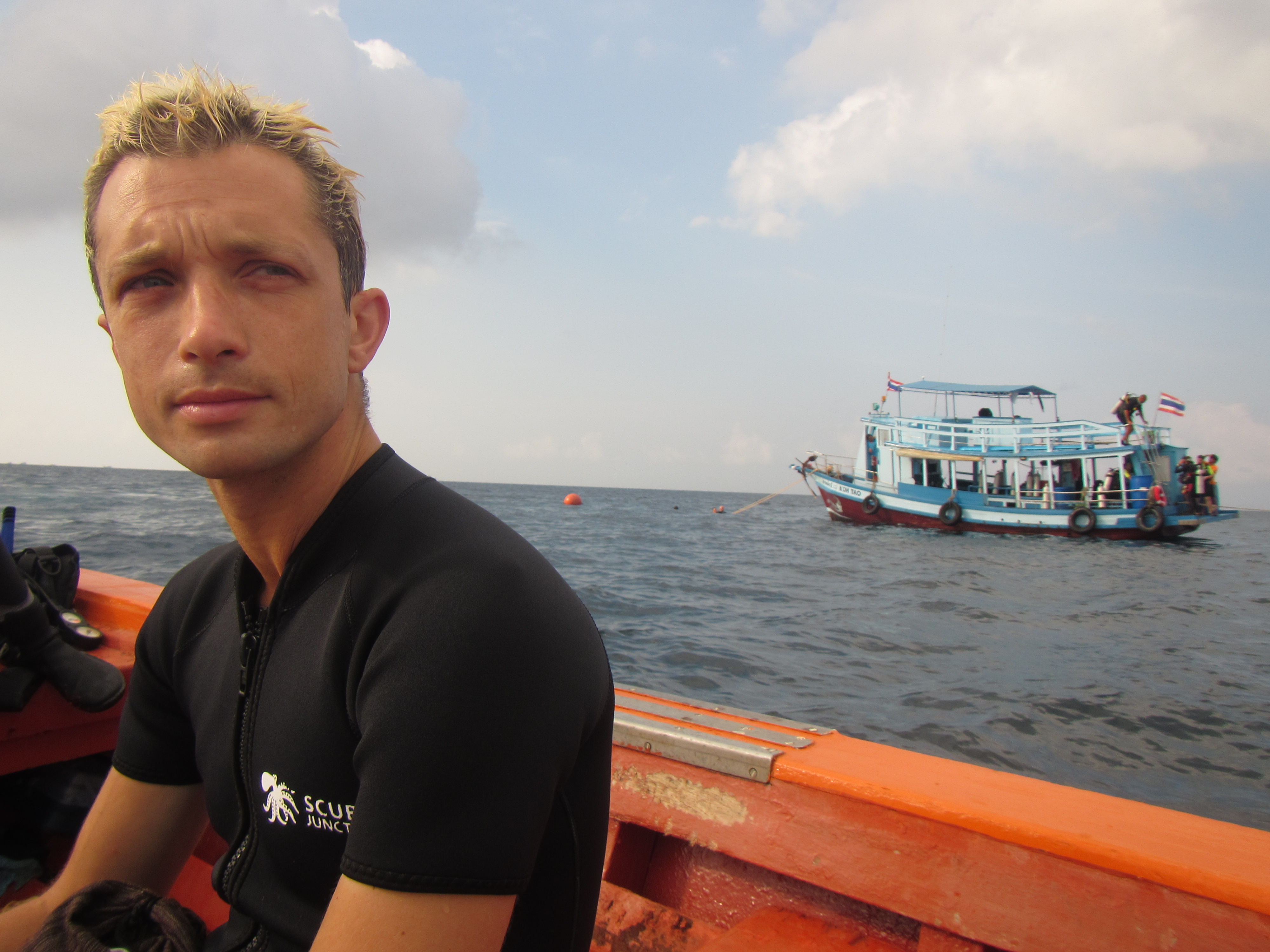
IMG_0732  IMG_0728

Our instructor for the refresher course was Leane, an English woman who used to work in corporate finance and wants to return to school for a Ph.D. in psychology, most of all at… Stanford! We talked a little about it and I offered to talk with her about her motivations and whether a Ph.D. is right for her. She was a fantastic instructor. The Private Eye sometimes takes 2-3 minutes in her initial descent (her ears equalize slowly), and Leane was very supportive, helpful, and patient. We did lots of high fives under water.

Today, our dive leader was Rachel, also from England, who used to be a punk, loves hip hop, and I’m sure could beat me up in a fight (not that that’s saying much). She was also excellent. When we found a lionfish hiding on a rock, something she had recently discovered and not told many about yet, she did a little underwater fist pump dance. Enthusiasm is infectious!

After a dive, you log what you did: how deep, how long, where, when, conditions, and what you saw. The post dive logging generally involves the dive leader walking you through everything you saw, a long list of fish, coral, sea cucumbers, and crustaceans. But, in all honesty, these aren’t the things that capture my attention or imagination. The lionfish was kinda cool, yeah, but the moments that made me stop and stare were much larger in scale. Like the time on our first dive when I looked up at the reflective surface of the water and saw silhouetted two schools of fish, one made up of hundreds of silvery fish about 6 inches long, the other 8 longtail fishes, these yellow, black, and white fish that are about a foot long and have a long, thin, white trailing fin on the top of their body. These hundreds of fish filled my field of view, not quite blotting out the sun but putting me in deep shade. Or, in our White Rock dive, when I looked down in a deep region and couldn’t see the bottom, just a blue green nothingness below, with shadows of fishes of all sizes flitting back and forth before fading into the unknown depth.

We have chosen this dive schedule because one of the instructors at our school, on hearing we wanted to dive the Liberty wreck, nodded a lot and said it is a fantastic dive. So in our agenda of seeking peak experiences, spending our time on Ko Tao diving to learn skills so we can dive the wreck is the plan.

Our camera can actually go to 10m underwater. I’m going to see if we can get some pictures to post. Given we are diving deep it might be tough, but hopefully I can figure out a way.

— The Professor
 

Ko Tao

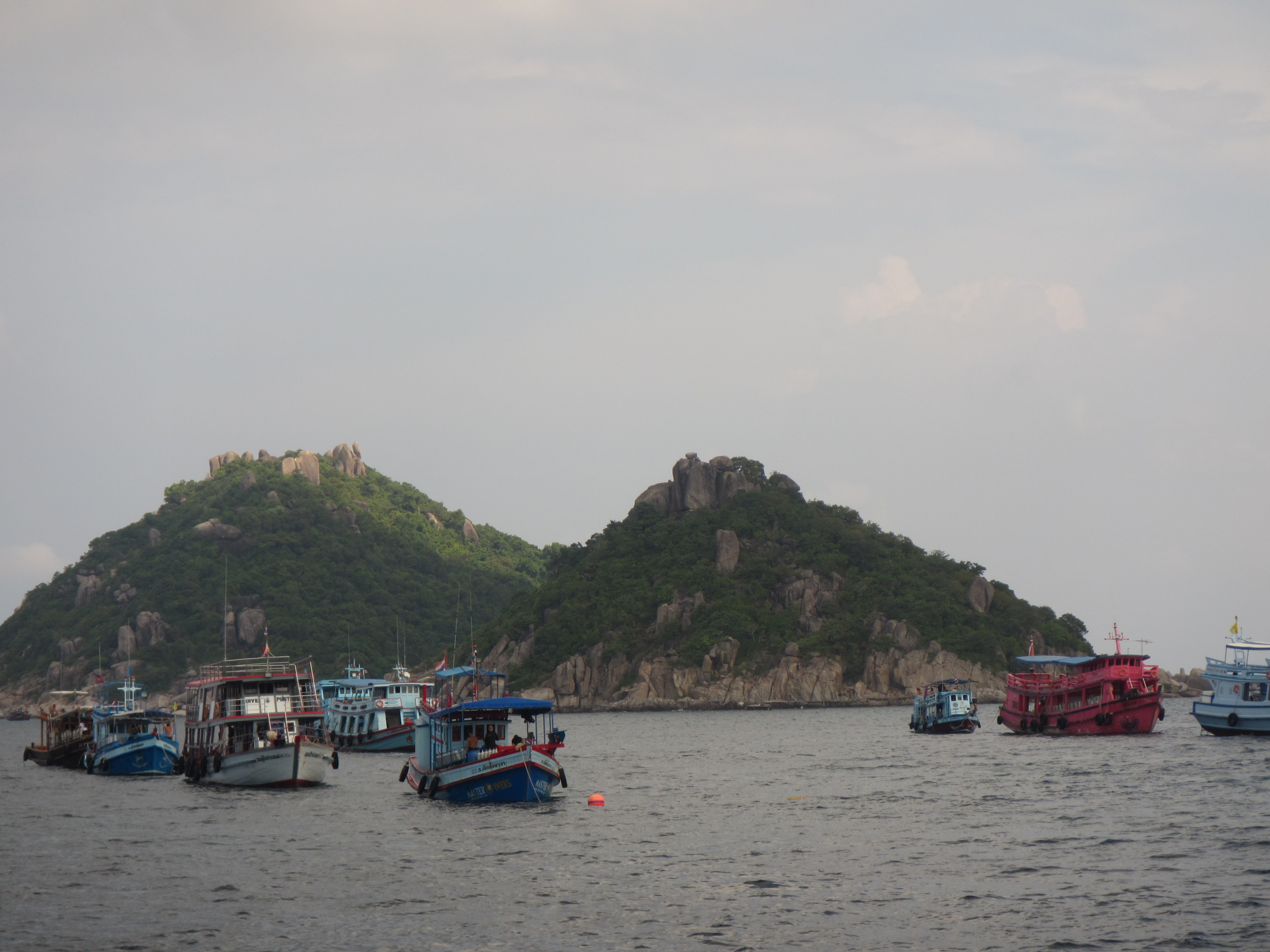
There are three islands close to one another on the east coast of southern Thailand: Ko Samui, Ko Phagnan, and Ko Tao. None of them are cheap like Laos is cheap (all you can eat buffet for $1.25!), due to their being beautiful tropical islands, but I listed them above in decreasing cost. Ko Samui is a well developed resort island, Ko Phagnan is famous for its beach dance parties, and Ko Tao, the little brother to the others, has become a diving mecca. Here you can see dive boats clustered around a dive site (I think this is Twin Pinnacles):

IMG_0735

Of course it has fine diving (we dove today and it was the best dive of my life, except maybe the time I swam alongside a turtle off the Kohala coast in Hawaii), but other places in the region have fantastic diving. As the cheapest of the three islands, Ko Tao is the place to learn how to dive and to take more advanced diving courses. Half of the places you can stay have dive schools, and in the afternoon every pool is filled with classes of people learning.

So this is our first stop in tropical Southeast Asia. The Private Eye and I haven’t dived in two and a half years, so we wanted to stop here to refresh our skills, maybe learn some new ones, and get recommendations from the local divers. After this, we’re thinking we want to dive Sail Rock (either from here or Ko Phagnan), I’m excited about the wreck dive near Bali (the Liberty), and we are considering going to the east coast of Thailand to dive the Similan islands. Originally the Similans had been high on our list, but it can be expensive, since it’s near the higher-end resort beaches of Phuket. So depending on how money is feeling when we wrap up here, we might head to Phuket, or, if money is tight, we might instead head to Railay Beach and Krabi, also on the east coast, for some oceanside cliff climbing.

Arriving here was, for lack of a better word, a bitch. We took the night train from Bangkok to Chumphon. We wanted a sleeper car, but it’s still busy enough around here, and we did it the day of, that all we could get were 2nd class seats. Since there was no AC, the windows were open, which meant passing trains were a deafening roar. A lot of other uncomfortable things meant each of us slept 3 hours at most. One night of poor sleep is not too hard, but we’d also only slept 3-4 hours the night before. We arrived in Chumphon at 5 am to take a bus at 6 am to a high speed catamaran to Ko Tao, departing at 7. The sea was rough enough that I started to become queasy, and almost lost it as I made my way to the back of the boat. What made it especially hard was that my eyes were so tired I couldn’t stay focused on the horizon – looking at the horizon I was fine, eyes closed or unfocused was bad. But once I was at the stern and could watch the churn of the water from the engines, I was fine. I actually feel asleep, sitting down, head resting on the railing. I arrived soaked in salt water, but with a stable stomach.

We caught a soorng-tao to Sairee beach, where a few of the most recommended dive schools are, found a too-expensive room that was fine for one night (B1200/$40) since we needed to sleep so badly, arranged for a refresher class the next day (Friday the 18th) with Scuba Junction, a seemingly awesome diving school (they are), and crashed out.

So this is a tropical island, with all that entails: beautiful white sand beaches whose sand is so fine in parts it feels like clay. The beach itself is all bars, restaurants, and dive schools. So you can, for B60 ($2), get a cup of coffee as well as toast with jam and butter, and eat them lounging on a patio that ends 10 feet from the surf. All of the beach is free access, so you can walk up and down it as much as you want. It’s not crowded. While it might be hard to find a patch of beach which has no one else for 30 feet, it’s trivial to find a spot for your towel. Sairee beach is about a kilometer long, with rocks at both of its ends, so you can walk it in 15 minutes.

I woke up before The Private Eye so did exactly that, walked up and down the beach, sitting down a few times, for an hour or so. Three people gave me fliers for events that evening as I walked: a new yoga studio, a flying trapeze show with free trials, and a bikini/trunk fashion show. I tried to be in the Burning Man spirit; rather than say no, I took every one offered with genuine interest. The Private Eye awoke, we had grilled barracuda for dinner (actually a big, square meal) and went to the trapeze show, whose details I’ll elide because I think The Private Eye night have more to say.

So we went to be early, woke up at 8 or so, booked a cheaper room, and made our way to Scuba Junction for our refresher course at 10AM.

— The Professor


Luang Prabang and the Search for Authenticity

I am writing this post on Ko Tao. Specifically, I am on the front porch of our cold-water not-quite-beach-side-but-close-enough bungalow, which i love beyond all reason. I am wearing a bathing suit and a soft cotton dress. This seems to me a pretty safe perspective from which to write about Luang Prabang, a place I enjoyed, but which filled me with conflicting emotions at the time.

When you go to a place to see its life rather than its sights, as in Luang Prabang, you – or at least I – am drawn to somehow participate in that life, to be able to offer something of value. In retrospect, I should have volunteered while we were there, but instead I got emotionally invested in a quixotic quest to spend my money in the right way. Money, you see, is the easiest way for a tourist to fit into the life of a tourist town. It is what is expected.

The first night we were in Luang Prabang, we went to the night market. It was a totally overwhelming display of consumer goods, beautiful things, all reported to be handcrafted, scarves and slippers, bedspreads and tablecloths, purses and paper crafts. But what caught my eye most was the jewelry. Laos, specifically the Hmong, are reputed to be master silversmiths, and silver jewelry was everywhere, all of it beautiful, all of it cheap. I bought a pair of little earrings for myself among all the other souvenirs for others that I bought; they cost me $5 worth of kip.

Next door, I saw a necklace and felt an immediate desire for it. It was large and opulent, with turquoise beads and a dripping pile of seed-pod-shaped charms. I put it on and felt very beautiful. Realistically, I imagined I could only wear it at Burning Man or other events where such decadence is celebrated. It was expensive for a souvenir, but cheap for what I imagined it to be.

I held off. I knew nothing of buying fine silver. I did not want to make a mistake, since our budget is not unlimited. So I put it down, and spent the next day reading about the purchase of silver, and went to the local museum that depicts the dress of the various Hill tribes of Laos, including the silver tradition among the Lao and the Hmong in particular. I learned about the history of silversmithing in Laos, and that one should look on the back or clasp of silver jewelry to see if it bears the important mark “92.5”, which indicates that the piece is sterling silver, or 92.5 percent silver. Laotian silver actually often exceeds this in purity, which makes it softer but even more attractive.

But I was not sure if these marks were universal, and I read nothing to guide me about navigating the silver shops of Luang Prabang. So I went back to the shop and looked at the necklace again. I tried it on and it was still beautiful. I looked all over it and did not see a mark of 92.5, but when the salesgirl assured me that it was indeed 92.5 percent silver, I bought it anyway.

Days passed, and I still had not recovered any ease. I had so enjoyed the boat trip on the Mekong to Luang Prabang, playing Ticket to Ride with the Blythe Spirit and the father and son from Hong Kong, and watching the hills and rubber plantations and villages and fisherman slide past as we floated down the glassy river. But our night at Pakbeng, where we were greeted with open need for our kip and nearly stayed in a literal fleabag hotel, had knocked me off my game. I was feeling edgy in Luang Prabang. As we stayed and our friends from the Gibbon Experience and the Elegant Frenchman moved on, my edginess deepened. This caused trouble between me and The Professor, though we shared some wonderful experiences.

While wandering the alleyways alone, so that the Professor and I could get a breather from each other, I happened into a beautiful art gallery, and was invited by the Laotian artist to sit and chat. He spoke perfect English and was obviously gay, with a white partner. They lived half the year in Canada and half the year in Laos, I gathered, and had been to San Francisco so many times that they did not want a postcard from there, which I offered to send them. I had mentioned that I was feeling very relaxed – true in that moment – and that I liked Luang Prabang very much, but that I feared the night market where I had been souvenir shopping was bad for my budget.

Most of what is sold there is made in factories in china, they told me.

In retrospect that was obvious and doesn’t detract from the uniqueness of what is sold there from a western perspective; I can’t get this stuff at home. But at the time it hit me like a lightning bolt. Afraid to tell them that I had already purchased a necklace, I told them that I had mostly bought needlepoint items, which I could see the market women stitching as they waited for customers. Those are authentic, they told me. So I told them I was thinking about buying a necklace. The ones near the market are all tin, they said. To get the real thing, you need to go to the silversmiths in their old district on the Mekong, or in an alley near the old fountain by the major intersection.

I digested this for a day, and then I went to these silversmiths. I bought a second necklace, stamped 92.5, more expensive than the first but still a good price for what it was, just as beautiful but less provocative. I met the silversmith, whose father-in-law had made a crown for the last king. He showed me an old photograph of it. I watched his daughter, who had sold me the necklace, practice an elaborate and fascinating craft of gold-thread embroidery. We talked to the limits of our mutual ability. She had long orange fingernails that looked wonderful laying the gold floss and stitching it into place with thinner, more delicate dark red thread. I thought of the Vegan Taxidermist, and the Paper Queen, and missed them tremendously. I felt the old familiar pang that I am not an artist like they are, just an occasional amateur, and the accompanying familiar consolation that I can at least support the lives of real artists and craftspeople in this world when I am abroad.

Which is a nice way of saying that if you don’t have the talent or discipline for art, you can still have the money and the taste to participate in the lives of artists. There’s a part of me that very easily adopts the role of the wealthy woman of leisure, and i distrust that part because i know the discipline to make your own beautiful things rather than buy them is superior. I am hard on myself sometimes.

I love both my necklaces and the lessons they taught me, and the experience of buying the latter. but if you ask me about my happiest memories of Luang Prabang, they are of talking with friendly people on the street who wanted to share with me their two months study of English. The fellow passing out fliers by the bamboo bridge. The fellow who lived on the same street as our hotel, and chatted with me. The fellow who clinked beer bottles with Phil and tried to dance with me on our last night in the city, at the club near the bus station behind the grocery store. And I loved seeing the sunset from the point where the rivers meet, and hanging out in utopia with the Blythe Spirit, and biking to a less-touristed waterfall with the Professor. I like Laos. I’ll need to digest it some more, though.

– the Private Eye


What The Professor packed

I have a smaller pack than The Private Eye. The Traveling Economist told me she’d never heard anyone say they wish they had a larger pack, so I have an Osprey Talon 33. It has a pouch for a water bladder, so I brought a camelback one. It’s a much easier way to carry water than a bottle, e.g. on two day boat rides or when mountain biking to a waterfall. Attached to my pack I have a name tag, a watch/compass, an LED flashlight, and two padlocks of different sizes (useful when you have to use lockers).

Clothing

  • one pair of permethrin pants
  • one permethrin long sleeved, collared shirt
  • one permethrin hat
  • 4 tank tops (2 new, icebreaker merino wool, 1 grey cotton, 1 mesh burning man)
  • 3 pairs of boxers (2 new, icebreaker merino wool, one old, cotton)
  • one pair of Psylo pants with detachable lower legs (can be long pants and 3/4 length shorts)
  • 3 pairs of socks
  • one olive t-shirt
  • one navy linen collared shirt
  • one pair of swimming trunks
  • one sarong (gift from The Surfer Stylist)
  • one pair of pajama pants
  • 3 leather wedding bands
  • chain necklace
  • one pair of flip flops (new Chocos)
  • one pair of light, comfortable, beat up hiking sneakers
  • scuba mask
  • snorkel
  • mountain biking sunglasses (very rugged, wrap-around)

I wish I had brought another pair of pants, like the Psylo ones (they are light and dry quickly). I didn’t realize that Thailand and Laos dress conservatively, such that my swim trunks are generally not OK to wear. While traveling, I’ve bought a pair of fisherman pants, a hooded, long sleeved t-shirt, a bracelet, and a scarf. I sent the sarong back with our gift package, since it’s bulky and I didn’t wear it in our first three weeks.

I put all of my clothes (except shoes and scuba stuff) in a large, sealable plastic bag – think of a giant ziplock bag. This means I can empty and fill my bag very quickly, and if we are caught in rain my clothes remain dry.

Medical and toiletries

  • toothbrush
  • 2 sticks of deodorant (with multiple showers a day in Thailand, the first lasted 3 weeks)
  • 20 or so 3mg melatonin for jet lag
  • 15 or so 200mg ibuprofen (Advil)
  • Imodium and laxatives
  • Anti-malarial pills from Kaiser travel clinic
  • Antibiotics for terrible diarrhea (3 doses) from travel clinic
  • 20 pairs of disposable contact lenses
  • electric razor
  • nail clippers and file
  • one linen handkerchief
  • small tub of Osmo essence hair clay (very stiff)

I wish I had brought a small screwdriver for my eye glasses, which sometimes come loose. I’ve had to borrow a small knife once, and will probably have to do so again a few times.

Other stuff

I brought two wallets. One holds a few cards and a bit of cash; I carry this around with me. One is larger, with multiple pockets, zip pockets, etc. I keep larger amounts of cash, travel documents, and other documentation in this one, which I generally keep locked up in our room somehow (locker, locked drawer, inside The Private Eye’s bag, which can lock up). I carry my passport with me at all times, either in a zipped pants pocket or in a zipped pocket of the bag I’m carrying.

In Chiang Mai I picked up a simple cloth satchel which I’ve used as my small day bag. It’s falling apart a little from my having put large, full water bottles in it a few times. But it was $4, so that’s fine.

Technology

  • First generation iPad
  • outlet plug converter
  • Canon PowerShot D20
  • 2 32GB memory cards
  • USB cable for camera
  • USB cable for iPad, 120V USB plug
  • Old candybar phone from Silamander, charger

I bought a new digital camera because our old one (from 2007) is starting to have mechanical problems with its lens. The D20 is, well, a d20!!!! and is a rugged model, waterproof to 10m, shockproof, etc. We don’t take a huge number of pictures, so I think we are only 10% of the way through our first card, most of which is a few videos.

An iPad seemed like the perfect computer, but I didn’t want to buy a new one. So I grabbed the first generation one from my lab, since it’s not super useful for work anymore (students borrow it for trips so they can watch movies on the plane).


Videos and photos!

We’re in Bangkok for the day, taking the sleeper train to Chumphon tonight (7:30 PM). All of the sleeping berths are booked, but we’re going to check a few times today to see if a berth has opened up. Otherwise it means sleeping in a chair. The Private Eye is off shopping near Siam Center, looking for a pair of pants that’s both functional and looks good. I’m at an Internet cafe just outside the train station, uploading photos and videos, as Internet connections are so much faster here than in Laos. So if you go back and look at some older posts, you’ll see some new pictures. I promise a video of the New Years fireworks and lanterns in Chiang Mai and a video of The Private Eye zip lining.


— The Professor


What The Private Eye packed

Those of you who have not travelled around for a while with a backpack may wonder, what exactly did we bring, what did we buy here, what do we wish we had brought and what did we wish we hadn’t brought?

I cannot speak for the professor, but I am happy to provide you with my own list of travel possessions and my thoughts. I keep my stuff in an osprey porter 46, with a small Pacsafe bag as a day purse. I like both a lot.

Clothing

Brought:
1 pair permethrin treated khaki pants
1 permethrin treated long sleeved collared shirt
2 tank tops
1 long sleeve button down silk shirt to wear with tank tops
3 pair socks
3 sets underwear/bras of various types
1 pair flip flops with arch support (Chacos)
1 pair ultralight black sneakers (Inov8 f-lites) with super feet insoles
1 bathing suit plus long sleeved swim and sun top
1 sarong that matches the long sleeved silk shirt and tank tops.
1 light rain shell
1 thin old cashmere sweater with discreet holes
1 pair PJs
1 pair earrings
1 glow in the dark donut on a black cord, functions as necklace and visibility-marker/toy in the dark
1 leather travel wedding band with two spares in case of damage
1 silver ring
1 permethrin treated sun hat
1 pair river shoes
1 pair cheap sunglasses

Bought:
1 t-shirt
1 pair lightweight pants
1 straw cowboy hat
1 pair earrings

There isn’t anything from the above that I wouldn’t have brought/bought, I use them all a lot and have generally been happy with my outfits. The one possible exception is the pants I bought at talat rot fai market in Bangkok, which are very comfortable and are in a gorgeous fabric, but are not very flattering. The best deals on pants are for pants where the circumstances (market) make them difficult to try on properly first… I have yet to find better pants, so they were a good purchase, but ill-fitting clothes do gall occasionally. I also have appear to have come down firmly on the side of “respectful” in my dress, which is good for talking with the locals, but not so great for attracting my hippie tribe fellow travelers. When I feel outgoing, this is of no importance, however.

Diving Things
Brought:
1 snorkel
1 mask
1 dive log
1 pair ear plugs
1 towel

It remains to be seen how much use these get, hopefully a lot! The towel has already been useful in a cheap guesthouse and on our waterfall excursion, and also for keeping warm once. The other things I brought because I wasn’t sure if rental gear in these particulars (mask/mouthpiece) would be small enough for me, and ear things are not rental gear. The dive log is heavy, but I couldn’t find my dive card so I thought I would need it to order another when we get to Ko Tau.

Toiletries/etc.
Brought:
4 bottles oil: castor, jojoba, almond and a blend of the above. I use them to clean my face, moisturize my legs and arms, and condition my hair.
1 toothbrush
1 package floss
2 travel toothpaste tubes
1 ziplock bag of assorted first aid supplies
2 tubes mosquito repellent lotion
1 crystal deodorant, ironically returning to the land of its manufacture, Thailand
Medicine for diarrhea, malaria, headaches, acne, and other conditions. I have a full-trip supply of everything, which takes up a lot of room and was not essential, since you can buy all of it over the counter in Thailand.
1 bag makeup. I don’t use it every day here, except concealer, but when I need a pick me up or we are going out, it’s a godsend. I used it more in Bangkok, where people glam up.
Lip balm
Solid sunscreen and liquid facial sunscreen
Small tube aloe Vera
Contact lenses
2 pairs prescription glasses, one regular and one sun
Retainer for the teeth

Bought:
Q tips
Snake brand powder. This miracle item makes you sweat less and smell less in the tropical heat. I use it every day in the hot weather. Not here, where it is chilly.
1 small bottle shampoo
1 big tube toothpaste
1 better toothbrush
Hand wash laundry detergent
1 bar good soap
1 scrubby turtle
1 washcloth for facial steaming with the oil
Tissues. Indescribably important. Bathrooms are often not provided with toilet paper. There are usually water guns (think kitchen sink hose attachments) with which to clean yourself, but NOT ALWAYS.
Mosquito sting salve. Works pretty well.
Contact lens solution

Wished I had:
Decent tweezers. My eyebrows and other hairs have grown back in since the pre-trip waxing. Funny story: I tried to get waxed before the waterfall trip, but got concerned when saw the lady trying to plug in an electric hot water thermos to heat the wax, which was in little Tupperware containers in the water. The socket kept throwing sparks as she tried to make a good electrical connection. I fled when she brought out the electric skillet(!) to use instead! Needless to say, I am now holding off for the beach, I guess Luang Prabang does not get this type of request often enough to be reliable at it.

et cetera
Brought:
Camera, with connectors and charger.
First gen iPad – the professor brought this, and it’s the perfect travel computer, except that we can’t connect our camera to it.
2 travel guides
1 moleskine calendar and pen, very useful for getting everyone’s contact info who we meet!
1 additional blank book, sort of wishing i had not brought this as I have not used it.
1 pee funnel from REI. Ladies, this one is a godsend at times.
1 headlamp
1 security leg belt for under pants, for the passport, etc.
1 wallet with drivers license and single credit/debit card, stays inside the most secure Pacsafe pocket.
Rope for clothes drying
Mosquito net head thing

Bought:
1 little zip wallet for daily cash, is souvenir, lives in easily accessible pocket.
Work gloves for gibbon experience

I think that’s about it. I should run now, we are about to have Au Revoir breakfast with the Blythe Spirit, who heads to Vang Vieng today.

– The Private Eye


Cultural Heritage, Waterfalls, and Plans

We’ve made our travel plans to Ko Tau. We are taking a 7:35AM flight out of Luang Prabang to Bangkok on the 16th, will spend the day in Bangkok, then take a sleeper train down to Chumphon. From there we will take a ferry/hydrofoil to Ko Tau, settle in, and start some beach time and scuba diving. We’re thinking we’d like to make it to Ko Phangnan for the next full moon party on the 26th, but given how busy it’s supposed to be around them we might just head east for a live aboard dive of the Similans (a dive where you live on the dive boat).

Perhaps the one thing against Luang Prabang is that it’s been a bit chilly. Much like Pier 29 in San Francisco, local stalls have been selling Lao P.D.R. sweatshirt hoodies at a brisk pace. But otherwise it’s wonderful, a small city with a mix of bustle (the night market) and quiet, pretty streets (the end of the peninsula). This morning we splurged for pain au chocolate aux aumandes at Banneton, which seems to be the best bakery in town. Of course, splurge means they were $1.90. We also picked up a baguette, which is as wonderfully crusty and chewy as we’ve come to expect from Acme in SF.

The bars on the peninsula close at 11:30, much to the chagrin of some of their patrons. The Private Eye did some investigating and heard that this is because they are close to so many of the temples and the UNESCO world heritage site area. Allowing late-night hijinks could supposedly jeopardize its status, so in a recent town meeting they decided to shut everything down at 11:30. I think it’s for the best, personally. I really liked in Dublin how pubs closing at midnight gives them such a different social place than bars in the U.S. – even if you stay until closing you can still get a reasonable night sleep before work tomorrow. I talked with one Israeli woman who objected; I told her to stuff it, although in more polite words than that. I’m sure the Lao want the tourist dollars, but I also think they don’t want coeds dancing on the tables (something that happened in Utopia last night just before it closed). The sense of entitlement from money can run strong. We also found a very classy bar, Ikon, run by a Hungarian expat.

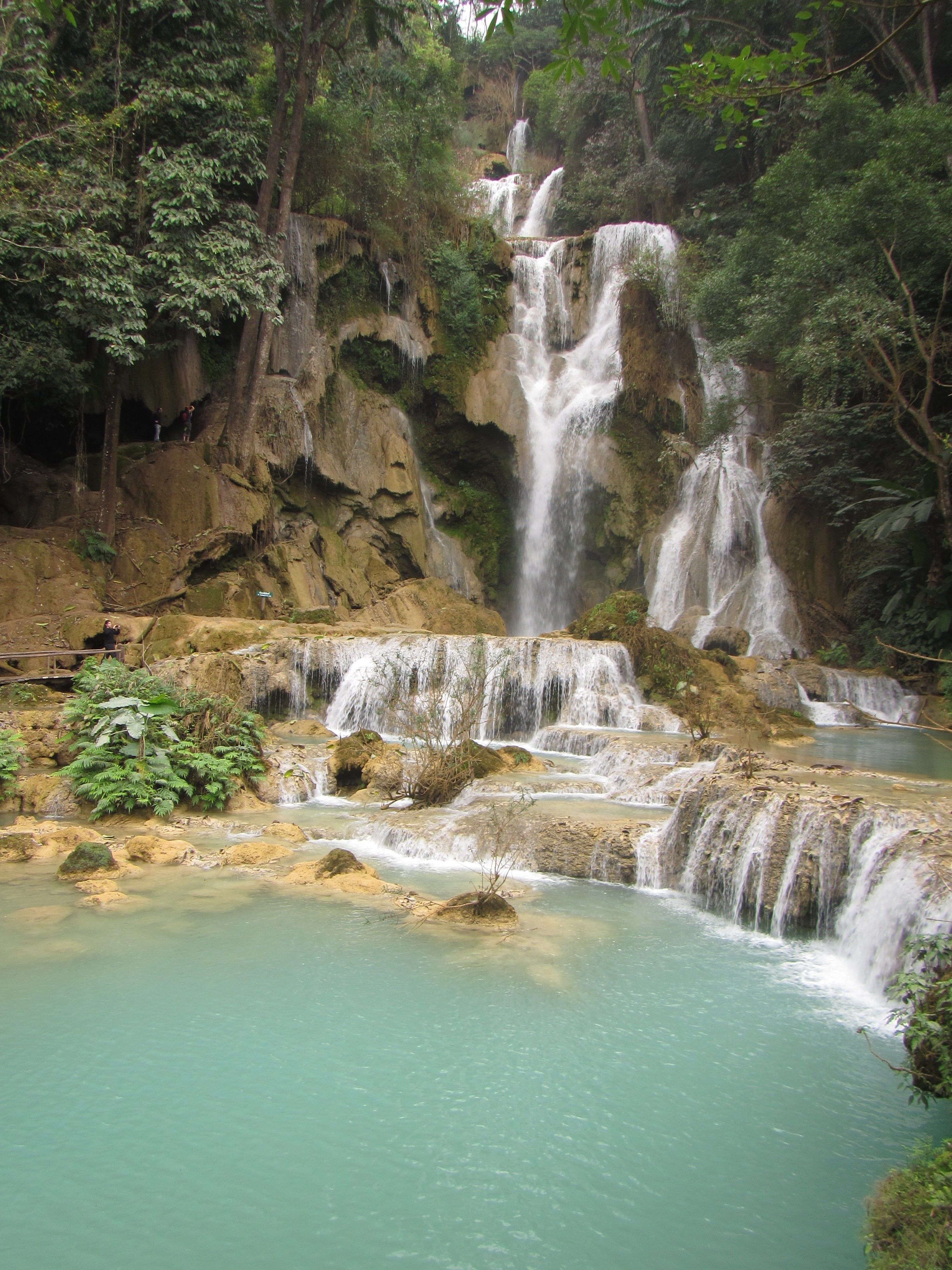
Yesterday we hired a tuk-tuk to take 6 of us to the nearby (38 km) Kan Sai waterfall. The water has calcium in it, which gives it a milky, greenish color. In addition to the fantastic waterfalls themselves, there are two swimming holes, one of which has a rope swing. We had been warned, and so we brought bathing suits and towels. The water was chilly, but it was great fun to scramble across the ladder to the branch, use the hook to grab the rope, then swing out over the water. At the bottom of the falls there’s also a bear rescue/rehabilitation center. We arrived exactly at feeding time. The keepers would hide their food in all sorts of places: under rocks, inside tree hollows, and on top of poles. That way the bears would have an hour or two of sniffing out where it all was, getting to it, and eating it. Seeing a bear peel a banana with its claws and teeth was neat. We had thought about bicycling to the falls, but decided driving there first to get a sense of the road would be better. It looked like a fun, reasonable workout to me; this means it would be unpleasant for The Private Eye, so maybe I’ll do it myself if I become really jumpy.

Jan16 593Jan16 600

Here’s our new friend Life Is Too Short, whom we stare at in horror as she has stepped over the railing to take a photo:

Jan16 594

She’s headed to Huay Xai for the Gibbon Experience in part based on our and The Blythe Spirit’s recommendation. We may cross paths again in Bali mid-February.

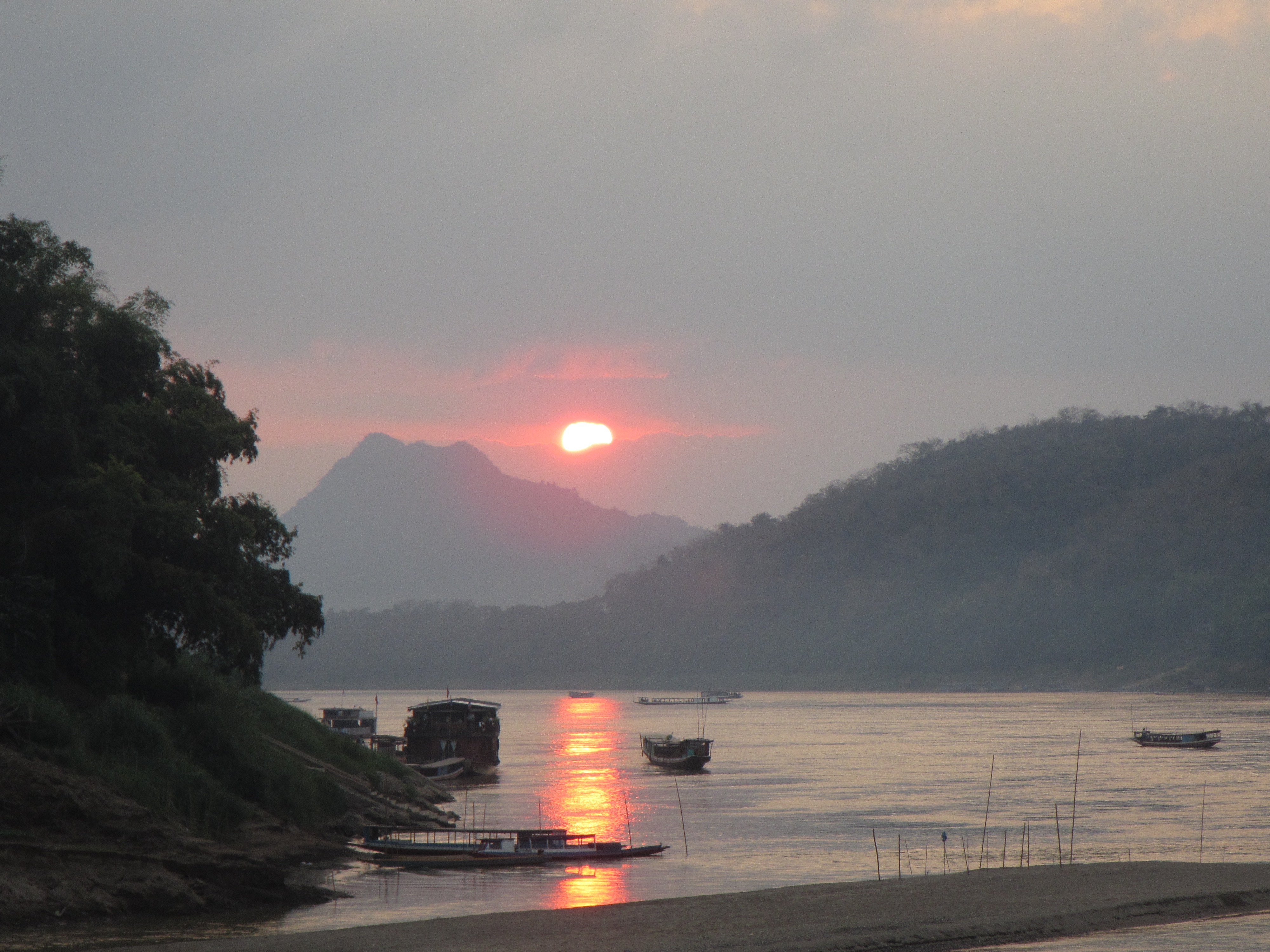
Meeting up for dinner after the waterfalls, we ran into the two Israeli Army Doctors from the Gibbon Experience. Their trek in Luong Nam Tha was a nightmare, unfortunately. The government had recently built a road, such that locals no longer used the trail. So a few guides went slowly ahead of them, clearing it with machetes. Furthermore, they were short, so the two doctors had to stoop the entire time. The guides said they’d bring water, but didn’t. One of them caught a cold. They said they are looking forward to recuperating a bit before going anywhere, and we told them this is a wonderful city to do so in. You can get a croissant, walk across the river on a bamboo bridge, and be in farmlands and nature, such as the hill from which we watched the sunset two nights ago.

Jan16 556

One note – I’ve so far been outed (my job) five times. Twice it was to people from the Bay Area, who know all the schools so want to know which one I work at. The other three times it’s been Israelis, in the first three minutes of the conversation: what do you do? what do you teach? what school? It’s a funny cultural signifier that the conversation always goes that way. But an Israeli woman did buy me a beer last night once she found out: so it’s true, kids, being a professor can get you free drinks.

— The Professor


Luang Prabang

We’ve settled into Luang Prabang for the next few days, a beautifully small yet rich city. It’s a mix of temples and colonial French architecture. On one hand, the night market has a wonderful buffet of tasty Lao food and dark, rich, Lao coffee can be had for less than a dollar, while on the other you can have croissants worthy of Paris. The backpacker culture has a big presence here; we spent the evening reclining on a couch chatting with The Blythe Spirit and some new friends in a backpacker bar which has a drink whose description includes Burning Man (it involves a tiny fresh red chili pepper). All bars on the peninsula close down at 11:30 in order to “preserve local values and customs.” Seems like a good arrangement.

We’re heading to some nearby waterfalls today (Saturday) for a day of hiking and swimming. After dashing north, settling into a pleasant city for a few days seems wonderful. When we want to move on, our next step with be Ko Tau, in the south of Thailand, for some diving.

— The Professor


The Road to and from Gibbons

The trip to the Gibbon Experience had three parts: driving fast along a winding paved road, driving slowly offroad to a village, then hiking from the village to the tree houses. Both going in and coming out, we saw something on the fast road leg that’s worth mentioning.

On the way in, we were descending along a hillside with a sharp curve to the left. There was oncea long metal guard rail, but it had been torn away by a tanker truck that had taken the curve too fast and fallen off the road, down into the ravine below, some forty or fifty feet. When we passed by, there was a large tow truck there, and a few people standing around, trying to figure out how to pull it out. When we passed by it again on the way out, the truck was still there, crumpled a bit and cracked, the smell of gasoline strong.

The way back was more distressing. After we left lunch, a large passenger van passed our song-taaws. About 20 kilometers from Huay Xai, we passed through a small village. In the village, a small blue truck had pulled out into the road just as the van sped through. The van struck the driver’s side of the truck cab. The front of both was completely crushed by the impact. There was glass everywhere, twisted metal, and dripping pools of fluid, a crowd gathered around.

Our song-taaw had two medical students (Israeli army doctors, one year from completing their studies), another one had a medical student from Australia. They immediately jumped out and headed to the accident. We saw people run up with a 10 foot long 4×4 board, I think to try to pry the vehicles apart. We saw them carry two people away, limp.

The doctors returned after about 10 minutes, frustrated. There was nothing they could do. The driver of the blue truck was not going to survive. The driver of the van had open fractures on both his upper and lower leg, and a crushed pelvis. The doctors tried tried to explain that they needed a board to splint the left and body and something to tie the person down with, but could not explain it. Instead, locals put the injured person in the back of a van, to (hopefully?) drive him to the hospital in Huay Xai. We left before they did. We passed a police car, but no ambulance. The doctor sitting across from me put his head in his hands and talked about the lack of basic medical care, supplies (no first aid kits in the village that he could find), knowledge, or urgency. The person with the crushed pelvis could have a good chance of surviving if treated properly, but the lack of EMT response or proper care was very bad for him.

But this is the reality of poor rural areas, especially in developing regions of the world. It’s not their fault that they don’t know the best emergency medical approaches, or don’t have medical supplies. All of these things cost money. Economic growth, in addition to material goods, generally brings improved education, improved services, and the corresponding increase in life expectancy. When I hear someone say “don’t buy from China” or “keep American jobs with Americans,” now all I’ll be able to think of is lost economic opportunities to people so much worse off, being deterred from earning the same possibilities and safety that I have.

— The Professor


Primates!

The Gibbon Experience in Laos was a fantastic success. We did not see the elusive gibbon for which it is named, but we lived for three days and two nights in arboreal bliss.

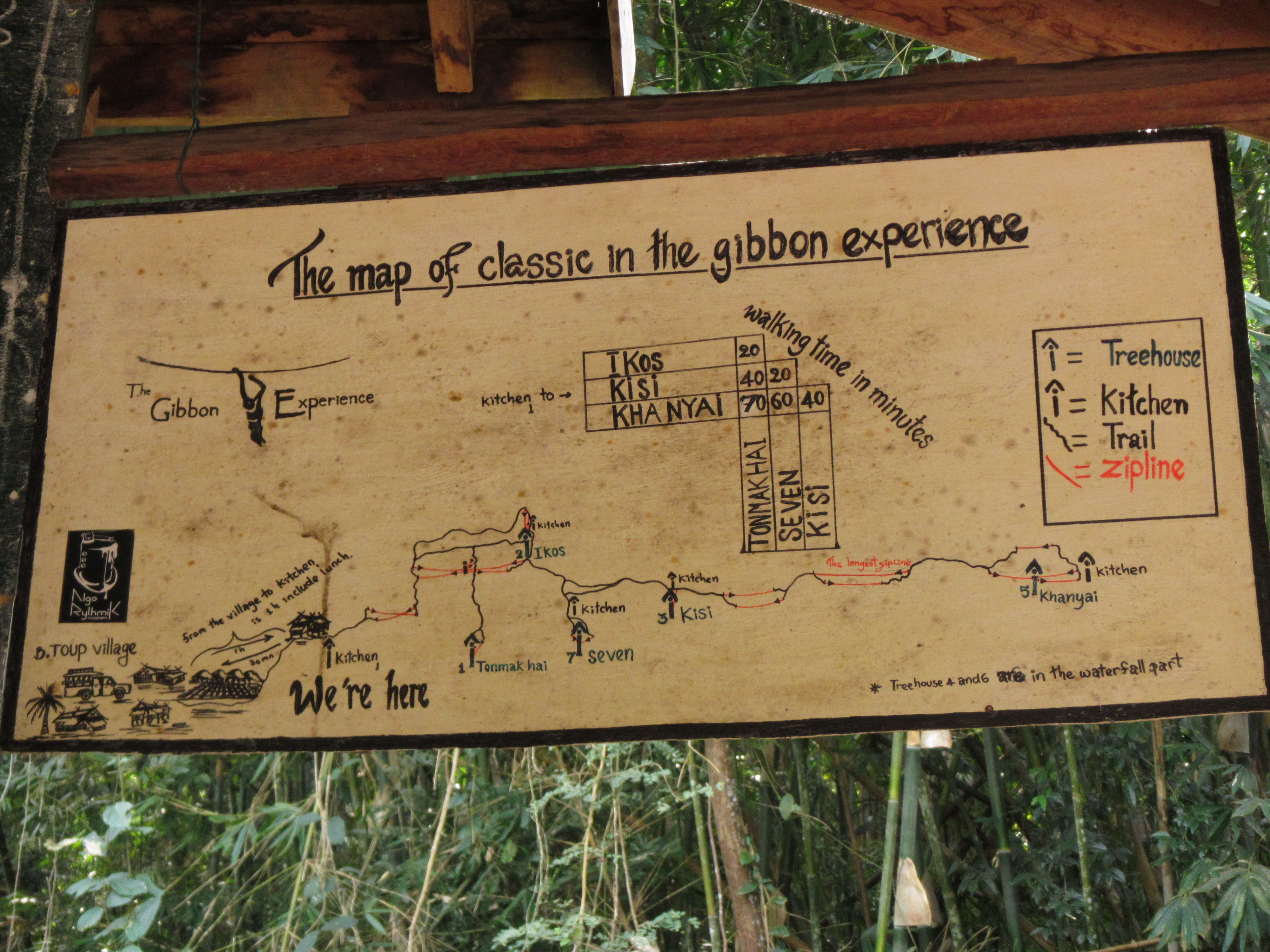
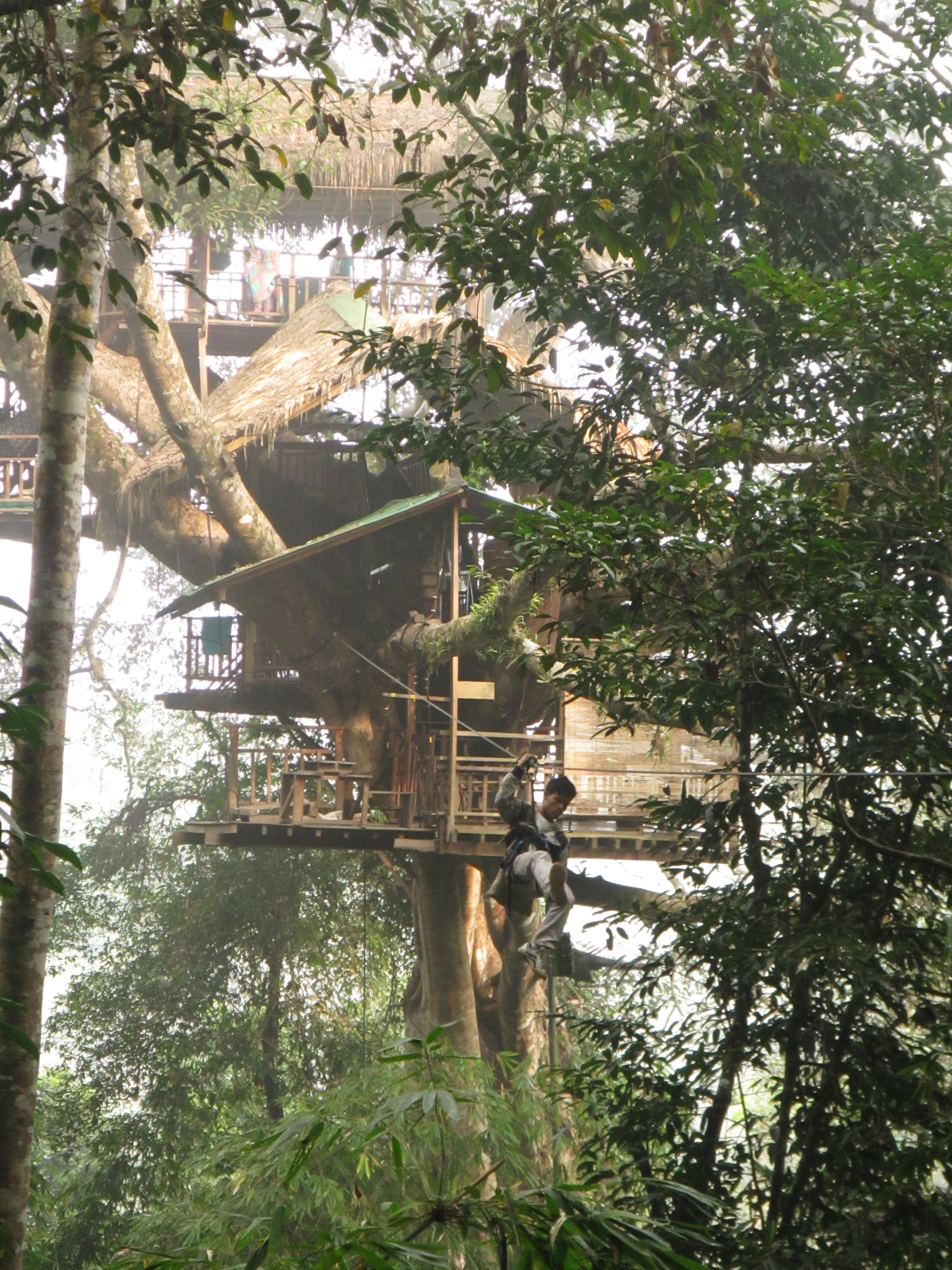
The Gibbon Experience is the first tour group that we have taken. In short, it involves riding in a pickup truck from Huay Xai on the Mekong River to a protected forest some two hours inland, then a combination of hiking and zip lining into the protected area. Once inside, we lived in open-air treehouses high above the ground and made excursions around the area to attempt to view gibbons, and to enjoy the extensive zip lines.

Jan16 457

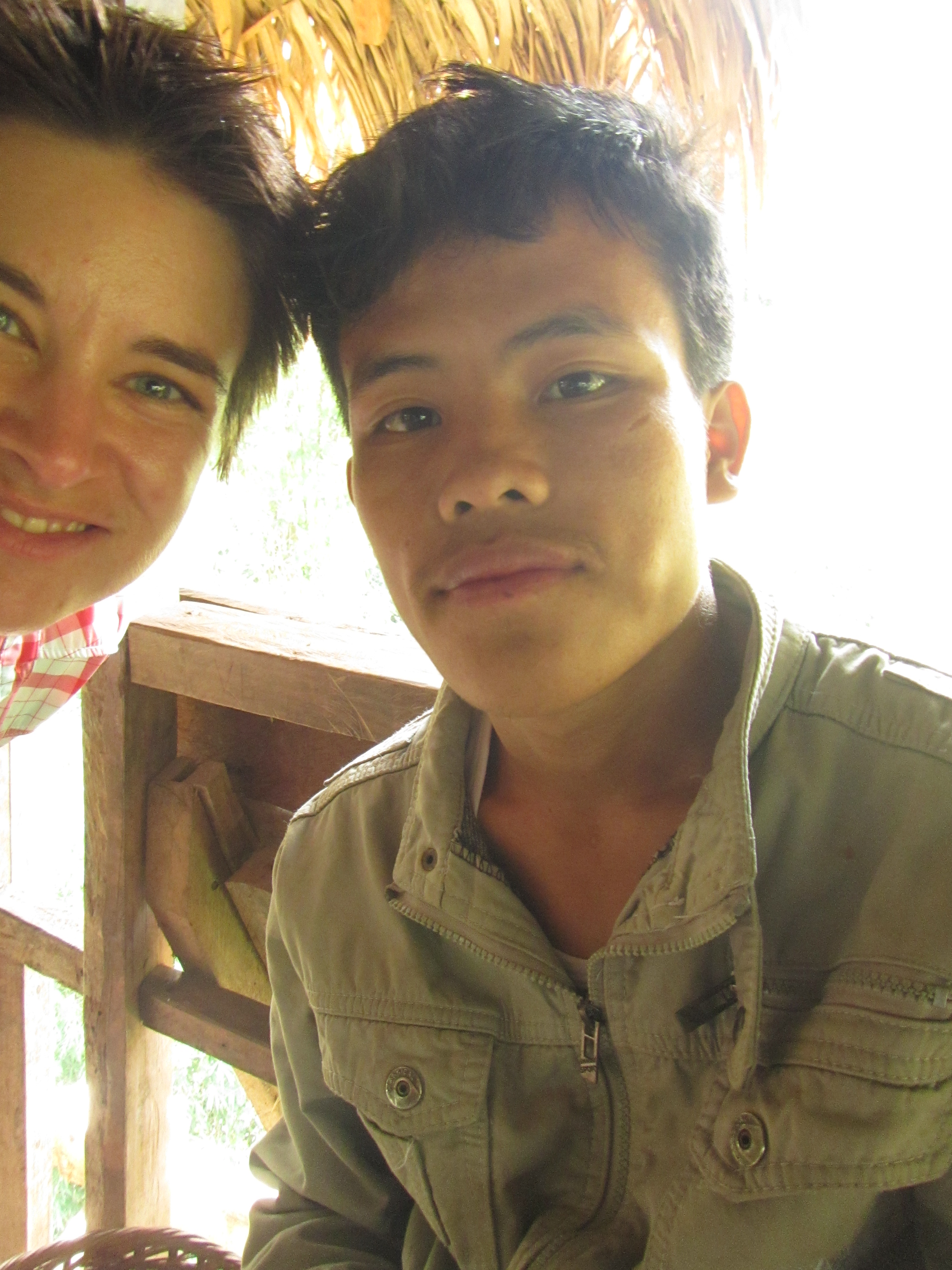
So simple, but such a lot to experience. What touched my heart most were the guides. The Gibbon Experience has a mission to preserve the gibbons’ habitat and part of that mission was hiring poachers, paying them more than they were making at their poaching, and teaching them English and other skills (such as zip lining!). Our guide was an excellent instructor and very careful to keep an eye out for us and our safety. And as he found the gibbons by their calls and brought us close to them, treading almost silently, I gathered that he was probably a good hunter. Alas, we were a group of heavy-footed Anglophones following him, and only some of us saw the gibbons before they fled from our cracks and rustles.

The Guide told me and the Professor, when we asked, that he used to hunt monkeys to sell for food to other Laotians. Now, with his greater income, he is putting two of his brothers and two of his sisters through school, which is apparently not free here. Another guide, who we met at a restaurant and guesthouse which benefits local women, told us that he was doing the same – in hopes that his educated brother will then put him through school.

Jan16 495

The second delightful thing about the experience was that we made friends! We had a lot of time to get to know the Blythe Spirit from Holland, the Newly Engaged Cuties from England, and the Spiffy Athletes from New Zealand, as we were all sharing a treehouse. We also got to know the Newlywed Members of the Tribe from Australia, two students also from Oz, two medical students from Israel, a teacher and his son from Hong Kong, and an Australian/Singaporean duo. They all were interesting, thoughtful, soulful people who became dear to us. We felt so lucky to have been shut up in the jungle with such great folks!

Jan16 471

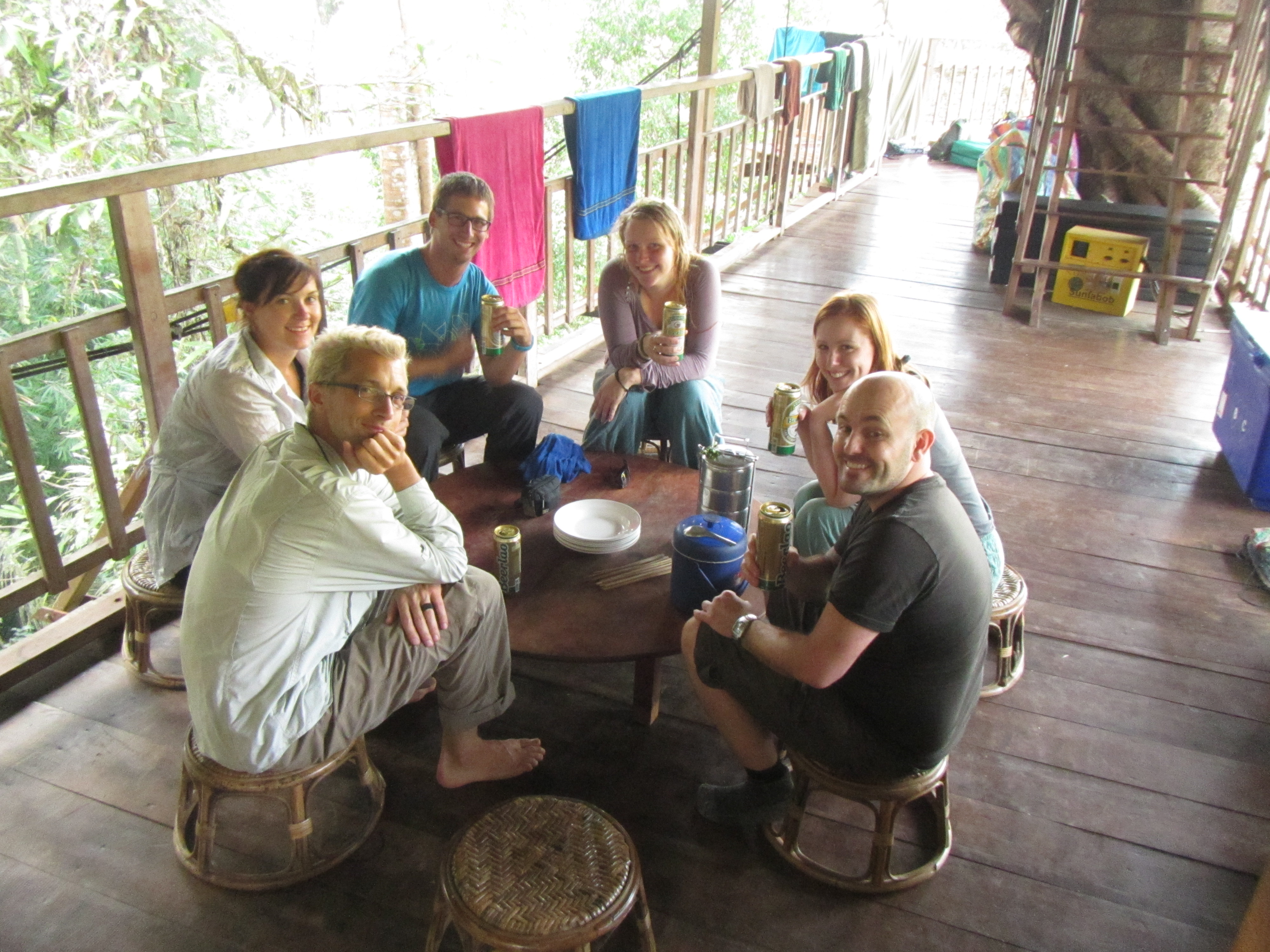
Our treehouse was a marvel, both beautiful and functional, with a running cold shower, a sink, a toilet, clean water for drinking and bathing and tapestry tents to cover our mattresses, protecting us from both insects and their bat predators. We were brought nourishing meals of rice, vegetables, beans and a little meat, along with fresh strong coffee with condensed milk (our new drug of choice), tea, fruit and peanuts and peanut brittle. We had brought our own extra sweets and drinks. Here you can see our guide zip lining away from the treehouse.

Jan16 507

The zip lining brought me a peaceful feeling, as I sped above mist-tracked forest canyons while dangling from a giant cable in a harness. Words don’t really do it justice, and I hope we can post video at some point on our excursion- we have failed thus far to find an Internet cafe that can handle the load. One pointer, if you ever try it: go fast! You can always brake later.

Professor: Here’s a video of one particularly fun zip line. Unfortunately it’s sideways and we don’t have editing software. So turn your head to the right? It takes a few moments to start as The Private Eye launches.

Finally, let me say that the forest itself was so beautiful, to see and to smell and to hear. The soundscapes at the dawn of our first day were utterly haunting, full of bird calls and gibbon song and insect drone. We seven in our treehouse spent a good portion of our first night in the bathroom (it had the best sky view), gazing at the stars through the giant branches of our host tree. Some of us hiked an eastern ridge at the dawn of our last day, and watched the sun rise through the bamboo. I took an afternoon nap in the highest part of our treehouse, snoozing in the soft breezes.

I absolutely felt we got our money’s worth. Because I am sure prospective travelers are reading this, though, I’ll tack on a few you-should-knows. It is the jungle: there are rats, mice, snakes and bugs. None of them really bothered us much, but we are adventuresome people and they might bother others. The guides leave you alone in your treehouses at night and there is no phone, so I would not go there were I a likely candidate for a medical emergency; the nearest hospital is hours away, and the nearest good hospital is in Thailand. I would also avoid it if I were physically unfit: we did the less hiking intensive of the three day experiences, and it was still a good deal of very strenuous long uphill climbing.

I am writing this post on while floating down the Mekong River in a slow boat. I will catch you next time in Luang Prabang!

– The Private Eye