RSS

Monthly Archives: February 2013

National Indentity

The history of these three nations formed after World War II – Indonesia, Singapore, and Malaysia – provided a contrast of how the past can shape the future. This is something The Private Eye and I have been talking a lot about as we wander, as her posts have alluded to.

First, one thing impressed upon us by the couple we met at Cocktail Cycle in Chiang Mai is that Indonesia is a somewhat precarious federation. On one hand, unity with Java provides economic opportunity and drives growth. On the other, Java is where the power lies, and other parts of Indonesia feel that, at times, they have to march to Java’s drum. So a bit like Germany and the EU, albeit without the wounds and distrust of the early 20th century. This became a bit clearer to me as I read about Papua, where armed uprisings against the government are not unheard of in very recent memory, and to which the government answers with executions of political leaders. I was unaware of Timor-Leste’s separation in 2002; The Private Eye commented that she remembered it, but it was at a time when terrorism was flooding international news out of the headlines.

Bali and the Gilis, while part of Indonesia, clearly had their own identity which was not strongly tied to the identity of Indonesia. This is in contrast to Yogyakarta, where Indonesian history was important and presented prominently. Both are technically Muslim nations, but Indonesia has a breadth of cultures and religions; while many of its citizens are Muslim, it seemed more an element of personal rather than national identity. Malaysia, at least Kuala Lumpur, defines itself very much as a Muslim nation, tying its identity to Islam in the Middle Ages and Renaissance.

This very strong Muslim identity makes sense given its history. Throughout the colonialism of the 15th to 20th centuries, the major point of conflict with European colonial powers was whether the people of Malaysia could continue to follow their own customs and religion. The pattern seemed to generally be that the Sultans would sign a treaty granting trade and military rights in return for cultural sovereignty, which the Europeans would soon break, and conflict followed.

This history of not only colonialism but also cultural and religious meddling sheds some light on Malaysia’s split with Singapore and Malaysia’s laws that favor ethnic Malaysians. Where Singapore was a city and port built by the British in the colonial era, Malaysia was a booming hub of trade when European powers arrived. Portugal’s initial efforts were diplomatic; when the Sultan of Malacca took members of the delegation captive and killed a few, Portugal sent a fleet and took the port by force. Colonialism kept Malaysians at the low rungs of the economic ladder. And so where Singapore wants equality among its ethnic groups, Malaysia wants to correct inequalities encouraged by past colonial politics.

And so, its heritage of Islam suppressed for so long, Malaysia, once independent, strongly asserted that part of its identity. The National Museum goes into the different Sultans and when they converted to Islam; the Islamic Art Museum is more notable than the National Art Museum; the space agency has exhibits tying modern concepts of the cosmos to Islam’s astronomers in Al-Andalus and North Africa. Singapore, meanwhile, looks solidly towards the future, less focused on history from 500 years ago.

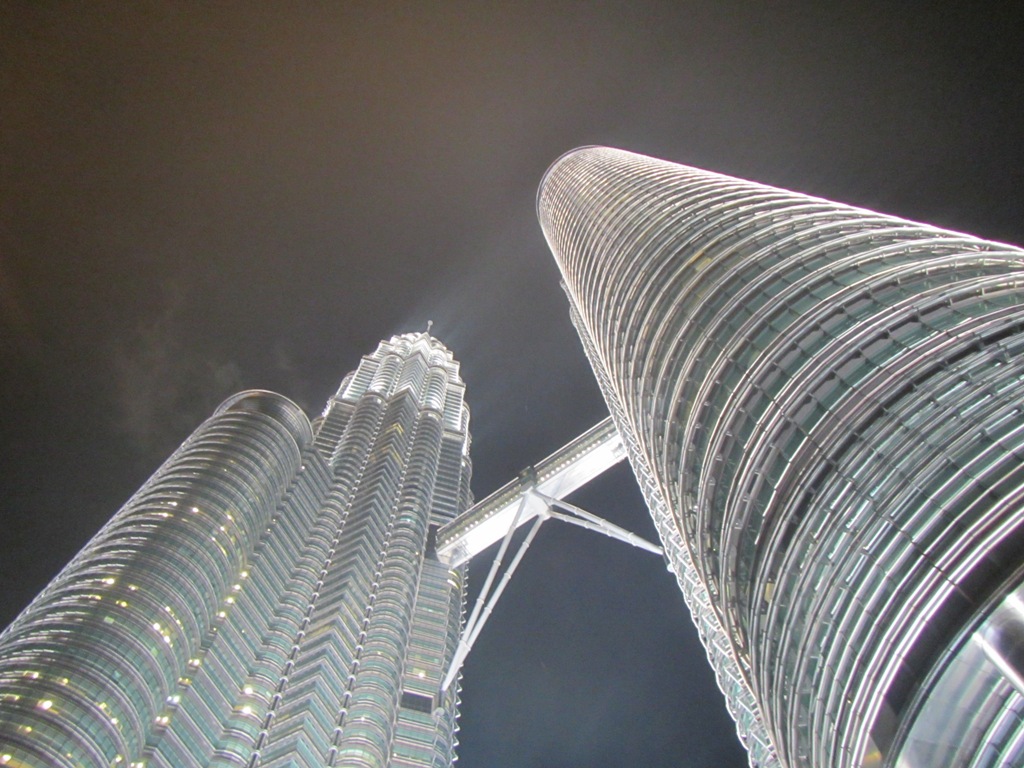
Malaysia is clearly prospering. The architectural icon of Kuala Lumpur, the Petronas Towers, are the office buildings for an oil company. And so Malaysia also shares that aspect of national identity with many Arab nations, although Malaysia also has a lot of agriculture. The Islamic world is vast. Remember World Without Oil, the game played on web bulletin boards a few years ago? I want to go back and see if anyone seriously explored the implications the end of oil will have to Islam.

— The Professor


Kuala Lumpur

Confession time: we totally did Kuala Lumpur in a Hemispheres magazine kind of way, only even shorter.

We flew in yesterday evening from Singapore, booked a decent room in an Indian-run Chinatown hostel, and ate nasi lempak for dinner (it’s a breakfast food) at a semi swanky rum bar with a Korean-looking piano lounge singer and a loud quartet playing cards and getting drunk at the next table over. We then hit the street market, where I bought four pairs of socks for less than $4. How can socks cost less than coffee? Why did I feel like I slipped down a rabbit hole into the ur-Asian city? Anyway, it was a new passport stamp dated to The Professor’s birthday, woo hoo!

This morning we arose and hightailed it to the US embassy, stopping only for street snacks and a bit of graffiti viewing along the way.

Singapore-KL-SiemReap 012

The Professor got some new pages added to his passport. Interestingly, the waiting room had a flatscreen showing advertisement videos for American universities and tourist destinations. The colleges included CU Boulder and Howard and a school in Missouri. They played up their science, business and law programs. I suppose people don’t send their kids away to another country for school for the sake of a literature degree.

Also interesting: aside from the Golden Gate bridge, the thing most used to sell Malaysians on San Francisco tourism are images of Chinese and Indian dancers! I imagine they have nonstop Bhangra here already in spades?

We next hailed a taxi to the National Museum, which traces the history of the Malay people from prehistory to the present. It’s a good museum, but we noticed something curious about the exhibits: all the artifacts illustrating the TYPES of objects that were important in the 1400s and earlier were 19th-century artifacts, until you got back to the Paleolithic-dig type stuff. I mentioned this to the professor, and he wondered aloud if they hadn’t all been taken during the colonial era.

Then we got to the next room, and found out that after conquering Malacca, the Portuguese man of war Alfonso de Albequerque loaded up a big old ship with Malaccan treasure for his king. The ship sank. Oh. THAT is who lost the would-be exhibits.

Well, him and his country, and then the Dutch, and then the English, and then the Japanese during the war. Suddenly, the whole Malaysian-preference thing in public policy made a lot more sense, problematic as that is as a moral matter for me and a practical one for the minorities here. You recall that policy, don’t you, from The Professor’s entries about Singapore?

That was my take away from the national museum, that Malaysia is a place rich in resources and blessed by the gods as a great trading location, and as such has rarely been left to her own devices.

Leaving the museum, we walked through a lovely lakefront park to the Museum of Islamic Art, which was dazzling in its breadth, beauty, and in the quality of its exhibits. The first floor features art and architecture from Southeast Asia, China, India, Africa, the Middle East and Europe. The second breaks it down into categories: embroidery and fabric arts, jewelry, ceramics, illuminated manuscripts (my favorite) and others. Takeaway feeling: Islam is HUGE, which is obvious but is different when you have it all illustrated for you. Definitely recommend this museum if you are in town.

We then went to the planetarium and space museum across the street and caught the planetarium show. The show and museum were both good, but what really caught my attention was the way that astronomy was depicted as an Islamic science. Rightly so, given how much Islamic scientists and mathematicians contributed to the field, particularly in the Middle Ages when progress in the sciences was so brilliant in the Islamic world and so lackluster elsewhere. But it was odd, odd to me to realize that, though these discoveries were not Malaysian, that the audience would feel they were part of their self-history because of the religious identity. It is… Different from how I perceive the world. Visually, it was also odd to see a star museum where the images of stars were surrounded by borders of Islamic geometric star patterns, and where the observatory sat atop a tower like a minaret. I liked it a lot.

We ate dinner at a mall food court in the iconic Petronas Towers, and blew off actually paying to ascend the towers in order to catch Cloud Atlas at the mall cinema. Good call! We learned that movie theaters are still where young people can go to cuddle when their parents might be a bit strict about their behavior elsewhere. So cute! The movie was fun, largely because it combines all of your favorite genres, so you can have your post-apocalyptic sci-fi, your high-seas adventure, your moody English prewar art lads and your Matrix all in one movie.

Singapore-KL-SiemReap 013

We came home, had a snack, and I tried durian. I wanted to like the reviled breadfruit. The king of fruits! I liked the juice. I liked it in baked goods. I even liked the faint odor of it. But reader, the fruit defeated me fresh-sliced and fragrant. It was gross. Although, I only got the 10 rumiah type, maybe the 25 rumiah one is better. For now I will stick with the mangosteen, queen of fruits, and the delicious juices of the soursop fruit and the kedongdong fruit.

We fly to Siem Reap tomorrow morning.

– The Private Eye

 
Leave a comment

Posted by on February 26, 2013 in Uncategorized


Singapore Details

Our flight landed at 6:00. After a brief bit of immigration (“Where is your next destination?” “I don’t know.” “Well, you have to write something.”), we took the MRT to our stop, Farrer Park. Life Is Too Short had arrived a few days earlier, and we arranged to meet up for dinner in our lobby at 8:30, wandering over to the Lavender Food Plaza, a hawkers plaza with twenty or so different stalls. We’ve returned there for every meal we have had in our neighborhood. Prawn noodles, Beijing lamain, Hainanese chicken rice, chicken Padang, all so good.

Since Luang Prabang, I’ve been longing for strong, rich coffee. Lao coffee is prepared with a large filter like a sock, filled with grounds, that sits immersed in the coffee. You mix the thick, brutally strong resulting coffee with hot water and condensed milk. Coffee in Thailand is often instant, and coffee in Indonesia (Bali Kopi, Lombok Kopi, Java Kopi) is served in a small cup, optionally with sugar but not milk, with the very fine coffee grounds forming a sludge at the bottom. And so, the rich, sweet coffee of Singapore, served just as in Laos, has been wonderful.

On Thursday, we met up with Life Is Too Short to go to the Singapore zoo. The delight with which The Private Eye and Life Is Too Short raced from animal to animal was hard to keep up with at times. By far the best part was an enclosed rainforest exhibit, surrounded by mesh so the butterflies wouldn’t escape. Mouse deer (neither mouse nor deer!) moved in the underbrush, ringtail lemurs sat on the railings, and enormous flying foxes, with wingspans over a meter, swooped above before gnashing on fruit hung 2 feet in front of you. For those who have been to the rainforest enclosure in the California Academy of Sciences, it was much like that, except out of doors and with many more vertebrates, enough that you seemed surrounded by them.

Picture 010Picture 009

Singapore is a big city, so surely it must have a nightlife. We met up again with Life Is Too Short to find a bar or club. Our part of town has numerous KTV lounges – karaoke. While you can’t see inside any of them, you can hear the singing within. Unfortunately, a bit of research discovered that public KTV lounges (as opposed to private karaoke rooms as in Japan) are where people go to meet friendly members of the opposite sex who work there. Most cater to men, but some cater to women. We tried going into one that billed itself as a pub/disco, but The Private Eye observed it was upstairs from a massage parlor, and we saw the entry has pictures of all of the women who worked there – “Like a menu!” she cried and we backpedalled to the street. At the suggestion of our front desk we went into one that, while it had some very friendly ladies, was very tame and not sleazy. For some reason, the bartender really wanted us to sing Hotel California – enough so the they queued it and assigned it to our table even though we didn’t request it! The Private Eye pulled it off well. But with two beers and a Pepsi being S26 (26 Singapore dollars, about $22) , we only had one round, and we quickly discovered they only put your song request on the queue when you order a drink.

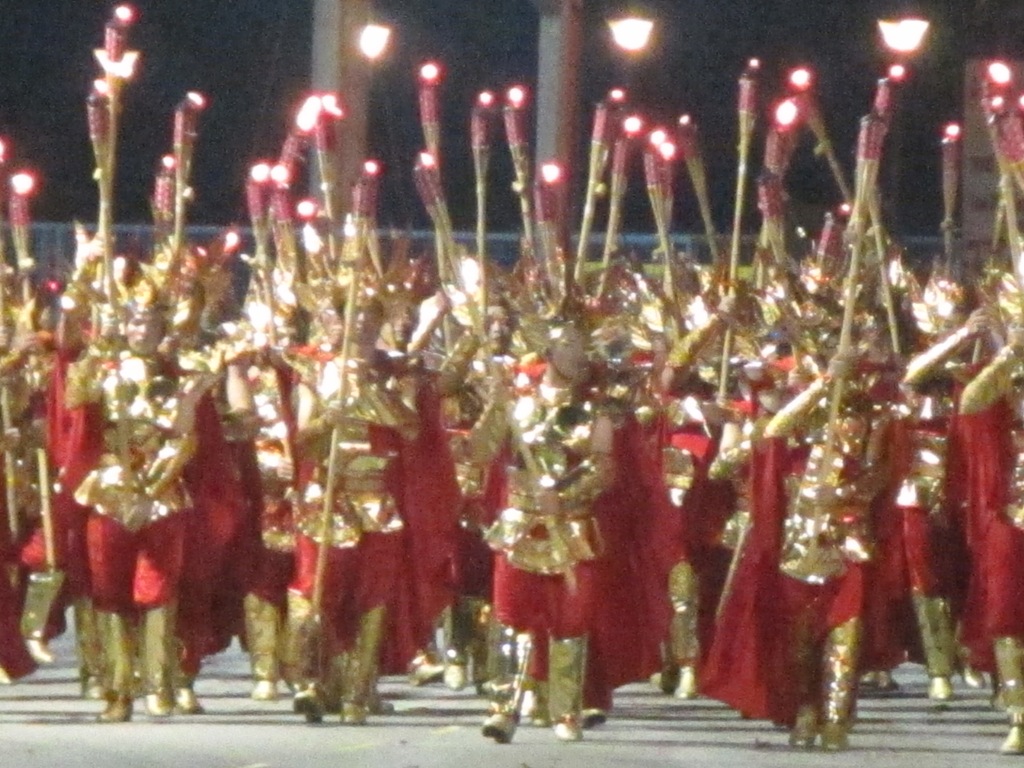
We found out that a huge yearly parade, called Chingay, was on Friday and Saturday evenings. Tickets started at S28, hard to afford when our daily budget for all meals, transport, entertainment, and errands is S100. Talking with some locals, we found out that there’s a large free area, but you want to be early to get a good view. So we wandered downtown, stopped by an outdoor equipemnt store to get some last minute gear for Peru, walked through the colonial district, then the shopping insanity that is Orchard Road until 6 or so, finally making our way via MRT to the parade.

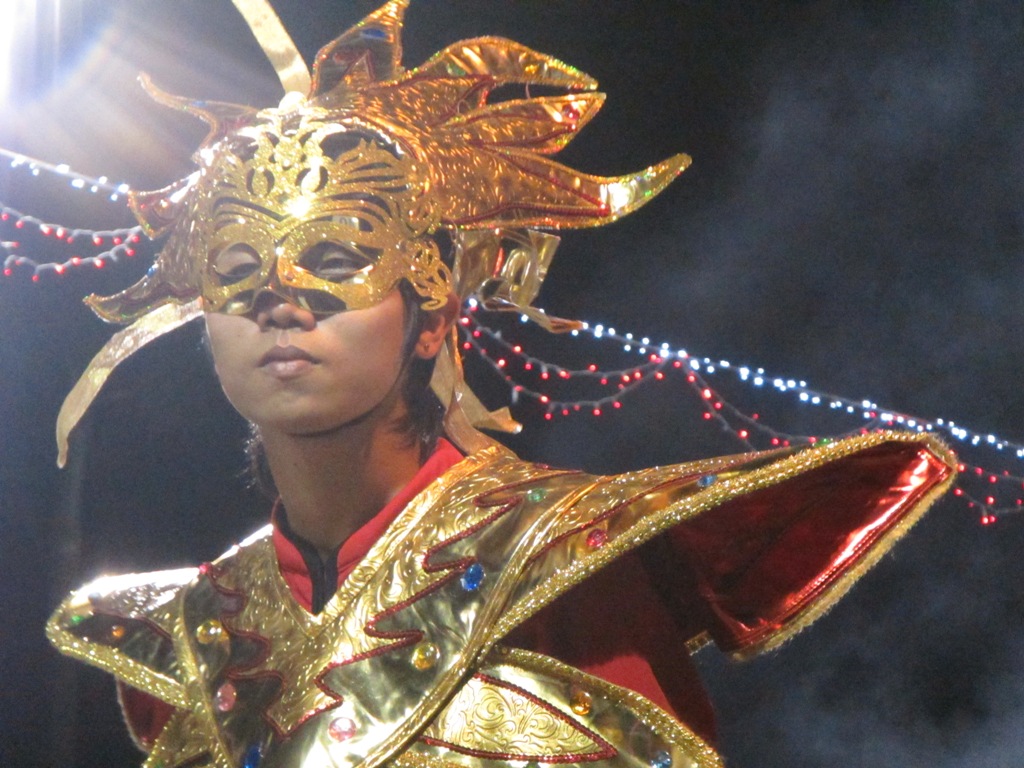
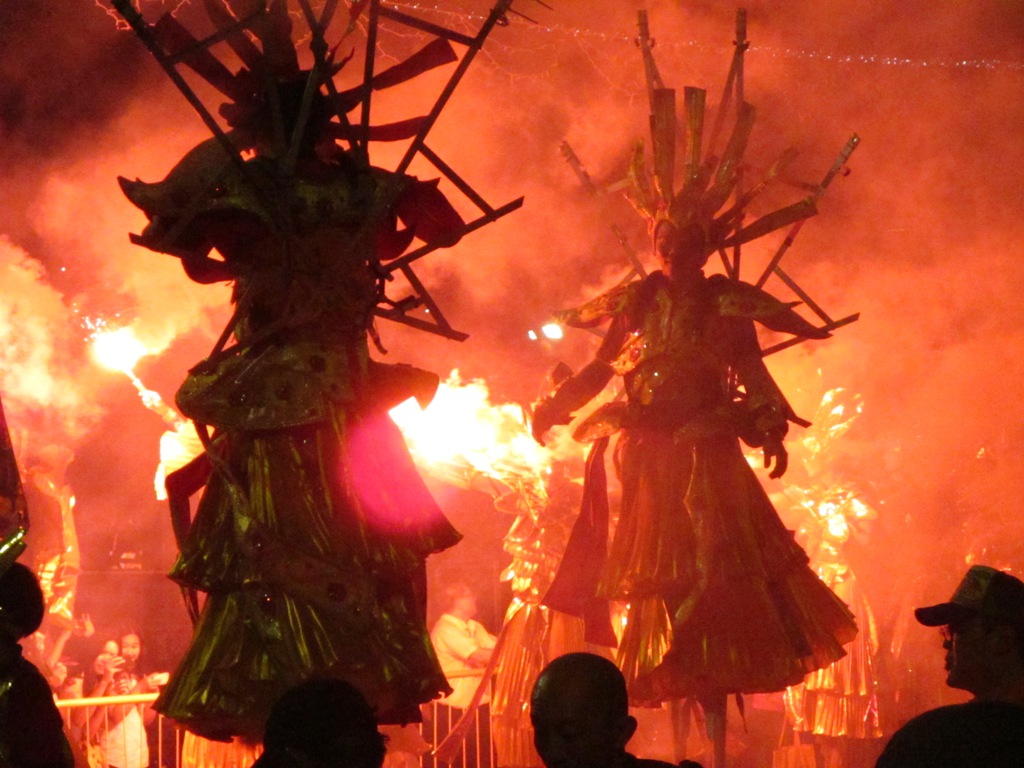
The parade was fantastic. It started with nearly a thousand dancers, had floats, dragons made from recycled plastic bottles, fire breathing, phoenix floats, and lasted for 90 minutes. All for free! The parade started in 1971, when Singapore banned fireworks. Words don’t do it justice:

Picture 011Singapore-KL-SiemReap 008Singapore-KL-SiemReap 007

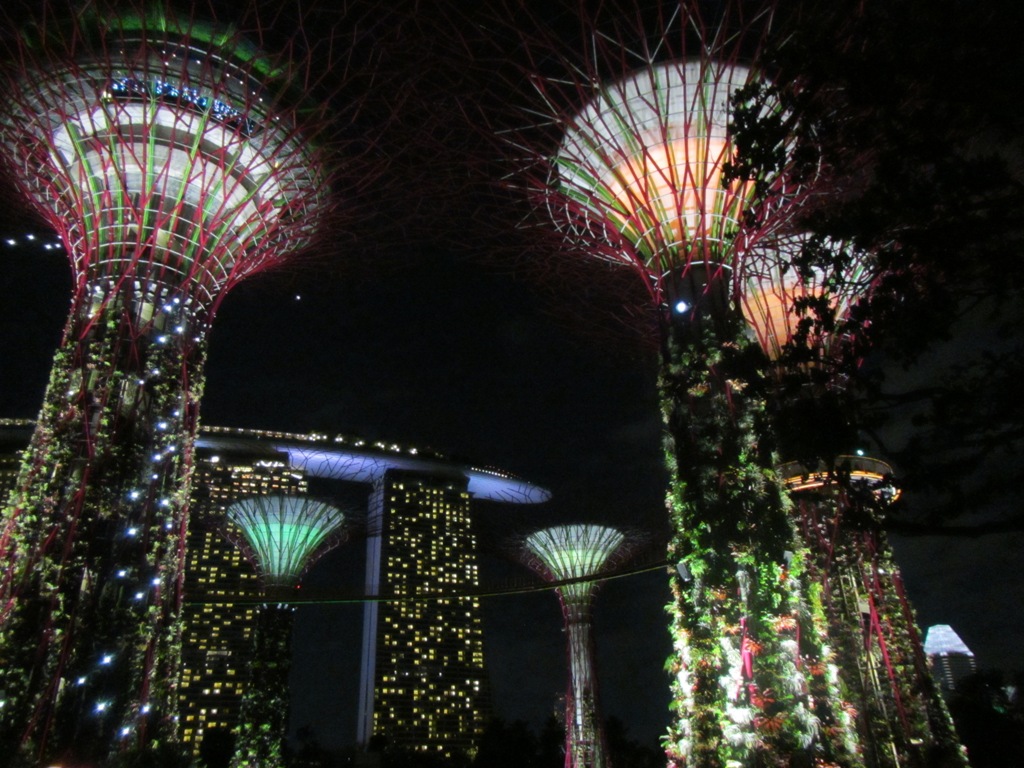
After the parade, we decided that we walk over to Marina Sands, an enormous hotel/casino complex. It’s the most iconic element of Singapore’s skyline: three huge towers in a slight curve, with an enormous open area, park, club, and pool sitting on all three that looks like a gargantuan ship aground in the sky. Unfortunately we were not up to the club’s dress code, so we wandered to the Marina Gardens, enormous steel structures (20-50m tall) that look like trees and are designed to be like them. They’re powered by solar panels atop them, have vines growing on their structure to perform photosynthesis, and, of course, light up and glow at night. Our feet exhausted from so much walking, we sat on some steps to watch the colors change and ebb, before catching one of the last trains back to Farrer Park.

Singapore-KL-SiemReap 010Singapore-KL-SiemReap 009

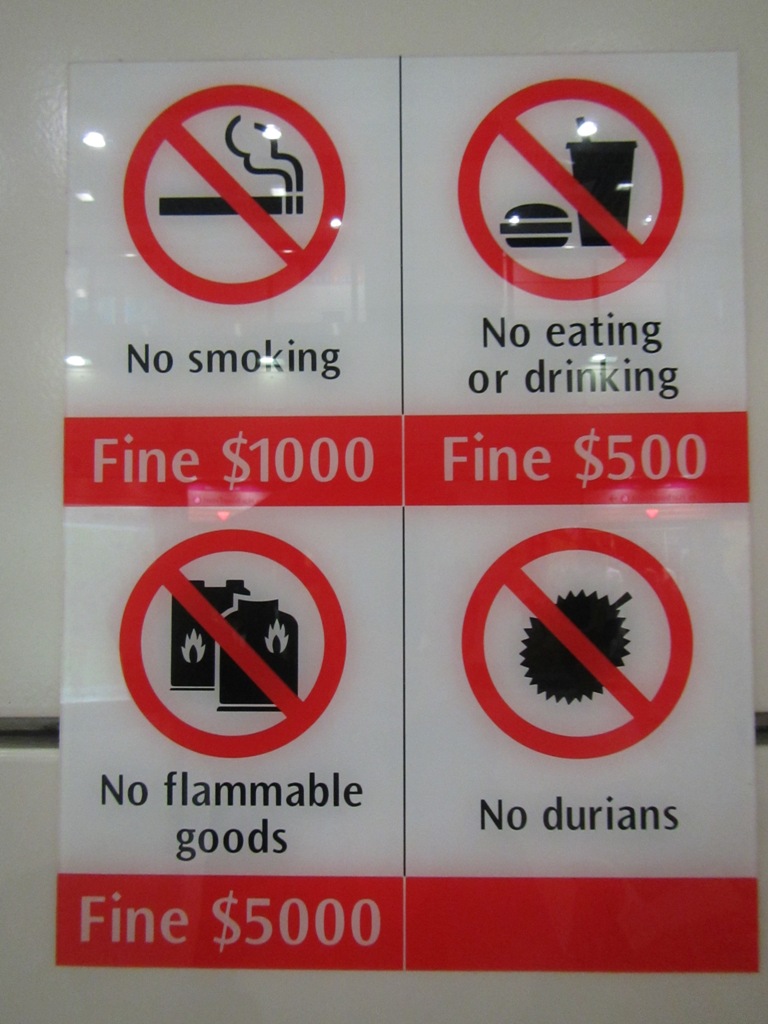
Today has been a slow day: laundry, hair cuts, some other practical things. The Private Eye and Life Is Too Short are back at the gardens to see them when they’re open; I’m back in the hotel stretching out my back, realigning some vertabrae I screwed up a decade ago. I guess I’m getting old. I had my first experience with the paternalism of Singapore: ibuprofen has to be bought over the counter, and sales are logged, so that a pharmacist can tell you know to take it properly. No matter that the instructions are different than every other place I’ve been. In Europe, you often buy 600mg pills; here, the pharmacist told me to take 1-2 200mg pills AND NO MORE. Oh, and here are the signs you see as you enter the subway:

Singapore-KL-SiemReap 011

We’ve booked a flight to Kuala Lumpur on the 25th, and it looks likely we will head to Siem Reap on the 27th, for a few days exploring Angkor Wat. After that, we have a bit under a week before we should return to Bangkok, and right now the top candidate is Hanoi.

— The Professor
 

Singapore

Oh, Singapore, you are a welcome home.

We landed in Singapore on the 20th, planning on staying just a few days. But we’ve loved it so much that we are now slated to depart on my birthday, the 25th. I want to copy The Private Eye and have a passport stamp on my birthday.

Singapore, a glittering, urban metropolis where everyone meets in hawkers plazas, food courts serving fantastic street food and dishes from China, Indonesia, India, and more. After 20 days in Bali, Jakarta, and the Gilis, the best Indonesian food I’ve had was here in Singapore. Admittedly, it cost $5 rather than $2, but still, it was vibrant and spicy and sharp in contrast to the comforting but ultimately a bit boring I found in Indonesia.

Singapore, a nation so small and dense that most people do not own a car, and so subway rides across 20 km are $2. Where the primary language is English in theory, but in day to day interactions it’s Chinese and many seem unable to speak much English. There are four official languages: English, Mandarin, Malay, and Tamil. So many signs are big and have three different alphabets on them. It’s illegal to sell chewing gum, spit on the street, or bring a durian into the subway.

Singapore, with an enormous zoo so fantastic it deserves a post of its own. Panda bears quietly napping, red pandas looking down at you from their den, flying foxes soaring above your head, false gurials, orangutans holding hands with keepers, Komodo dragons lazily sunning, and so much more. We arrived at noon, thinking we’d have plenty of time, and were some of the last to be shooed out at 6:30.

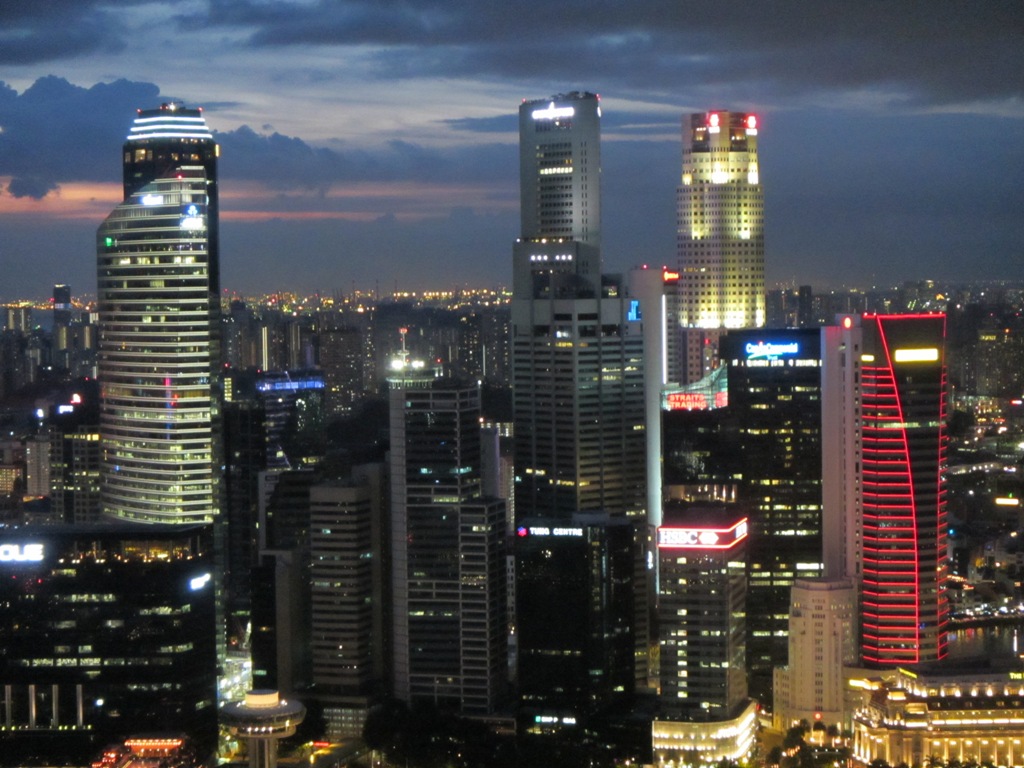
Singapore, whose Chingay parade began in response to the banning of firecrackers in 1972 and is now watched by over 1.5 million Singaporeans. Ten thousand participants, stilt walkers, floats, fire breathing dragons, visiting participants from other countries, all under the neon skyline and slowly rotating Singapore Flyer.

It is exhilarating to see Southeast Asia through a lens of ultra-modernity and prosperity.

— The Professor
 

Yogyakarta, Day 4

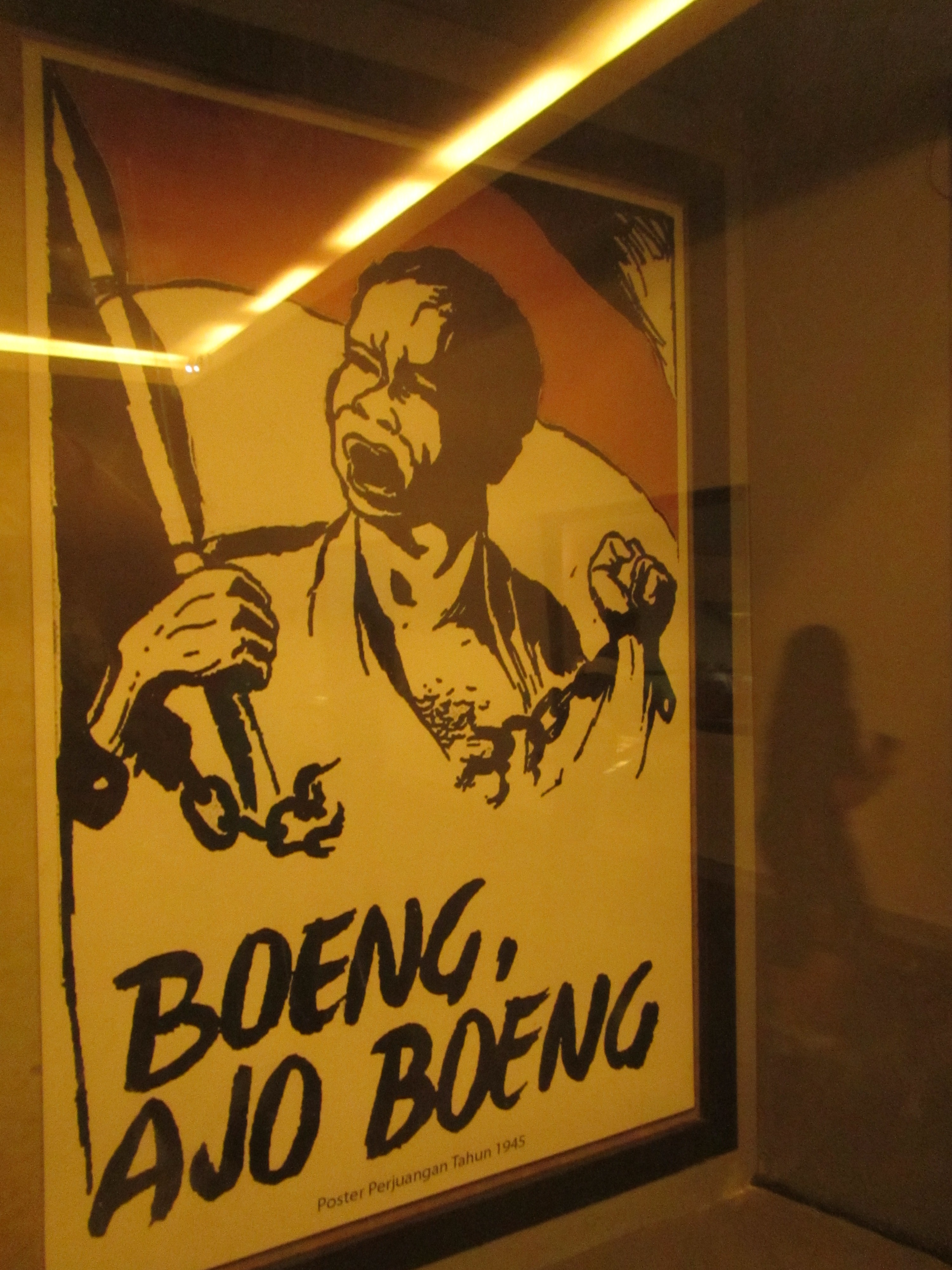
Our last full day in Yogyakarta was an educational one. First, we went to the Benten Vredeburg museum in the downtown. This is an old Dutch fort that was converted to a history museum of Indonesian independence and early national struggles. I really enjoyed the dioramas, which were high quality and probably took someone a long time to make. The stories they depicted bore a heavy stamp of “official history”, but as I was unfamiliar with a lot of the history and appreciated any education, this did not bother me all that much. It is amusing, though, how many were devoted to meetings, a dry subject when taken without the gloss of myth making.

Picture 001

Of course, for the many high-school history students there, we were part of the attraction. We starred in a lot of cell phone photos and made friends with their teacher.

We then got lost for a bit attempting to find the bus to Kaliurang. But eventually, we boarded a scrofulous foam-entrailed minibus which took us to the right village, and we chatted with an pleasant small scale businessman on the way. From Kaliurang, we attempted to board another minibus to the Ullen Sentalu museum. It was going there, but we were going to have to wait another hour for its regularly scheduled departure. Instead, we gave the driver an equivalent $3 to drive there right away.

I really liked Ullen Sentalu. It was up the slopes of the volcano, so the weather was cool. It has beautiful buildings on beautiful grounds, and is a gracious and personal museum of four sultan families of central Java, created and kept by one of those families. Especially charming was the room with many letters to a princess, encouraging her to keep up her strength and happy nature after her parents denied her marriage to her beau. They all had poetic phrases and photos of the sender; the girl’s parents eventually relented.

There is also a great collection of portraits both painted and photographed, an in-depth look at batik, and other quiet treasures. You have to have a museum guide to tour Ullen Sentalu, and ours, Tammy, was a real pleasure to talk to.

Picture 002

Afterward, we caught a cab home and went out for jackfruit curry. I liked the curry just fine, and the fruity pressed tofu quite a lot, but I couldn’t handle the solid fist of organ meat that came with it. Oh well, I just got more tofu.

On the following day, we flew to Singapore. I really like the Yogyakarta airport, which
is a startlingly good place to buy souvenirs. It was much better than Jakarta, where we had a layover.

Singapore began for us with meeting up with our friend Life Is Too Short, who we’d met in Luang Prabang. It was 8:30 pm by the time we were settled and ready for action, so we walked to the nearest hawker stall food court, the Lavender Street one about a block away. I ordered dumpling soup with greens, a plate of bao, and a juice from a fruit I had never heard of before. I sat down with The Professor and our friend, took a bite, and fell in love with Singapore. The fastest way to my heart really is through my stomach, I guess.

– The Private Eye


Yogyakarta and Indonesian Independence

Dear reader, I must be honest with you. I’ve been a bit deceptive in my descriptions of Yogyakarta, relying on the imagination rather than fact. When I wrote that Yogyakarta is unique in Indonesia in that it still has a monarch, a sultan, and that the city centers around his palace complex, called the kraton, I wrote the truth. But when I read those words, I imagine something from myth: gilded domes, brightly painted pillars, courtyards and steps of marble, and a dignified man sitting on a rug, sipping tea, with bodyguards and the smell of exotic spices. The reality is a bit less interesting: a wall, painted white, some streets, mostly western style buildings, and a thin, older gentleman whose father really liked photography. So much more similar to the king of Thailand than what at least my imagination conjures.

Much like the King of Thailand, the Sultan of Yogyakarta is loved by his people. Yogyakarta remains a monarchy because, when Indonesia sought independence in 1948-9, and different regions began to discuss the idea of forming one nation, the Sultan of Yogyakarta was strongly supportive and wanted to join the effort. Yogyakarta was the capital for a short period of time. Because the sultanate was so instrumental to the formation of the nascent nation, it received special dispensation to remain a monarchy. Recently the region had democratic elections, as part of a slow process of modernization: the people elected the sultan with an overwhelming majority,

In the United States, our war for independence was hundreds of years ago. The country has evolved and grown since, but the moment of national birth was before the industrial revolution. For Indonesia, however, this moment was just over sixty years ago, when politicians engaged with other countries, such as the U.S., and students took to the streets to fight the British and Dutch. Indonesia’s war of independence when my father was 9 years old – it still exists in living memory.

One wrinkle to this very recent birth and slow formation of a national character is how geographically and culturally diverse the country is. It is 70,000 islands, from Sumatra in the west to Papua in the east. It encompasses the funeral culture of Tana Toraja, the animistic Hinduism of Bali, the Dani of Papua who first met white people in 1938, and the bustling metropolis of Jakarta. Forging a national identity out of this patchwork of hundreds of previously independent cultural groups is a challenge – the closest analogy I can think of is India, except imagine if India’s regions were islands, and consider the greater isolation that brings.

Our next destination, Singapore, provides an interesting contrast to the path of building a national identity. Singapore was originally part of Malaysia. While there were significant cultural, religious, and political differences between it and the rest of the country, the belief was that seeking individual independence wasn’t feasible for political and economic reasons. But irreconcilable differences emerged very quickly, especially on questions of preferentially treating certain ethnic and racial groups. And so, more like China and less like Indonesia, Malaysia pursued a national identity in part defined along ethnic lines, leading Singapore and the rest of the country to part ways.

But unlike the tenor this idea takes in Europe and the U.S., where discriminatory policies are typically conservative (seeking to maintain the status quo), in Malaysia they are intended to change the status quo and build a Malaysian middle class to stand along side the wealthy other ethnic groups (e.g., Chinese). So more similar to some of the policies in Latin America.

These thoughts are jumbled and incoherent, mostly because I need to read more – these are based on impressions and observations whose supporting facts might be incomplete or incorrect. The world is more stable than it was just after World War II, but many nations are still figuring out a place and identity since their birth and creation, whether it be Indonesia, India, or Israel. An example I should look at is Italy and Garibaldi – something which I will most definitely do when visiting The Medieval Scholar in Siena this June.

— The Professor


Yogyakarta, day 3

It was important to me that we come to Yogyakarta because it is the first place I have been where I felt that I was really in Indonesia – not vacationland like the Gilis, and not a place whose identity is so distinct (Bali) that you don’t really feel like you have been to the bigger nation. Not coming here would have felt like I had gone to Hawaii and then claimed I had seen America.

But Yogyakarta is also a vacation place, only it is a place for vacationing Indonesians. As far as I can tell, it is like coming to Philadelphia and viewing The Liberty Bell, other historical sights and the art museums. Families, the women with sensible headwraps and skinny jeans, ride in the horse carriages to the museums. (These carriages are bigger than they were in the Gilis, seating up to six or 8 people, and some of them are drawn by tall horses rather than dainty ponies.) Couples and singles ride in the becak, bicycle carriages with the driver in the rear of the vehicle. Like us, they visit the sultan’s palace, watch the traditional dancing (similar yet different than the Balinese), and visit the museums and the sights.

Of course, there are people who live here, and lots and lots of university students.

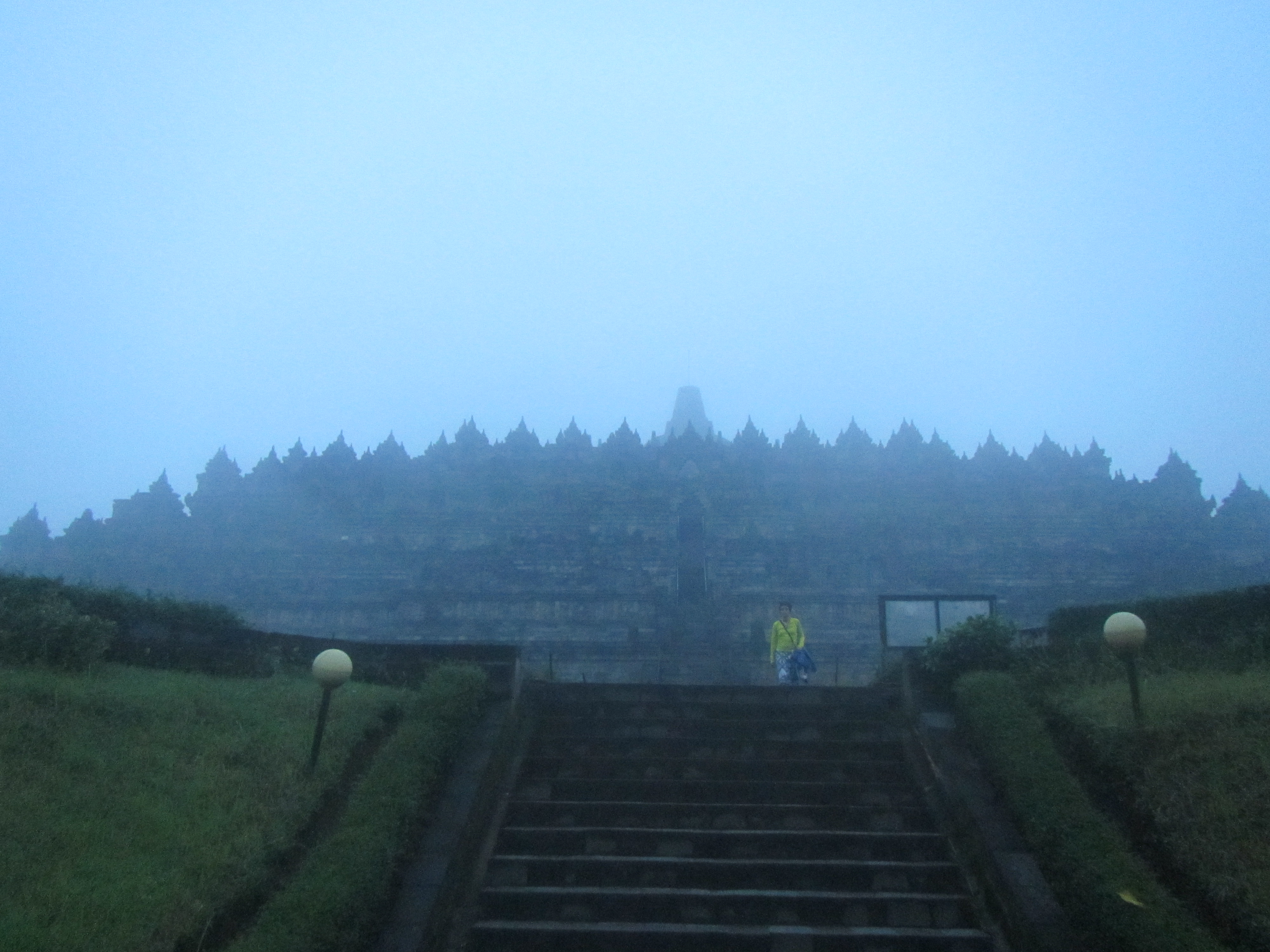
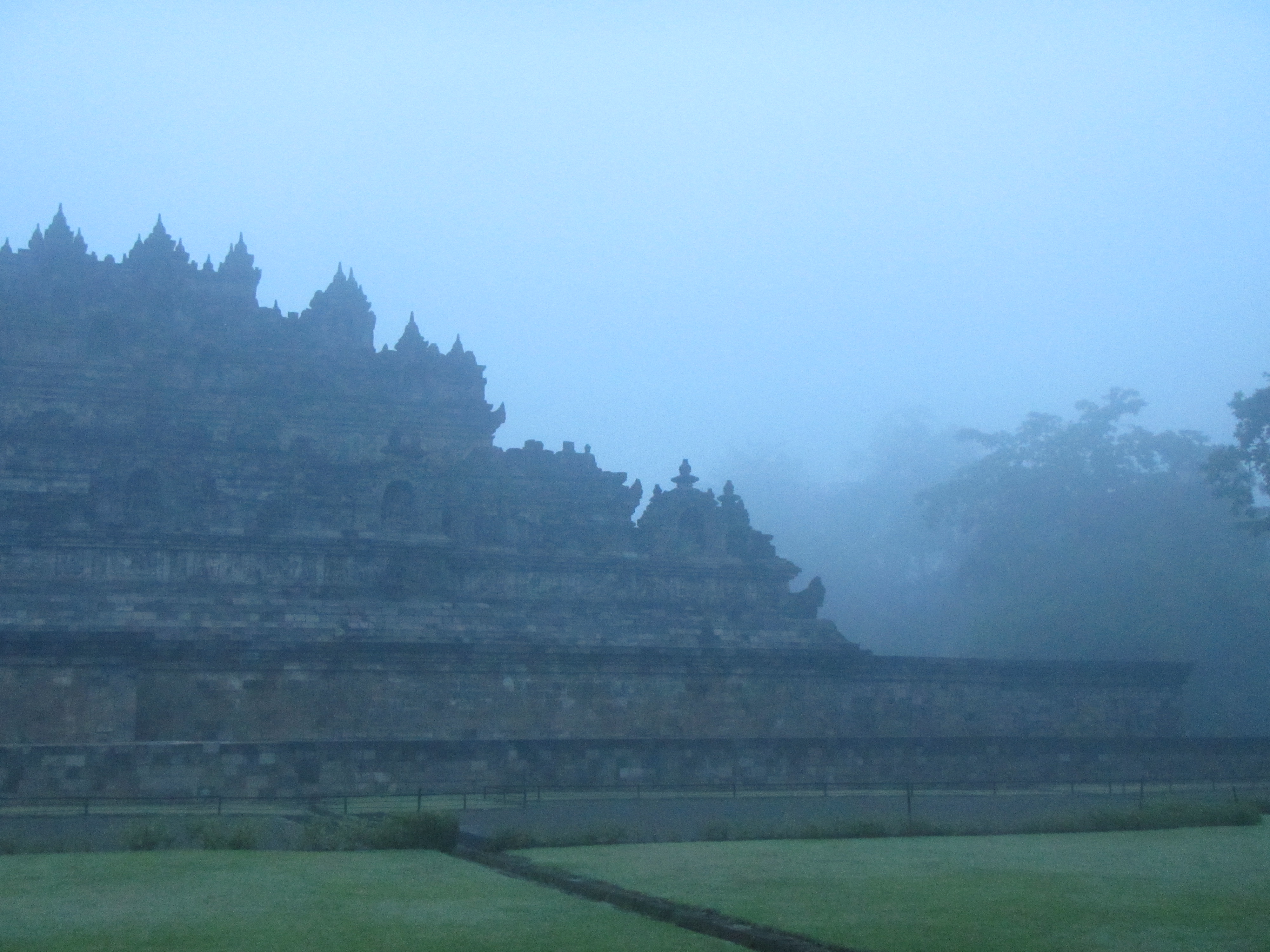
So yesterday, we got in a white Landrover type vehicle with a driver, and headed to Borobudur for the sunrise. Borobudur is a ruin whose shining moment was brief – built in the 700s or 800s AD as a great Buddhist center, it was basically abandoned after a local regime change both political and spiritual. Now, unearthed from volcanic ash and restored, it is a tourist attraction for both foreigners and Indonesians.

It is magnificent. We booked the “real sunrise tour” at our losmen (hotel), which meant that our tour guide paid a hotel located on the grounds of the monument to let us in before the 6 am official opening hour. We arrived at 5 and were each given a sarong and a flashlight, and went in a group of about 30 people, in the dark, to the walls of the giant stone structure. We were walked a few levels of stairs up, shown the best sunrise-viewing site, and left to our own devices.

Yogyakarta 010Yogyakarta 011

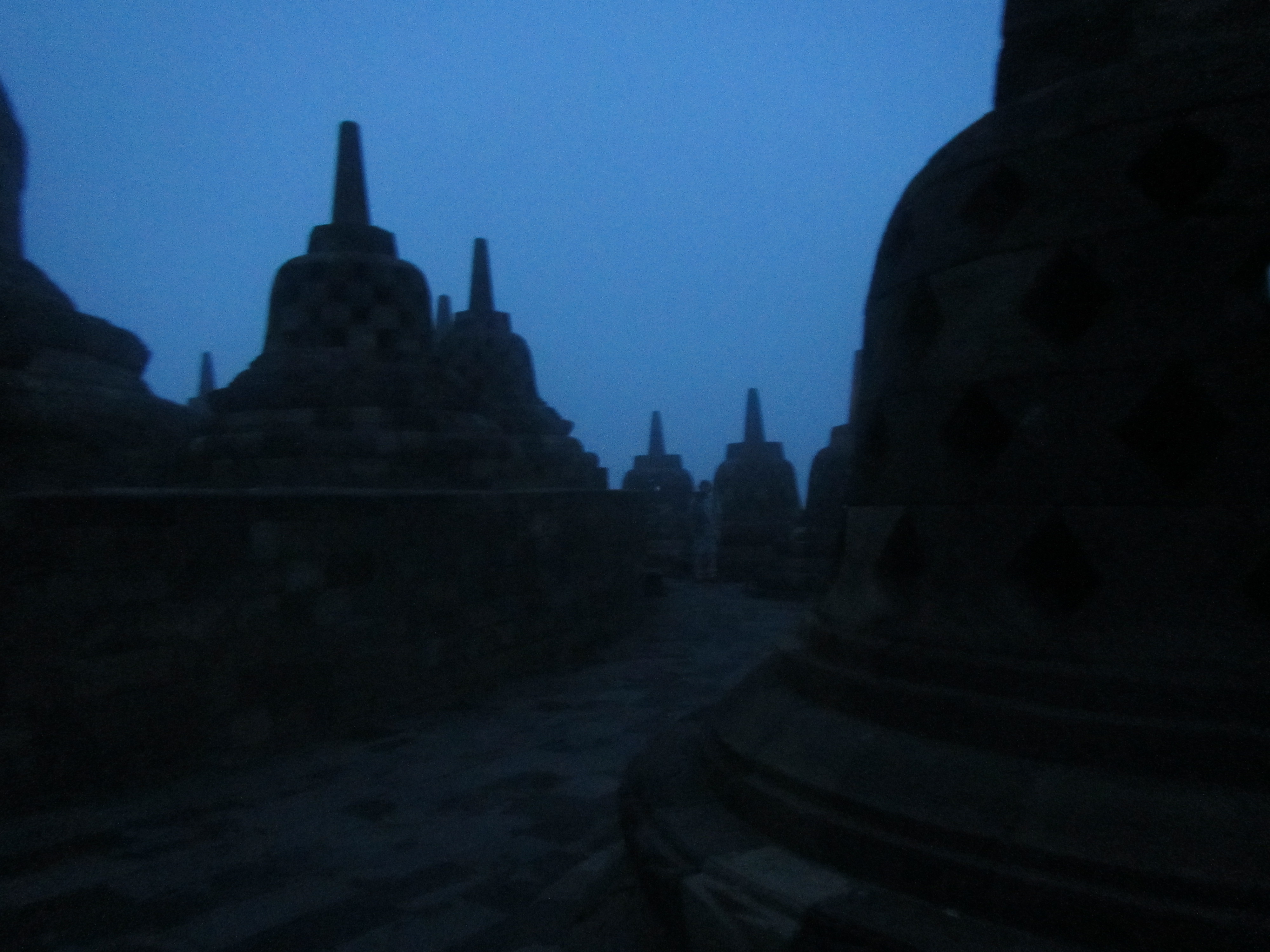
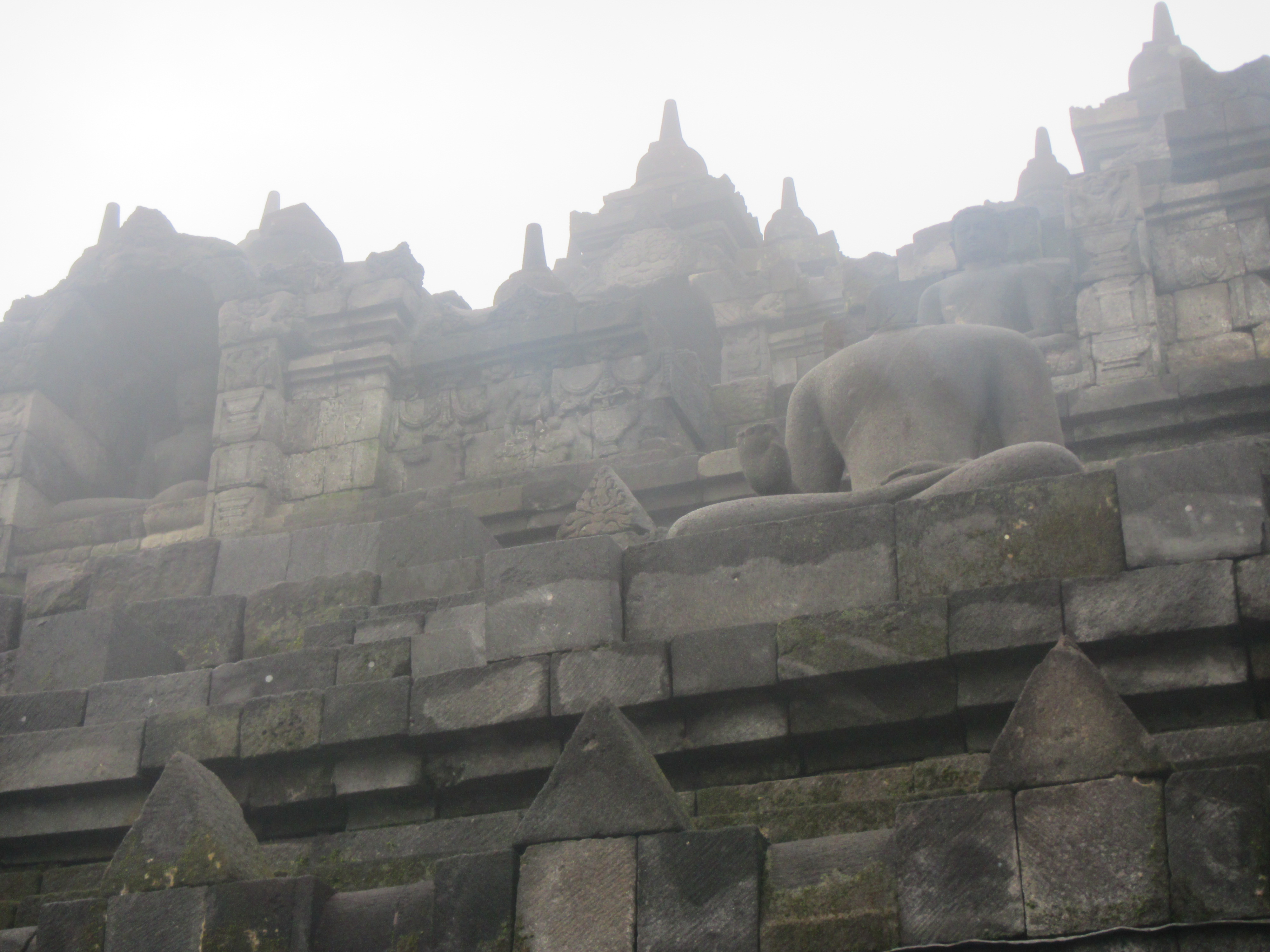
Borobudur is like a giant stone wedding cake, albeit with the bottom levels square and the three upper tiers circular. At the top rests a giant stone onion (stupa), surrounded by smaller such shapes on the penultimate tiers. The entire thing is covered in astonishingly detailed stone carving, most depicting the life of the Buddha, but some showing what look like scenes of regular life – the books tell me that some of these show carnal desires to be overcome and others depict doctrine, but I don’t know enough about that to write intelligently on it.

Yogyakarta 015Yogyakarta 016Yogyakarta 017

We quickly figured out that there would be no golden dawn for us, as it was overcast. Instead, the Professor and I started wandering the narrow walkways of the monument clockwise bottom to top. We were almost always alone, and this was why we’d paid the extra money for the “real sunrise tour”. It was glorious, and even more so after we saw that the monument’s airspace is home to dozens of swallows on the wing. I don’t get tired of these birds ever.

Yogyakarta 014Yogyakarta 019

Afterwards, I was pressed into buying some postcards, but as I had wanted to anyway this was no big deal. We walked through the grounds and then ate breakfast in the early-entry hotel, and then it was off to Mendut temple for a quick visit, and then on to Prabanan. On the way though a beautiful country of rice fields and misty mountains, I told our driver that we had never eaten bakso, a food remembered fondly by President Obama. We decided to get some lunch after Prabanan.

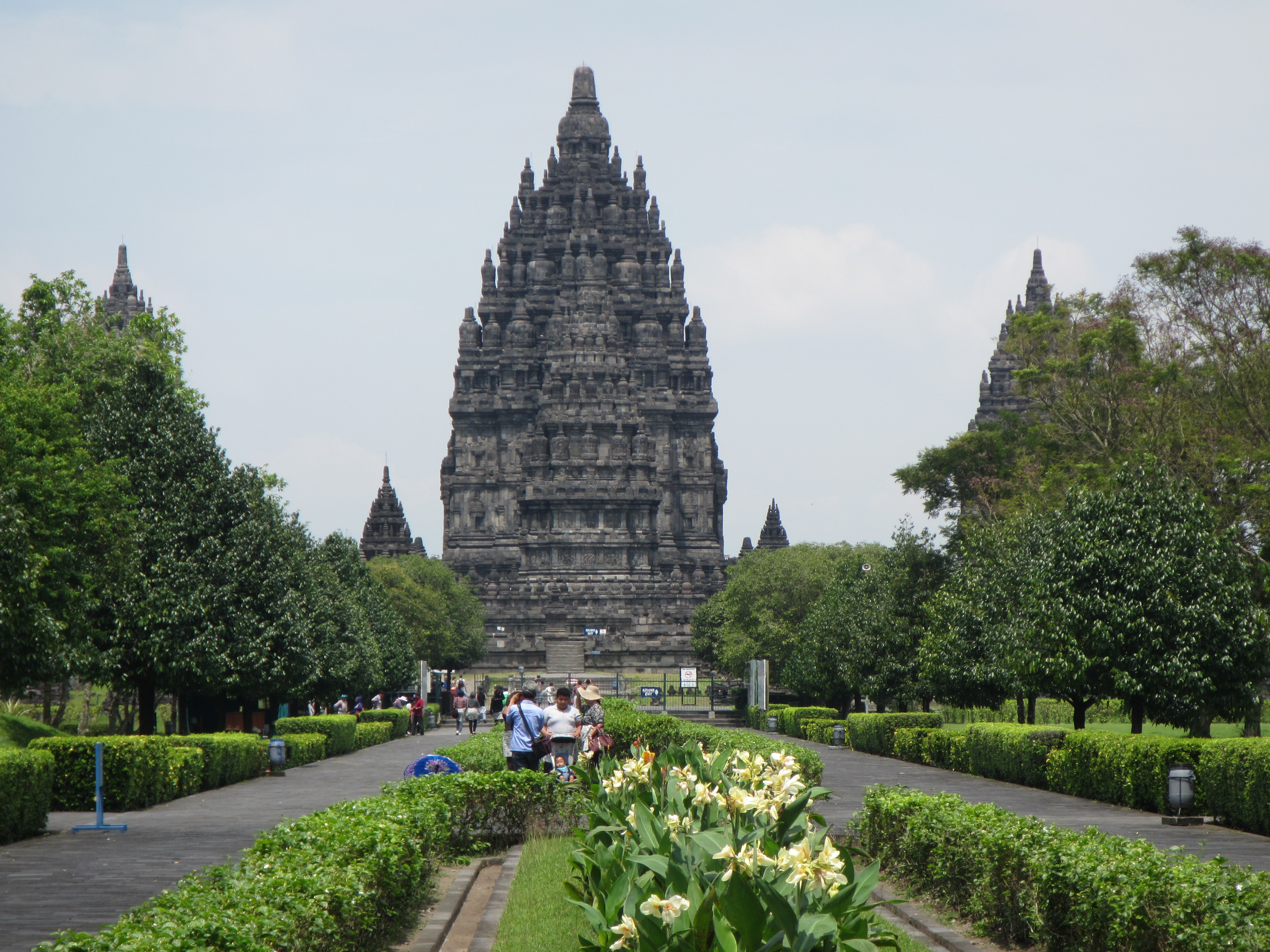
Prabanan is the Hindu sibling of Borobudur, built roughly contemporaneously and likewise abandoned swiftly after a similar regime change, both spiritual and political. Instead of one large building, though, it is a temple complex with separate structures for Shiva, Brahma, Vishnu, etc. We could go inside most of the temples, though we had to wear a hard hat for one of them, as they are working on structural repairs following the 2006 earthquake. The carvings are amazing and as you would expect a lot more fun than the Buddhist ones – multi-armed Kali, monster mouth doorways and mustachioed men abound.

Yogyakarta 021Yogyakarta 024Yogyakarta 025

It is as good a point as any to mention that I have found the mode of dress and presentation among the Javanese to be singularly sexually dimorphic, more so than other places we have been. Women (whom I tower over with a few rare exceptions) seem very … womanly, with small hands, small feet, a neatness and cleanness about themselves. Oh, and headscarves sometimes. Men have shirts cut close to the body, mustaches, white eyes and teeth, and handsome faces full of confidence. They roll their r’s here.

Anyway, we toured the temples for about an hour and a half, and then we and our driver drove to a bakso joint on our way home. Turns out that bakso is meatball soup with noodles. It was, like a lot of Indonesian food that we have tried so far, homey and satisfying rather than spectacular. I like the food here a lot and have never sickened on it, but it is not exciting the way Thai food is.

Despite our early rising, we got a second wind on our way back and so went to the Affandi museum, which we had been to the day before but found it closed. This time, we got a delightful (free with admission!) tour of the artist’s work, which is housed in his own home compound. The buildings are all a shade of robin’s egg blue with curved walls and a roof/ceiling style reminiscent of a banana leaf. He apparently felt that being covered with banana leaves had protected him in early life, and had used them to protect his paintings when he was a poor student.

Yogyakarta 027Yogyakarta 026

I had wanted to see this museum because Affandi is recognized as one of Indonesia’s great modern painters, and his style clearly has left it’s mark on the local scene – at least judging from the paintings we saw in our hotel (which is run by an artist) and also in Bali. But I was most glad that we saw his work after we had visited Borobudur when we got to the third gallery. There, among the sketches, was one of his wife napping at Borobudur’s lovely grounds. Other sketches showed details of Prabanan’s carvings. I loved seeing the evidence of his family’s gentle visits to these monuments, as it made me feel connected somehow to this foreign artist who is no longer with us, and in a grander sense, connected to the world.

We finally went home and napped for three hours, then ate, foraged for middle eastern pastry for dessert, and then returned to bed. It was a happy day.

– the private eye


Yogyakarta – Days 1 and 2

Oh, the batik salesmen of Yogyakarta. They seem so friendly, so hospitable. “My friend! What is your name? Where are you from? When did you arrive? Where from? For how long will you be in Yogya?” But once such pleasantries have wound down, they cast their line. “Oh, you arrived today? You are lucky, it is the last day of the student art exhibition, which has a lot of batik!” Because, you see, their eyes and posture tell you it is so sad, a veritable tragedy, how poor the batik is in your country, and so it’s really your duty to bring some home.

We’ve been trying to come up with a fun way to respond, to play along and pull their chain once it’s clear they’re trying to cheat you. The one I want to try involves reading up a lot about the art and then telling the person I’m a connoisseur, in fact a professor at a prestigious American university, an art professor who studies batik and so yes, can truly appreciate and discern a fine piece of batik. Of course, they might see this as raising the stakes – if I’m that, yet so clueless to talk to them, maybe they can make a HUGE sale… We will see. Either that, or be completely clueless on what batik is and then tell them that I don’t understand why you’d ever want cloth with patterns on it.

Our first day was a mix of reading in the guest house lobby waiting for our room to be ready, then venturing out to Jl. Malioboro (named after the Duke of Marlboro) to see the market.It had a lot of batik, of course, front and center. But in the back, there were also spice and food merchants, huge bags of cinnamon and turmeric, bins of star anise, cloves, and cardamom, all filling the rain-humid air with such wonderful smells. And, of course, head scarves:

Indonesia 011

The Private Eye commented that she’d like a guide: some of the foods, such as dried, thin disks of some starch that were everywhere, were foreign to us. And as she finished her first durian juice, her prayer was answered. A man named Aldi started chatting us up. He is a spice merchant, and started telling us about Sultan’s Tea, also called garbage drink, but not for its flavor, rather that when prepared the many spices floating in the tea make it look like flotsam and jetsam. As we walked back to his stall, we asked him about the different foods and he answered all of our questions. He then sold us two packets with which to prepare Sultan’s Tea, which include ginger, bay leaves, cinnamon, and a half dozen other spices. They were about 90c each; even if a total rip-off, I’d gladly have paid $2 for the time talking with him. We tried Sultan’s Tea tonight at dinner and it was great, sweet and spicy, so we will have to break open one of the packages sometime soon.

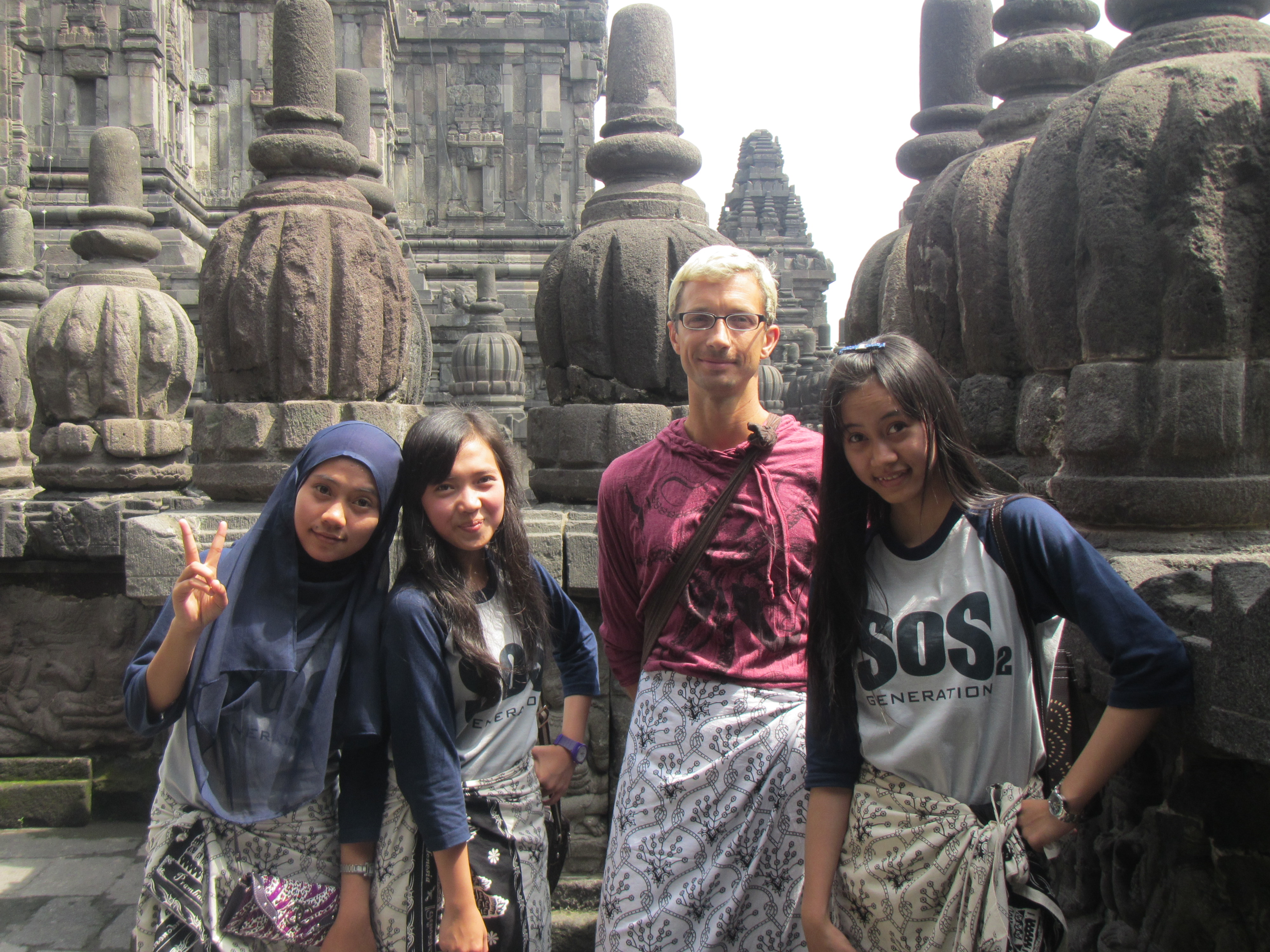
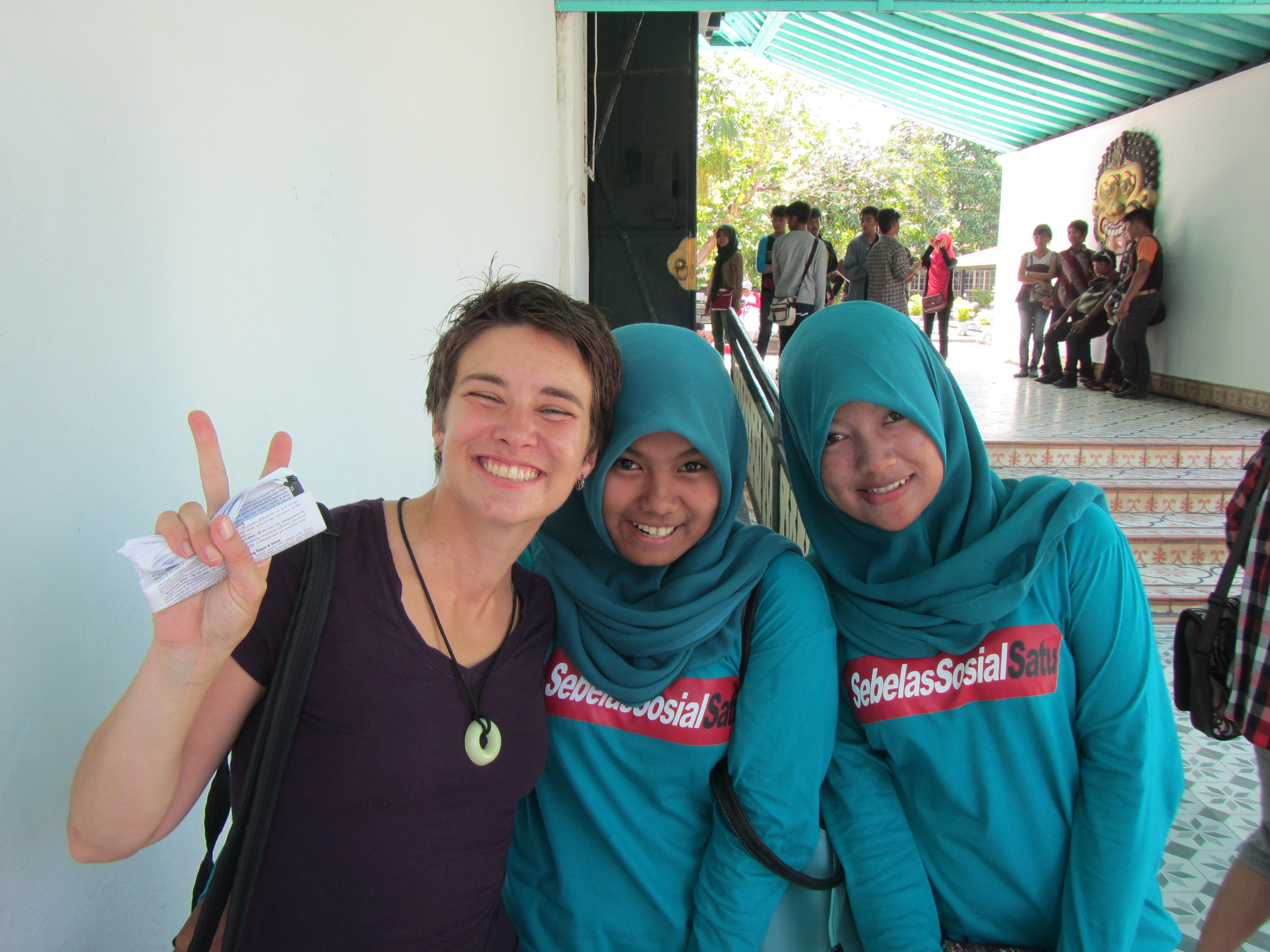
Today, we went to the kraton, the large walled complex that encompasses the Sultan’s palace. We also ventured to the silversmithing village/neighborhood a few kilometers away. At the kraton,we encountered a first, something which we’ve experienced at every tourist destination in Yogyakarta: we are one of the attractions! Teenagers, generally school groups, ask if they can have a picture with us. We usuallu say yes, except when there are so many (and have so many cameras they need to switch between so everyone gets a picture) that we don’t seem to be seeing the sights anymore. Sometimes we ask if we can have a picture too:

Yogyakarta 007

Yogyakarta 020Yogyakarta 023Yogyakarta 022

In all honesty, though, today was more about the transportation than the destinations. We rode in a becak, a two-person seat pushed by a bicycle, in our case ridden by old, gnarled and wiry men who could read the traffic so well that they never used brakes yet were always completely safe.

Yogyakarta 005

I liked the idea of transportation infrastructure that puts its providers in good shape. We rode the bus and, with the help of a man from Holland who used to live here but now just visits, figured out a transfer – no matter that our destination, the Affandi museum, was closed. Then the rain began, and we hid under a tiny tarp with three teenagers running a coffee cart, where we had two cups of coffee, two small bundles of rice and chicken, three egg rolls, and a few other fried goods, for R12,000 – around $1.50.

It’s hard to say much about Yogya just yet – while there is tourism here, it seems much more a working city, and so the culture is not as on display. It also means the division between tourist and local is much thinner, such as sitting in a donut shop that is a Starbucks clone, surrounded by Indonesian couples and friends chatting. Tomorrow we wake at 3:45 to go see Prambanan and Borobudur, enormous, beautiful Hindu and Buddhist temples. We have booked a flight Wednesday afternoon to Singapore, where hopefully we will connect with Life Is Too Short, as well as the Singaporean man we met on the bus to Chiang Rai from Tha Ton.

— The Professor
 

Kuta to San Francisco noobs: FAIL

Our last full day on Gili Trawagnan was Thursday the 14th. Over breakfast at Bale Sasak, we met The Wine Label Designer, who lives in Napa. After a bit of chit-chat, we agreed to have lunch together. He had just arrived on the island, so we gave him a bit of information on how to get around and fun things to do. We then parted ways: we watched an episode of Homeland in the height of the afternoon heat, while he went paddle boarding. After watching the sunset at Exile one last time, where we had an interesting conversation with a local who helped start one of the three major bars on the island. He talked about island politics and some of the recent legal issues as well as methanol poisoning. We met up with The Wine Label Designer again for a drink at Surf Bar, whose young proprietors were actually a bit obnoxious. But they let us play our own music so we all listened to The Black Keys for a bit before The Private Eye and I decided to turn in.

Denpasar airport is actually much closer to Kuta than Denpasar. Since we have a 6:05AM flight to Yogyakarta, we thought spending one night, a Friday night, in the famous/infamous Kuta was a good idea. Kuta is kilometers of beautiful beach that’s pretty good for surfing: it’s where Bali tourism and vacationing began. These days, it’s a long strip of clubs, minimarts, tourist-friendly restaurants, bars, and little stores hawking touristy wares. People traveling to Bali for its culture avoid it like the plague; people traveling to Bali to dance, lounge on the beach, and party love it.

After a 90 minute boat ride from Gili Trawagnan and a 2 hour van ride, we arrived in Kuta and booked a room. We had a nice conversation with a Londoner who was traveling with two of her girlfriends. She had a lot of interesting travel stories, but the conversation was also a little sad. She found out that there had been a bunch of layoffs (redundancies, in British parlance) at her work while she was away and didn’t know whether she was one of them. Based on a conversation she had with her boss before she left (“While you’re traveling, think about what you might want to do next…”) it seemed pretty clear she probably was, but she hadn’t connected the dots. We both stayed mum on our independently reached conclusions.

I had scraped my foot on a rock in the surf when snorkeling on Wednesday, and a torrential downpour had left large standing pools of water in many of the side roads on Gili Trawagnan on Thursday night. I ended up having to step in a few of them, and despite using iodine and alcohol before bed, I woke up Friday morning with the scrape a bit red and tender. So as soon as we arrived in Kuta and had a room, I headed to a clinic to have the scrape cleaned and dressed as well as receive some antibiotics. Once that was complete, we wandered the alleys a bit for dinner, followed by watching the sunset on Kuta beach. Walking back to our room, we came aross a restaurant with fire dancing to thumping techno and so stopped for dessert, then finally made a few sprints between covered alcoves when the downpour momentarily receded.

So where to go for some music? We surveyed the options and decided on first walking to Kuta’s main drag to hear if there was anything good. If not, then we’d try a place called Deejay Club that would be a very short cab ride away. If none of those panned out, we’d head to Seminyak (a much longer cab ride), the upscale version of Kuta, where The Wine Label Designer said he thought we might like.

Kuta’s strip (Jl. Legian) was a bit boring and crass – The Private Eye actually saw a guy grab a drunk girl and grope her (unwillingly); she broke it up. After that, we walked much more closely together, listened for a bit at the one place that sounded promising, and decided to move on to Deejay. After fending off an irate taxi (but not Taksi) driver who claimed nobody uses meters on Friday night (hint: if they become angry they are probably lying), we found a respectable taksi, arrived at Deejay around 12:30, and found out it didn’t open until 1. Later that night, taking with a woman with excellent English, we found out Deejay is where people go after the regular clubs, because it’s open until 11AM.

But our taksi to the airport was at 4:30AM, so we didn’t want to hang out for half an hour in a kinda dirty and quiet alley for the late club to open, given we wouldn’t be able to stay for when it would get going. So one more taksi, this time to Mint in Seminyak.

But oh, what San Francisco fools we are. You see, these are the upscale clubs. You know, the ones that successful people in their thirties go to. That means they have a dress code. Psylo shorts and a tank top don’t make the cut – sleeves at least, collars preferred, leather shoes appreciated. So we wandered around a bit, realizing the intersection of good music and would let me in was the null set. Especially frustrating given I could have worn appropriate clothes but didn’t know. After weighing our options – three more taksis to go home to change, come back, then head home, seemed like too much. And so, we San Francisco noobs, to whom dress codes are completely foreign, utterly failed to dance.

And so, 90 minutes of sleep later, now we are on the flight to Yogyakarta, which was momentarily in danger of being rerouted to Eastern Java due to fog but is now starting its descent. The guidebook says the greatest danger in Yogyakarta is slick batik salesmen who rip you off; if that’s the seamy underbelly of this town, it sounds adorable.

— The Professor


Gili Air

Our overnight on Gili Air was pleasant. It is like Gili T, but much smaller – not cheaper, and not geographically smaller, but far fewer crowds and almost no hawkers. The number of tourists per resident is much lower. Still lots of restaurants and the like. The west of the island is farms plus bungalow establishments, no stores.

I will be brief – we went there for music and hippie culture, but were charmed by the rural beauty of the backside of the island. It’s a bowl of endless blue looking seaward, and an emerald niche of coconut palms, grasses and scores of golden dragonflies looking landward. Swallows cut through the air in front of you at a steady rate. On the eastern shore, the views of Mt. Rinjani on Lombok are wonderful in the morning, before the clouds hide the mountain. We met a lovely couple – him an artist, she a midwife – on a little bohemian family vacation, and that seemed about right for the place.

There are more mosquitos than on Gili T though. Keep that in mind if you get a room there!

– The Private Eye