I awoke under the mosquito net in our little room with the walls just above face height on me. The door was a piece of cloth and ripped screens formed the remaining top two feet of wall, but we had a bed frame and a little bit of privacy, so it was the most luxurious room of the week. It was 5 am, and the sound of the winter wind was powerful, waking me with confusion.
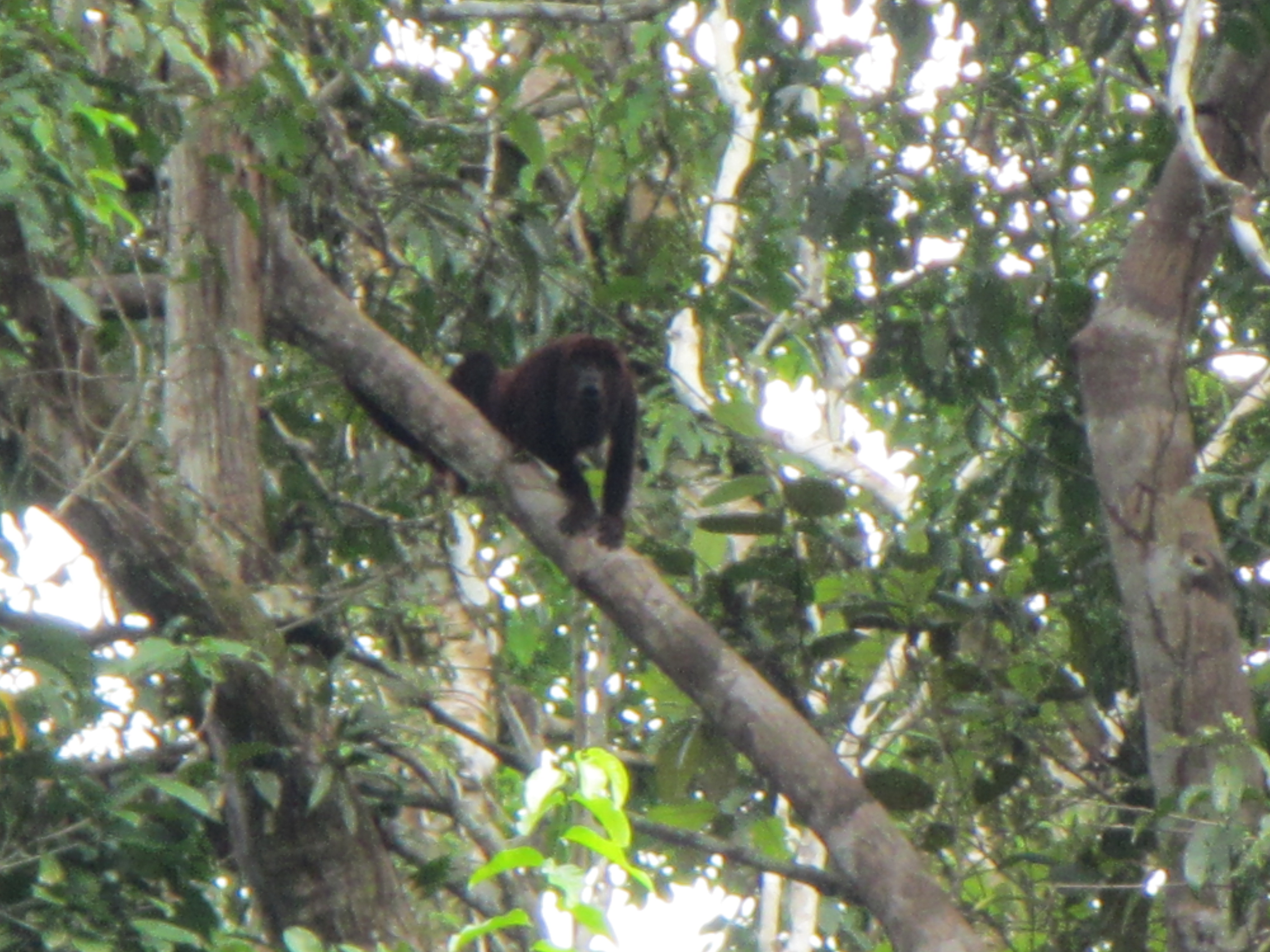
It was not really a blizzard-bringer. It was monkeys. Red howler monkeys. The sound was uncanny.

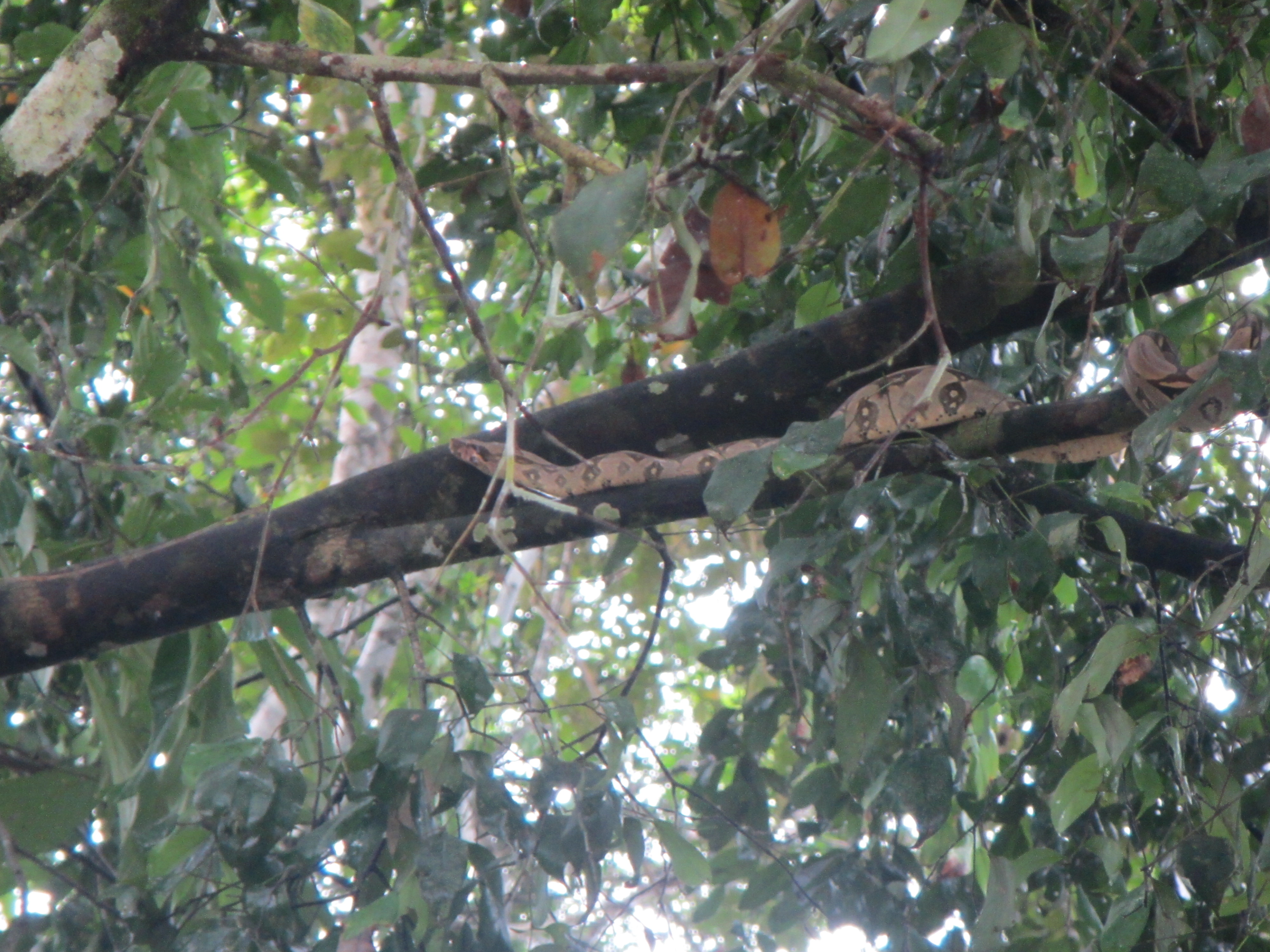
Before breakfast, Señor summoned us out to the canoe, and we paddled until we were just under a tree. “Mantona,” he said. It was some kind of constrictor. It eats baby monkeys, among other things.
We returned to the cabana, where Señora was making us tortilla de huevos, an egg pancake with tomatoes, onions, MSG salt mix, and paprika salt mix, combined with wheat flour. She was unfortunately not feeling well, so Señor made her a traditional remedy of a local raw chicken egg, sugar, chicken bouillon, and condensed milk. It is important that the chicken egg be local and not from the supermarket, he told me.
Señora still looked quite miserable afterwards. Some time later, I came into the kitchen and asked how she was faring, and she told me she was in pain. I asked if it was the headache, but she said no, it was emotional pain. It turned out that she and her husband had suffered the untimely death of their adult daughter some seven months ago, while they were in fact on the river guiding. I expressed my sympathies, and imagined how hard it must have been. There are no cell phones here, and the only form of outside contact is through the official radios at the government outposts, and some but not all of the way station cabanas. Señor and Señora are presently raising this daughter’s son, along with a few of their younger children.
We took to the river again, and soon saw our first sloth! It was high in a tree, so slow it was hard to tell it was moving. We saw another eagle, and little toucans on the wing, and an animal called an “achouney” that I still have yet to identify. It looked vaguely like a coati. We also saw the “tijuanguro” (please don’t rely on my spelling), a bird who gives a special call when the floodwater starts to rise, or so Señor said. I dubbed it the “ave de las noticias,” or newsbird.
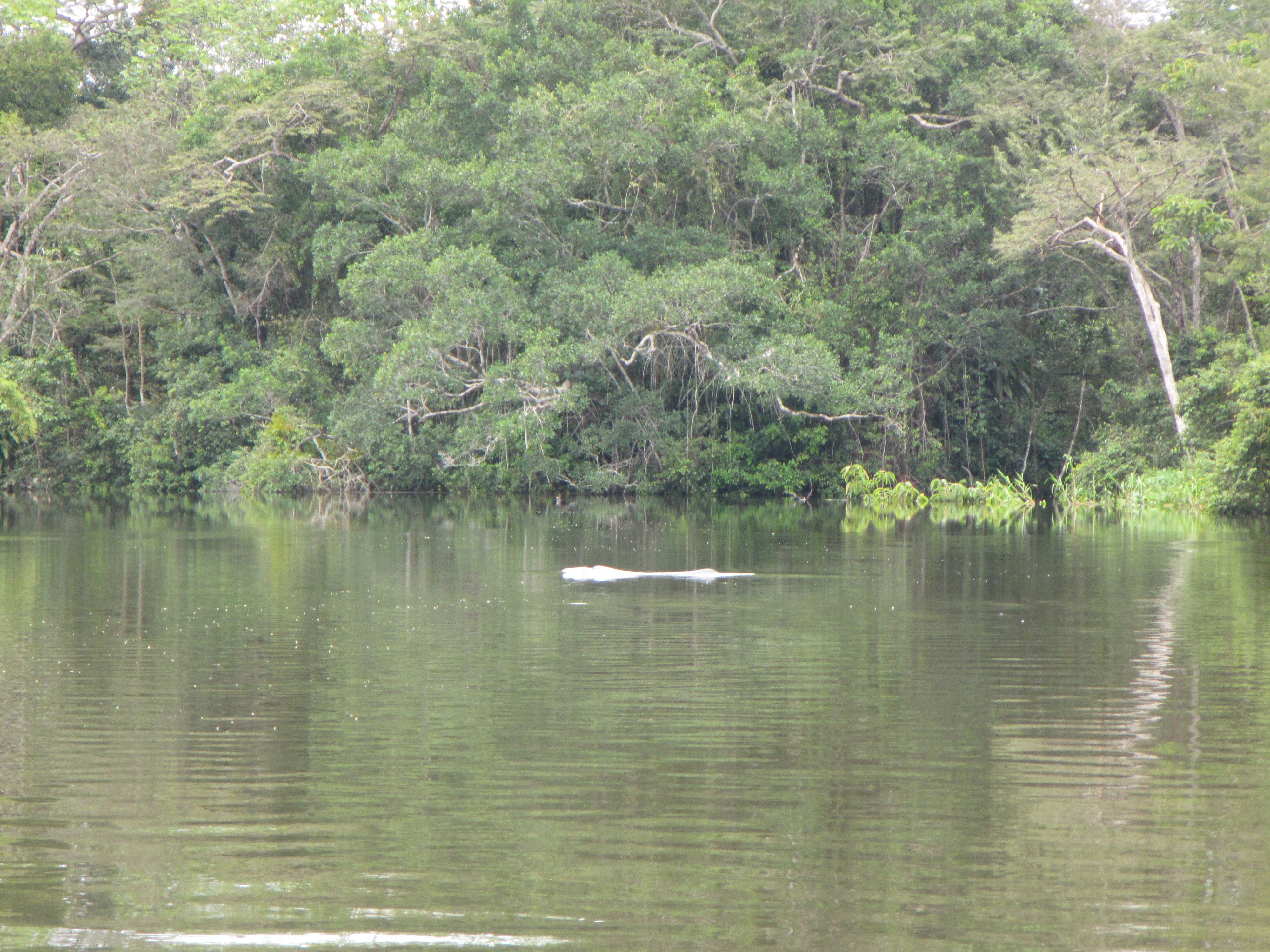
And we saw pink dolphins. Around a dozen, as soon as we rounded a bend into a deep water oxbow lake. They live there at this time of year, and are not seen during the dry season, Señor told me. He also explained to me that they are people, and that was easy to believe. They surfaced to breathe with a sinuous motion more akin to a human swimmer than the straight-necked shuttle of the surfacing sea dolphin. It was hard to tell what they were doing beyond surfacing, as this part of the river was nutrient-rich whitewater, the color and opacity of chalky mud. But several times they seemed playful, leaping full-bodied out of the water.
I, of course, was in heaven, but they made our guides nervous. Señor told me that the bufeo Colorado is dangerous to women, that they will grab women swimmers and try to separate them from their men, in order to have sex with them under the water. He said that it was reasonably safe on the boat, but that he would not stick around to watch them for more than an hour or so, and that it would be bad if Señora or I were menstruating.
They were not entirely pink. Rather, they were particolored like a human with dual pigmentation, part pink, part gray, and freckling between the two. A few times they seemed to be following the boat. The group contained both male and female dolphins, Señor said.
That night, we bunked at a ranger station, which was also a wooden building on stilts, but with wooden walls from roof to floor, a door, a tin roof, and a radio tower. I took my first river bath here, wishing I had brought some soap that was more environmentally friendly, but since apparently everyone both washes and does laundry in the river, I got over my guilt. The Professor told me that given the volume of water here and the small scale of the use, we weren’t likely hurting anything by washing.
As evidence of the health of the river, we ate fish for nearly every meal, cooked by Señora. She is a great fish cook. We ate so many kinds of fish, and I sadly can’t remember their names, except for the piranha of course. Generally they were fried, which was my favorite, but sometimes cooked whole in various ways. Fish generally was accompanied by multiple starches, generally cooked bananas and rice. Sometimes we had a little salad of cabbage, tomatoes and onions. It wasn’t the same food that our guides ate, as they preferred fish in broth with yucca.
– The Private Eye
 The Professor and the Private Eye: Adventures Abroad