RSS

Monthly Archives: March 2013

Day 3 in La Selva, March 18

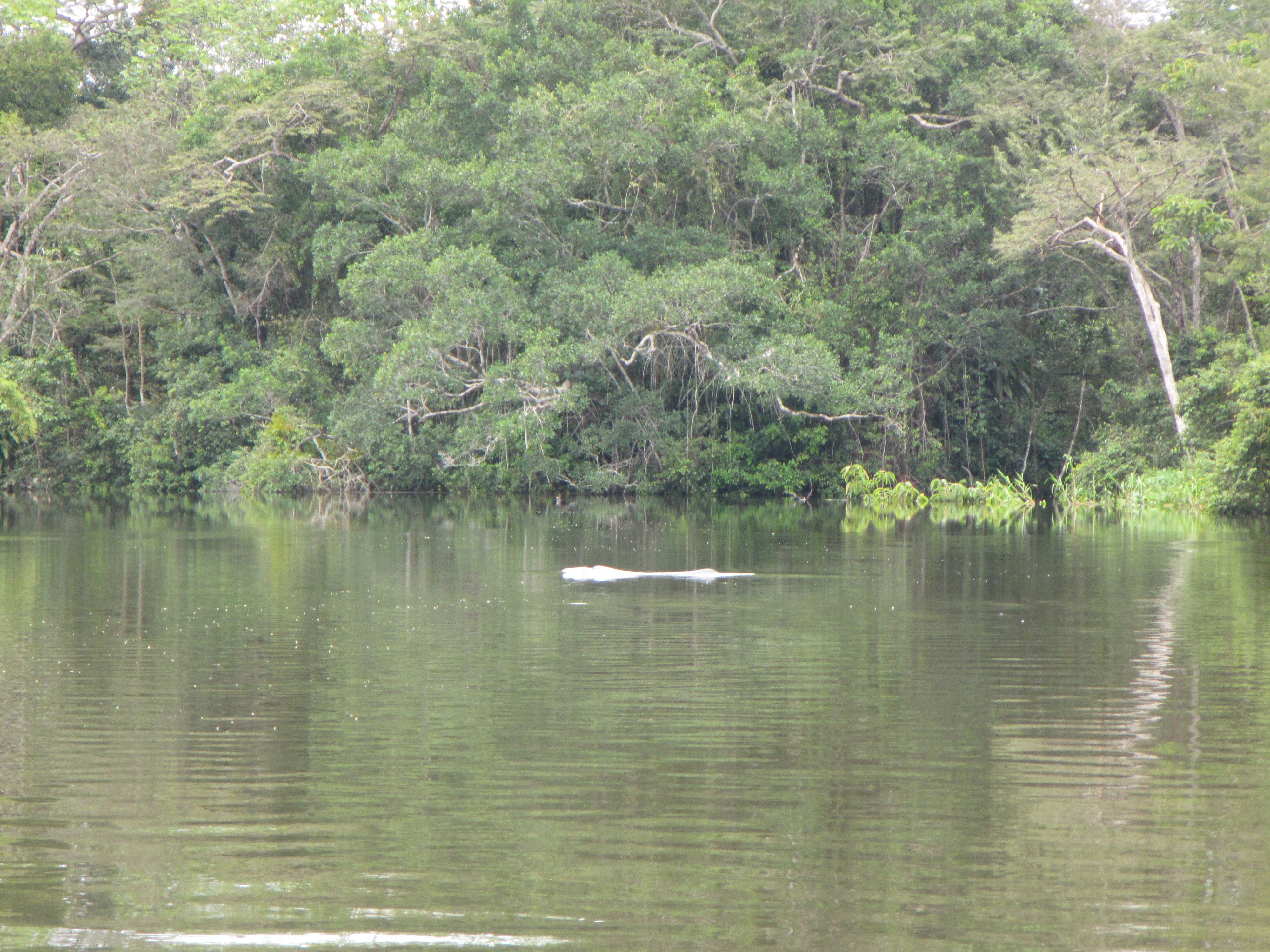
We started our third day in the rainforest with good things – a bunch of fish in the net for later, sloths stationed really close to the river, a few bufeo dolphins on the water. But then we had an accident – while we were passing under a low tree branch, Señora hit her head and fell in the water. She grabbed the branch to keep the current from dragging here along and climbed back into the boat with no problems.

But afterwards she had a wretched headache, and had gotten water in her ear. Señor was worried about her until we stopped for lunch, as was I. I gave her some of my ibuprofen for her headache, and she was incredibly grateful. I realized how much further off the beaten path we were than places we had been before. I realized that there might not be a pharmacy in Lagunas, and that Señora maybe couldn’t afford even mild, over-the-counter pain medicine if there is a pharmacy. I realized that it was a good thing that the Professor and I had our own first aid kit, because our guides’ kit probably consisted of what they could glean from the rainforest. Which I am sure is a lot, but apparently doesn’t include painkillers. Or mosquito repellent.

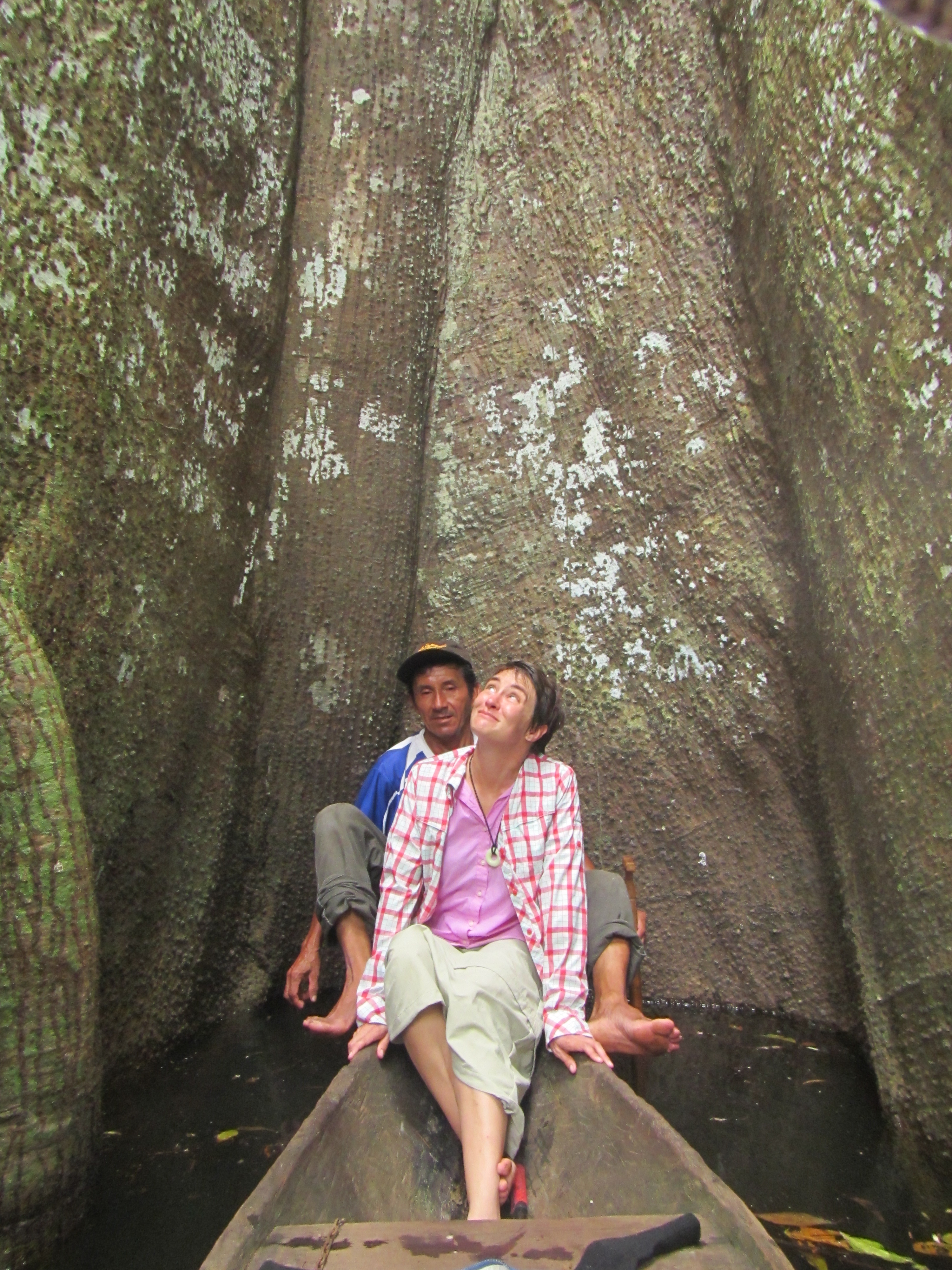
Things got better after we viewed an enormous tree in the middle of the flooded forest. Señora seemed happy to show us the tree, and was perkier. We even backed the canoe into its crevasses for photos, which unfortunately caused the Professor to get many, many bug bites. Señora had, the previous day, washed his clothes in the river (she offered), and we surmised that the vigorous scrubbing might have scrubbed out some of the built-in permethrin. But looking up at the giant trunk from between its buttressed roots was, in fact, very neat.
IMG_3094

Heading back into the main river, we traveled on. We saw a hoatzin, a fascinating bird whose young retain two claw fingers on the bend of their wings (!) for clambering around on vegetation. They lose these claws when they mature, but still look awfully prehistoric. They only eat leaves, and smell bad, which saves them from human hunting.

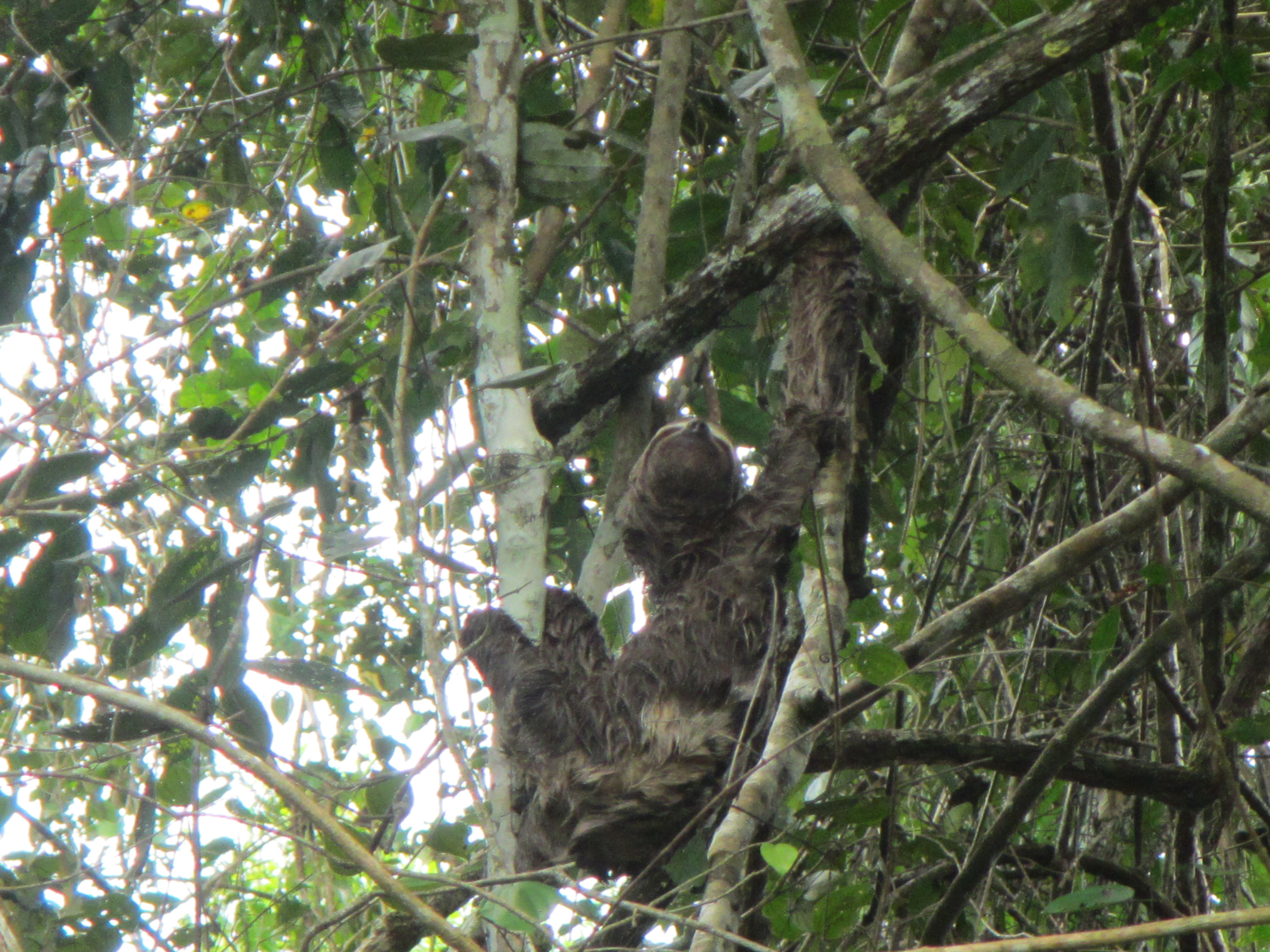
When we were almost at the end of the day’s journey, a sound of a fountain of liquid caught our attention. We backed up the boat, and sure enough, it was a sloth hanging from a branch with only its two hands, noisily eliminating into the river while keeping its own person relatively tidy.

IMG_3086IMG_3100

Sometimes, traveling on the river, I felt as though I was in the midst of an animated movie montage, probably Disney, where the heroine sings about how wonderful the world is, and the animators set out to dazzle you. I mean that it was a parade of macaws, parrots, butterflies and monkeys, with the occasional dolphin for a big crescendo. As we passed close to branches poking up out of the water, dozens of tiny vampire bats would fly away in a burst. It was magical.

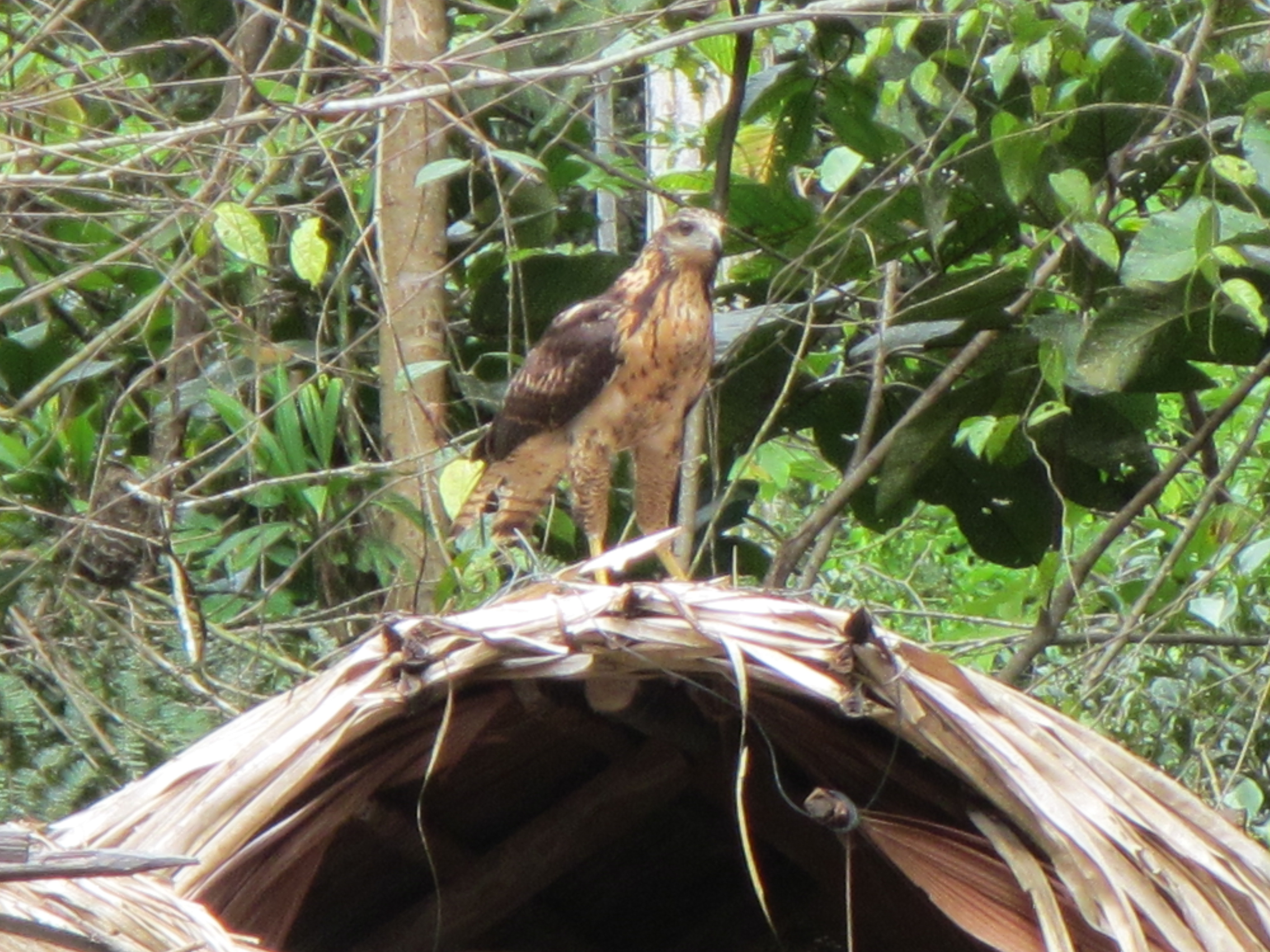
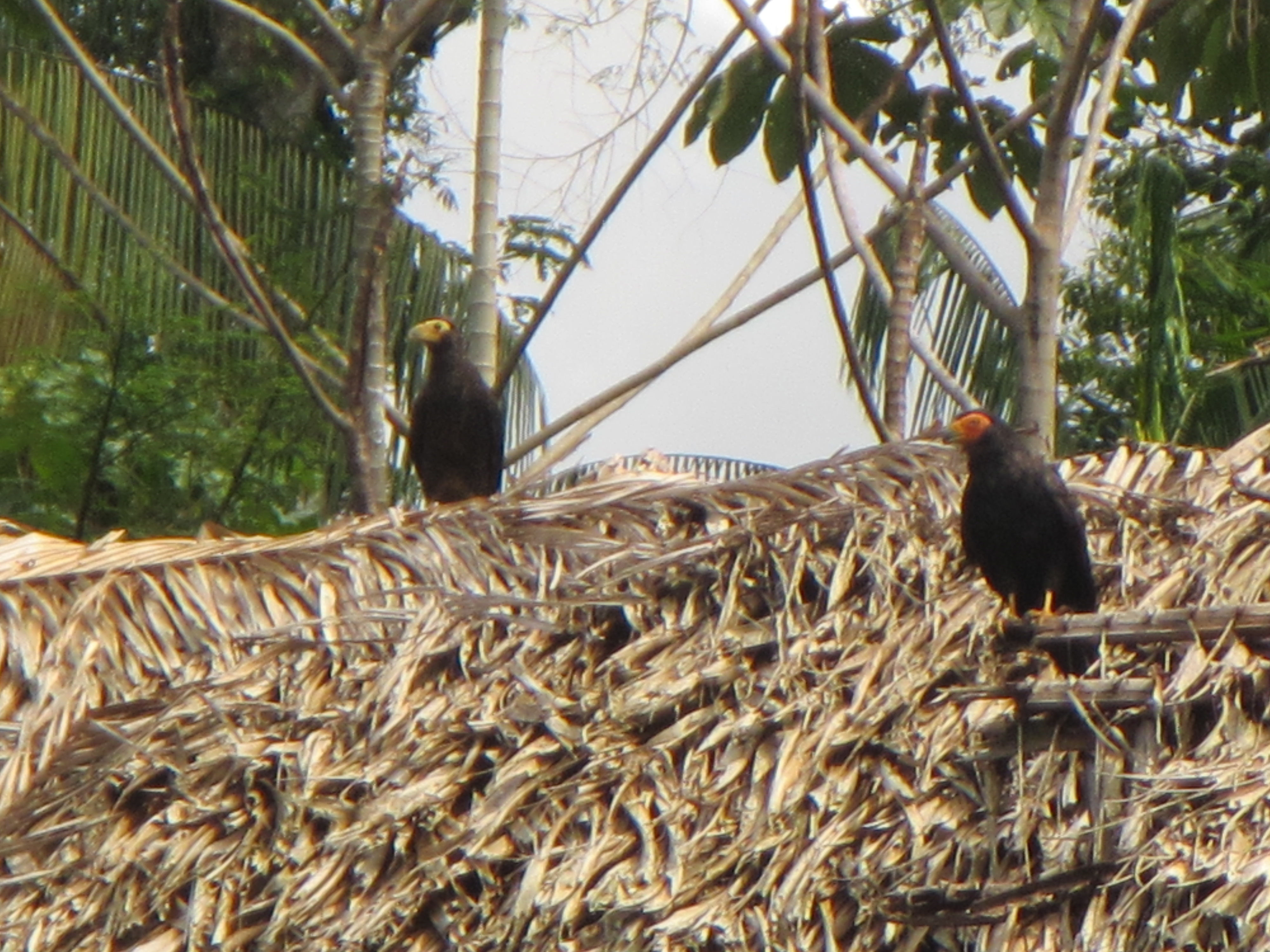
Arriving at our destination, I think we were all a bit dismayed. It was a simple open-sided cabana in terrible repair. The thatched roof was falling apart. Fully half the boards were missing from the floor, fortunately all on one side of the structure. The other side was mostly solid, apart from a few iffy bits. Black-headed vultures and a hawk were congregated on the roof. They flew off when we approached. There was no dry land at all.
IMG_3103

Señor cursed a bit, but said that the next cabana was too far away to make before dark. Cutting some wood to make a new beam, he rigged up a tarp to keep the rain off us for the night, and added some poles to be the tie points for our mosquito nets. Señora swept the bird droppings off the floor with a twig broom. We were to sleep on the two mattress pads under a mosquito net, while Señor and Señora slept on a blanket under another net.

For the first but far from the last time, I felt uncomfortable that these people almost 20 years our senior were doing all of the work and bearing much of the discomfort. But this was their job, and we were paying them. It was a quandary for me. We often offered to help out more, but they generally refused, and sometimes even stopped us when we attempted to help without asking permission.

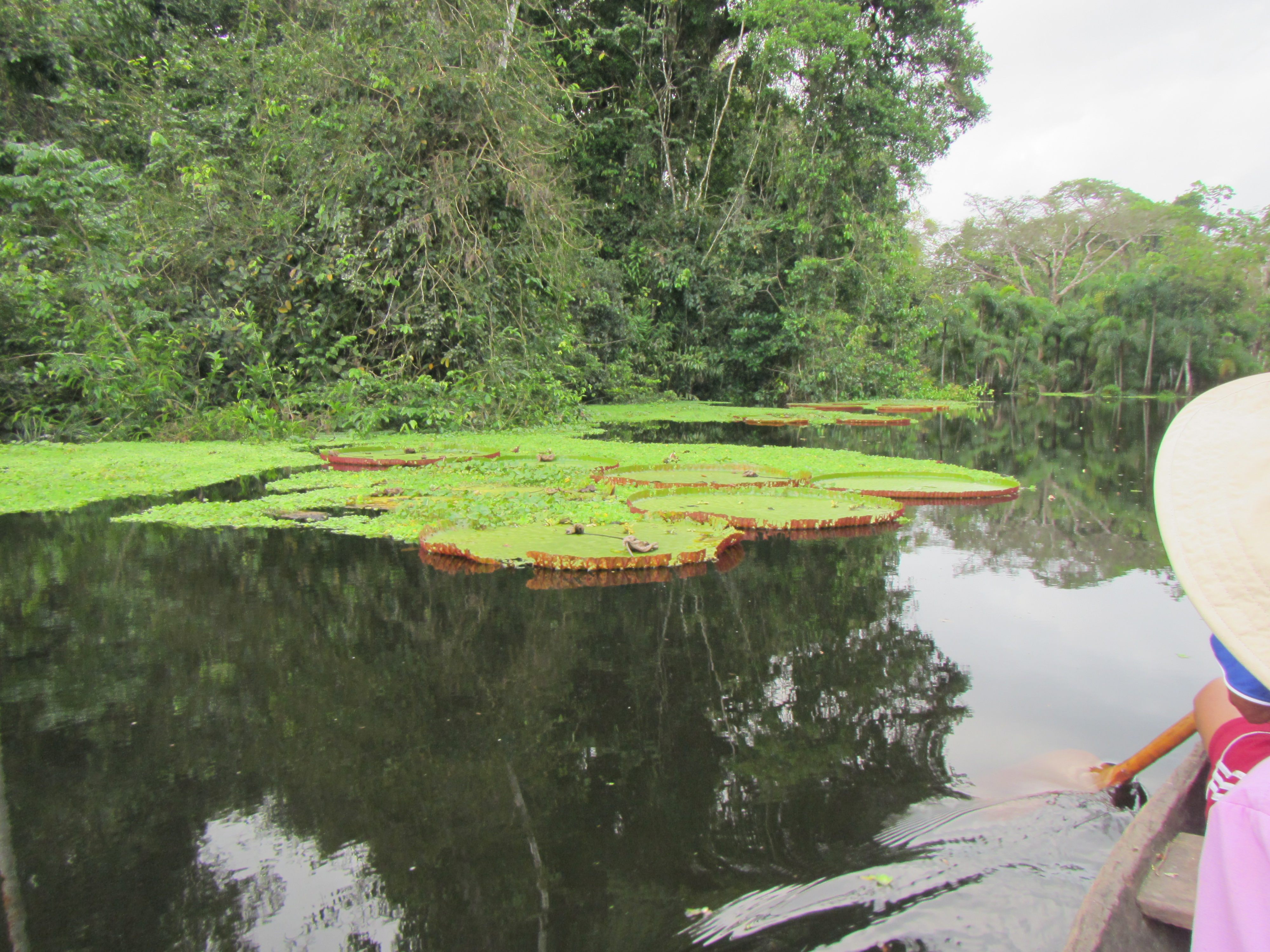
Leaving our things at the cabana (except for my backpack, which I said was to lean on but was actually for my peace of mind), we rowed off to another oxbow lake where the beautiful La Victoria Reina water lilies grow. Their enormous leaves, which start out as fleshy purple buds that look like blossoms, are big enough to float a cat on. Even a big cat like Rudimouse Prime, aka Butterball Rudy, my fat creamsicle-colored fella back home. And the lake where they were was lovely, with patches of peridot-green water plants.
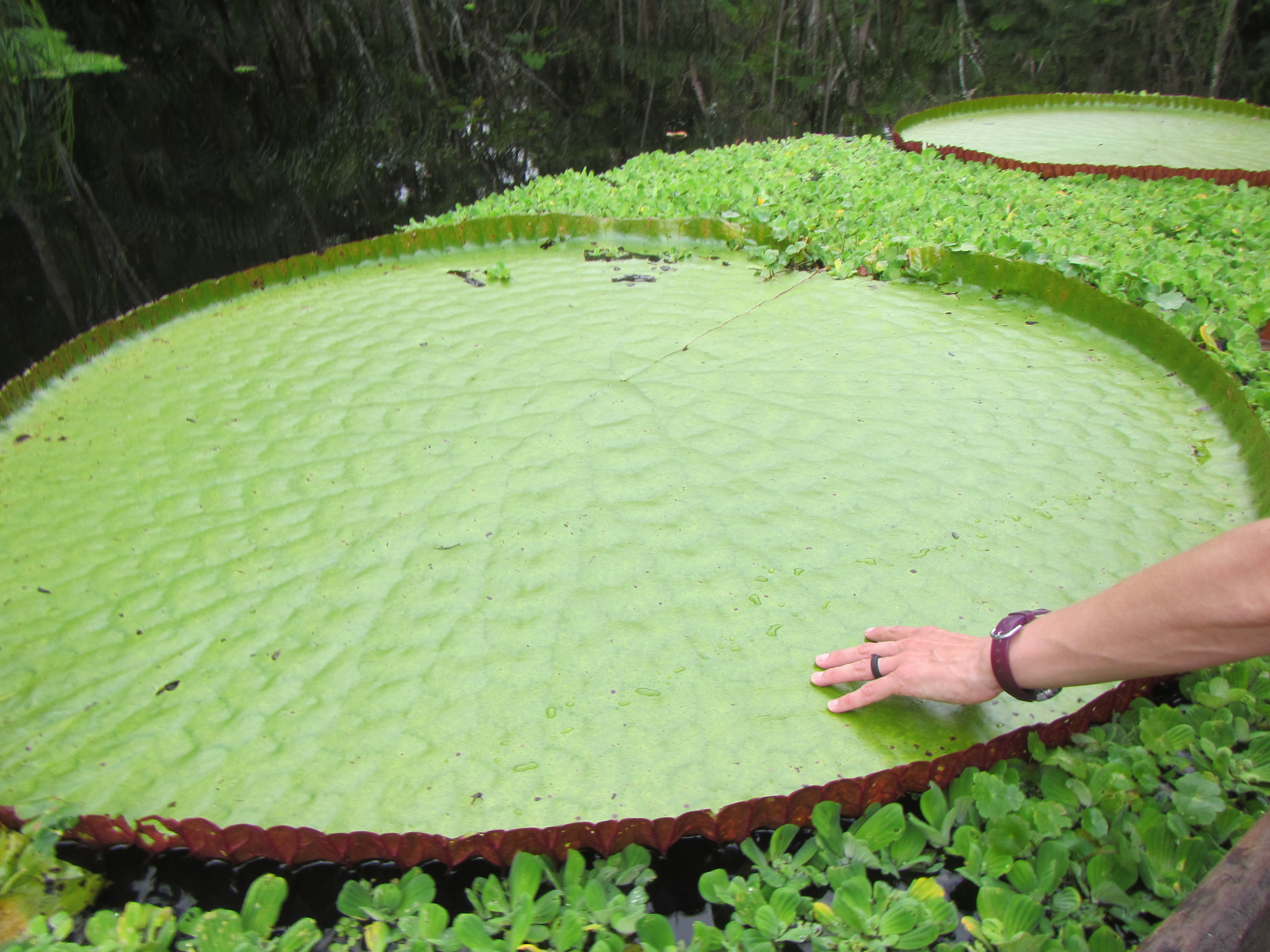
IMG_3107IMG_3112

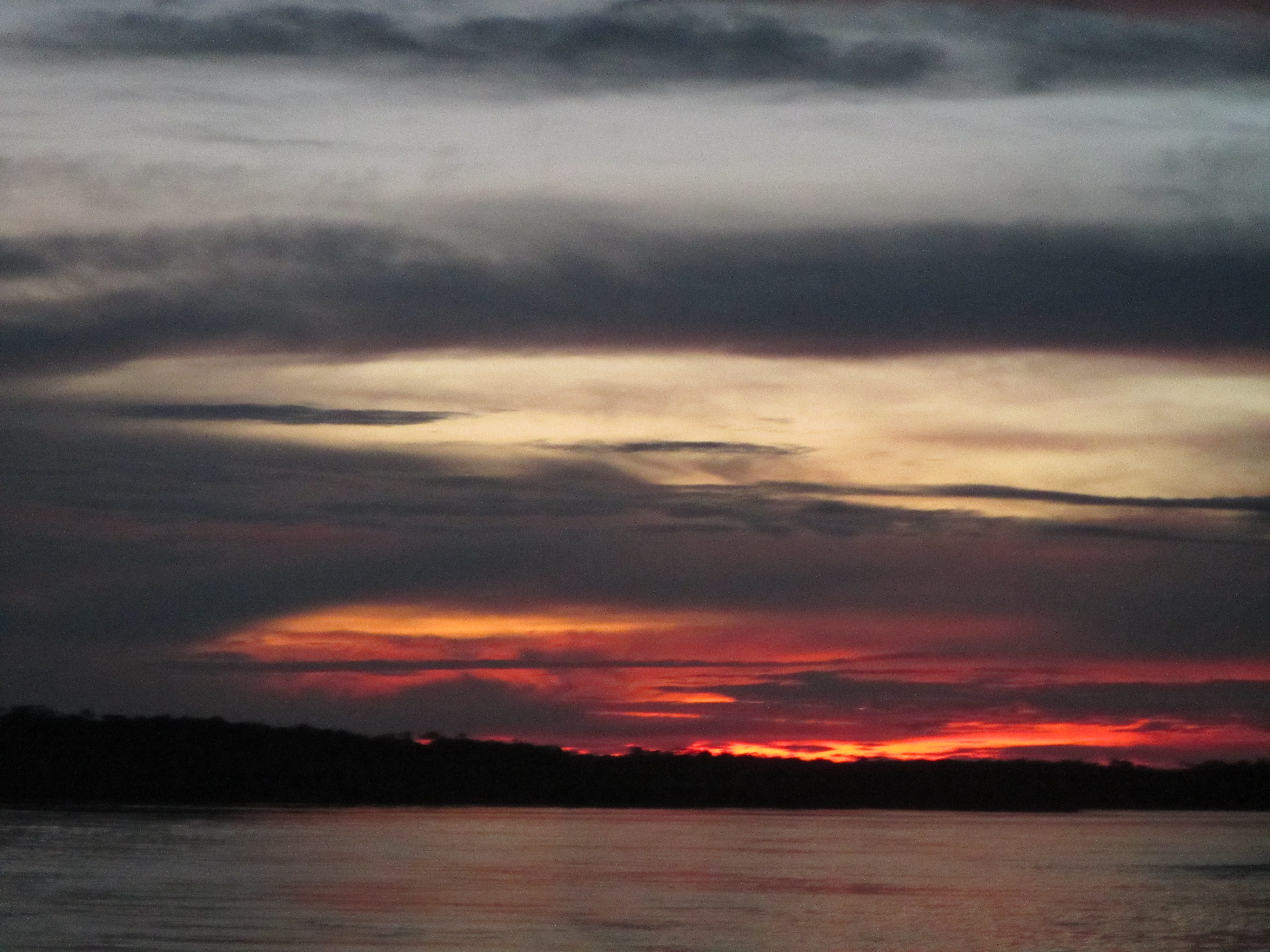
Clouds were piling up, and we began rowing quickly back to the cabana. The rain began, dazzling because the cloud cover was not complete, and the sun was setting. Everything was gold touched and full of watery light, and we were only a little damp when we made our shelter.

That night, I asked Señor if he knew more stories about the dolphins. He said he did, but the stories turned out to be a description of the traditional medicinal uses for dolphin body parts (they are apparently rarely hunted, but when they are, this is the purpose). The traditional medicinal uses amount to sympathetic magic to overcome male lack of confidence with women.

I told Señor that since he had told me that dolphins are like people, I felt sad for the dolphin’s parents, spouse, children and brothers and sisters. He agreed that it was “mucho peine” for the dolphin family – the same word Señora had used to describe the emotional anguish of the loss of their daughter.

– The Private Eye


Day 2 in La Selva, March 17

I awoke under the mosquito net in our little room with the walls just above face height on me. The door was a piece of cloth and ripped screens formed the remaining top two feet of wall, but we had a bed frame and a little bit of privacy, so it was the most luxurious room of the week. It was 5 am, and the sound of the winter wind was powerful, waking me with confusion.

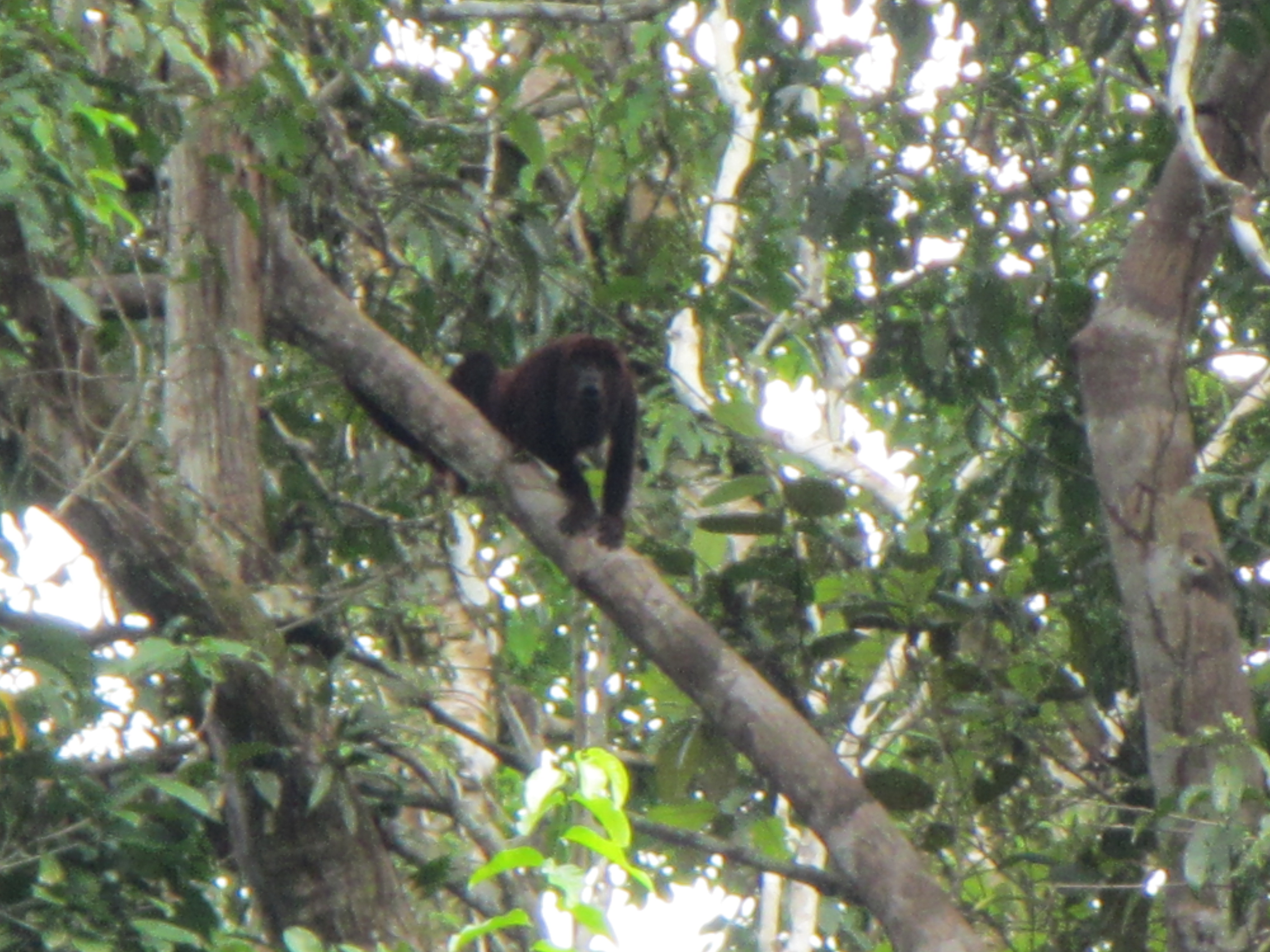
It was not really a blizzard-bringer. It was monkeys. Red howler monkeys. The sound was uncanny.

IMG_3070IMG_3081

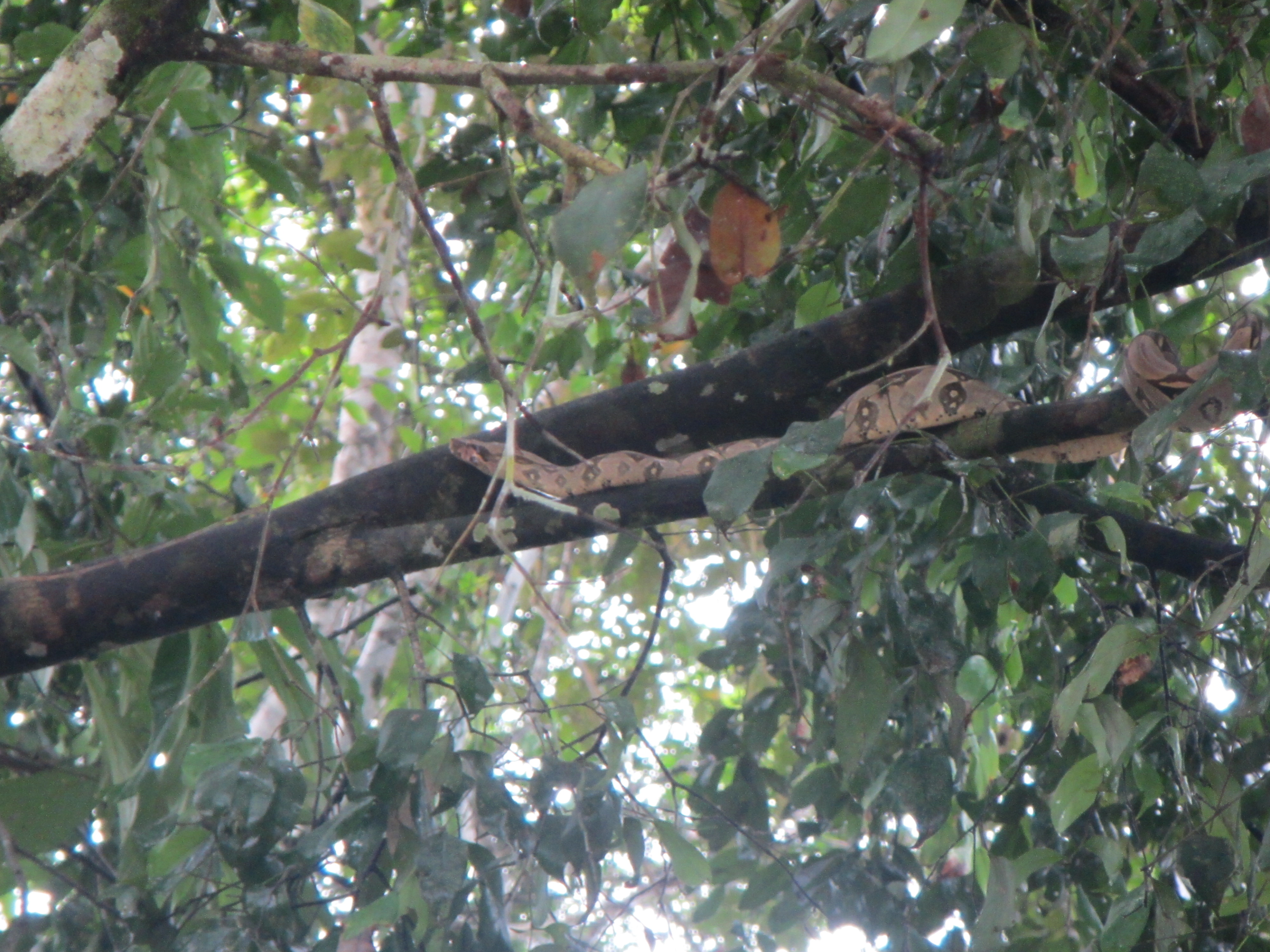
Before breakfast, Señor summoned us out to the canoe, and we paddled until we were just under a tree. “Mantona,” he said. It was some kind of constrictor. It eats baby monkeys, among other things.

We returned to the cabana, where Señora was making us tortilla de huevos, an egg pancake with tomatoes, onions, MSG salt mix, and paprika salt mix, combined with wheat flour. She was unfortunately not feeling well, so Señor made her a traditional remedy of a local raw chicken egg, sugar, chicken bouillon, and condensed milk. It is important that the chicken egg be local and not from the supermarket, he told me.

Señora still looked quite miserable afterwards. Some time later, I came into the kitchen and asked how she was faring, and she told me she was in pain. I asked if it was the headache, but she said no, it was emotional pain. It turned out that she and her husband had suffered the untimely death of their adult daughter some seven months ago, while they were in fact on the river guiding. I expressed my sympathies, and imagined how hard it must have been. There are no cell phones here, and the only form of outside contact is through the official radios at the government outposts, and some but not all of the way station cabanas. Señor and Señora are presently raising this daughter’s son, along with a few of their younger children.

We took to the river again, and soon saw our first sloth! It was high in a tree, so slow it was hard to tell it was moving. We saw another eagle, and little toucans on the wing, and an animal called an “achouney” that I still have yet to identify. It looked vaguely like a coati. We also saw the “tijuanguro” (please don’t rely on my spelling), a bird who gives a special call when the floodwater starts to rise, or so Señor said. I dubbed it the “ave de las noticias,” or newsbird.

IMG_3033

And we saw pink dolphins. Around a dozen, as soon as we rounded a bend into a deep water oxbow lake. They live there at this time of year, and are not seen during the dry season, Señor told me. He also explained to me that they are people, and that was easy to believe. They surfaced to breathe with a sinuous motion more akin to a human swimmer than the straight-necked shuttle of the surfacing sea dolphin. It was hard to tell what they were doing beyond surfacing, as this part of the river was nutrient-rich whitewater, the color and opacity of chalky mud. But several times they seemed playful, leaping full-bodied out of the water.

IMG_3049

I, of course, was in heaven, but they made our guides nervous. Señor told me that the bufeo Colorado is dangerous to women, that they will grab women swimmers and try to separate them from their men, in order to have sex with them under the water. He said that it was reasonably safe on the boat, but that he would not stick around to watch them for more than an hour or so, and that it would be bad if Señora or I were menstruating.

They were not entirely pink. Rather, they were particolored like a human with dual pigmentation, part pink, part gray, and freckling between the two. A few times they seemed to be following the boat. The group contained both male and female dolphins, Señor said.

That night, we bunked at a ranger station, which was also a wooden building on stilts, but with wooden walls from roof to floor, a door, a tin roof, and a radio tower. I took my first river bath here, wishing I had brought some soap that was more environmentally friendly, but since apparently everyone both washes and does laundry in the river, I got over my guilt. The Professor told me that given the volume of water here and the small scale of the use, we weren’t likely hurting anything by washing.

As evidence of the health of the river, we ate fish for nearly every meal, cooked by Señora. She is a great fish cook. We ate so many kinds of fish, and I sadly can’t remember their names, except for the piranha of course. Generally they were fried, which was my favorite, but sometimes cooked whole in various ways. Fish generally was accompanied by multiple starches, generally cooked bananas and rice. Sometimes we had a little salad of cabbage, tomatoes and onions. It wasn’t the same food that our guides ate, as they preferred fish in broth with yucca.

– The Private Eye


The first story of Señor

This is a story about the dolphins, bufeos. Take it with a grain of salt – it is the story as I understood it, which may not be the same as the story that was told me.

There once was a man who wanted to kill a manatee. All night, he waited and waited, harpoon in hand. But when he finally threw the weapon, he did not hit a manatee – instead, he hit one of many dolphins that were swimming around agitatedly.

He pulled back his harpoon, but the tip was left behind in the creature’s back.. Since his harpoon was ruined, he went home.

“Did you catch the manatee?” asked his wife, who wanted to cook the beast.

“No,” replied the man. “I harpooned a dolphin by accident.”

“Oh, ok,” said his wife.

They went to sleep. But at 2 a.m., there was a knock at the door.

“Police!” came the voice from the threshold.

The man went to his door.

“You are under arrest,” said the two officers.

“But why?” asked the man.

“For assault and torture of a doctor,” said the police. “You are coming with us.”

The man protested that he had harpooned a dolphin that evening but had not hurt a human being, but the officers were insistent. He was handcuffed and led to the their boat, and told that they were going to the hospital in Iquitos, where he could see the victim.

The boat was swallowed by a whirlpool as they were traveling. At the bottom, they came to a beautiful city, full of lights. They went to the hospital, and there they saw the doctor – a big tall white man with really broad shoulders. The doctor had the tip of a harpoon embedded in his back. The officers gave the fisherman a knife and told him to cut the spear point out of the doctor’s back, and he did so.

They were then going to take him to the court. Figuring he was in trouble so he might as well enjoy what he could, the man took out some tobacco, rolled a cigarette, and began to smoke. Now, tobacco is a friend to man, but dolphins detest it. The people demanded he put it out, but he simply blew the smoke and replied that if he was under arrest, he was going to enjoy a cigarette before he went to jail. Pretty soon, all the people began vomiting spectacularly – the doctor, the police, everyone.

The man ran away and was able to get on the police boat. He started back for his own home, but as he traveled, still smoking, the boat and everything on it regained its true form. The boat itself was a crocodile! The paddle was an anaconda! The benches were turtles. Nevertheless, the man gained the surface of the water, leaving the city, and returned to his own home. He went to bed and later awoke there, as if from a dream.

The End

– The Private Eye


Day 1 in La Selva, March 16

Jefe introduced us to our guides on the night of the 15th, but we met them for real on the morning of the 16th. I will call them Señor and Señora, a married couple in their early 50s. Señor is a trim, dapper man, short, muscled, beginning to feel his age a little, but still plenty strong. Señora has a sadder face, a stouter figure, and a few missing teeth, but comes by them honestly. Jefe picked The Professor and I up in a moto version of a pickup truck, and drove us to his office, where we met the two of them.

We were fitted for tall rubber boots, and left our sneakers and my oversized straw hats in the office for a week. We did not want to get the former dirty, nor potentially spread Asian tropical pests into virgin rainforest with the latter.

The Professor, I, Señor, and Señora were bundled into the moto-pickup again, along with a lot of stuff – big lidded buckets of water, basins, fruit, dry goods, mattress pads, blankets, mosquito nets, etc. Heading out of town, we stopped at the police station, where the police logged our passport numbers and told us that if we have any problems we should come to them. Though their T-shirts with police logo rather than more formal uniforms, inscrutable eyes and machine guns made me feel insecure, I was quite sure they were sincere about keeping the gringo tourists safe.

We drove for about half an hour to the Pacaya Samiria National Reserve. Once there, Señor and Señora loaded things into a wooden dugout canoe, while Jefe, the Professor and I went to sign in at another register, this one for the government controllers of the reservation. For some reason this discussion seemed a little tense between Jefe and the controller, and we had the distinctly (or so I have heard) Latin American situation of sitting around in an office for an unaccountable delay, waiting for the fellow to sign off on our entry. But eventually he signed.

Meanwhile, Señor and Señora had moved our things from their usual boat to a bigger boat. Not many people come to Pacaya Samiria in the rainy season, so it had been a while since there was anyone touring with them for more than a week, obviously requiring more room in the boat for provisions.

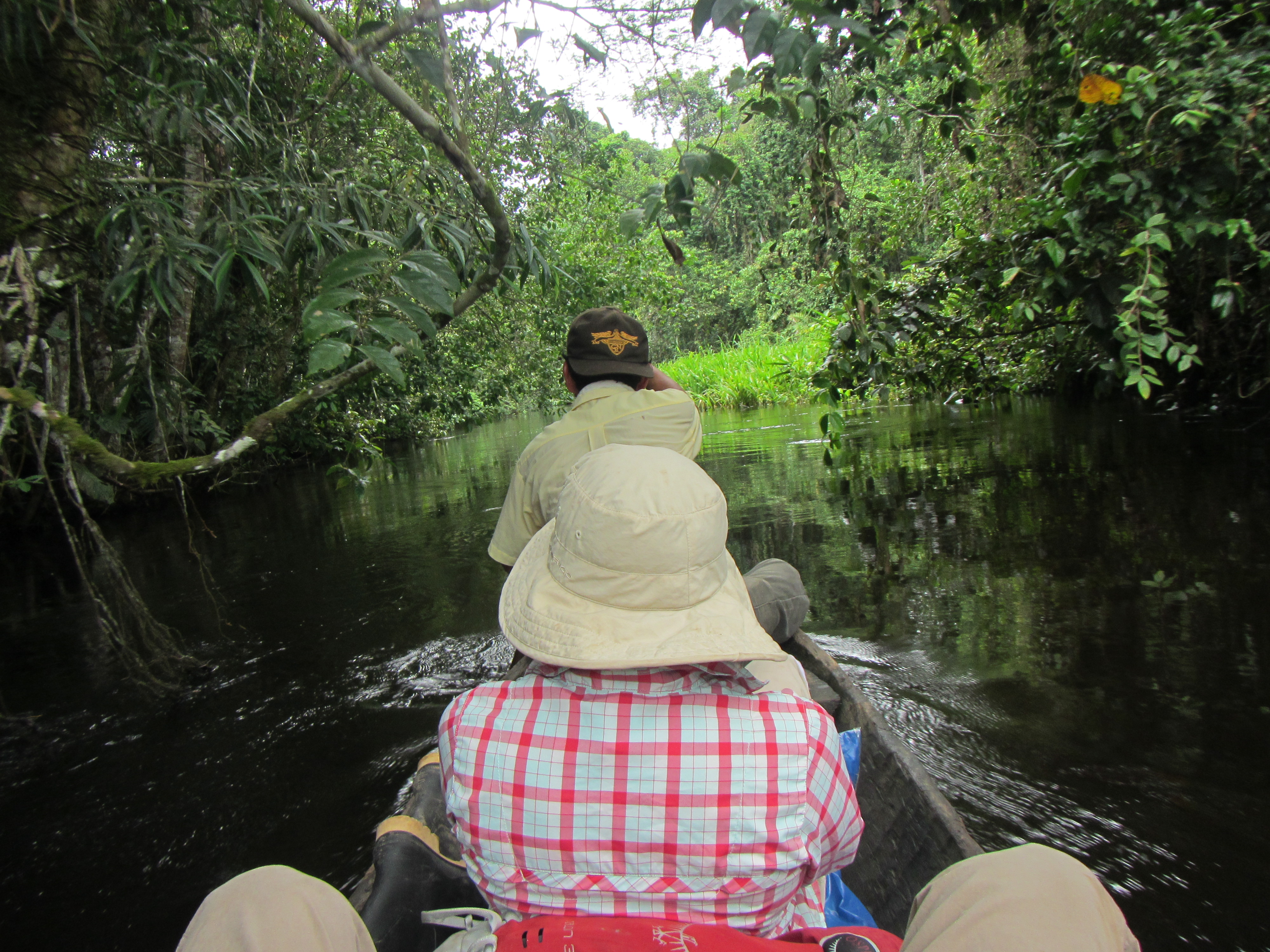
We boarded our wooden vessel, Señor manning an oar in the front, then me, then The Professor, and then Señora manning an oar in the far back. The Professor had an oar, but wouldn’t be using it for the downriver portion of the trip. We would be canoeing four days into the reserve, and then returning the way we had come, heading into the current for the way home. We were sailing on the Samiria River, one of the two that gives the reserve its name.

IMG_2999

We smoothly and silently entered a world of vivid, vivid green, more vivid than Ireland because it is more all-encompassing, green plants beside us, green trees above us, green reflection in the river below us. The first day’s journey was largely on blackwater, one of a few river types in the Amazon basin. Nutrient poor, it looks like strong black tea, and logs in the water are the color of tea-boiled eggs.

The government allows the local mestizo people around Pacaya Samiria to continue their subsistence and small scale economic activities in the park, within limits. Logging is not allowed, but fishing for both personal consumption and small scale marketing appears to be. Hunting of the non-endangered wildlife for personal and family consumption is allowed. As a result, the local fishing people appear quite earnest about supporting the restrictions on use for the preservation of the forest long-term.

At least, Señor is. One of the fishermen who plies the rivers when he is not guiding turistas, he merrily told us over the week which animals are delicious, and which forbidden. As such, both he and his wife know the river very, very well, and how to spot the animals in the gallery forest on either side. I doubt we would have seen 1/4 of the animals we did without them.

But with them, it was a safari. We had not been in the reserve for more than an hour when Señora called out for us to stop and observe an enormous, handsome green lizard with orange spangles around its eyes. It was perched in some branches that were almost at eye level. “Chameleon,” Señor told me. We saw a second within another hour. There were also many birds, including a number of large hawks and a startling amount of blue and gold macaws.

IMG_3009

The gallery forest on either side of us was completely flooded. What I mean by that is that there was no land, that we could literally have taken the boat anywhere we could have fit it between trees. Sometimes we did. Doing so, we saw what Señor called a renaco, a giant tree whose branches all had sent roots of their own to the ground, like a tentacular tree monster or forest spirit. It was very beautiful. Señor showed us our first piranha of many that we would see and eat.

IMG_3004

We stopped for lunch at what I would learn to call a cabana, a wooden structure, stilted, with minimal to no walls and a thatched-palm roof. While we were eating, a majestic hawk (or eagle, still need to identify it) landed on the outhouse building, where it took an enormous projectile dump as I watched with my mouth open. It took us a while to stop laughing.

IMG_3025

We saw two kinds of monkeys, one tiny kind in a big family group, possibly saddleback tamarins. The bigger variety were black monkeys with white hair on their faces. At one point, we saw a monkey leap right over a stream, from tree to tree like a heroine from building to building.

We stopped for the night at Poza Gloria, a very established cabana with half walls and even a shower. We ate dinner and went to bed early.

IMG_3029

– The Private Eye


To Lagunas, March 15

Early in the morning (think 5?) in Yurimaguas, we awoke and, for lack of anything else to do, walked to the area around the plaza to see if there was a market and if we could get cash, bug repellent, and breakfast. There was indeed a market, and it was a more “authentic” experience than most we had been to in Asia, if by authentic you mean that were the only gringos there, no English was spoken, and people looked a little wary. The Professor had a tasty little sandwich and we each got a fresh grapefruit juice (yum) but there was no coffee readily apparent. So after getting cash and repellent, we returned to our hotel.

It had a nice dining room with big windows on the second floor overlooking the Huallaga River, and we enjoyed some coffee. Our neighbors at the next table were fellow Americans, an evangelical biker gang if you can believe it. “Riding for the Son” was on the backs of their jackets, and they had the kind of deep voices of men from manly states, Wyoming or Nevada or Idaho, where the air is clear and there’s room to think and all that. Voices with an echo, that you can imagine telling cowboy tales during a pause while you are out fixing fences together. Anyway, it made me homesick, but they didn’t strike up a conversation with us, and we didn’t strike one up with them.

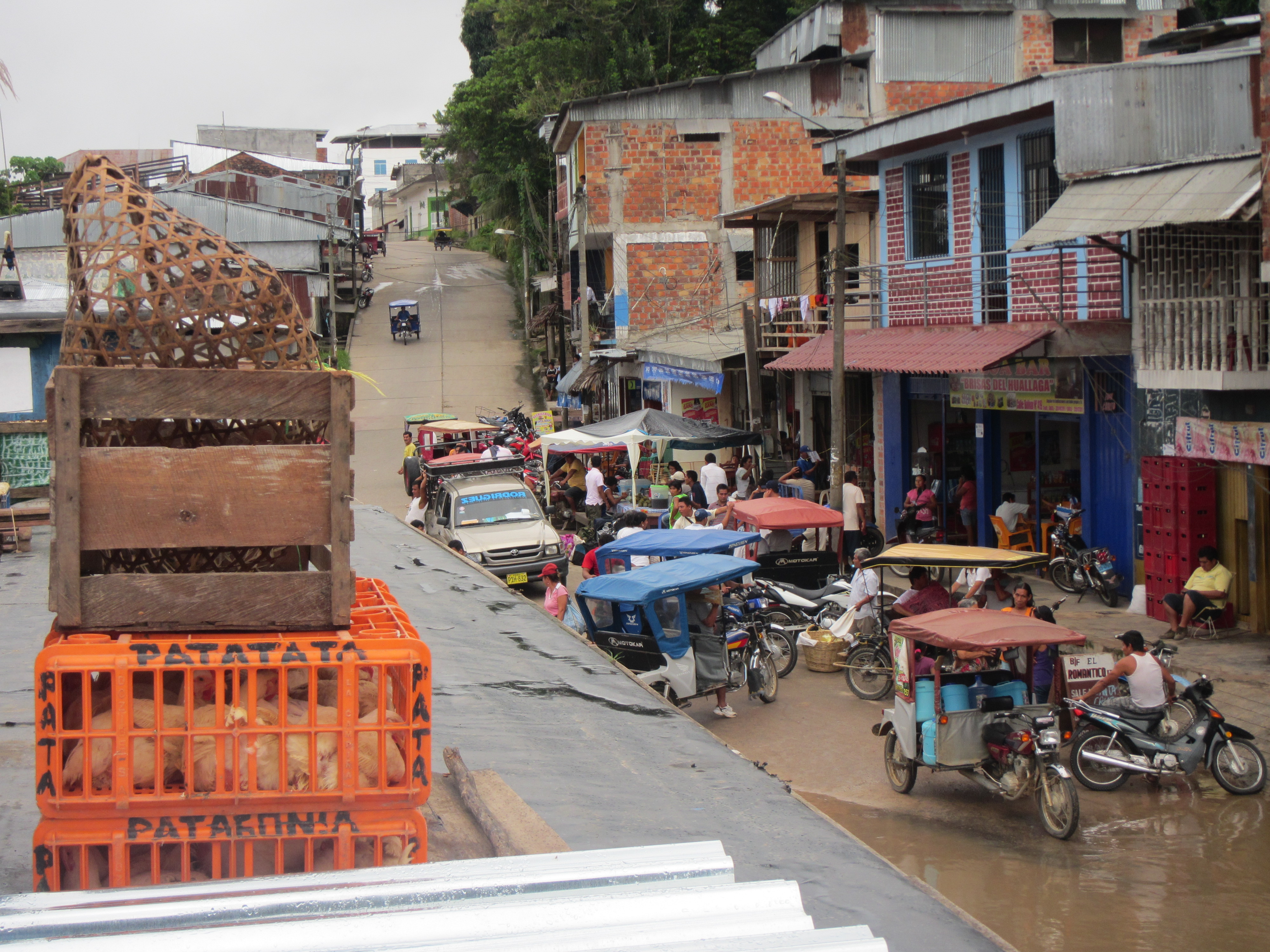
We met up with our tour company at 7 ish, and we took a mototaxi down to the boat dock. It was a dirty, noisy, messy place and we were swarmed by people telling us which boat to board, and also to try to secure us as clients I am sure. I told them in Spanish that we were waiting for the man I will call Jefe, the company’s owner, and they immediately backed off and told us he was just behind us on his own motorcycle.

IMG_2955

Jefe is just a touch older than us, a middle-aged father with a round head and a pleasant smile. He boarded the bus with us and rode with us all the way to Lagunas, which is a full day’s boat ride – the boat left at 9 a.m. and arrived at 7 p.m. Along the way, we talked a good deal, and he pointed out things to us along the riverbank – garsas, which are egrets, for example. When we boarded, rather than set us up in the giant common area in the middle of the boat, he quickly hustled us up to the smaller area up a short ladder – above the engine, kitchen and bathroom. Open-frame walls at the front and back of the little cabin made it not too unpleasant despite the engine notice and smell. This was not a special or private cabin, as we three were some of about 7 hammocks in the place, but its size kept it from being as overwhelming as the main deck, and we felt more comfortable using electronics.

IMG_2961

I came to like Jefe a fair bit as the ride continued. He had been guiding for some 15 years before he started his company some three years ago, at around the time his daughter was born. We all alternated talking and napping in our hammocks, swaying as the boat drifted downriver. At lunchtime, we were served rice and carrots and yucca and a little bit of chicken, the latter from more rubbery parts than I typically eat.

IMG_2995

I also spoke with another passenger, an hombre de comercios, who makes a living buying things in bigger cities, and bringing them on the boat downriver to sell in Lagunas. He had a lot of toilet paper, and bags of rice, and brooms. It reminded me, for the second time that day, of the old west.

Eventually we arrived in Lagunas, and we walked down a wooden plank, into some muddy water, and up onto the shore. Jefe booked us into a cheap but serviceable hotel, and we went out with him and his wife for chicken and plantains at a chicken restaurant.

And then we turned in, and slept in our last real bed for a week.

– The Private Eye


To Yurimaguas, March 14

On the 14th, we flew to Tarapoto, and from there took the local tuk-tuk, called a mototaxi, to a gas station where lots of men were hanging around. One of them was the driver of a collectivo, a sedan which will make the drive to a given destination when it has four passengers, or their equivalent fare. We rode with one other passenger, choosing to pay more rather than cram a third person into the back seat with us and our things, which we were too mistrustful to put in the trunk. Pretty much everyone, from books to locals, agrees that your possessions are not safe in Peru, as sneak thievery and outright robbery abound, to say nothing of burglary.

From there, we drove for two hours to Yurimaguas. On the way, we were impressed by the beauty of the landscape, which as we passed the Cordillera Azul was full of cool highland rainforest, stunning green peaks against a blue and white sky. Later, the land was more agricultural, but still beautiful, and we were impressed by the fact that these poor farming communities were so much cleaner than anything we had seen in Asia. The buildings were remarkably similar – open-air wood houses on stilts, with thatched palm or tin roofs, often with no doors in the doorways and no screens in the windows. But there was no trash littering the area in front of the homes. The packed dirt looked quite carefully swept. The walls had little paint left, if they ever had any, but they seemed as though they had been scrubbed or brushed, with no stains or even rainspatter. It made me cheerful to see such a place. I imagine it is better off than rural Asia – we saw more than a few satellite dishes, and the street lights were both omnipresent and bright.

Not all was perfect, however – we were stopped on the highway at by a group of soldiers. Our driver, who had very good English, said that these men were not police, but that they patrolled the road. Previously, he said, there were bandits at this location, who would rob passerby. Instead, we simply gave these men with machine guns the few soles in change we had in our possession, and we were waived on our way. The thing is, if robbery is an issue, I think it quite reasonable for the police to establish a checkpoint, and to charge a toll for it. The informal nature of this one, though, of course gave me the willies.

Soon, we entered Yurimaguas and were driven to possibly the fanciest hotel in town, where the office of our tour agency was located. We talked with the man the owner had brought in to help with his business, an English speaker who had a lot of experience running touring companies and as a river guide on the other side of Pacaya Samiria, nearer to Iquitos. The man tried to up sell us a bit for more days in the reserve, but after mulling it over we decided to stick with our original plan – 8 days and 7 nights in the reserve. We also met the owner, a man who seemed more quiet at the time, but who I grew to like later over the next day’s boat ride. The fellows set us up in a good room, and we went to sleep, ready to embark the next morning on a river voyage to Lagunas, doorway to Pacaya Samiria.

– The Private Eye


A Few Short Words on Lima

Given the distortion of reality that an 11 time zone shift brings, we didn’t venture out much into Lima. After a first night at a business hotel, we moved to Miraflores, an upscale (read: safe) and busy neighborhood for our second night. Lima and San Francisco are not sister cities, but they should be. Lima is of course warmer, but it’s not hot, at least this time of year. Like San Franciso, a breeze from the Pacific cools it. At certain times of year, impenetrable banks of fog move in unannounced and stay longer than welcome, enough so to earn mention in a discourse on the terrible sides of the color white in Moby Dick (which I happen to be reading). It feels good, like home, to have a cool, damp breeze, wide sidewalks, and the roar of the Pacific at the edge of town, with scores of surfers waiting for a good break.

The Private Eye is buzzing with excitement and can’t stop reading her Neotropical Companion. Since she saw that nature program as a teenager, it’s been a life dream to see the Amazon and the pink dolphins. We are almost there…

— The Professor


27 hours later…

After sleeping 4 hours and flying for 27, we’re now safely at our hotel in Lima. It’s a nice hotel targeted at business travelers. We chose it because it is so close to the airport; wandering around delirious from lack of sleep at 111PM seems like a bad idea. We will catch a taxi to a backpacker neighborhood tomorrow, pick up some last minute supplies (Imodium, batteries for head lamps, SIM card for the phone). Day after tomorrow, we fly to Tarapoto and start our journey into the rainforest. The Private Eye used her Spanish in the cab ride; when she explained to the female driver that she speaks a little and I don’t, the driver said that’s the best situation. 🙂

But now it is time to sleep.

— The Professor


Peru bound!

It’s our last day in Asia. We have a 7 AM flight tomorrow to Lima (through Tokyo and Houston). Due to the dateline we depart 7AM on the 12th and arrive at 10PM on the 12th (total transit time is 27 hours). Trying to find a room at midnight when completely exhausted is an easy way to be robbed, so we booked something for our first night. We have one day in Lima then fly to Tarapoto on the 14th, from which we take a bus to Lagunas, spend one night there, then head into the Amazon for ten days.

Today, we went to The Expat Teacher’s school and talked with kids at lunch about our careers. We’ve sent off our last package home, and now have slightly lighter packs than when we started, since some clothes will not be needed in the rainforest.

We watched Lincoln last night and had a discussion about why we found it riveting but Mr. Expat Teacher’s students (he teaches history) find it boring. I think it’s a bit like Dickens – because the language is subtle and at times playful, you have to enjoy that kind of word play. Just a hypothesis.

We will be home in just over two weeks – I have started to have to handle a few work things (arranging a course I am teaching in the spring) since we will be completely disconnected once in the rainforest. I am so glad that we spent the effort on this blog, not only for the benefit of our friends and family, but also so we have detailed memories we can re-read. I chatted with my department chair before I left, and she commented that her family was on the 5 year anniversary of their year long travel journey; each day, they sat down together and looked back on where they were five years ago, recalling many details and reliving the experience. Maybe we should try the same thing in 2017-18.

— The Professor


English Subtitles Most Wonderful

Our last night in Phnom Penh, we turned on the TV in our luxurious room (AC! Fridge! TV! Free laundry!) and encountered a kung fu movie involving a child monk, an old and wizened master, and a villain with spiky shoulder pads. The action sequences were not great, but the English subtitles were fantastic entertainment:

“The teacher empty senior the big defeats thief’s person greatly and courageously.”

“Higher than that thief’s person’s effort… That why would you be anti- to win. So a should have another to losing a teacher sad BE is not. However I still needed to give public recognition today empty. The is empty you beat today the very brave dozen have to be good.”

“The first teacher can teach me a to recruit extremely. The second teacher can give me adjust a bed. Master’s elder brother’s feet were too smelly.”

“This still doesn’t hurt that on the whole how just hurt on the whole. I have already dashed in to chase little LIN2 SI4 YI2 as flat ground.”

— The Professor