RSS

Author Archives: theprofessorandtheprivateeye

Yogyakarta, day 3

It was important to me that we come to Yogyakarta because it is the first place I have been where I felt that I was really in Indonesia – not vacationland like the Gilis, and not a place whose identity is so distinct (Bali) that you don’t really feel like you have been to the bigger nation. Not coming here would have felt like I had gone to Hawaii and then claimed I had seen America.

But Yogyakarta is also a vacation place, only it is a place for vacationing Indonesians. As far as I can tell, it is like coming to Philadelphia and viewing The Liberty Bell, other historical sights and the art museums. Families, the women with sensible headwraps and skinny jeans, ride in the horse carriages to the museums. (These carriages are bigger than they were in the Gilis, seating up to six or 8 people, and some of them are drawn by tall horses rather than dainty ponies.) Couples and singles ride in the becak, bicycle carriages with the driver in the rear of the vehicle. Like us, they visit the sultan’s palace, watch the traditional dancing (similar yet different than the Balinese), and visit the museums and the sights.

Of course, there are people who live here, and lots and lots of university students.

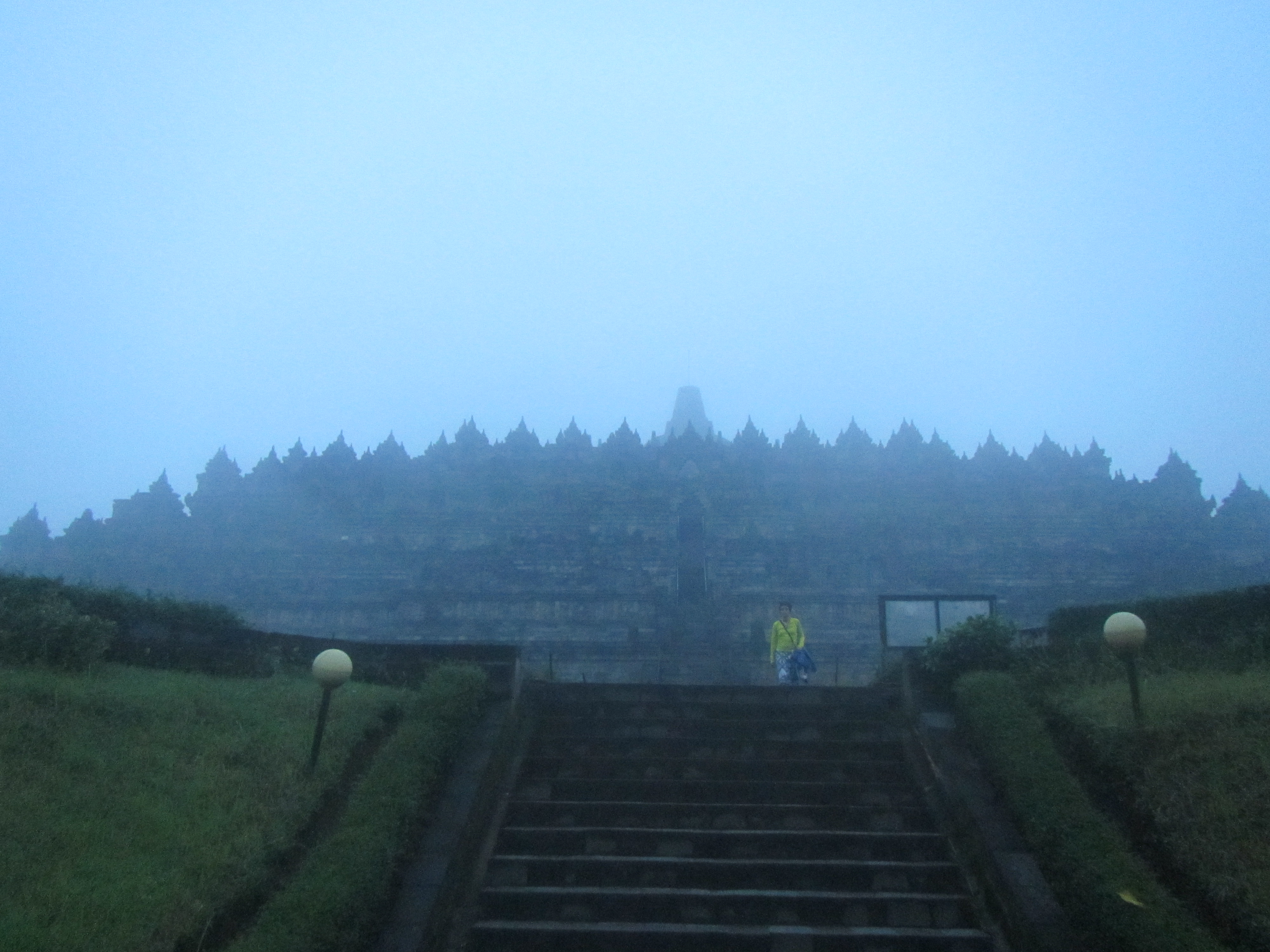
So yesterday, we got in a white Landrover type vehicle with a driver, and headed to Borobudur for the sunrise. Borobudur is a ruin whose shining moment was brief – built in the 700s or 800s AD as a great Buddhist center, it was basically abandoned after a local regime change both political and spiritual. Now, unearthed from volcanic ash and restored, it is a tourist attraction for both foreigners and Indonesians.

It is magnificent. We booked the “real sunrise tour” at our losmen (hotel), which meant that our tour guide paid a hotel located on the grounds of the monument to let us in before the 6 am official opening hour. We arrived at 5 and were each given a sarong and a flashlight, and went in a group of about 30 people, in the dark, to the walls of the giant stone structure. We were walked a few levels of stairs up, shown the best sunrise-viewing site, and left to our own devices.

Yogyakarta 010Yogyakarta 011

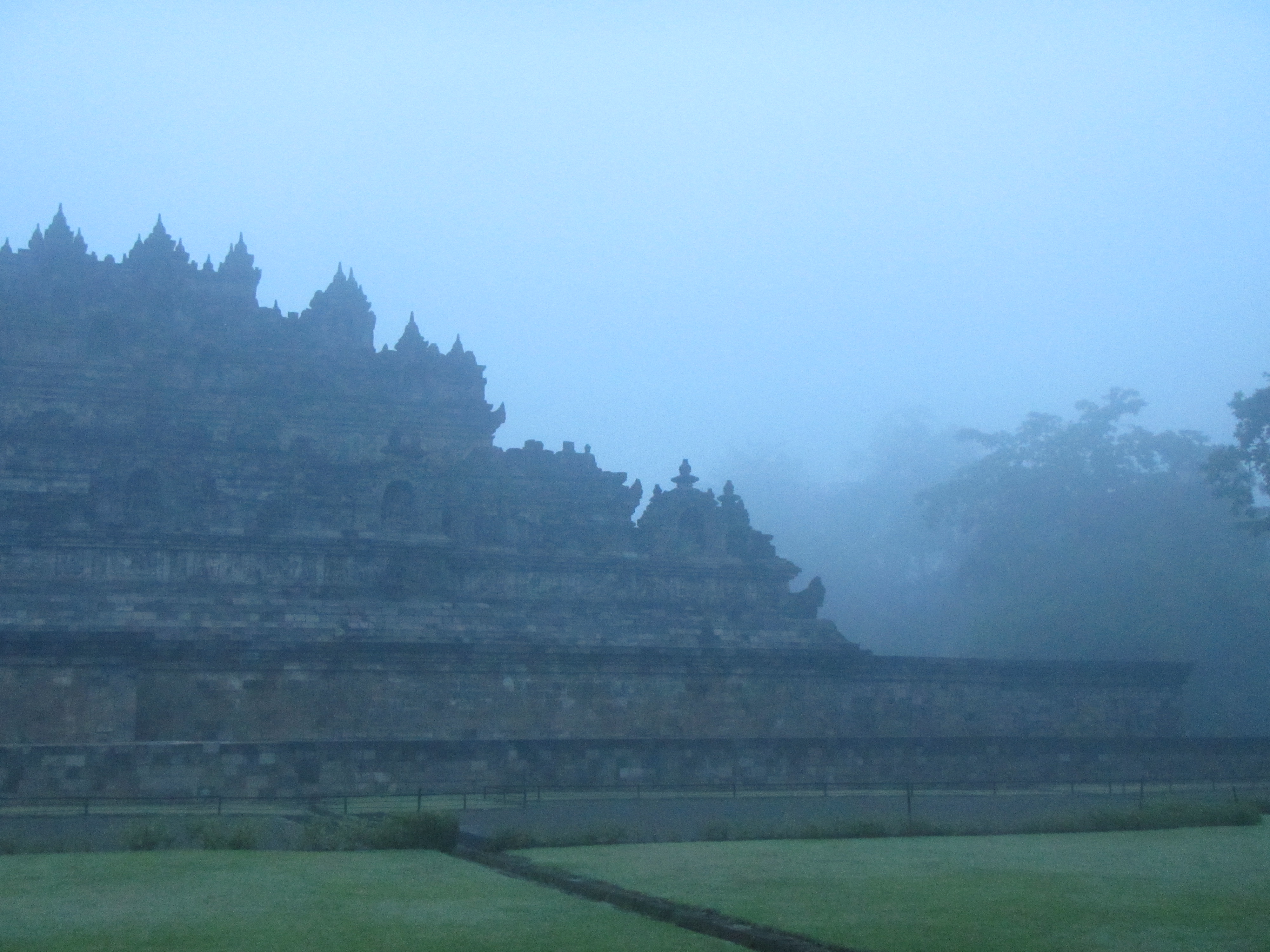
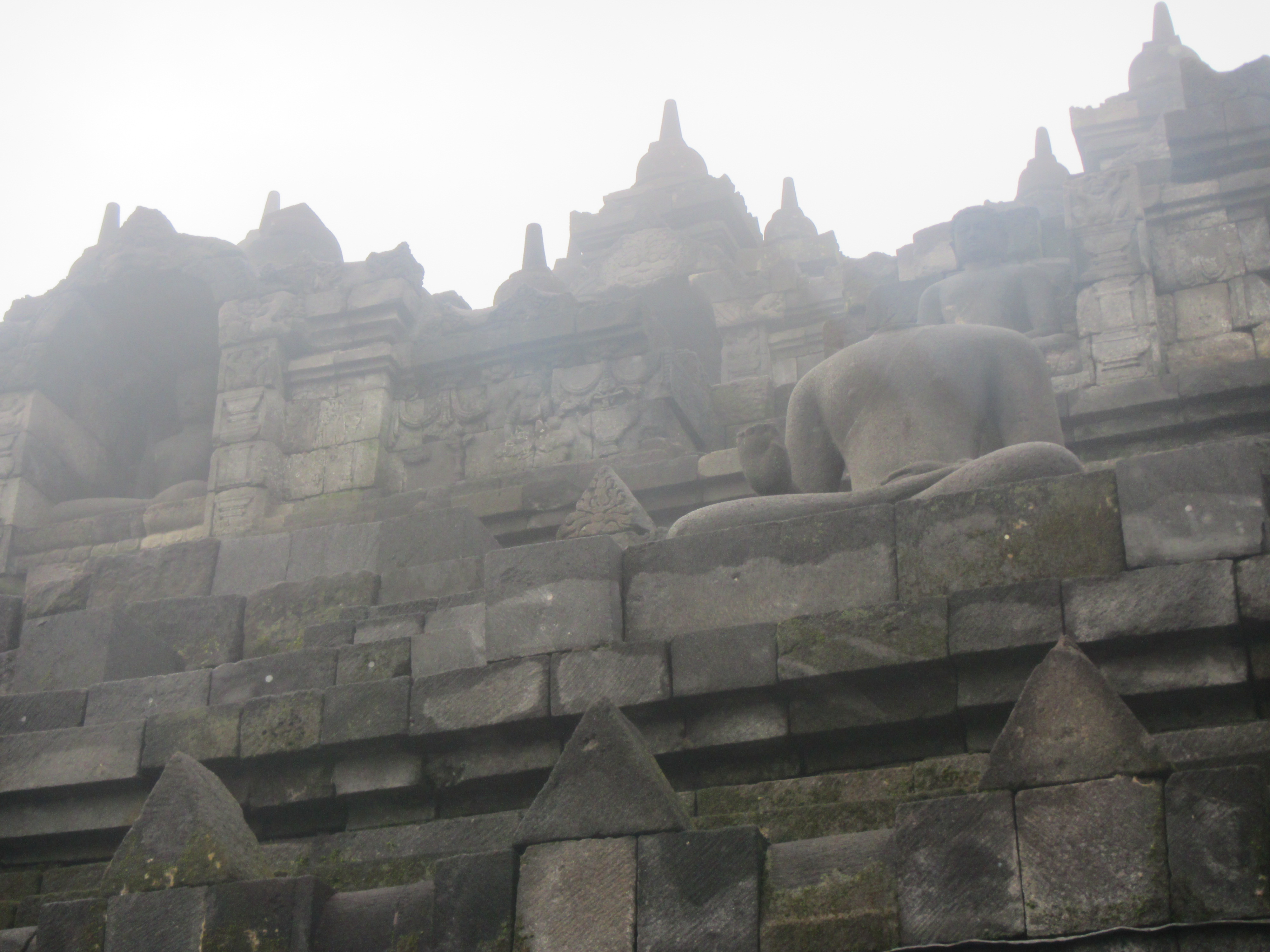
Borobudur is like a giant stone wedding cake, albeit with the bottom levels square and the three upper tiers circular. At the top rests a giant stone onion (stupa), surrounded by smaller such shapes on the penultimate tiers. The entire thing is covered in astonishingly detailed stone carving, most depicting the life of the Buddha, but some showing what look like scenes of regular life – the books tell me that some of these show carnal desires to be overcome and others depict doctrine, but I don’t know enough about that to write intelligently on it.
Yogyakarta 015Yogyakarta 016Yogyakarta 017

We quickly figured out that there would be no golden dawn for us, as it was overcast. Instead, the Professor and I started wandering the narrow walkways of the monument clockwise bottom to top. We were almost always alone, and this was why we’d paid the extra money for the “real sunrise tour”. It was glorious, and even more so after we saw that the monument’s airspace is home to dozens of swallows on the wing. I don’t get tired of these birds ever.

Yogyakarta 014Yogyakarta 019

Afterwards, I was pressed into buying some postcards, but as I had wanted to anyway this was no big deal. We walked through the grounds and then ate breakfast in the early-entry hotel, and then it was off to Mendut temple for a quick visit, and then on to Prabanan. On the way though a beautiful country of rice fields and misty mountains, I told our driver that we had never eaten bakso, a food remembered fondly by President Obama. We decided to get some lunch after Prabanan.

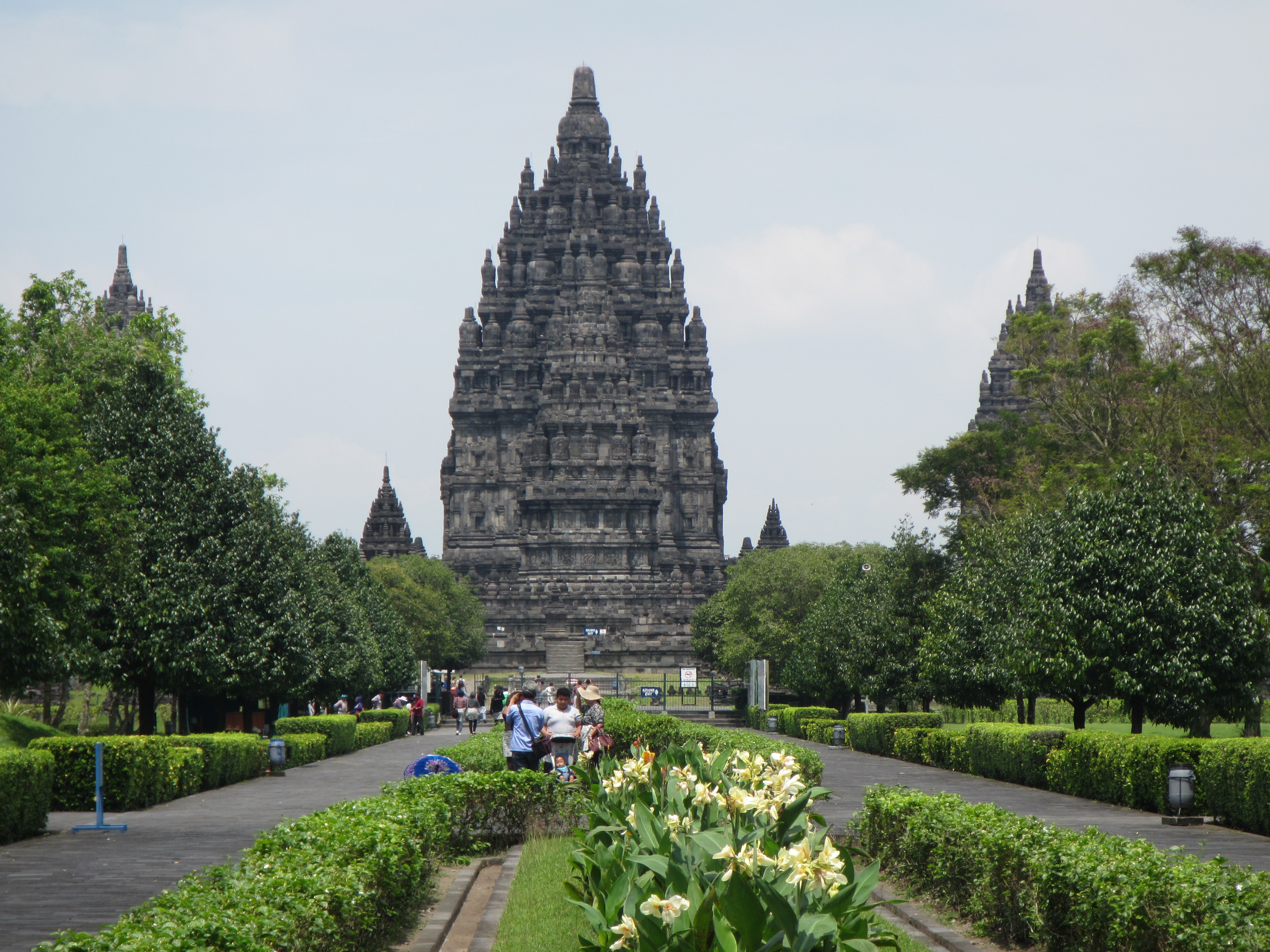
Prabanan is the Hindu sibling of Borobudur, built roughly contemporaneously and likewise abandoned swiftly after a similar regime change, both spiritual and political. Instead of one large building, though, it is a temple complex with separate structures for Shiva, Brahma, Vishnu, etc. We could go inside most of the temples, though we had to wear a hard hat for one of them, as they are working on structural repairs following the 2006 earthquake. The carvings are amazing and as you would expect a lot more fun than the Buddhist ones – multi-armed Kali, monster mouth doorways and mustachioed men abound.

Yogyakarta 021Yogyakarta 024Yogyakarta 025

It is as good a point as any to mention that I have found the mode of dress and presentation among the Javanese to be singularly sexually dimorphic, more so than other places we have been. Women (whom I tower over with a few rare exceptions) seem very … womanly, with small hands, small feet, a neatness and cleanness about themselves. Oh, and headscarves sometimes. Men have shirts cut close to the body, mustaches, white eyes and teeth, and handsome faces full of confidence. They roll their r’s here.

Anyway, we toured the temples for about an hour and a half, and then we and our driver drove to a bakso joint on our way home. Turns out that bakso is meatball soup with noodles. It was, like a lot of Indonesian food that we have tried so far, homey and satisfying rather than spectacular. I like the food here a lot and have never sickened on it, but it is not exciting the way Thai food is.

Despite our early rising, we got a second wind on our way back and so went to the Affandi museum, which we had been to the day before but found it closed. This time, we got a delightful (free with admission!) tour of the artist’s work, which is housed in his own home compound. The buildings are all a shade of robin’s egg blue with curved walls and a roof/ceiling style reminiscent of a banana leaf. He apparently felt that being covered with banana leaves had protected him in early life, and had used them to protect his paintings when he was a poor student.
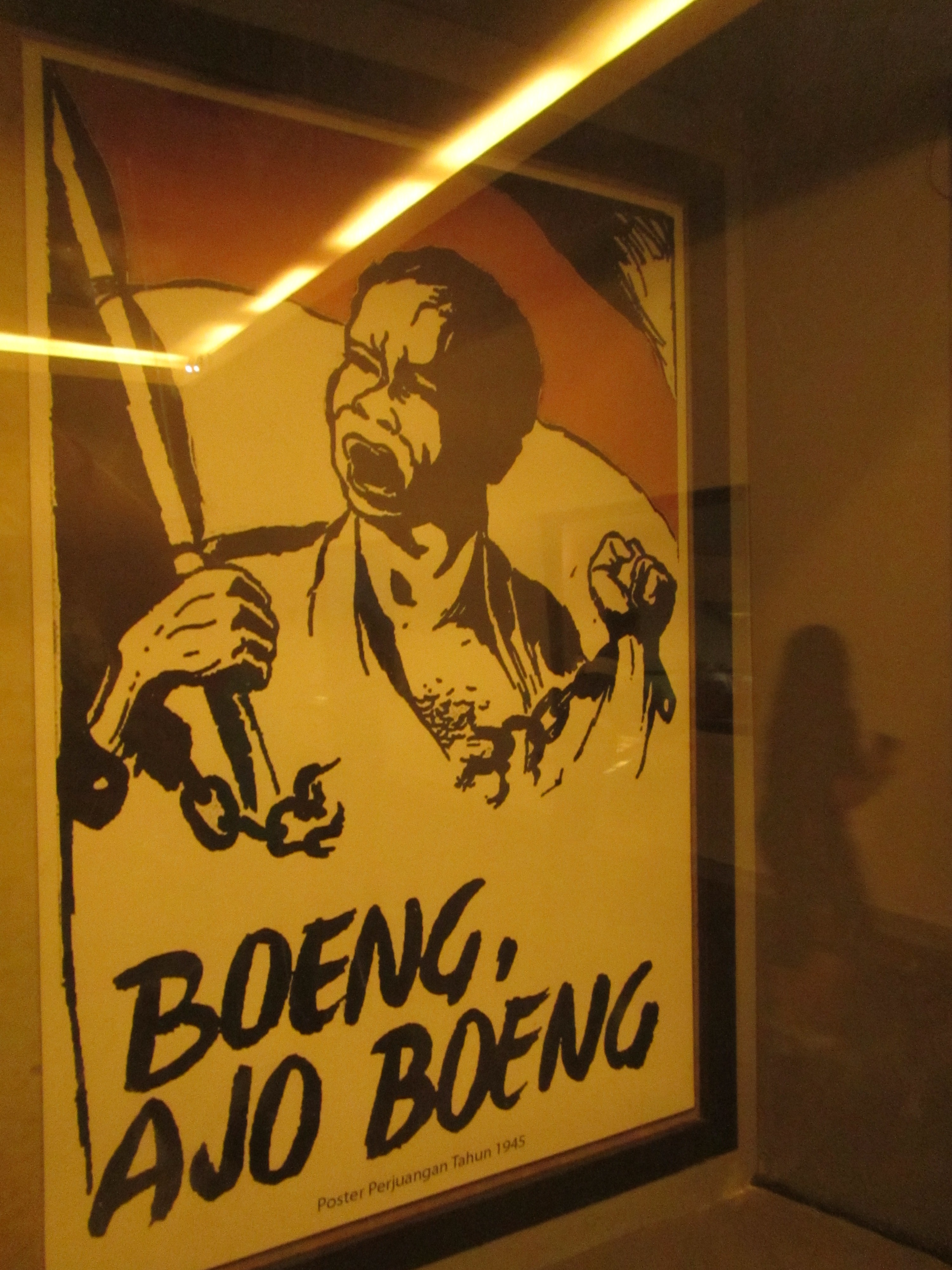
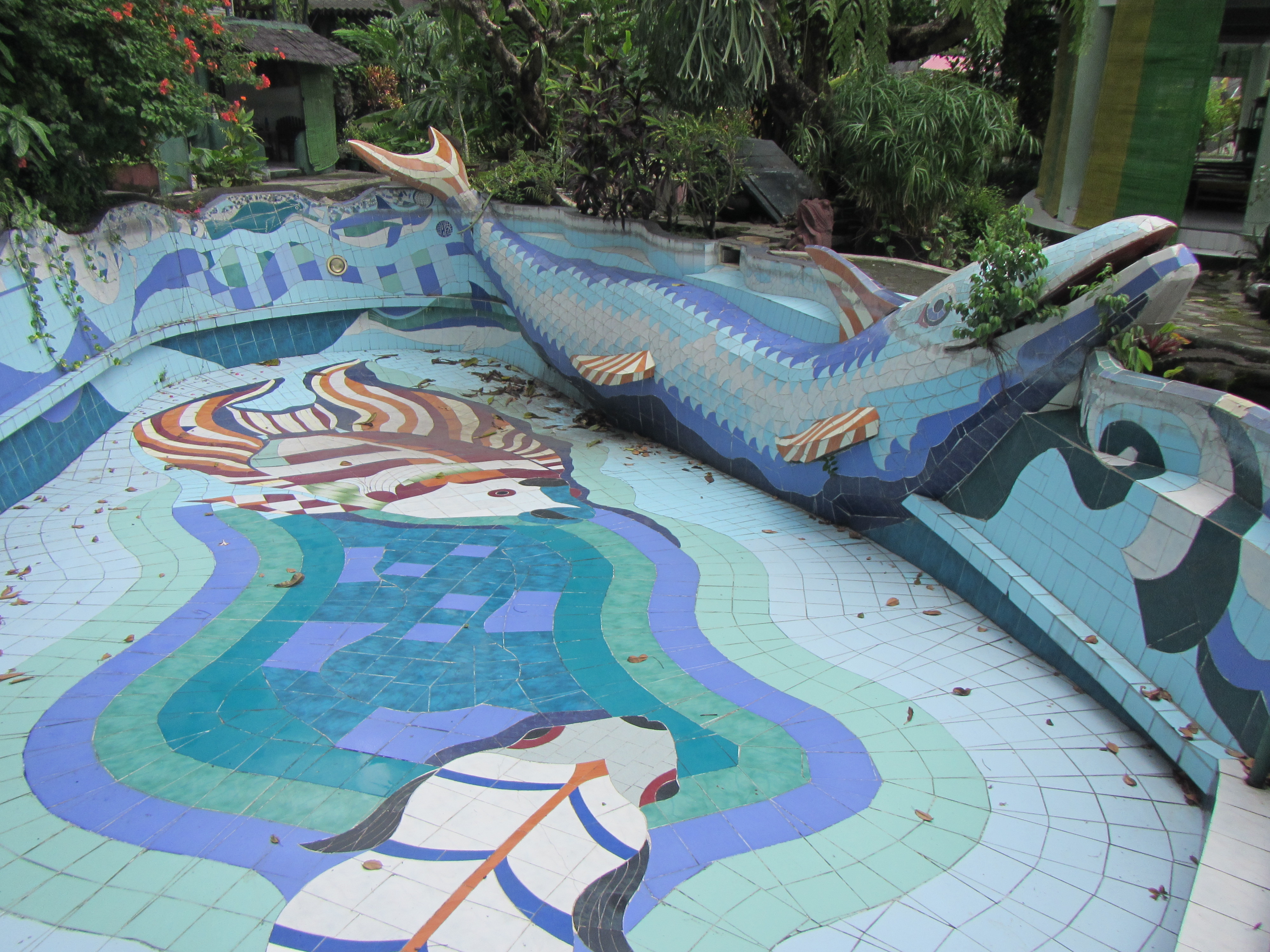
Yogyakarta 027Yogyakarta 026

I had wanted to see this museum because Affandi is recognized as one of Indonesia’s great modern painters, and his style clearly has left it’s mark on the local scene – at least judging from the paintings we saw in our hotel (which is run by an artist) and also in Bali. But I was most glad that we saw his work after we had visited Borobudur when we got to the third gallery. There, among the sketches, was one of his wife napping at Borobudur’s lovely grounds. Other sketches showed details of Prabanan’s carvings. I loved seeing the evidence of his family’s gentle visits to these monuments, as it made me feel connected somehow to this foreign artist who is no longer with us, and in a grander sense, connected to the world.

We finally went home and napped for three hours, then ate, foraged for middle eastern pastry for dessert, and then returned to bed. It was a happy day.

– the private eye


Yogyakarta – Days 1 and 2

Oh, the batik salesmen of Yogyakarta. They seem so friendly, so hospitable. “My friend! What is your name? Where are you from? When did you arrive? Where from? For how long will you be in Yogya?” But once such pleasantries have wound down, they cast their line. “Oh, you arrived today? You are lucky, it is the last day of the student art exhibition, which has a lot of batik!” Because, you see, their eyes and posture tell you it is so sad, a veritable tragedy, how poor the batik is in your country, and so it’s really your duty to bring some home.

We’ve been trying to come up with a fun way to respond, to play along and pull their chain once it’s clear they’re trying to cheat you. The one I want to try involves reading up a lot about the art and then telling the person I’m a connoisseur, in fact a professor at a prestigious American university, an art professor who studies batik and so yes, can truly appreciate and discern a fine piece of batik. Of course, they might see this as raising the stakes – if I’m that, yet so clueless to talk to them, maybe they can make a HUGE sale… We will see. Either that, or be completely clueless on what batik is and then tell them that I don’t understand why you’d ever want cloth with patterns on it.

Our first day was a mix of reading in the guest house lobby waiting for our room to be ready, then venturing out to Jl. Malioboro (named after the Duke of Marlboro) to see the market.It had a lot of batik, of course, front and center. But in the back, there were also spice and food merchants, huge bags of cinnamon and turmeric, bins of star anise, cloves, and cardamom, all filling the rain-humid air with such wonderful smells. And, of course, head scarves:

Indonesia 011

The Private Eye commented that she’d like a guide: some of the foods, such as dried, thin disks of some starch that were everywhere, were foreign to us. And as she finished her first durian juice, her prayer was answered. A man named Aldi started chatting us up. He is a spice merchant, and started telling us about Sultan’s Tea, also called garbage drink, but not for its flavor, rather that when prepared the many spices floating in the tea make it look like flotsam and jetsam. As we walked back to his stall, we asked him about the different foods and he answered all of our questions. He then sold us two packets with which to prepare Sultan’s Tea, which include ginger, bay leaves, cinnamon, and a half dozen other spices. They were about 90c each; even if a total rip-off, I’d gladly have paid $2 for the time talking with him. We tried Sultan’s Tea tonight at dinner and it was great, sweet and spicy, so we will have to break open one of the packages sometime soon.

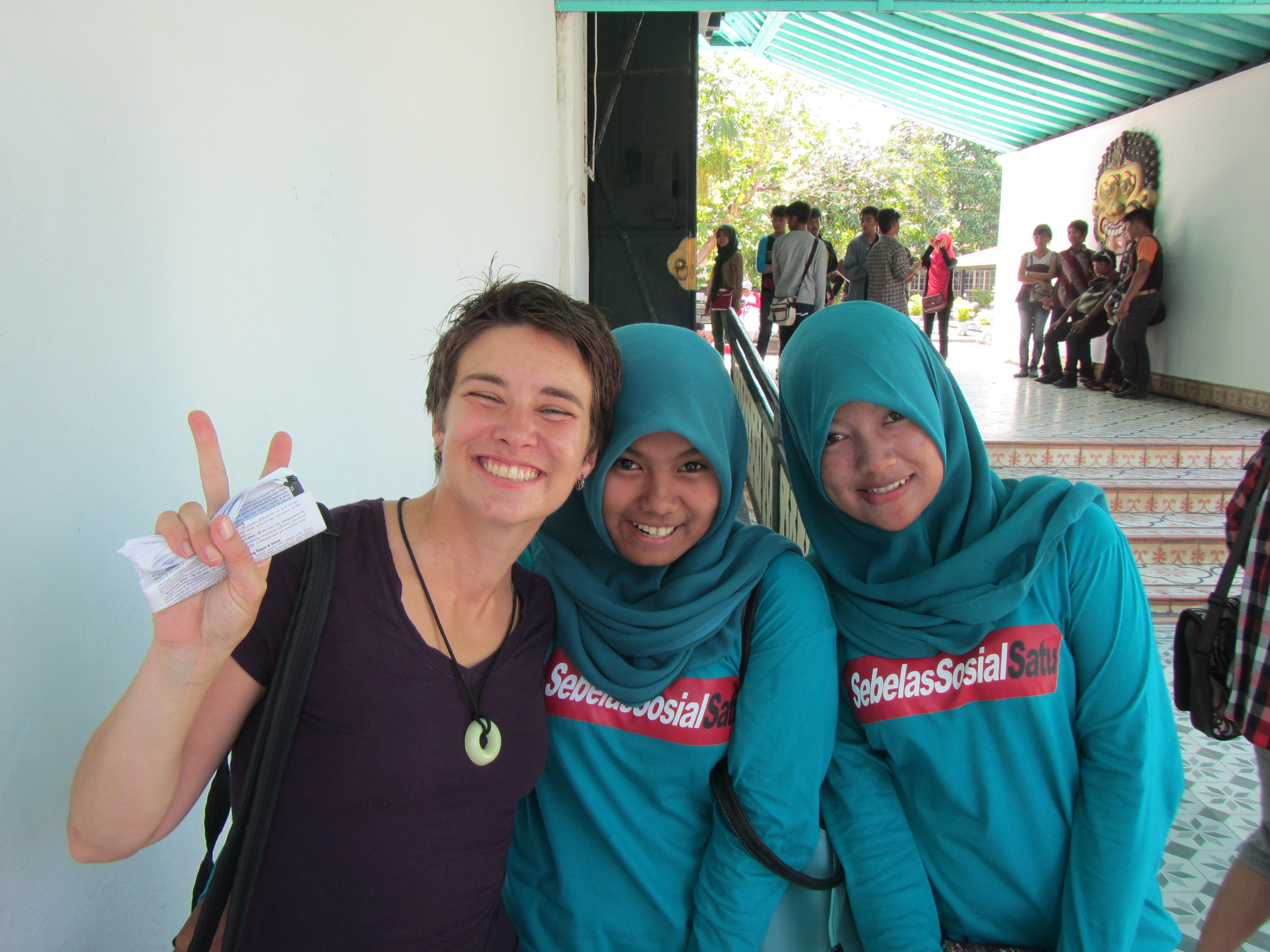
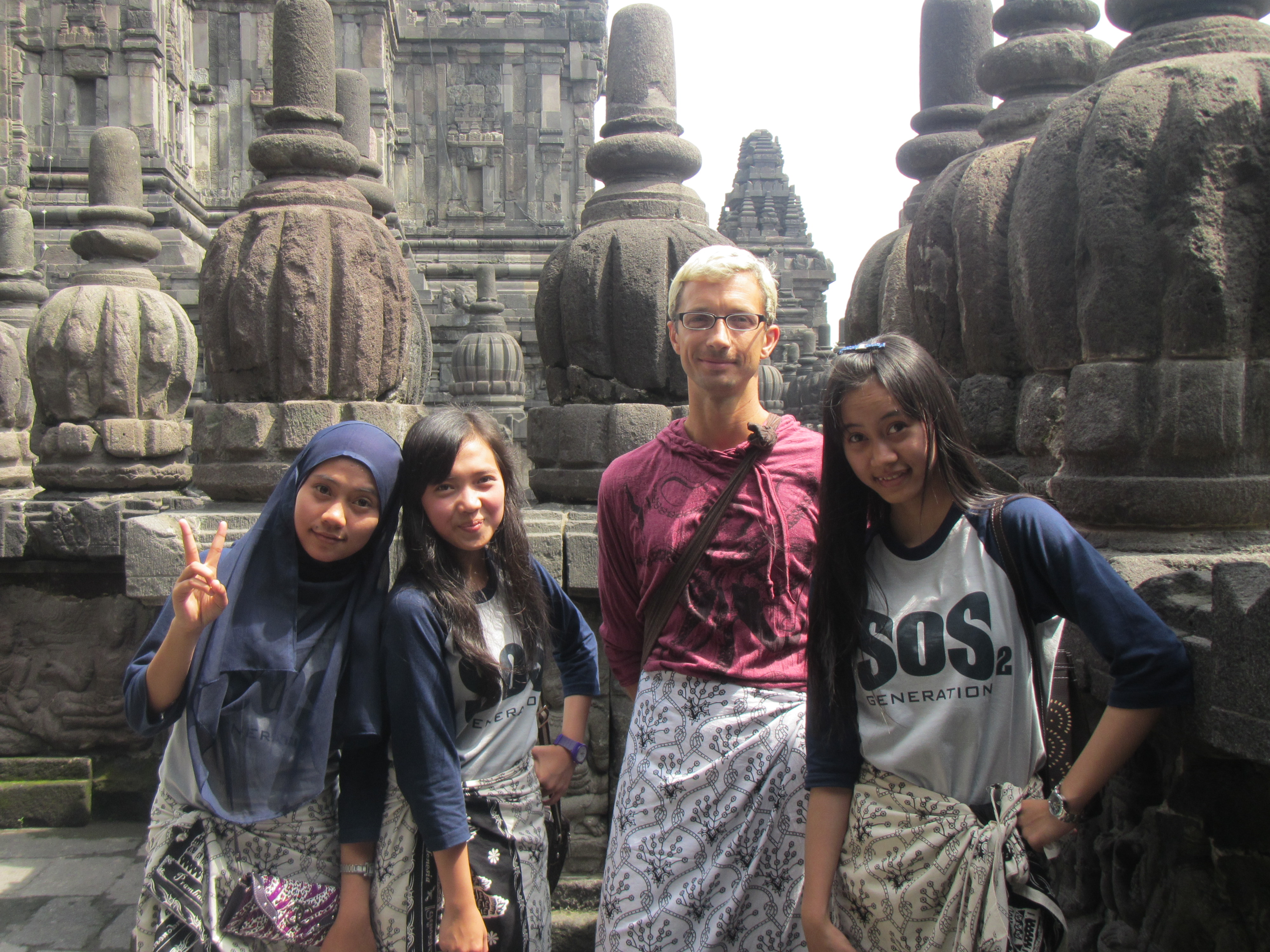
Today, we went to the kraton, the large walled complex that encompasses the Sultan’s palace. We also ventured to the silversmithing village/neighborhood a few kilometers away. At the kraton,we encountered a first, something which we’ve experienced at every tourist destination in Yogyakarta: we are one of the attractions! Teenagers, generally school groups, ask if they can have a picture with us. We usuallu say yes, except when there are so many (and have so many cameras they need to switch between so everyone gets a picture) that we don’t seem to be seeing the sights anymore. Sometimes we ask if we can have a picture too:

Yogyakarta 007

Yogyakarta 020Yogyakarta 023Yogyakarta 022

In all honesty, though, today was more about the transportation than the destinations. We rode in a becak, a two-person seat pushed by a bicycle, in our case ridden by old, gnarled and wiry men who could read the traffic so well that they never used brakes yet were always completely safe.

Yogyakarta 005

I liked the idea of transportation infrastructure that puts its providers in good shape. We rode the bus and, with the help of a man from Holland who used to live here but now just visits, figured out a transfer – no matter that our destination, the Affandi museum, was closed. Then the rain began, and we hid under a tiny tarp with three teenagers running a coffee cart, where we had two cups of coffee, two small bundles of rice and chicken, three egg rolls, and a few other fried goods, for R12,000 – around $1.50.

It’s hard to say much about Yogya just yet – while there is tourism here, it seems much more a working city, and so the culture is not as on display. It also means the division between tourist and local is much thinner, such as sitting in a donut shop that is a Starbucks clone, surrounded by Indonesian couples and friends chatting. Tomorrow we wake at 3:45 to go see Prambanan and Borobudur, enormous, beautiful Hindu and Buddhist temples. We have booked a flight Wednesday afternoon to Singapore, where hopefully we will connect with Life Is Too Short, as well as the Singaporean man we met on the bus to Chiang Rai from Tha Ton.

— The Professor


Kuta to San Francisco noobs: FAIL

Our last full day on Gili Trawagnan was Thursday the 14th. Over breakfast at Bale Sasak, we met The Wine Label Designer, who lives in Napa. After a bit of chit-chat, we agreed to have lunch together. He had just arrived on the island, so we gave him a bit of information on how to get around and fun things to do. We then parted ways: we watched an episode of Homeland in the height of the afternoon heat, while he went paddle boarding. After watching the sunset at Exile one last time, where we had an interesting conversation with a local who helped start one of the three major bars on the island. He talked about island politics and some of the recent legal issues as well as methanol poisoning. We met up with The Wine Label Designer again for a drink at Surf Bar, whose young proprietors were actually a bit obnoxious. But they let us play our own music so we all listened to The Black Keys for a bit before The Private Eye and I decided to turn in.

Denpasar airport is actually much closer to Kuta than Denpasar. Since we have a 6:05AM flight to Yogyakarta, we thought spending one night, a Friday night, in the famous/infamous Kuta was a good idea. Kuta is kilometers of beautiful beach that’s pretty good for surfing: it’s where Bali tourism and vacationing began. These days, it’s a long strip of clubs, minimarts, tourist-friendly restaurants, bars, and little stores hawking touristy wares. People traveling to Bali for its culture avoid it like the plague; people traveling to Bali to dance, lounge on the beach, and party love it.

After a 90 minute boat ride from Gili Trawagnan and a 2 hour van ride, we arrived in Kuta and booked a room. We had a nice conversation with a Londoner who was traveling with two of her girlfriends. She had a lot of interesting travel stories, but the conversation was also a little sad. She found out that there had been a bunch of layoffs (redundancies, in British parlance) at her work while she was away and didn’t know whether she was one of them. Based on a conversation she had with her boss before she left (“While you’re traveling, think about what you might want to do next…”) it seemed pretty clear she probably was, but she hadn’t connected the dots. We both stayed mum on our independently reached conclusions.

I had scraped my foot on a rock in the surf when snorkeling on Wednesday, and a torrential downpour had left large standing pools of water in many of the side roads on Gili Trawagnan on Thursday night. I ended up having to step in a few of them, and despite using iodine and alcohol before bed, I woke up Friday morning with the scrape a bit red and tender. So as soon as we arrived in Kuta and had a room, I headed to a clinic to have the scrape cleaned and dressed as well as receive some antibiotics. Once that was complete, we wandered the alleys a bit for dinner, followed by watching the sunset on Kuta beach. Walking back to our room, we came aross a restaurant with fire dancing to thumping techno and so stopped for dessert, then finally made a few sprints between covered alcoves when the downpour momentarily receded.

So where to go for some music? We surveyed the options and decided on first walking to Kuta’s main drag to hear if there was anything good. If not, then we’d try a place called Deejay Club that would be a very short cab ride away. If none of those panned out, we’d head to Seminyak (a much longer cab ride), the upscale version of Kuta, where The Wine Label Designer said he thought we might like.

Kuta’s strip (Jl. Legian) was a bit boring and crass – The Private Eye actually saw a guy grab a drunk girl and grope her (unwillingly); she broke it up. After that, we walked much more closely together, listened for a bit at the one place that sounded promising, and decided to move on to Deejay. After fending off an irate taxi (but not Taksi) driver who claimed nobody uses meters on Friday night (hint: if they become angry they are probably lying), we found a respectable taksi, arrived at Deejay around 12:30, and found out it didn’t open until 1. Later that night, taking with a woman with excellent English, we found out Deejay is where people go after the regular clubs, because it’s open until 11AM.

But our taksi to the airport was at 4:30AM, so we didn’t want to hang out for half an hour in a kinda dirty and quiet alley for the late club to open, given we wouldn’t be able to stay for when it would get going. So one more taksi, this time to Mint in Seminyak.

But oh, what San Francisco fools we are. You see, these are the upscale clubs. You know, the ones that successful people in their thirties go to. That means they have a dress code. Psylo shorts and a tank top don’t make the cut – sleeves at least, collars preferred, leather shoes appreciated. So we wandered around a bit, realizing the intersection of good music and would let me in was the null set. Especially frustrating given I could have worn appropriate clothes but didn’t know. After weighing our options – three more taksis to go home to change, come back, then head home, seemed like too much. And so, we San Francisco noobs, to whom dress codes are completely foreign, utterly failed to dance.

And so, 90 minutes of sleep later, now we are on the flight to Yogyakarta, which was momentarily in danger of being rerouted to Eastern Java due to fog but is now starting its descent. The guidebook says the greatest danger in Yogyakarta is slick batik salesmen who rip you off; if that’s the seamy underbelly of this town, it sounds adorable.

— The Professor


Gili Air

Our overnight on Gili Air was pleasant. It is like Gili T, but much smaller – not cheaper, and not geographically smaller, but far fewer crowds and almost no hawkers. The number of tourists per resident is much lower. Still lots of restaurants and the like. The west of the island is farms plus bungalow establishments, no stores.

I will be brief – we went there for music and hippie culture, but were charmed by the rural beauty of the backside of the island. It’s a bowl of endless blue looking seaward, and an emerald niche of coconut palms, grasses and scores of golden dragonflies looking landward. Swallows cut through the air in front of you at a steady rate. On the eastern shore, the views of Mt. Rinjani on Lombok are wonderful in the morning, before the clouds hide the mountain. We met a lovely couple – him an artist, she a midwife – on a little bohemian family vacation, and that seemed about right for the place.

There are more mosquitos than on Gili T though. Keep that in mind if you get a room there!

– The Private Eye


Blatant endorsement

Those of you who recall our adventures in Luang Prabang may recall my personal misadventures in hair removal. For those who are interested in such things, I can happily report that Ubud is a very different story, and I am overdue in letting you know.

Fresh Spa on JL Dewi Sita, which promises treatments so good you can eat them, has “caramel waxing.” This means sugaring, in which hair is removed with a warm taffy like sugar and water mixture, rather than hot wax. Because business was slow, I had two ladies working on me – don’t expect this, it was a totally a low season perk. But you can expect an awesome service. It was the most painless hair removal I have ever had. Seriously, it did not hurt, not even the bikini sugar. After the sugaring, they carefully removed stray hairs with a tweezer, quickly, and i was a smooth and happy soon-to-be beach bum. And I got to watch a gecko while it was going on. It was a good price too. Very very happy.

– The Private Eye


Next Steps

We have decided on our next destination: Yogyakarta on the island of Java, with Kuta in Bali as a one night stopover on our way back to Denpasar airport. Our flight is Saturday at 6:05 AM – at that time, we could get two tickets, with meals of our choice, for $130. So we will take a boat to Kuta on Friday, maybe try finding some dancing there on Friday night, then wake up dreadfully early to fly to Java.

Yogyakarta sounds a lot like the Chiang Mai of Indonesia: university town, lots of arts, some fantastic religious sites. But unlike Chiang Mai, it has a sultan.

So we are here on Gili Trawagnan for two more nights. We considered a day trip to Komodo, but once you add everything up it’s a bit expensive. We also considered climbing Rinjani on Lombok or Gunung Agung on Bali, but since it’s the rainy season floods, landslides and such make them questionable endeavors. So we’ve decided to head back west. After Yogyakarta, we hope to go to a bustling metropolis (either Singapore or Kuala Lumpur), then we will have time for one more destination before we start our endgame with Angkor Wat. Until then, we’ll do a bit more snorkeling:

— The Professor


Gili Trawagnan

We have settled for a few days in the strange and delightful Gili islands, with Gili Trawagnan as our base.

It would be easy to dismiss this place on first glance as a party island and little more. There is the predictably busy main drag, with open air pizza joints and seafood barbecues and young men calling out to advertise cheap rooms. But honestly, you would have to be blind to let that first impression stand for more than an hour. Gili T, while no longer a hidden paradise, is compelling.

To start – Now that we have been traveling for almost two months, The Professor and I have this whole finding a room thing down to a routine. I am more picky, more distract-able and more patient, and more likely to be willing to take some time to shop around. So I go and find a room unencumbered while The Professor stays with the bags at a cafe, enjoying a cold drink and freed from the annoyance of my selection process.

Here is where Lonely Planet is useful – it is good for helping you pick in which neighborhood to look for a room. I could tell when I read it that the beach places would be bad value near the harbor, and too expensive for our backpacker budget on the more remote parts of the island. I rented a bike and headed a few blocks down a dirt road leading away from the shore and into the village. Soon enough, I found two good lodgings right next to each other. I was tempted by the reasonably cool fan room in a relaxed guesthouse with a charismatic innkeeper who spoke great English. But I went with the place next door, where the same price got us a bungalow with a pretty outdoor bathroom, a lounge with cushions and mood lighting underneath the bungalow, a tv and DVD player, and a big open hangout area where we could meet other travelers. And for an extra $3 a day, air conditioning, which is nice because we have been sleeping badly. We have been trying to patronize the bar at the first place to help that good-spirited innkeeper, but it turns out it is closed for the season.

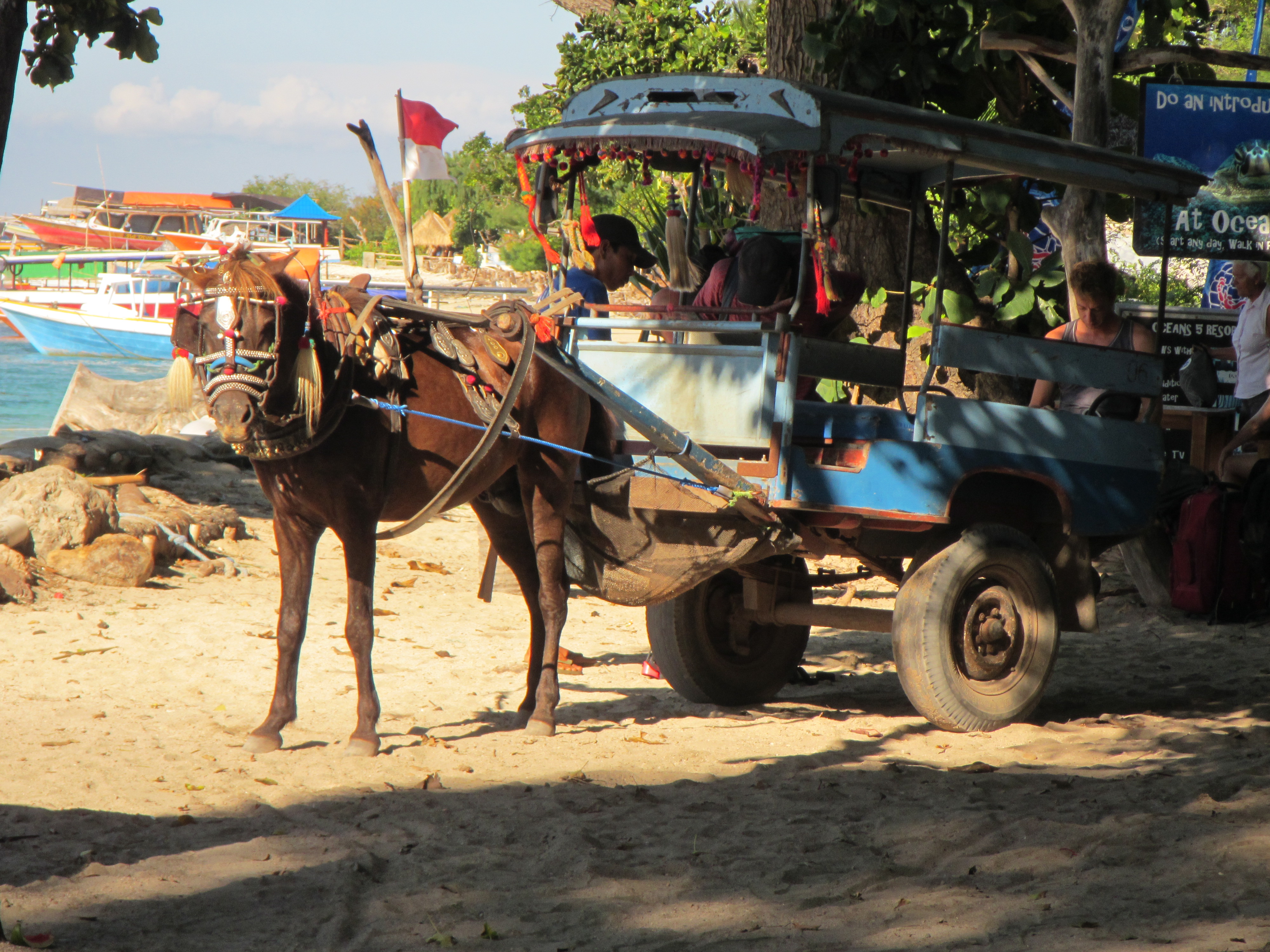
Anyway, this all tells you nothing about Gili T. So, let me say that I learned on that first day that bikes yield to pony carts pretty much automatically. Pony cart is the fastest transport on the island, btw, because there are no motorized vehicles and sand drifts make the roads bad for bikes in some places.

We also learned that the coral is in much much worse shape here than in Amed when we went
snorkeling. Storms, ocean warming, coral-eating fish and turtles, and fish bombing up until 10 years ago have all done a number on the reef. There were lots of fish, however.

We have dived twice since our arrival, one at Talet Malang (sp?) and one at Shark Point. We saw a lot of good fish, one and two white-tipped sharks at the latter, which was awesome. Shark Point also had some great soft coral. However, that one was a pretty exciting dive – the current got so intense that keeping up with the other, bigger, more athletic divers had me blowing through my air from exertion. Eventually, I had to share air with the divemaster while the three of us crawled hand over hand across the ocean floor to reach a safe place to ascend, the current was so strong. The divemaster had a huge tank with a lot of air left, so I actually found the whole experience fun and educational rather than frightening, a sort of cross between diving and rock climbing. We all did everything you are supposed to do when things go wrong, and we arrived safely at the surface and then onto the boat, and on to shore.

On land, the most frequently encountered fauna are the aforementioned ponies and a plethora of young cats with naturally stubby tails, much like Manx cats but less pretty. A kitten cohort is apparently getting weaned right now, so there is a lot of feline whining.

IMG_1497

Hmm. I feel like I am circling around the island but not really getting you into the charm of the place. Let me try. This island is only recently settled by anyone at all, so the juxtaposition of traditional Sasak people from Lombok and tourists is not galling. I like seeing the women in headscarves walking near the women in bikinis. At sunset, the muzzien calls the people to prayer over a loudspeaker. At night, along a string of beach bars, the beats call the people to dance. Lots of children fly kites impossibly high. The air is soporific.

There is a solar array on the hill. They grow coffee here, and keep brown cows and assorted goats. We were followed by a loose pony while biking through the interior. There is a simple cemetery with wooden headstones near a coconut orchard. One one coast, you watch the clouds pile over the Rinjani volcano in Lombok. On the other coast, you watch the sun set beyond Bali, the light turning the clouds and the sea into pastel castles and liquid gold. Everyone turns out to watch these colors, whether at the downtempo bar, the acoustic guitar bar, or just along the sand.

IMG_1438IMG_1437

Indonesian food is comfort food, far less dazzling than Thai food but simply satisfying.

Today we are doing a an overnight trip to Gili Air, a smaller island with less going on, except for one beach bar playing music we like. Then it is back to Gili Trawagnan, where we will take care of some things with our good wifi connection, and make some decisions. We have one month exactly left in Asia. What shall we do with our time?

– the Private Eye


Bullet Points on Gili Trawagnan

The Private Eye is writing a longer post on Gili Trawagnan, where we have been since Saturday, February 9th. But I thought I might give a few bullet points.

  • Fastest mode of transportation: small buggies pulled by ponies (no motorized vehicles on the Gilis)
  • Scariest moment: clambering up a hill of coral, hand by hand, fighting a strong current at 30m depth with 70 bars of air left
  • Biggest surprise: running into an EE Ph.D. student from Stanford whom I’ve co-authored a paper with

    Indonesia 004

  • Best meal: whole red snapper caught by the island, grilled to order in the night market
  • Aha moment: hearing the call to prayer five times a day
  • Biggest exercise of self control: after having our dive leader pretentiously chastise us for not knowing the formula for computing maximum operating depth for nitrox diving (SSI uses tables), being kind when his math was wrong twice
  • Best thing about our bungalow: outdoor, private bathroom including outdoor shower
  • Most fun moment: having many locals ask us how much they can buy our glowing necklaces for, they are amazed by them

— The Professor


Ubud to Amed and the USS Liberty

Our last day in Ubud, February 7th, was hectic.

While down near the Monkey Forest, visiting Andy in his studio, we came across a tailor/leatherworker. Hanging in his shop was a leather jacket I thought The Private Eye might like. Back in college (a decade and a half ago), she bought a light leather jacket at The Gap. It became one of her most worn coats, due to its combination of useful features: a lining warm enough for a cool but not cold night, a hood, side pockets without zippers that scratch your wrists, and an inside pocket for a wallet and phone. The jacket has been slowly falling apart, and so for the past year or two I’ve been looking for a replacement. This jacket seemed perfect. Heavy goat leather, so it can take the beatings of everyday use, a hood, an excellent cut, her size, and a beautiful teal lining. The day before we left, I showed her the coat and in a prearranged dance of signals so the shop owner would not know her degree of interest, she tried it on and said she loved it. There was one catch: to make a new coat would take 2-3 days, and we were leaving tomorrow. So perhaps he could sell us this one? And add side pockets? Without zippers? And an inside pocket? And repair/replace the lining because it’s a little worn from show? The answer to all of these questions was yes, and at a fantastic price. The one catch: it would not be ready until 3.

And just in case it sounds like I always bargain low prices, I don’t. When the shopkeeper quickly agrees, then smiles, and touches the money to similar items for good luck, then you know it could have been cheaper. Like the Barong mask I bought at Gunung Kawi.

So we planned to leave Ubud at 3 or so. We took care of all of our last tasks (a carved wooden mask for Cleverpig, register for Burning Man ticket sale, a gift for furrybluehouse, some Internet banking, returning our library books, a waxing for The Private Eye), and arrived at the Monkey Forest parking lot at 2.

You see, by this point we had several bags of stuff for our real lives – presents for friends, a few souvenirs (Barong mask for my lab!), two pairs of pants from a cool but cheap designer, and now a leather jacket. Our taxi agreed to leave for Ubud at 3, but could not do much later. So once I picked up the jacket, I hired a scooter (R10k) to take me to the post office to mail this all home. With one hand I held onto the diver, with the other I held the four bags. Sending it all by sea (2-3 months) and packing cost about $80. So then hop on a scooter back (driven by an old man who drove a harder bargain, R14k), and call Made, the driver, to tell him we are ready.

And what a good driver Made (mah-DAY) is! We would recommend him to everyone. He drove us to the puppet and mask museum in Ubud and when we discussed Amed, he gave us a price that later research showed to be very fair (R350k, or $40) for a 2 hour drive. We had a wonderful conversation during the drive. We talked about Bali, his children (two daughters, learning Balinese dance), America, the permanency of residences and families in Bali, village life, immigrating to Bali (village head gives you rules to follow…), and Indonesia. In March and April he works for an American company that organizes a bicycle ride in Bali, the rest of the year is for hire. If you are ever in Bali and want a good driver, ask and we can give you his information. It can be hard to find a good driver and just meeting people on the street is hit or miss.

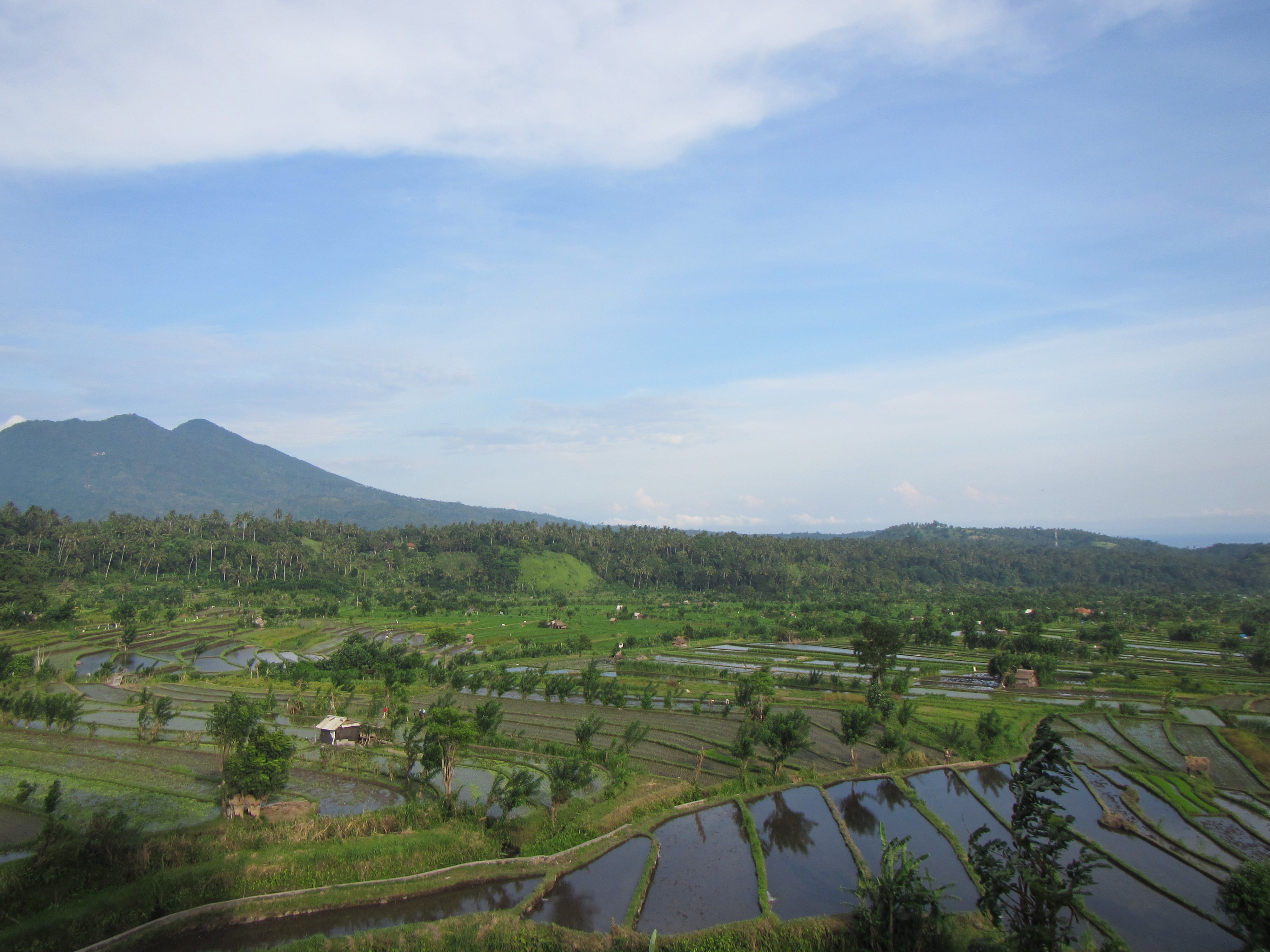
The drive began as Ubud traffic, but towards the end became beautiful. Roads high above terraced rice fields, huge banyan trees, and the ever-increasingly looming power of Gunung Agung, whose top was shrouded by a single, lonely cloud.

IMG_1352

It’s the low season in Bali. Ubud still has a good number of visitors, travelers, and tourists, but Amed is very quiet. It’s a line of bungalows, warungs, and dive shops along the road parallel to the beach. In the low season, the local industries are fishing and salt making. The Liberty dive is off the shore from Tulamben, which is a 10-15 minute drive northwest; we chose to stay in Amed because the beach is tiny black pebbles rather than big black rocks and the town has more to it than just diving.

We picked Eco Divers because they have a reputation for being environmentally conscious. Seemed a reasonable distinguishing feature. We arranged to dive the next day, they helped us find a bungalow (which we chose to not spend a second night in – while nice looking and clean its architecture is such that it stays hot at night, our second night, tonight, is in a bungalow run by our dive guide, on the beach, cooler, nice, and an even better price), and arrange for a boat to the Gilis. The dive price was high; I’m willing to negotiate for goods and sleeping, but diving doesn’t seem like something to drive a price on, and a great dive is so much better than a good one.

After Sail Rock, we weren’t sure how many days we would like to dive. We figured that if conditions were poor, we’d hang around and wait to dive until they were excellent. This was a little frustrating to Eco Divers (How many nights? Not sure. How many days of diving? Not sure?), but we didn’t want to commit to many days hanging out on a beach and also didn’t want to leaves before a great dive.

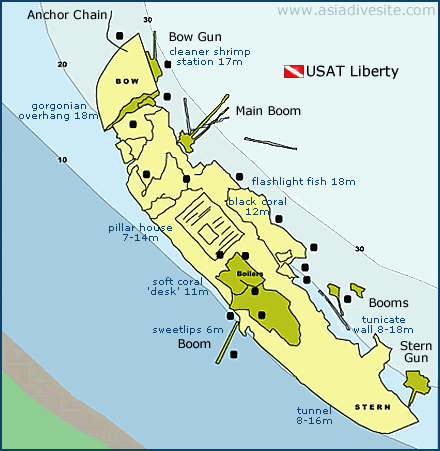
And what a dive it was. The Liberty was a transport ship in World War II, fitted with two guns for self defense. The ship was 120 meters from bow to stern. In 1942 it was hit by a Japanese torpedo and limped to Bali, where it was grounded and sat on the beach until 1963. When Gunung Agung erupted, the ship rolled off the beach and settled to the sea floor about 30 meters from the shore, where it has been since. The stern is the highest point, about 8 meters below the surface. The bow is down at 26 meters (hence our deep dive training!). I wish I could have taken pictures, but renting cameras is expensive and our point and shoot can only go to 10 meters. Here are some pictures I found on the web:

libertymap677_123_WreckDiverAndFish_DSC0057_1

So it’s an enormous ship. Even with the 50 meter visibility (!!!!), you can’t see the ship end to end. Many supporting structures and internals have broken free, leading to side towers of life and a whole metropolitan area of coral and fish. We saw a pair of 4 foot long yellowfin tuna, a 5 foot long sea turtle, schools of tens of different kinds of fish, an enormous grouper, coral of all colors of the rainbow, scorpionfish, and so much more. In Ko Tao, there were what I thought to be large plate coral, maybe 3 feet in radius. On and around the Liberty, there were coral with a radius of 5 feet or more.

For our first dive, we were practically alone; we arrived first and only saw other divers as we left the wreck. Even on the second dive, there were only a few other groups.

On the first dive, we approached at the stern and took a path alongside the ship on the side facing away from shore, until we reached the bow. We then entered the body of the ship and swam between girders to see all of the life within it. Because the Liberty is so large, this wasn’t tight swimming. On the second dive, we reversed our path, taking a different route through the ship. We entered the ship at the stern, swam through it, then returned along the side facing away from the shore. Swimming alongside and within this enormous steel structure, covered and swarmed with life darting to and fro, this private helicopter tour of the aquatic Manhattan, well, it was as good as everyone had promised.

The water was so calm, the visibility so good, and we saw so many rare things (Tuna! Turtle!) that I thought diving again tomorrow would likely just be a disappointment. So we decided to leave tomorrow for the Gili Islands and booked a fast boat with Eco Divers. We found a better bungalow and spent a good part of the afternoon snorkeling just outside it. The snorkeling was similarly magical – while there were no turtles like in Hawaii, we saw many of the same fish we saw on our dive, but this time could linger as long as we wanted to watch them. Also, the coral were outstanding, splashes of color in all kinds of shapes, so much healthier than in Ko Tao. While Ko Tao has one clownfish, named Nemo, carefully protected by a ring of stones, we saw at least half a dozen just snorkeling along the shore.

After snorkeling, we rinsed off and had a wonderful and simple dinner (grilled fish for me, fried prawns for The Private Eye, vegetables, and rice) at our dive master’s restaurant, cooked by his wife, who also makes a mean lemon pancake. I tried arak, the palm sugar wine: it tastes similar to sake. And that leaves us here and now, sitting on the beach, looking at the stars, which look so different!

— The Professor


The value of good people in Ubud

I will admit that for a couple of days, I actively disliked Ubud.

How can this be, you might wonder? This is, after all, a city where art reigns supreme, where mask-carver, batik-maker and painter are viable day jobs. Further, this is the city of love in Eat, Pray, Love. But I didn’t love it to start, though i came to like it very much, and I hope the reasons why may be of use to other travelers.

First: my greatest regret about our preparations for this trip is that neither of us learned to ride a scooter. Despite the fact that one of our dear friends is nothing less than the Scooter-Preneur of San Francisco, and another of our dear friends owns and rides a scooter, in our presence, all the time — we just never learned. In Asia, we soon came to understand, this is the equivalent of deciding not to learn to drive a car in America. You can do fine in major cities, but in the country or in a place without strong transit infrastructure, like Bali, you will be hiring a car and driver, which was a largely unexpected and unwelcome expense. Self-driving car rental here is thin on the ground. Locals tell you about all the tourists who die every year learning to ride scooters here. Fellow travelers who didn’t heed the warning invariably show you some scrape or another from a more minor accident.

This being the case, we decided to base ourselves in the center of Ubud, so we could walk quickly to many of the main attractions, rather than basing ourselves in some blissed-out rice paddy twenty minutes by foot from town proper. This turned out to be a fine decision for many practical reasons, and I really liked our guesthouse, but the center of Ubud is now well and truly touristed. Picture being at Pier 39, but every shop is filled with interesting things, and has a kind-looking woman out front urging you to buy. Every street corner has a man asking if you if you want taxi, transport. It’s great for shopping, but a bit overwhelming for me – I tend to notice everything, and everyone, and feel drawn to connect based on very minimal contact. This is a great quality for my work, but a lousy one for navigating a new bazaar in a new country where I feel unsure of myself. Point being, our particular location meant that we could not walk anywhere without being subject to 10 minutes or more of this.

Add to this the 90+ degree heat and humidity that turns my face into a 12 hour wellspring of sweat every day, and I was having trouble enjoying all that is amazing about this place.

But what a difference a new friend makes! The day after we met the Art Teacher (the expat from Canada who lives in Turkey and was here on vacation), we did not see her. She was doing her batik class, and we were making our rings, which I loved as it was both quiet and fully engrossing. Afterwards I had a tougher time enjoying myself, though The Professor and I did a nice sunset walk on the Campuan Ridge (rice paddies, towering pastel cloud views, charming local teens smoking and flirting in quiet corners of a thatch-field atop the ridge), and saw the Kecak and Fire Dance.

IMG_1074

Both are very worth seeing, by the way. The former features a cast of shirtless men who chant monkey-like chitterings as the only musical accompaniment to a drama of a portion of the Ramayana; the section stars Hanuman the monkey king, of course. The latter features a man, supposedly entranced, who is “riding” a hobby-horse over a bed of hot coconut husk coals barefoot, each charge of knight and steed resulting in a beautiful and shocking shower of embers directly at somebody’s face, but never touching them. Attendants swept the coals back into a pile after each pass, until the man astride the magic gallops through them again. Eventually he collapses from exertion and is revived by the priest. I know this is an old ritual tarted up for tourists, but it remains powerful.

IMG_1102

And yet despite the wonder I remained discontent! But that all changed the next day when we met up with the Art Teacher at the Threads of Life textile center for a lecture. It’s a worthy organization with an approach both practical and academic to preserving Indonesian weaving traditions throughout the archipelago. And the Art Teacher was so enthusiastic and knowledgable about it, and about Bali/Ubud in general. She is very smart, and tells good stories, and it was a pleasure to talk with her. Suddenly, I could appreciate the quiet lanes off the main roads more, and feel a bit less affected by the pleading on the busier streets.

The lecture was followed by a lunch of delicious suckling pig in a nearby warung, where we relaxed despite future daily specials squealing on a balcony one floor below us. Then, following the clue that our laundress had been all dressed up that morning, we went to the temple of the dead. We missed the ritual, but enjoyed seeing the architecture and banyan trees, and just sat around on a shady platform talking. Then we got the bright idea to go to the Setia Darma Museum of Masks and Puppets in the village of Mas, which was exceptional – and was another great place to sit and talk when we weren’t appreciating remarkable art.

IMG_1174IMG_1158

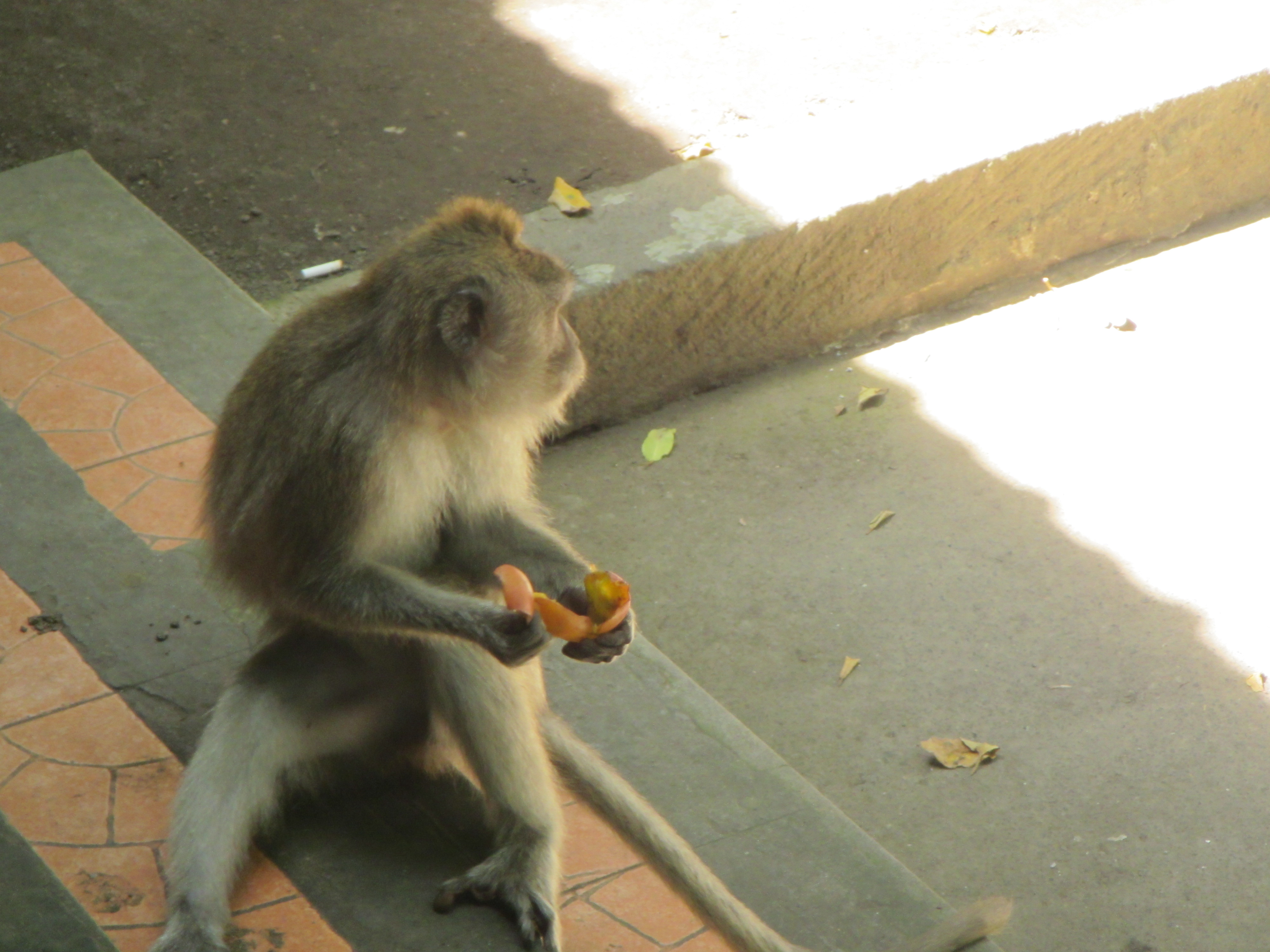
When we got back, we separated near the Art Teacher’s part of town, which is still busy but less frantic, near the Monkey Forest. We parted, and the Professor and I decided to find the studio of the artists we had met in the gallery on Hanuman Street. It turned out that the studio lay directly behind the sacred monkey forest, and that there is a “bike path” (scooter route) that leads there which follows the exterior fence of the forest. We saw plenty of monkeys on our walk, including a baby monkey that was so tiny, it had trouble managing its rambutan fruit.And we didn’t have to pay to go into the forest! And here are full-grown ones:

Indonesia 001 Indonesia 002

Behind the forest, past a woodcarver’s house, lay the studio. It was open walled, cement floored and tin roofed, and the artist I had spoken with for a long time at the gallery was the only one at home. There were stacks and stacks of paintings in racks along the edge of the space, and suitable seating for such a place, such as old car seats and a large sculptural high chair, and some cheap plastic stools near a home-made table. The artist welcomed us, and we shared our mangosteens, and talked until the sun set about Indonesia and America and his art and the yoga-people who come to Bali — both the good and the over-the-top ridiculous: “yoga blah blah blah”. Also hilarious: his explanations about why Balinese men get a lot of action from female tourists, though our host did not relate that he had had any such adventures. I admire a man with discretion.

IMG_1203IMG_1208

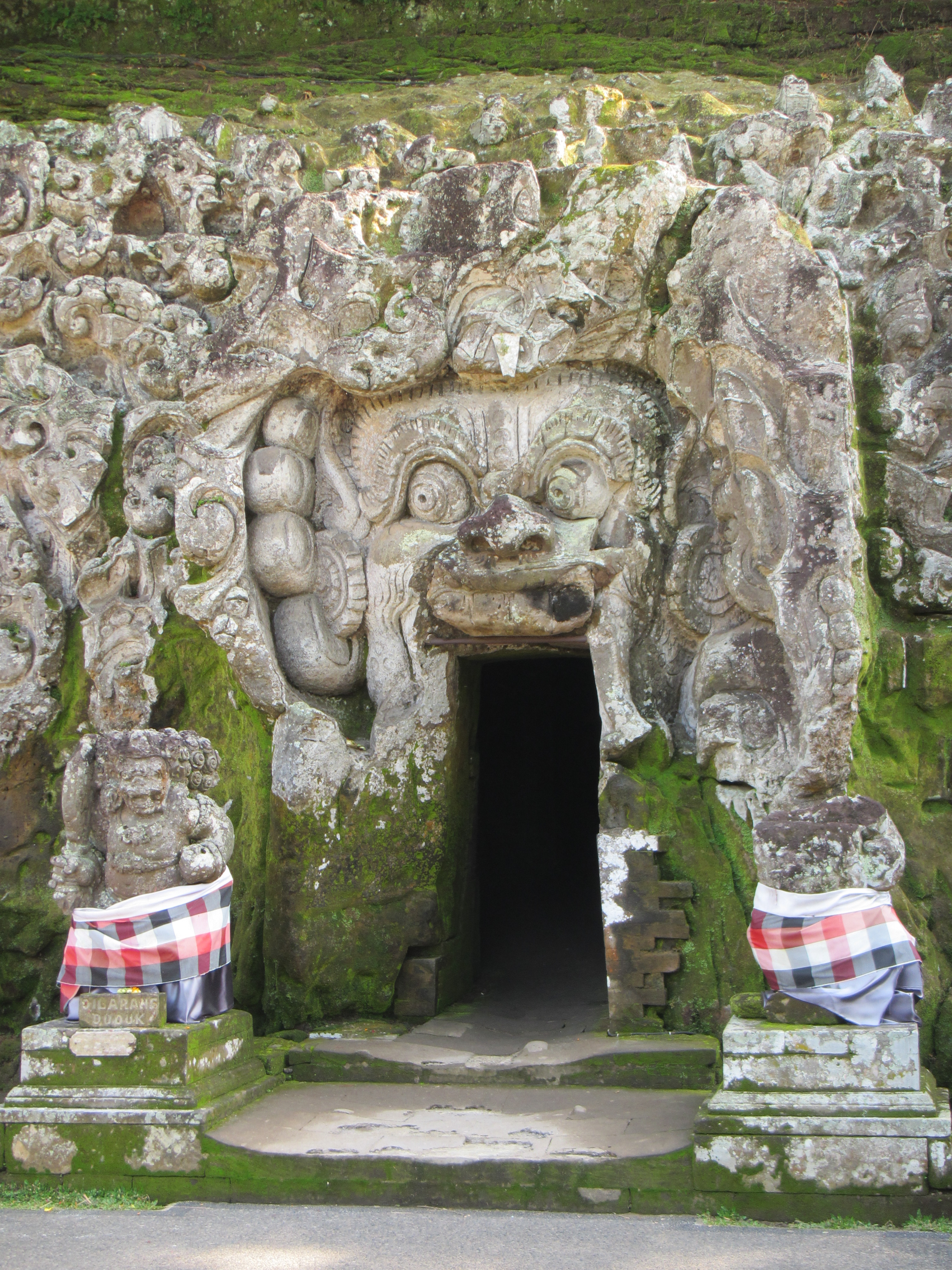
We bid him farewell and had a nice duck dinner, and then went to bed. On the next day, the Art Teacher, the Professor and I walked to Goa Gajah, a cave whose opening is carved in a monstrous face. We then went to Gunung Kawi, a site of old ruins in niches of a rock face. We retired to our homestay for the heat of the day, where I spent my time learning Bahasa Indonesian words from our host’s children, while teaching them English words for things. It was fun; I also tried to teach the oldest tic-tac-toe, but I fear I am a poor teacher and we turned it into a counting game.

IMG_1220

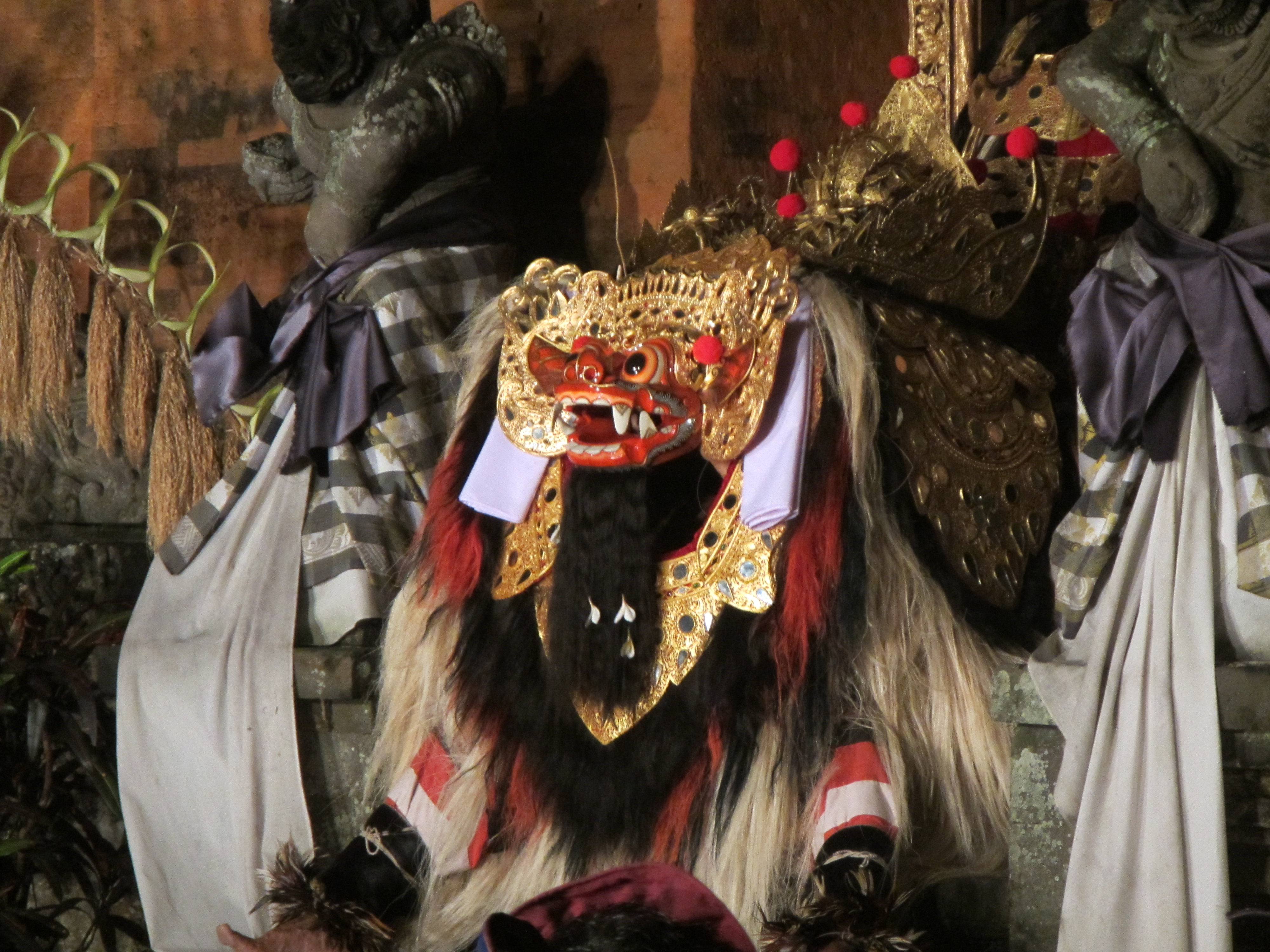
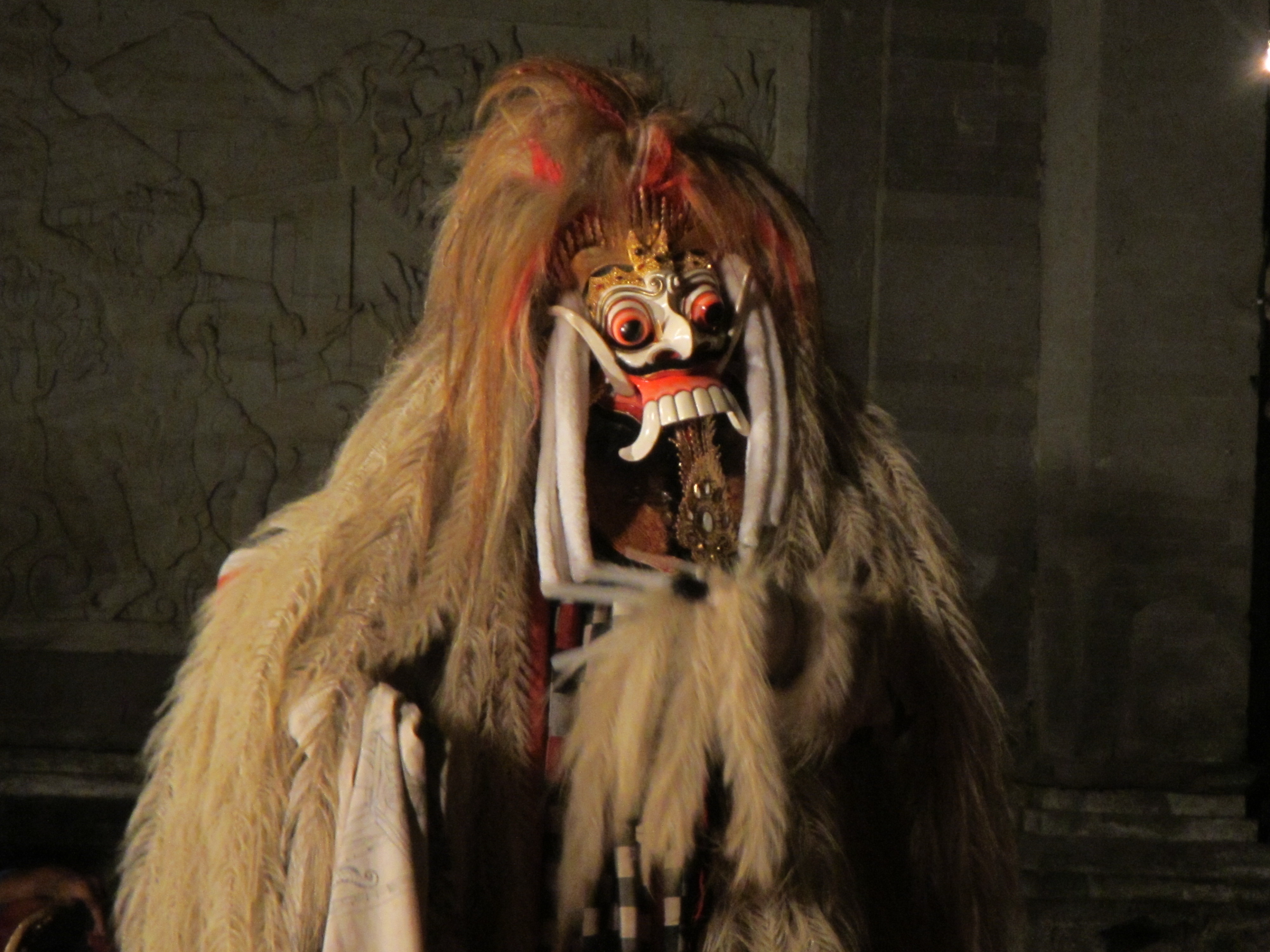
Later, we went back to the palace and enjoyed a much more exciting Legong dance than our first one, the dancers seemed much more passionate. We also saw the Barong dance, in which a large, shaggy embodiment of good does some onstage comedy with a monkey, and later fights a demon. Predictably, I love the Barong. So do children everywhere!

Barong:IMG_1283
Demon:IMG_1343

It was a great performance.

Today, we head on to Amed on the east coast to dive the wreck of the USS Liberty. I am looking forward to less humid weather, but I have come to appreciate Ubud more, thanks to our hosts, their children, the artist and the Art Teacher. It is amazing how much kindness and conversation can turn your whole view around.

– The Private Eye