RSS

Author Archives: theprofessorandtheprivateeye

Cultural Heritage, Waterfalls, and Plans

We’ve made our travel plans to Ko Tau. We are taking a 7:35AM flight out of Luang Prabang to Bangkok on the 16th, will spend the day in Bangkok, then take a sleeper train down to Chumphon. From there we will take a ferry/hydrofoil to Ko Tau, settle in, and start some beach time and scuba diving. We’re thinking we’d like to make it to Ko Phangnan for the next full moon party on the 26th, but given how busy it’s supposed to be around them we might just head east for a live aboard dive of the Similans (a dive where you live on the dive boat).

Perhaps the one thing against Luang Prabang is that it’s been a bit chilly. Much like Pier 29 in San Francisco, local stalls have been selling Lao P.D.R. sweatshirt hoodies at a brisk pace. But otherwise it’s wonderful, a small city with a mix of bustle (the night market) and quiet, pretty streets (the end of the peninsula). This morning we splurged for pain au chocolate aux aumandes at Banneton, which seems to be the best bakery in town. Of course, splurge means they were $1.90. We also picked up a baguette, which is as wonderfully crusty and chewy as we’ve come to expect from Acme in SF.

The bars on the peninsula close at 11:30, much to the chagrin of some of their patrons. The Private Eye did some investigating and heard that this is because they are close to so many of the temples and the UNESCO world heritage site area. Allowing late-night hijinks could supposedly jeopardize its status, so in a recent town meeting they decided to shut everything down at 11:30. I think it’s for the best, personally. I really liked in Dublin how pubs closing at midnight gives them such a different social place than bars in the U.S. – even if you stay until closing you can still get a reasonable night sleep before work tomorrow. I talked with one Israeli woman who objected; I told her to stuff it, although in more polite words than that. I’m sure the Lao want the tourist dollars, but I also think they don’t want coeds dancing on the tables (something that happened in Utopia last night just before it closed). The sense of entitlement from money can run strong. We also found a very classy bar, Ikon, run by a Hungarian expat.

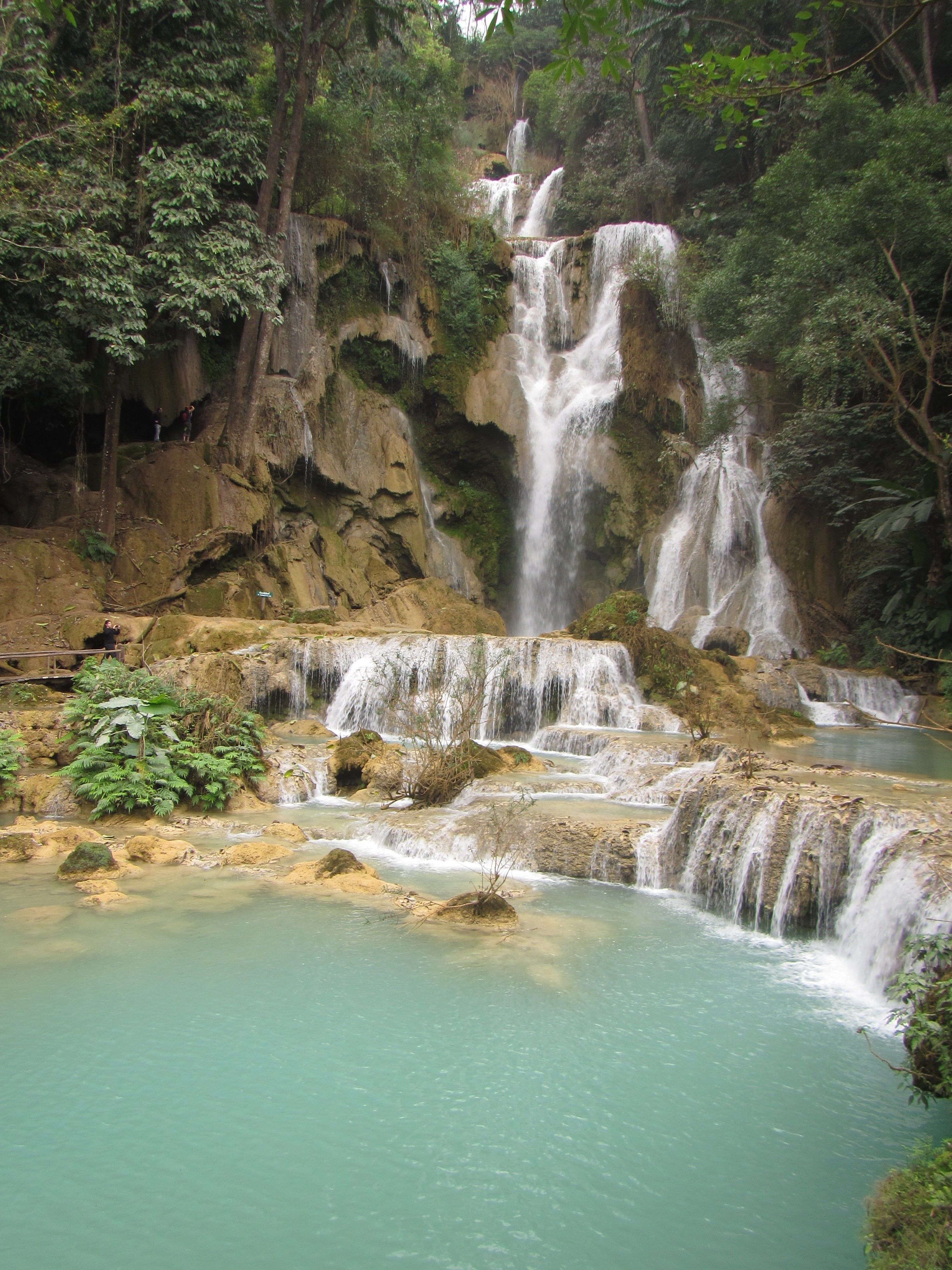
Yesterday we hired a tuk-tuk to take 6 of us to the nearby (38 km) Kan Sai waterfall. The water has calcium in it, which gives it a milky, greenish color. In addition to the fantastic waterfalls themselves, there are two swimming holes, one of which has a rope swing. We had been warned, and so we brought bathing suits and towels. The water was chilly, but it was great fun to scramble across the ladder to the branch, use the hook to grab the rope, then swing out over the water. At the bottom of the falls there’s also a bear rescue/rehabilitation center. We arrived exactly at feeding time. The keepers would hide their food in all sorts of places: under rocks, inside tree hollows, and on top of poles. That way the bears would have an hour or two of sniffing out where it all was, getting to it, and eating it. Seeing a bear peel a banana with its claws and teeth was neat. We had thought about bicycling to the falls, but decided driving there first to get a sense of the road would be better. It looked like a fun, reasonable workout to me; this means it would be unpleasant for The Private Eye, so maybe I’ll do it myself if I become really jumpy.
Jan16 593Jan16 600

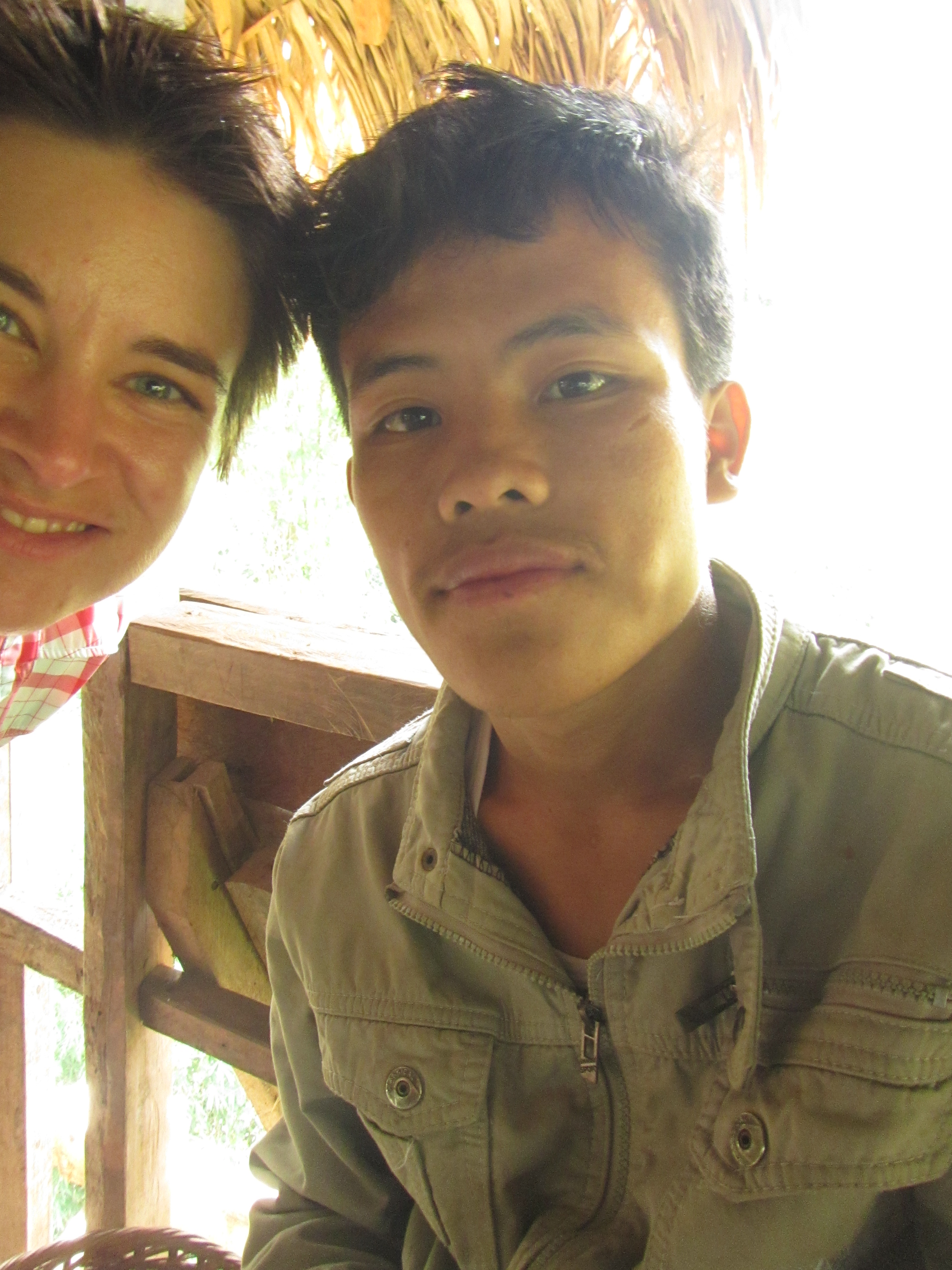
Here’s our new friend Life Is Too Short, whom we stare at in horror as she has stepped over the railing to take a photo:

Jan16 594

She’s headed to Huay Xai for the Gibbon Experience in part based on our and The Blythe Spirit’s recommendation. We may cross paths again in Bali mid-February.

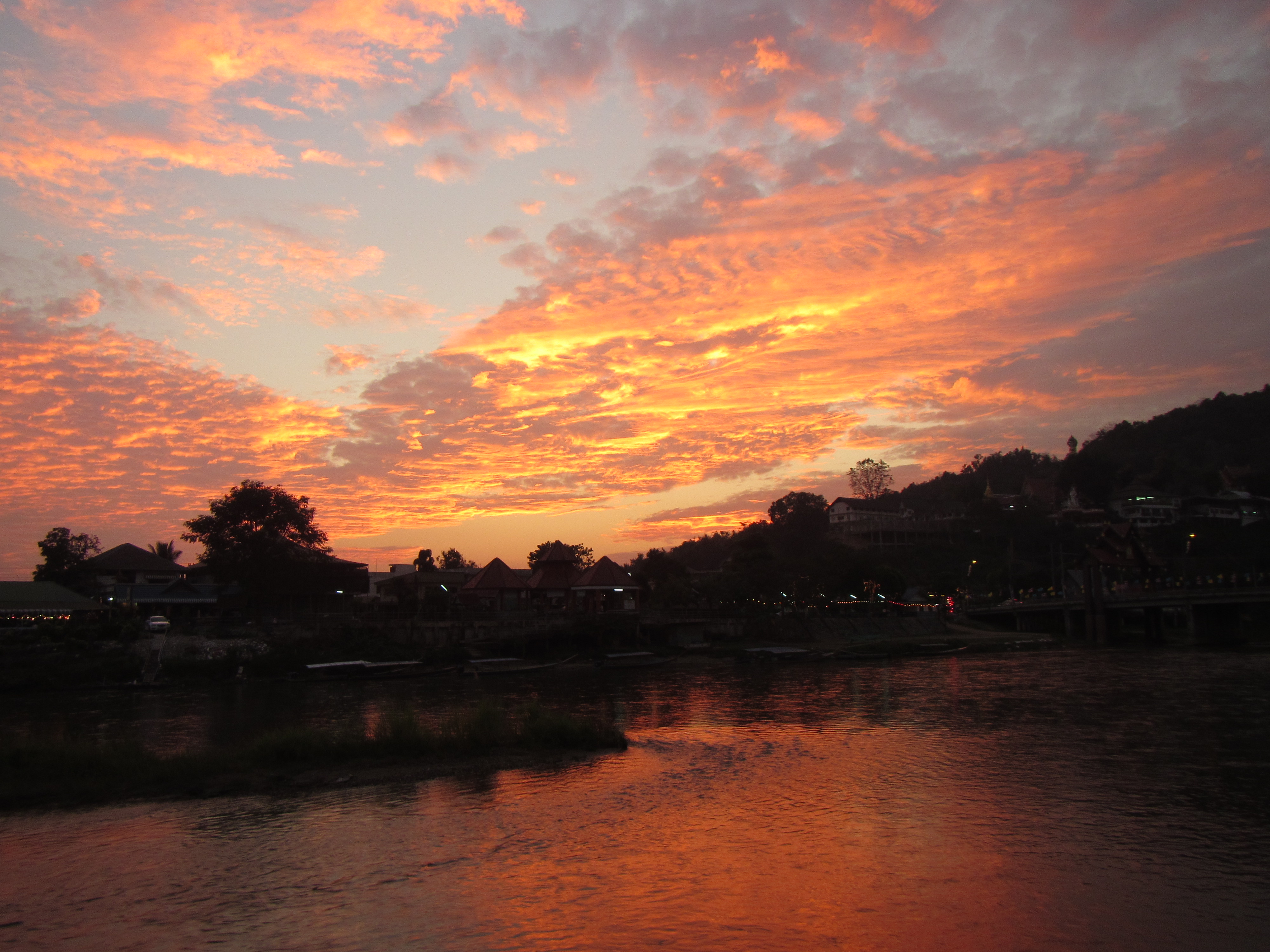
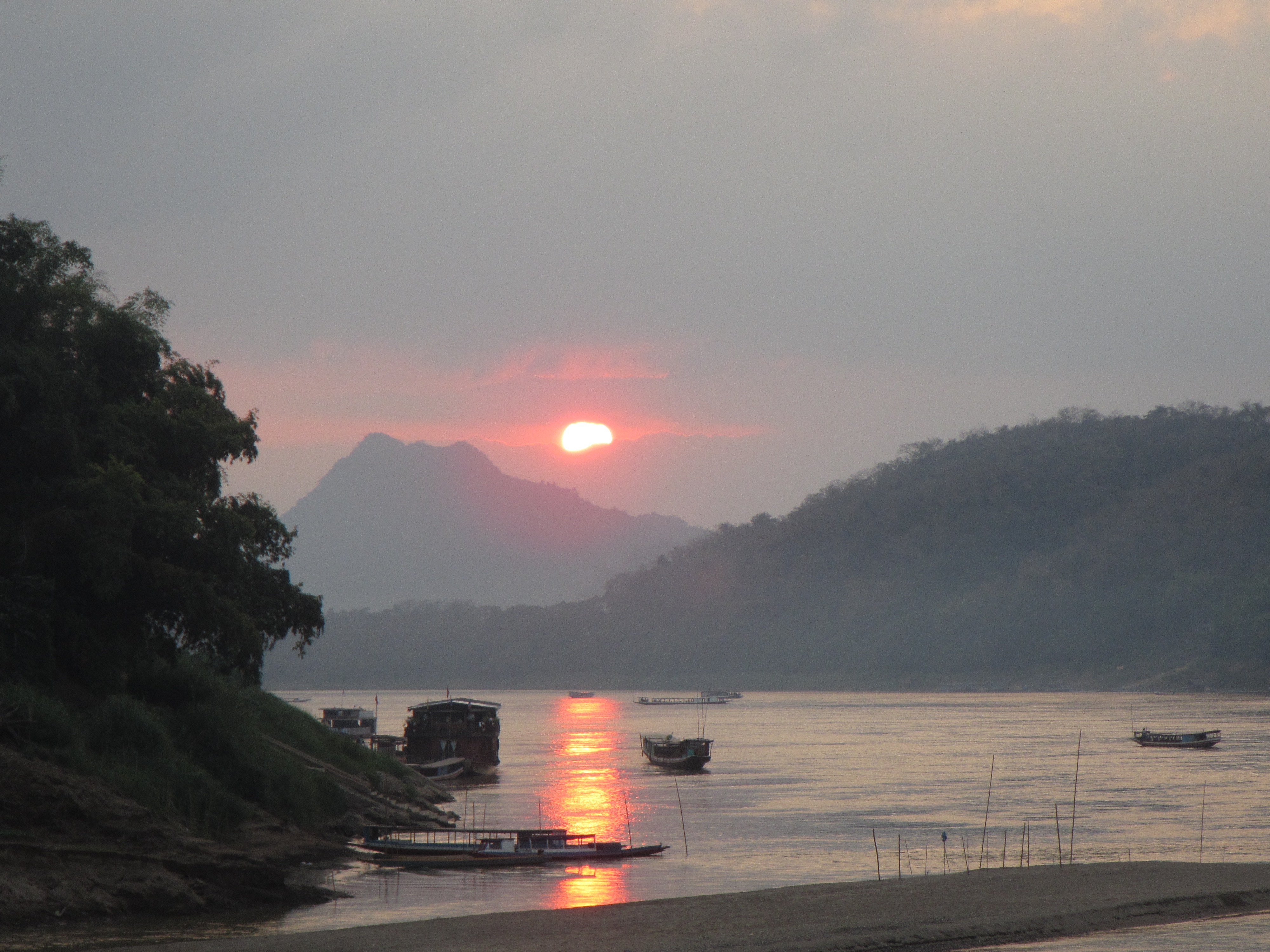
Meeting up for dinner after the waterfalls, we ran into the two Israeli Army Doctors from the Gibbon Experience. Their trek in Luong Nam Tha was a nightmare, unfortunately. The government had recently built a road, such that locals no longer used the trail. So a few guides went slowly ahead of them, clearing it with machetes. Furthermore, they were short, so the two doctors had to stoop the entire time. The guides said they’d bring water, but didn’t. One of them caught a cold. They said they are looking forward to recuperating a bit before going anywhere, and we told them this is a wonderful city to do so in. You can get a croissant, walk across the river on a bamboo bridge, and be in farmlands and nature, such as the hill from which we watched the sunset two nights ago.
Jan16 556

One note – I’ve so far been outed (my job) five times. Twice it was to people from the Bay Area, who know all the schools so want to know which one I work at. The other three times it’s been Israelis, in the first three minutes of the conversation: what do you do? what do you teach? what school? It’s a funny cultural signifier that the conversation always goes that way. But an Israeli woman did buy me a beer last night once she found out: so it’s true, kids, being a professor can get you free drinks.

— The Professor
 

Luang Prabang

We’ve settled into Luang Prabang for the next few days, a beautifully small yet rich city. It’s a mix of temples and colonial French architecture. On one hand, the night market has a wonderful buffet of tasty Lao food and dark, rich, Lao coffee can be had for less than a dollar, while on the other you can have croissants worthy of Paris. The backpacker culture has a big presence here; we spent the evening reclining on a couch chatting with The Blythe Spirit and some new friends in a backpacker bar which has a drink whose description includes Burning Man (it involves a tiny fresh red chili pepper). All bars on the peninsula close down at 11:30 in order to “preserve local values and customs.” Seems like a good arrangement.

We’re heading to some nearby waterfalls today (Saturday) for a day of hiking and swimming. After dashing north, settling into a pleasant city for a few days seems wonderful. When we want to move on, our next step with be Ko Tau, in the south of Thailand, for some diving.

— The Professor


The Road to and from Gibbons

The trip to the Gibbon Experience had three parts: driving fast along a winding paved road, driving slowly offroad to a village, then hiking from the village to the tree houses. Both going in and coming out, we saw something on the fast road leg that’s worth mentioning.

On the way in, we were descending along a hillside with a sharp curve to the left. There was oncea long metal guard rail, but it had been torn away by a tanker truck that had taken the curve too fast and fallen off the road, down into the ravine below, some forty or fifty feet. When we passed by, there was a large tow truck there, and a few people standing around, trying to figure out how to pull it out. When we passed by it again on the way out, the truck was still there, crumpled a bit and cracked, the smell of gasoline strong.

The way back was more distressing. After we left lunch, a large passenger van passed our song-taaws. About 20 kilometers from Huay Xai, we passed through a small village. In the village, a small blue truck had pulled out into the road just as the van sped through. The van struck the driver’s side of the truck cab. The front of both was completely crushed by the impact. There was glass everywhere, twisted metal, and dripping pools of fluid, a crowd gathered around.

Our song-taaw had two medical students (Israeli army doctors, one year from completing their studies), another one had a medical student from Australia. They immediately jumped out and headed to the accident. We saw people run up with a 10 foot long 4×4 board, I think to try to pry the vehicles apart. We saw them carry two people away, limp.

The doctors returned after about 10 minutes, frustrated. There was nothing they could do. The driver of the blue truck was not going to survive. The driver of the van had open fractures on both his upper and lower leg, and a crushed pelvis. The doctors tried tried to explain that they needed a board to splint the left and body and something to tie the person down with, but could not explain it. Instead, locals put the injured person in the back of a van, to (hopefully?) drive him to the hospital in Huay Xai. We left before they did. We passed a police car, but no ambulance. The doctor sitting across from me put his head in his hands and talked about the lack of basic medical care, supplies (no first aid kits in the village that he could find), knowledge, or urgency. The person with the crushed pelvis could have a good chance of surviving if treated properly, but the lack of EMT response or proper care was very bad for him.

But this is the reality of poor rural areas, especially in developing regions of the world. It’s not their fault that they don’t know the best emergency medical approaches, or don’t have medical supplies. All of these things cost money. Economic growth, in addition to material goods, generally brings improved education, improved services, and the corresponding increase in life expectancy. When I hear someone say “don’t buy from China” or “keep American jobs with Americans,” now all I’ll be able to think of is lost economic opportunities to people so much worse off, being deterred from earning the same possibilities and safety that I have.

— The Professor


Primates!

The Gibbon Experience in Laos was a fantastic success. We did not see the elusive gibbon for which it is named, but we lived for three days and two nights in arboreal bliss.

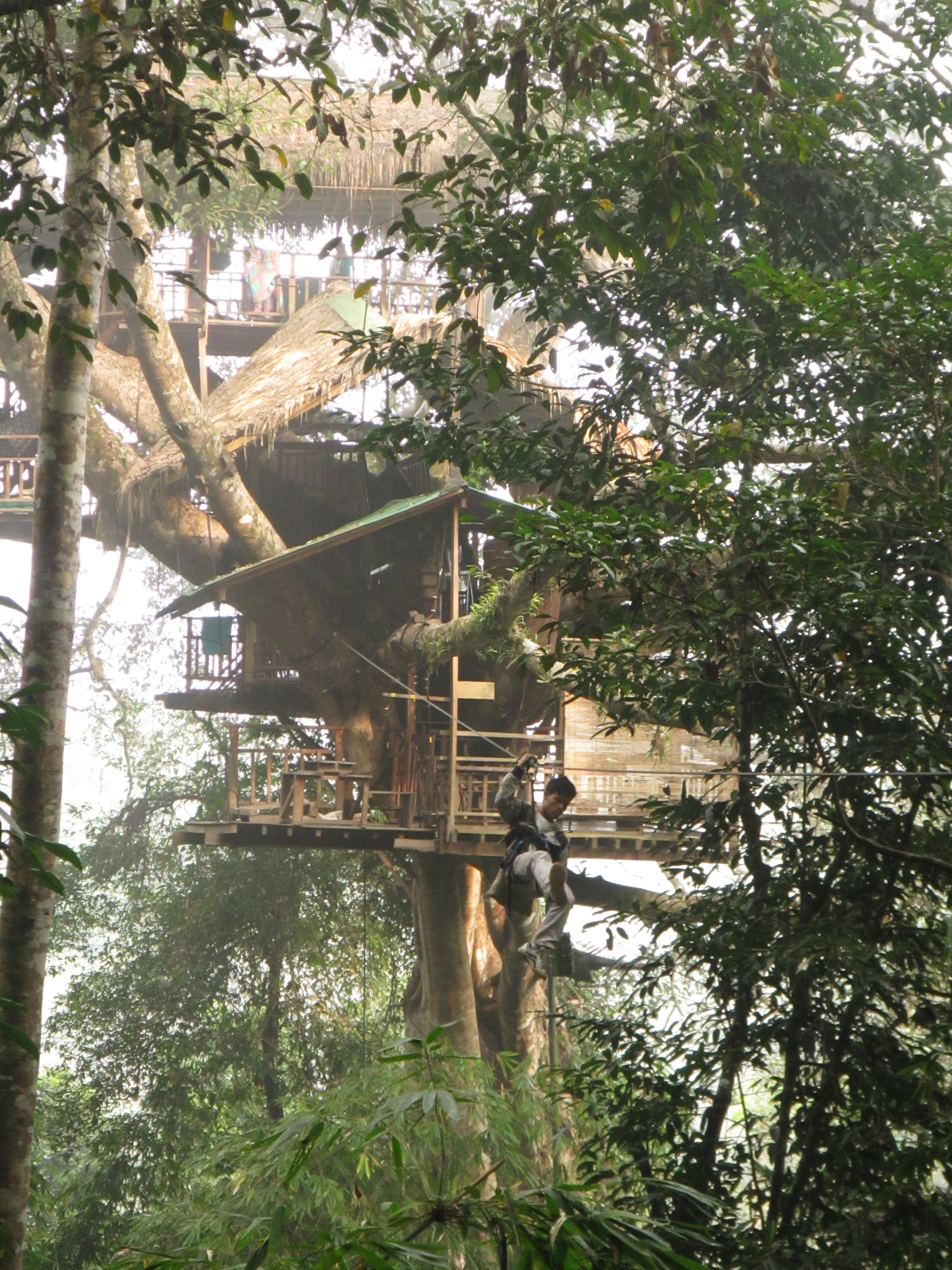
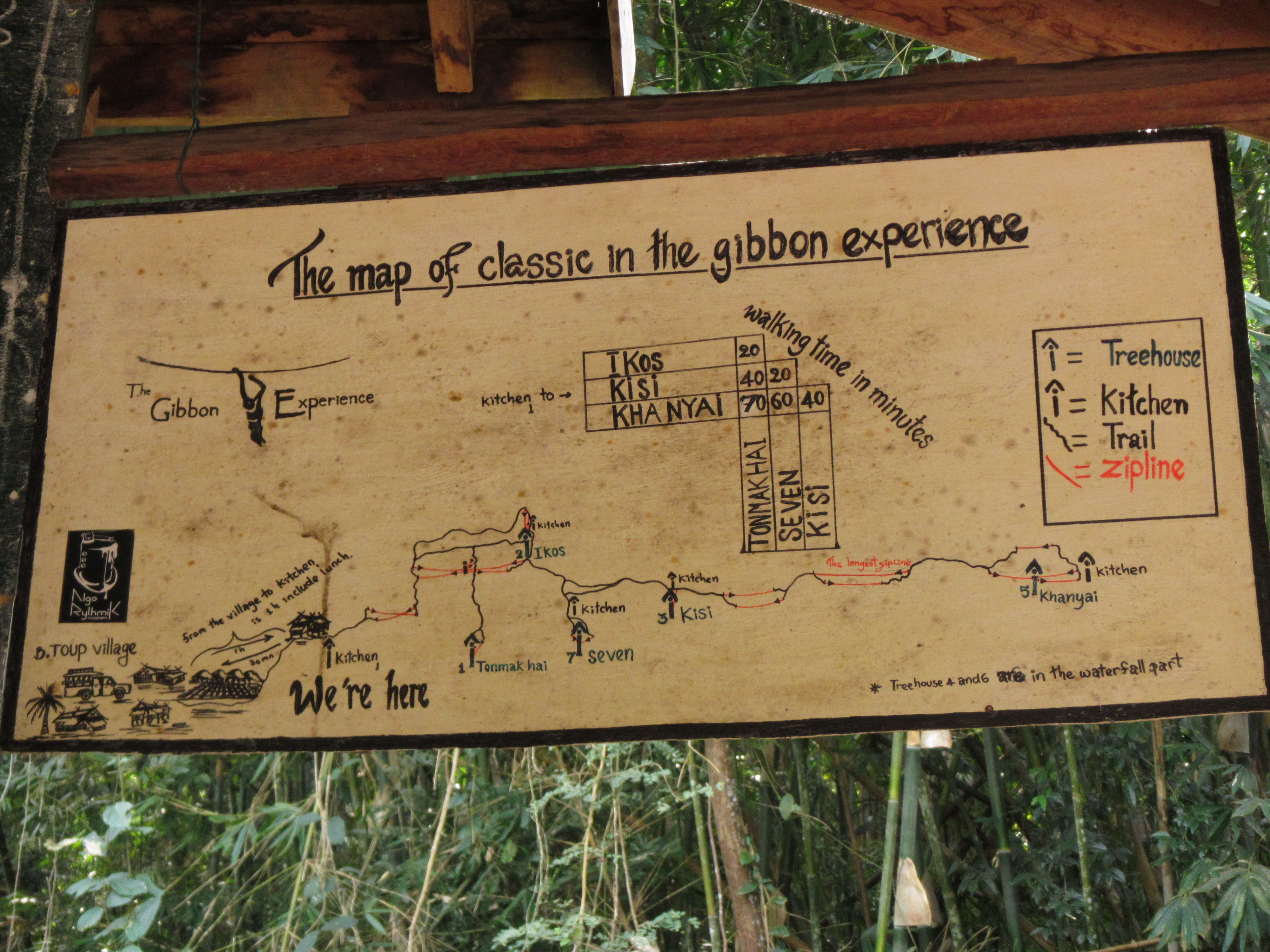
The Gibbon Experience is the first tour group that we have taken. In short, it involves riding in a pickup truck from Huay Xai on the Mekong River to a protected forest some two hours inland, then a combination of hiking and zip lining into the protected area. Once inside, we lived in open-air treehouses high above the ground and made excursions around the area to attempt to view gibbons, and to enjoy the extensive zip lines.

Jan16 457

So simple, but such a lot to experience. What touched my heart most were the guides. The Gibbon Experience has a mission to preserve the gibbons’ habitat and part of that mission was hiring poachers, paying them more than they were making at their poaching, and teaching them English and other skills (such as zip lining!). Our guide was an excellent instructor and very careful to keep an eye out for us and our safety. And as he found the gibbons by their calls and brought us close to them, treading almost silently, I gathered that he was probably a good hunter. Alas, we were a group of heavy-footed Anglophones following him, and only some of us saw the gibbons before they fled from our cracks and rustles.

The Guide told me and the Professor, when we asked, that he used to hunt monkeys to sell for food to other Laotians. Now, with his greater income, he is putting two of his brothers and two of his sisters through school, which is apparently not free here. Another guide, who we met at a restaurant and guesthouse which benefits local women, told us that he was doing the same – in hopes that his educated brother will then put him through school.

Jan16 495

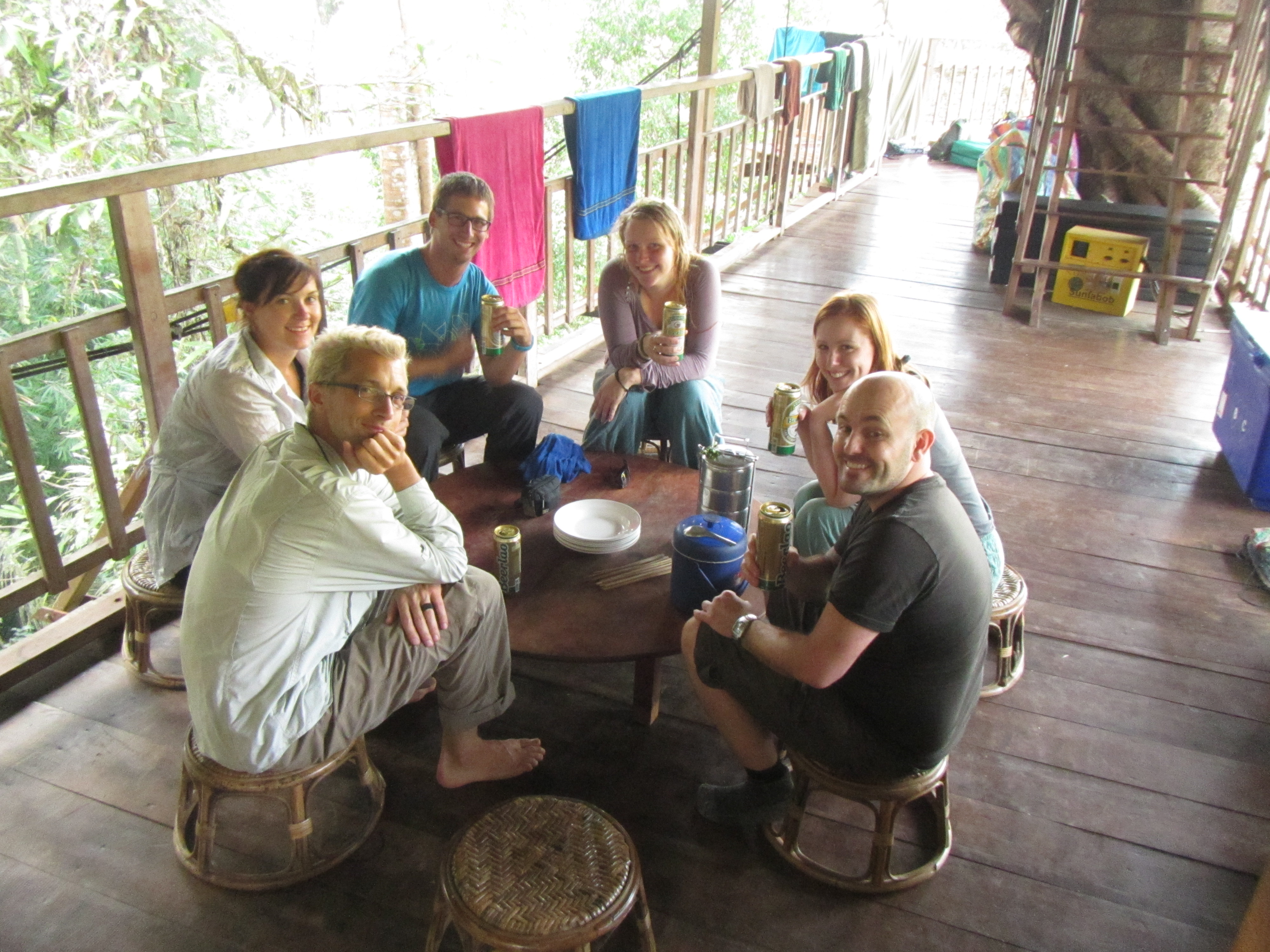
The second delightful thing about the experience was that we made friends! We had a lot of time to get to know the Blythe Spirit from Holland, the Newly Engaged Cuties from England, and the Spiffy Athletes from New Zealand, as we were all sharing a treehouse. We also got to know the Newlywed Members of the Tribe from Australia, two students also from Oz, two medical students from Israel, a teacher and his son from Hong Kong, and an Australian/Singaporean duo. They all were interesting, thoughtful, soulful people who became dear to us. We felt so lucky to have been shut up in the jungle with such great folks!

Jan16 471

Our treehouse was a marvel, both beautiful and functional, with a running cold shower, a sink, a toilet, clean water for drinking and bathing and tapestry tents to cover our mattresses, protecting us from both insects and their bat predators. We were brought nourishing meals of rice, vegetables, beans and a little meat, along with fresh strong coffee with condensed milk (our new drug of choice), tea, fruit and peanuts and peanut brittle. We had brought our own extra sweets and drinks. Here you can see our guide zip lining away from the treehouse.

Jan16 507

The zip lining brought me a peaceful feeling, as I sped above mist-tracked forest canyons while dangling from a giant cable in a harness. Words don’t really do it justice, and I hope we can post video at some point on our excursion- we have failed thus far to find an Internet cafe that can handle the load. One pointer, if you ever try it: go fast! You can always brake later.

Professor: Here’s a video of one particularly fun zip line. Unfortunately it’s sideways and we don’t have editing software. So turn your head to the right? It takes a few moments to start as The Private Eye launches.

Finally, let me say that the forest itself was so beautiful, to see and to smell and to hear. The soundscapes at the dawn of our first day were utterly haunting, full of bird calls and gibbon song and insect drone. We seven in our treehouse spent a good portion of our first night in the bathroom (it had the best sky view), gazing at the stars through the giant branches of our host tree. Some of us hiked an eastern ridge at the dawn of our last day, and watched the sun rise through the bamboo. I took an afternoon nap in the highest part of our treehouse, snoozing in the soft breezes.

I absolutely felt we got our money’s worth. Because I am sure prospective travelers are reading this, though, I’ll tack on a few you-should-knows. It is the jungle: there are rats, mice, snakes and bugs. None of them really bothered us much, but we are adventuresome people and they might bother others. The guides leave you alone in your treehouses at night and there is no phone, so I would not go there were I a likely candidate for a medical emergency; the nearest hospital is hours away, and the nearest good hospital is in Thailand. I would also avoid it if I were physically unfit: we did the less hiking intensive of the three day experiences, and it was still a good deal of very strenuous long uphill climbing.

I am writing this post on while floating down the Mekong River in a slow boat. I will catch you next time in Luang Prabang!

– The Private Eye


Crossing into Laos

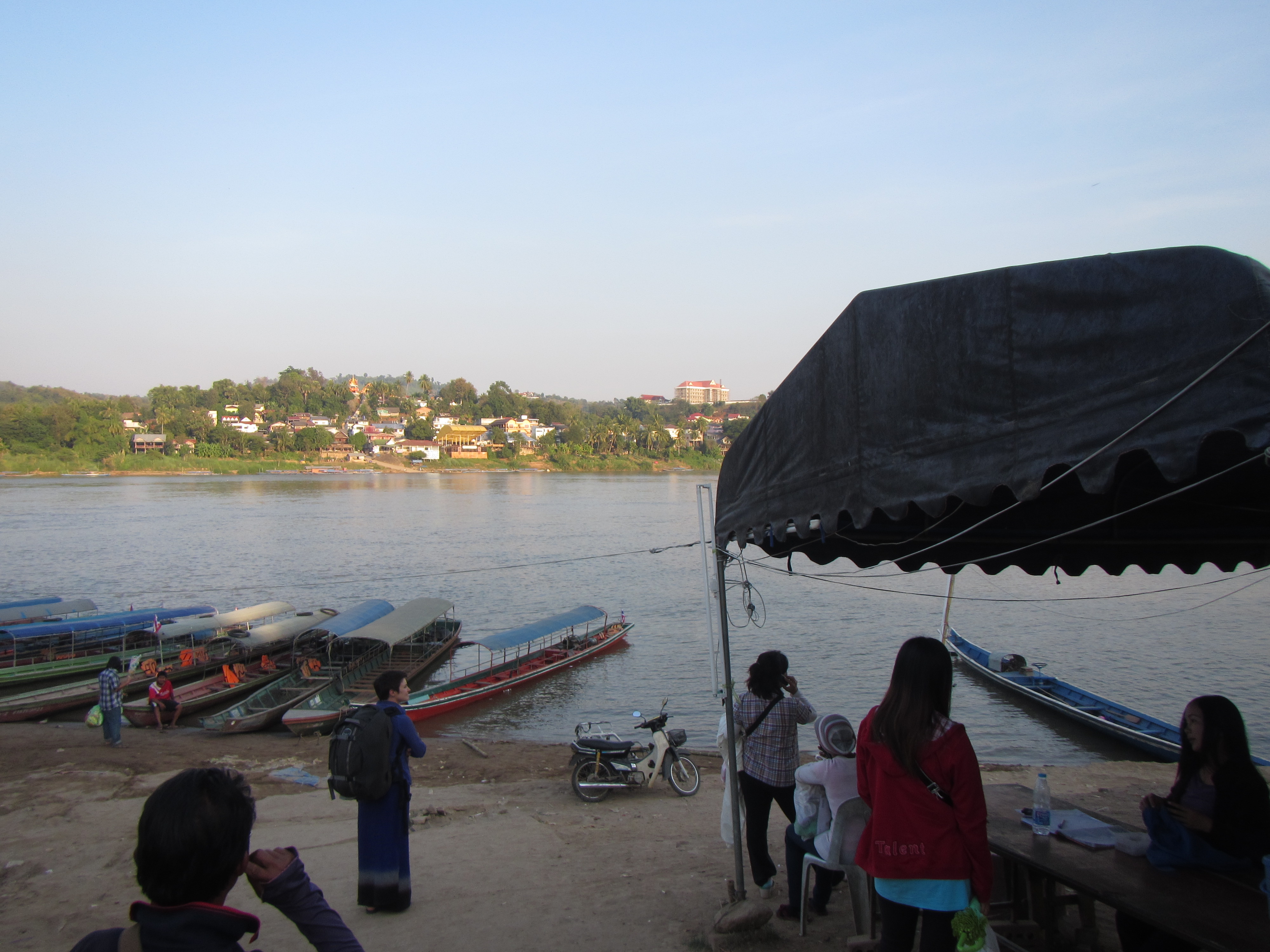
We spent one night in Chiang Rai and caught a bus to Chiang Khong, a small border town that sits on the Mekong River. After a bit of discussion, we decided to just cross over into Laos immediately, rather than spend one night more in Thailand. We had to hurry – it was 4:30 and the border crossing closes at 6. We hired a tuk-tuk to take us the kilometer north to the dock, filled out our Thailand departure card, and hopped on a longboat to the other side: Huay Xai, Chiang Khong’s Laotian sibling.

Jan16 455

An entry visa is $36, which we paid in USD. We had been debating what to do when we arrived in Laos. Our hoped for plan was to embark on The Gibbon Experience. But since we had no reservations, this might be tricky. Email correspondence suggested hopefulness, but nothing was certain.

The Gibbon Experience has three options: express, classic, and waterfall. Express is 2 days and one night, while classic and waterfall are 3 days and 2 nights. Classic involves getting up early to see and hear gibbons, while waterfall involves no gibbons but a beautiful waterfall and pool to swim in.

Our first choice was the waterfall (we didn’t know yet it doesn’t have gibbons). But we were arriving on the night of the 5th and it departs the morning of the 7th. So we decided to just go to the office and find out whether there was space and if so sign up. The Private Eye ventured out and discovered that they had space for the classic on the 6th but waterfall on the 7th was only a maybe. Huay Xai is pretty boring, so we decided that gambling and maybe sticking around to the 8th was a bad plan, so signed up for the classic on the 6th. This made me happy – I am feeling a bit jumpy and in need of activity, so the idea of crossing into Laos and at 8am the next morning embarking on an adventure sounded great.

I won’t try to really explain the Gibbon Experience in words – I’ll upload some photos and hopefully a video as soon as I can.

— The Professor


Post jungle

We’ve been off in the Lao jungle the past few days on an adventure that involved tree houses 100 feet from the forest floor and zip lining along the jungle canopy. We’re heading to Luang Prabang tomorrow on the slow boat with some new friends, we will have had a chance to write more details on the trip.

— The Professor


Hill Tribes

The hill tribes are one of the big tourist attractions in Northern Thailand. The Lonely Planet Thailand book has a long section on them, showing drawings of their traditional clothes and describing their lifestyle, religion, agriculture, and history as well as where they live. When I came across this section of the book I became cross; in all honesty, it read way too much like a gaming book describing the rural tribes of some fantasy continent. But these are real people and societies, not purely imagination.

The idea of visiting a modern instance of a primitive culture (here I use primitive in the technological and economic sense, not ethical or spiritual) as tourism rubs me the wrong way. The analogy I gave – an extreme one, yes, but I tend to do that, as many of you know – is when the British captured African tribesmen and put them in zoos. Going to view other people in their day to day life is not itself problematic: I sometimes enjoy sitting outside a cafe and watching the street as much as anyone else. But when the distinctive feature you’re going to view is poverty, I recoil.

Because that’s what it is, really. You’re not going to see the modern manifestation of an old culture. The selling point is to see it for real – people living much as they did 200 or more years ago, although now they have a motor scooter or two for transportation. Using an analogy closer to home, tourists don’t go to Native American reservations to see a modern Native American lifestyle. There are reservations where residents perform tribal dances and ceremonies in traditional garb for tourists to see (I recall seeing one dance in New Mexico when very young), but re-enactment of history under your own terms (admission fees, camera fees, etc.) is very different than a paid guide taking you into a village.

A particularly noxious example of this are the long neck Karen, whose women use brass rings to push down their collar bones and give themselves long, extended necks. The only reason they do this is for tourism. By going to see the long necked Karen (there are Karen who do not follow the practice), you are paying people to self-mutilate and live in a society which your payment implicitly forbids them from leaving (the village without TVs and running water will see more tourists).

It’s even worse when you pay a guide a bunch of money to take you to a village and they don’t receive anything. Add the fact that most of them are not Thai citizens and so do not have many rights. For example, guides to the hill tribes must be Thai citizens, which means they cannot be the guides to their own culture,

Of course I’m being a bit extremist here. While I’d want to talk with someone who paid a guide to take them to the long necked Karen and point out what they’d done, there are many shades of grey. For example, there is a group (which the hill tribe museum in Chiang Rai praised highly) that pays much of the visit price to tribes, and works with them to organize when and how visits occur, a bit more like the Native American model I’ve experienced.

This was the debate The Private Eye and I were having in Tha Ton. She pointed out that going to a village and buying their crafts was the best thing one can do. The idea of traveling to a village without a guide, seeing if it was alright if we entered the village, and buying crafts made me a little uncomfortable, but I thought it was a light enough shade of grey that I should go so I could have actual experiences with which to understand the situation better.

So we went, I bought a scarf, we tried to be respectful and friendly, and I’ll need to think about it more.

– The Professor


Birthday bus!

It is my birthday and I am on a bus ride from Chiang Rai. These past two days have been spent on the move. It will be interesting to see how we react to Laos (lazy people, a Singaporean backpacker told us yesterday), as both of us timed out of slow paced country life in 2.5 days in Tha Ton.

Yesterday, we awoke early and took a boat trip on the Maekok River with The Expat Family and visited two hill tribe villages. I was a bit full of myself because I’d booked the tour with the boat folks directly, rather than with a tour guide or guest house, saving us thousands of baht and the annoying distraction of a guide. We motorboated on a long-tail boat away from Tha Ton for approximately one hour, hiked around a Lahu village for an hour, got back on the boat for 20 minutes, then hiked up a hill to an Ahka village for an hour, then took the boat the remaining 40 minutes back to our hotels.

Jan16 407

Here are the highlights of the trip from my perspective:
– seeing Ms. Expat Teacher grinning with delight at the positively chilly temperatures of the morning boat ride.
– enjoying the relatively non-exploitive nature of our visit. Certain tribes – I am sure the Professor will blog about this – are basically coerced to remain in their villages for the tourist trade. On our visit, it was clear that the men were all out farming or fishing, that the women were engaged in their usual occupations, nobody was wearing their traditional dress (which is gorgeous but no longer everyday wear), and the place had certainly not been cleaned up for us. The Lahu women did want to sell us handicrafts, and I happily bought a few and paid full price – one woman was so happy about that that I felt conflicting emotions for bringing such joy with $3.30. But people just smiled and waved at the Akha village, except for the old woman who showed us the hilltop church,which she assumed we had come to see.
– I actually did like seeing the church. It looked like a missionary’s fantasy, and probably was. Its walls were bamboo slats. The roof was corrugated tin. A pretty but ragged multicolored cloth star and flags decorated the outside, along with the wooden cross. The inside looked cool and dimly but warmly lit from the sunlight peeking through the slats. There were plank benches, a dirt floor, neat stacks of books and other religious paraphernalia. Outside, there was a spectacular view of the river valley, the farmland and the mountains beyond. Sad I didn’t see the gates that are supposed to accompany such villages, though – they apparently have human figurines with exaggerated sexual symbols to deter spirits from entering the village. Perhaps this village was fully converted, or we didn’t look in the right place. Oh well- I suppose we would have seen it were we meant to.
– We DID see an orchard of rubber trees, though! It was so neat, each tree had a cut and a little chute in it, like those used for maple sugaring, with a black rubber bowl below catching the white gluey goop. Such orchards in SE Asia, by the way, caused the collapse of the rubber boom in the Amazon. The trees originated there but then were smuggled out so rubber could be acquired more cheaply.
– Also, we saw bamboo forests. Can’t wait to get in one. So beautiful.
– our boatman, Doh, who seemed like a stand up guy, and who waited patiently for us while we hiked and explored.
– people who fish the river by dumping a lot of rocks in their boats. Can’t figure out what they are trying to get, yet.

Professor: and we saw a spider nearly the size of The Private Eye’s head!

Jan16 435

After our boat ride, we said au revoir to the Expat Family. We had a wonderful lunch at our guest house, Garden Home. (btw, much better food, much better atmosphere than anywhere else we ate in Tha Ton.) We caught a bus to Mae Chan and had a lovely conversation with a Singaporean hippy backpacker. We caught a passenger pick up truck to Chiang Rai, and had a lovely conversation with a Chinese geek backpacker. I am going to send them both postcards from the states; the Chinese fellow’s address is a bit terrifying in its level of detail and what that represents.

We weren’t even 24 hours in Chiang Rai. But that’s ok, as we got a lot out of it, including a very educational visit to a hill tribe museum, a delicious dinner at a hot pot place in what looked like a garage, a flower show of wonder, and an actual laundromat.

– The Private Eye

PS – one more way Burning Man is like SE Asia: the long driveway of Wat Tha Ton is lined with humorous philosophical sayings.


To Tha Tun

After our cooking class we went to bed a bit early and read. Our hosts at Taicoon guest house told us there is a direct bus from Chiang Mai to Tha Ton, leaving from the north bus terminal. We looked up the schedule and found it is a four hour trip, departing every 90 minutes or so. We thought catching the 9am would be best, but if we slept in 10:30 would work. Our alarm didn’t go off, but we managed to return our bicycles, buy pastries for breakfast, and get to the bus by 8:55.

A bus winding along mountain roads was a bit rough on two of the kids on the bus, who threw up, but a great breeze through the open windows made sure the smell wasn’t a problem. The bus dashed from town to town, stopping at a half dozen or so spots in Chiang Mai, Chiang Dao, and Fang before arriving in Tha Ton. We had a brief delay when the bus blew a tire in Fang; we limped a half mile to a tire shop, then a bunch of Thai men took off their shirts (Thai men in tank tops! The scandal!) to employ pneumatic tools and jacks to get us on our way. I’m glad it happened there and not halfway between towns, that could have been disastrous. So we rolled into Tha Ton and booked a room at the Garden Home for 300B ($10) a night.

Jan16 375

Tha Ton is a small, rural Thai town. There is one main street, which goes over the Maekok river (which the locals call the Limkok river, I believe, making directions difficult the first few tries). It’s surrounded by corn farms, garlic farms, guava orchards, and other agriculture. The mountains overlook to the west, and there are several Wats hidden in their tree-covered clefts and seams, visible at times from the road. The humidity gives everything a thick haze, so the river seems to wind away into a milky nothingness.

Jan16 378

The Expat Teacher is staying with her family and a few friends at a nice resort a kilometer from town, along the main road. We walked there, talked with her while gazing out over the fields, joined her and her family for dinner (Khao Soi for everyone!), then continued talking over a drink. Come 10pm, The Private Eye and I decided to head home. It was too late for a sōrng-tāa-ou, so we decided to take the 10 minute walk home.

For two city slickers who love nature but don’t actually spend much time in rural areas, it was an adventure. Some of it was fun, like the silent white cow looking ghostly in the moonlight. The part that was scary was when we walked by a home and a trio of dogs started growling and barking furiously. But unlike other homes with barking dogs, these dogs weren’t behind a fence. So they came out onto the road and followed The Private Eye, growling and surging forward, then slowing. None of them were very big dogs, so we weren’t in serious danger, but a bite or two would certainly have been painful. And in all honesty, we don’t quite know how to deal with dogs in a pack who are that aggressive. Our uncertainty and surprise led to a lot of adrenalin, but nothing happened. They followed us for a hundred yards or so – seemed like a mile – then turned back. In the same spirit of honesty as The Private Eye, I’d like to say that it didn’t bother us at all, but that is not true; we were both scared as this trio of dogs growled at our heels and calves on the otherwise deserted and dark road along the hillside.

We woke early, while it was still cool, to climb up to the most ornate of the Wats that one can see for the road. There’s a series of 8 different stages, from small Buddha shrines, to a large golden Buddha with a Naga hood (the Naga eyes light up at night?!?!?!) to finally the temple on top. Inside it was beautiful, but also creepy; there were lifelike wax figures of two famous monks whose pictures were all over the temple, sitting in the central prayer area, while a recording of monk prayer played over the speakers. When I first saw them I thought monks were actually praying (why was the cleaning lady using her vacuum then, of all times?), but no, just creepy wax figures. The Expat Teacher’s husband, who also visited the Wat, but later in the day, saw them as emblematic of the decline and corruption of Thai Buddhism. “No attachment, indeed,” he said.

We wandered down to the docks to arrange for a private boat to take us 6 down river to see hill tribe villages (The Private Eye is great at this), and found a lady who said her daughter could teach us how to ride a motor scooter when she returned from school. Unfortunately the girl had cold feet – she was only 12 after all – so we will have to learn some other time.

Being in Tha Tun has been wonderful because it’s rural. After Bangkok and Chiang Mai, we needed some quiet, nature, and clean air, all of which are here in abundance. It’s a sigh of relief. But it’s of course also a bit slow, which I have trouble with after 48 hours or so.

Jan16 404

The Private Eye and I went over a bunch of possible plans for our next steps. Our hope is to do a nature adventure trip in Laos called the Gibbon Experience, which involves sleeping in tree houses 200 feet up and going across 2km of zipline in the jungle canopy, then heading to Luang Prabang. Depending on how much time we take, we have a lot of options. If we spend a lot of time in Luang Prabang, we might head directly south to Ko Tau. If we have a few extra days before most European tourists clear out on the 15th, we might head south to Vang Vieng, which seems to have thankfully cleaned up a bit recently (no more bars at the top of the tubing region of the river). If we have a bunch of extra time, we might just fly over to Angkor Wat and give it the 3 or more days it deserves.

— The Professor


Thai Food and Thai Cooking (Chiang Mai, day 3, New Year’s Day)

We awoke a little lazily after our late night out. The Private Eye headed out to run a few errands (drop off laundry at one of the nearby homes that offer the service, renew our bike rental, etc.). I tided the room before heading to Black Canyon Coffee, which although very bland inside actually makes excellent coffee, to read my book. Almost everyone we know who’s been to Thailand has recommended taking a cooking class, and Chiang Mai is supposed to be one of the best places to do so. The classes range in complexity from an all day class that involves traveling to a local farm to an afternoon/evening affair for 4 hours. Given our late rise, we decided that we’d try to do the latter. We’d bike to and wander around a shopping district in the northwest to try to find The Private Eye another pair of pants, then come back to the old city for our cooking class.

So we ventured out to this one Soi nearby where there seemed to be several cooking classes, with the hopes of signing up for one this afternoon. None of them panned out, including the two our guest house hosts recommended. Since we’re leaving tomorrow morning for Tha Tun, our situation looked grim. But I remembered what our new Melbourne friends has said the night before about finding rooms – just try again later, and chances something will have opened up. So we ventured to the northwest, planning to stop by Asia Scenic, the most highly recommended school, just before the class to see if an opening had appeared.

There’s a huge amount of street food of many kinds, in a fashion that regulations in a place like San Francisco would never allow. Yes, that old man has a sidecar on his motorcycle, which is a propane stove and table. Yes, that’s a huge wok of boiling oil that he’s frying chicken in with that stove, 6 inches from the sidewalk. If you tripped, you could land your hand or face in the oil. In return, a large, enough-for-lunch fried leg and thigh is about 85 cents. The pickings were slim today compared to last night, but this fried chicken vendor was along the road were bicycling on, so lunch for 2 (fried chicken, sticky rice, some vegetables) for $2, slightly less than a cappuccino. A papaya salad is $8 for takeout at Regent Thai in Noe Valley; from a street vendor, it’s 85 cents.

While Parisians famously frown at street food (the recent encroachment of falafel is fascinating), the Thai love it. But this reflects something about the cuisines as well. While a properly made coq au vin takes 3-4 hours to make, a good 90 minutes of which is work, most Thai dishes are astoundingly simple. You can make a bunch of them in the morning and serve them all day. Furthermore, seemingly very different dishes turn out to have almost identical ingredients. The only difference between a red and a green curry is the chili pepper used (fresh green or dried red). Pad See Yew, Pad Thai, and other stir fry dishes have identical seasonings, just different ingredients. So one set of prep can provide for many different dishes.

We dropped by Asia Scenic at 4pm, and, indeed, they had space for 2. We wandered to a nearby coffee bar along this narrow, quiet Soi and read in the shade of a forested oasis before heading back over for our class.

The class itself was delightful. Our group of 12 had four people from Toronto, four from San Francisco, two from Sydney, and two from Frankfurt. The other Californians were really from Sonoma, so we talked a bit about markets to buy the ingredients. Of the 6 possible courses, 2 were picked for us (curry paste and curry) and we as a group could pick 2 from appetizer, soup, stir fry, and dessert. We chose soup and stir fry. For each course, you chose one of 3-4 dishes. After choosing your dishes, you walk to a nearby market to have a bunch of ingredients explained and shown. 3 hours, some chopping, propane, and stirring later, we ate our own cooked Thai food and left with a cookbook.

Jan16 365

Tomorrow morning we’re catching a 4 hour bus to Tha Ton, to meet up with The Expat Teacher again. We plan to stay there until the 5th, at which point we will either head east to Pai and Mae Hong Sun, or north to Laos. I’m itching to get south, to the islands and beaches, Indonesia especially, but doing so before the 15th is probably a bad idea due to the super-high tourist season. I’m fascinated by Brunei Darussalam, in part because I haven’t yet heard anyone say anything about it and in part because of its virgin rainforests. I wonder if it’s off the beaten track because there’s no alcohol, so not a partying destination? We will have to ask The Expat Teacher tomorrow.

– The Professor