RSS

Category Archives: cities

Lima, revisited, and coming home

We arrived in Tarapoto around noon. With our flight back to Lima departing at 5PM, we debated heading into Tarapoto for a few hours or just cooling our heels (literally) at the airport. Our collectivo to Tarapoto had two other passengers. One was a middle aged woman with a pet parrot, which she kept locked up tight in her small handbag. Sometimes it would peek its head out and she would stroke it, until it squawked, at which point its head went back in the bag. She hid it when we passed the police checkpoint; she claimed it was her pet (and its behavior seemed to match that description), but taking birds from the Amazon basin to the highlands is an easy way to have the police ask a lot of questions. Animal smuggling is quite real and a significant problem.

We had arranged for a taxi pickup at the airport through our hostel. When we arrived, after a short trip to the near supermarket, we experienced the terrific and so long missed luxury of hot showers. With shampoo. And soap. A scrubbing. I washed my hair twice. While we were clean, though, are clothes were not. Señora had washed them, but she had done so with river water, so practically everything we owned had a smell to it. We hand hand washed a few things for our first of two days in Lima (note to future travelers: white vinegar is great for getting smells out, soak clothes for 30 minutes or so in a sink of cold water with a few tablespoons). First thing the next morning, we took all of the rest of our clothes to a laundry. Oh, having a bag full of clean, clean-smelling clothes, it was so comforting.

In our two days, we went to the Museo Larco, the church of San Francisco, which has a crypt, the Plaza de Armas, the old town, and wandered some around Miraflores. Our conclusion is that Lima is a wonderful city to live in. It’s cool, dry, has a love of literature, wonderful food, the ocean, nightlife, wide sidewalks, parks, many of the details that make it remind me of San Francisco. But for tourism it’s pretty thin, in part because earthquakes mean there isn’t much that’s very old. The Museo Larco is stellar, but besides that… well, except the laser light water show at Parque Reserva.

IMG_3338

Watch The Private Eye leap in front of the watery fire:

Imagine a medium sized park, about the size of Dolores Park, with a dozen or so fountains, some of which change and shift their flow over time. At 7:15, the music starts, the projectors turn on, and they, along with lasers, begin a multimedia experience of ridiculous scale with sheets and streams of water as the canvas.

With not that much to do, The Private Eye and I spent most of our last two days languorously enjoying an introduction to city life. We had excellent coffee, strolled in parks, and retold stories of our trip to each other. I joked that after eight days in the rainforest, a 17th century painting of St. Francis just doesn’t seem that… exciting. I think each of us is going to come up with a best of list, and we might perhaps put together a “what we’d do differently next time” post.

IMG_3382 IMG_3348 IMG_3295

We are now in UA 927, 38,000 feet up, somewhere over Nevada, on our final flight from Houston to San Francisco. These last two hours seem more difficult than any others during our trip. I’ve watched the in-flight movie, Life of Pi, we have played a game or two of Ticket to Ride, now I am anxiously counting the minutes until we land. I read Bleak House in Peru, but now I can’t seem to read more than a few pages of Hard Times before my mind wanders. Tomorrow morning I’ll get on my bike, ride to Caltrain, go to the new company offices in the morning, then the university in the afternoon. Tonight, we’ll be seeing a lot of friends at the Orbit Room.

The captain just told us the seatbelt sign will be on in 5 minutes, we will be landing in 25! Home!

— The Professor


Singapore Details

Our flight landed at 6:00. After a brief bit of immigration (“Where is your next destination?” “I don’t know.” “Well, you have to write something.”), we took the MRT to our stop, Farrer Park. Life Is Too Short had arrived a few days earlier, and we arranged to meet up for dinner in our lobby at 8:30, wandering over to the Lavender Food Plaza, a hawkers plaza with twenty or so different stalls. We’ve returned there for every meal we have had in our neighborhood. Prawn noodles, Beijing lamain, Hainanese chicken rice, chicken Padang, all so good.

Since Luang Prabang, I’ve been longing for strong, rich coffee. Lao coffee is prepared with a large filter like a sock, filled with grounds, that sits immersed in the coffee. You mix the thick, brutally strong resulting coffee with hot water and condensed milk. Coffee in Thailand is often instant, and coffee in Indonesia (Bali Kopi, Lombok Kopi, Java Kopi) is served in a small cup, optionally with sugar but not milk, with the very fine coffee grounds forming a sludge at the bottom. And so, the rich, sweet coffee of Singapore, served just as in Laos, has been wonderful.

On Thursday, we met up with Life Is Too Short to go to the Singapore zoo. The delight with which The Private Eye and Life Is Too Short raced from animal to animal was hard to keep up with at times. By far the best part was an enclosed rainforest exhibit, surrounded by mesh so the butterflies wouldn’t escape. Mouse deer (neither mouse nor deer!) moved in the underbrush, ringtail lemurs sat on the railings, and enormous flying foxes, with wingspans over a meter, swooped above before gnashing on fruit hung 2 feet in front of you. For those who have been to the rainforest enclosure in the California Academy of Sciences, it was much like that, except out of doors and with many more vertebrates, enough that you seemed surrounded by them.

Picture 010Picture 009

Singapore is a big city, so surely it must have a nightlife. We met up again with Life Is Too Short to find a bar or club. Our part of town has numerous KTV lounges – karaoke. While you can’t see inside any of them, you can hear the singing within. Unfortunately, a bit of research discovered that public KTV lounges (as opposed to private karaoke rooms as in Japan) are where people go to meet friendly members of the opposite sex who work there. Most cater to men, but some cater to women. We tried going into one that billed itself as a pub/disco, but The Private Eye observed it was upstairs from a massage parlor, and we saw the entry has pictures of all of the women who worked there – “Like a menu!” she cried and we backpedalled to the street. At the suggestion of our front desk we went into one that, while it had some very friendly ladies, was very tame and not sleazy. For some reason, the bartender really wanted us to sing Hotel California – enough so the they queued it and assigned it to our table even though we didn’t request it! The Private Eye pulled it off well. But with two beers and a Pepsi being S26 (26 Singapore dollars, about $22) , we only had one round, and we quickly discovered they only put your song request on the queue when you order a drink.

We found out that a huge yearly parade, called Chingay, was on Friday and Saturday evenings. Tickets started at S28, hard to afford when our daily budget for all meals, transport, entertainment, and errands is S100. Talking with some locals, we found out that there’s a large free area, but you want to be early to get a good view. So we wandered downtown, stopped by an outdoor equipemnt store to get some last minute gear for Peru, walked through the colonial district, then the shopping insanity that is Orchard Road until 6 or so, finally making our way via MRT to the parade.

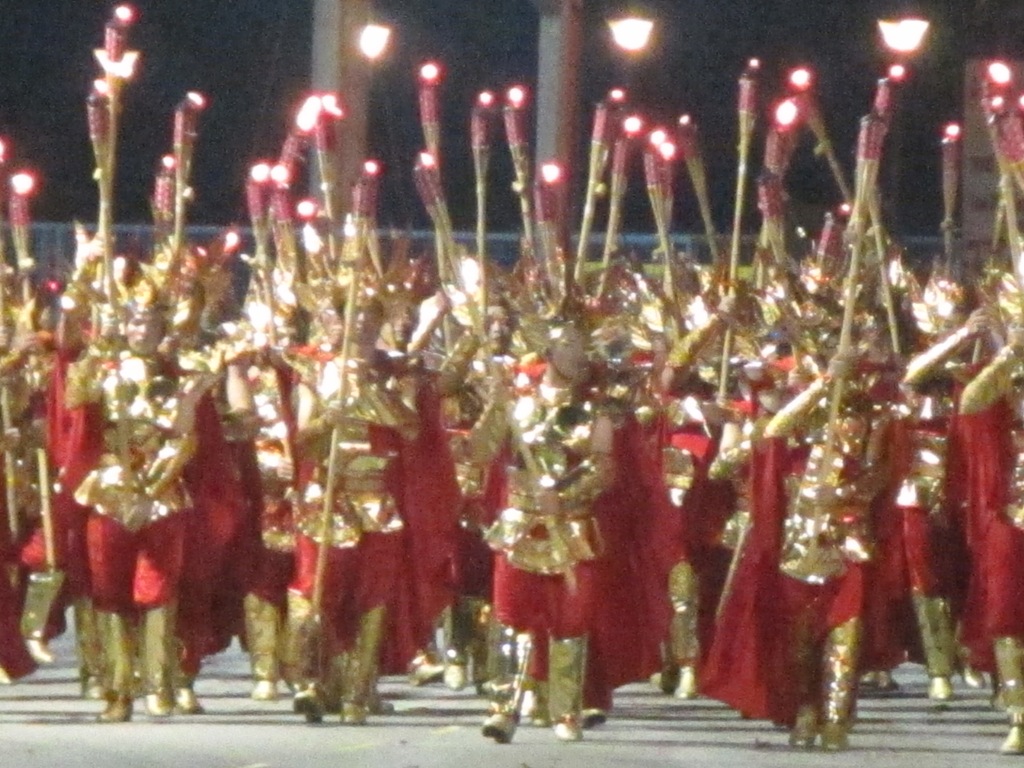
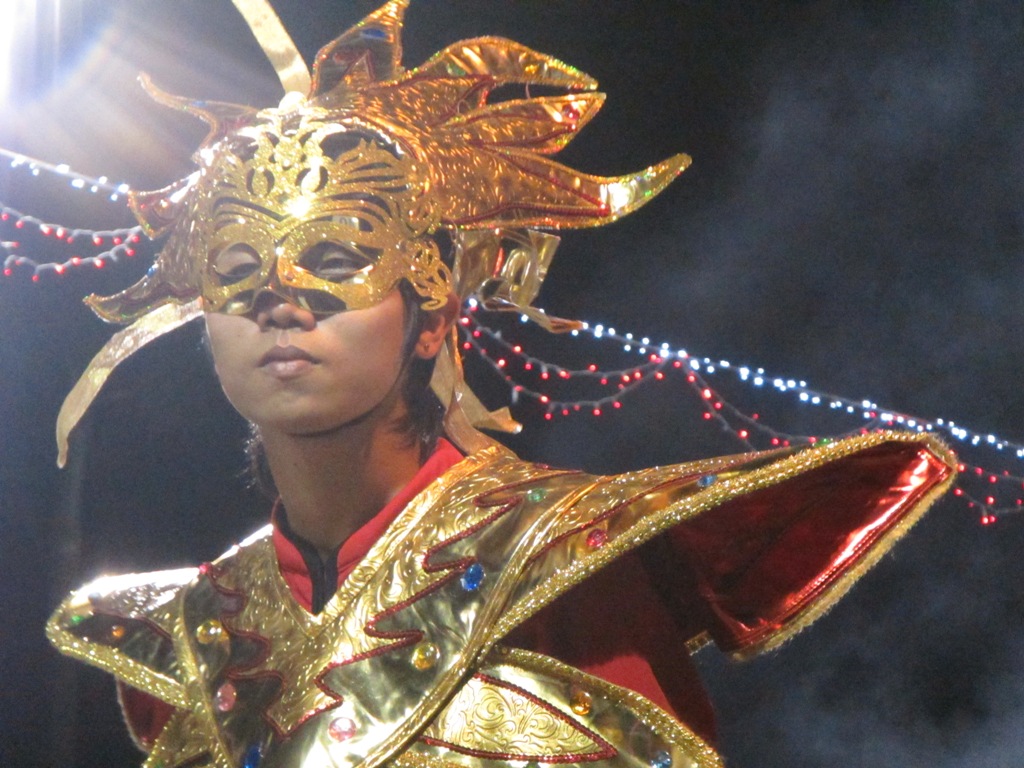
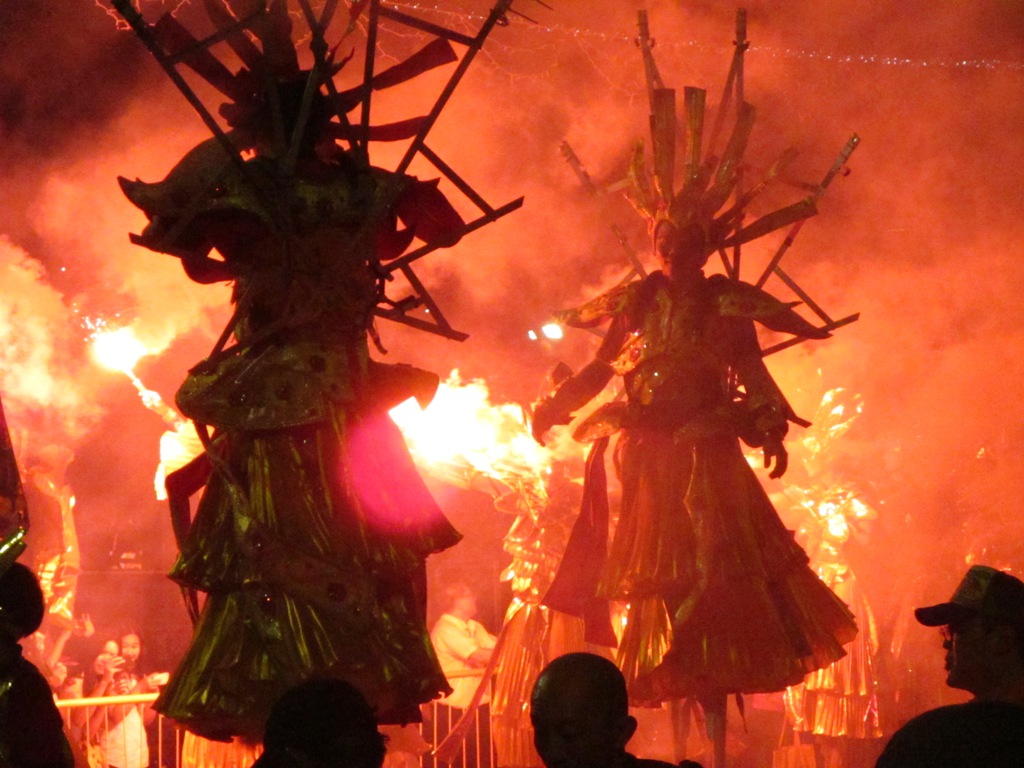
The parade was fantastic. It started with nearly a thousand dancers, had floats, dragons made from recycled plastic bottles, fire breathing, phoenix floats, and lasted for 90 minutes. All for free! The parade started in 1971, when Singapore banned fireworks. Words don’t do it justice:

Picture 011Singapore-KL-SiemReap 008Singapore-KL-SiemReap 007

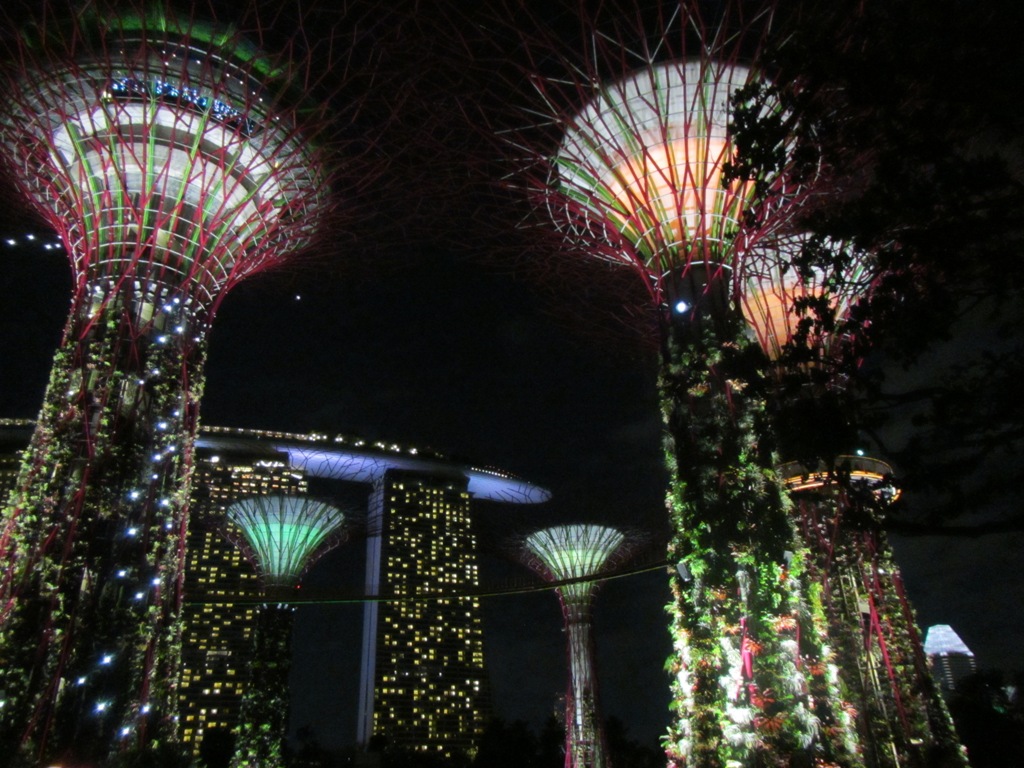
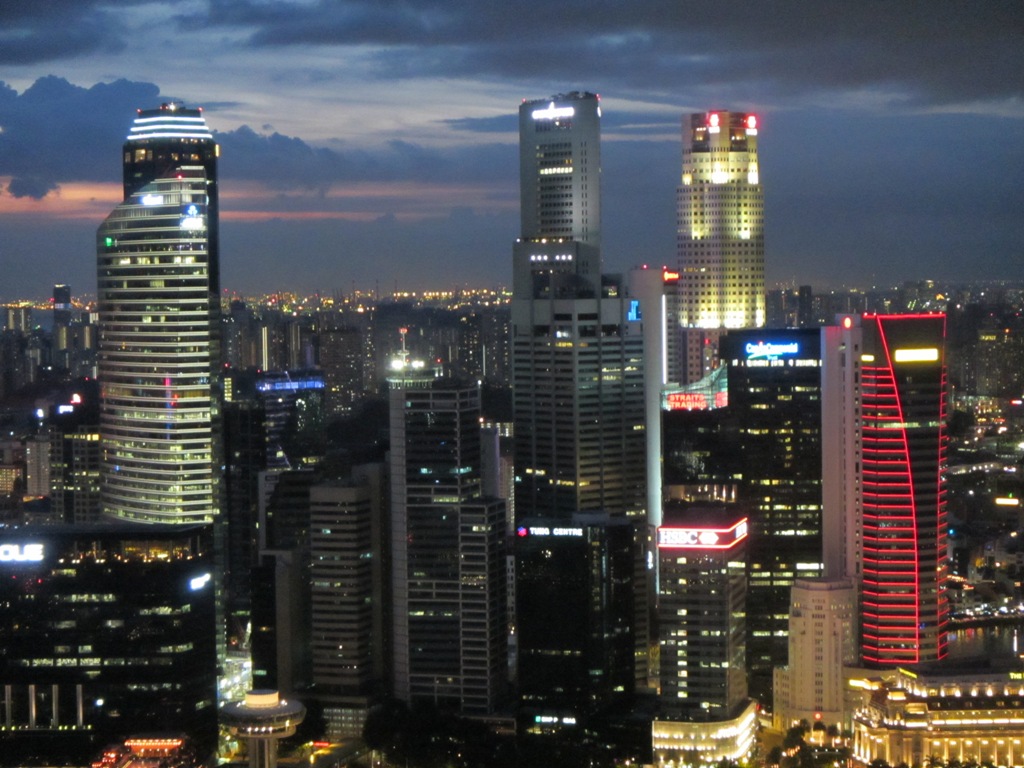
After the parade, we decided that we walk over to Marina Sands, an enormous hotel/casino complex. It’s the most iconic element of Singapore’s skyline: three huge towers in a slight curve, with an enormous open area, park, club, and pool sitting on all three that looks like a gargantuan ship aground in the sky. Unfortunately we were not up to the club’s dress code, so we wandered to the Marina Gardens, enormous steel structures (20-50m tall) that look like trees and are designed to be like them. They’re powered by solar panels atop them, have vines growing on their structure to perform photosynthesis, and, of course, light up and glow at night. Our feet exhausted from so much walking, we sat on some steps to watch the colors change and ebb, before catching one of the last trains back to Farrer Park.

Singapore-KL-SiemReap 010Singapore-KL-SiemReap 009

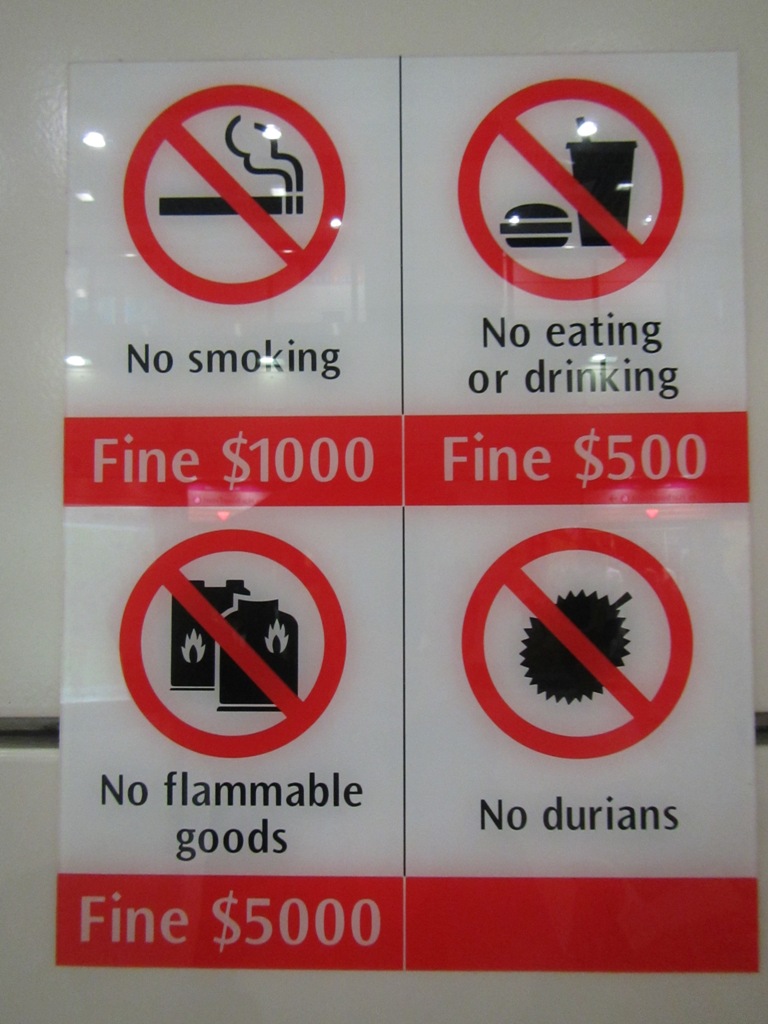
Today has been a slow day: laundry, hair cuts, some other practical things. The Private Eye and Life Is Too Short are back at the gardens to see them when they’re open; I’m back in the hotel stretching out my back, realigning some vertabrae I screwed up a decade ago. I guess I’m getting old. I had my first experience with the paternalism of Singapore: ibuprofen has to be bought over the counter, and sales are logged, so that a pharmacist can tell you know to take it properly. No matter that the instructions are different than every other place I’ve been. In Europe, you often buy 600mg pills; here, the pharmacist told me to take 1-2 200mg pills AND NO MORE. Oh, and here are the signs you see as you enter the subway:

Singapore-KL-SiemReap 011

We’ve booked a flight to Kuala Lumpur on the 25th, and it looks likely we will head to Siem Reap on the 27th, for a few days exploring Angkor Wat. After that, we have a bit under a week before we should return to Bangkok, and right now the top candidate is Hanoi.

— The Professor
 

Singapore

Oh, Singapore, you are a welcome home.

We landed in Singapore on the 20th, planning on staying just a few days. But we’ve loved it so much that we are now slated to depart on my birthday, the 25th. I want to copy The Private Eye and have a passport stamp on my birthday.

Singapore, a glittering, urban metropolis where everyone meets in hawkers plazas, food courts serving fantastic street food and dishes from China, Indonesia, India, and more. After 20 days in Bali, Jakarta, and the Gilis, the best Indonesian food I’ve had was here in Singapore. Admittedly, it cost $5 rather than $2, but still, it was vibrant and spicy and sharp in contrast to the comforting but ultimately a bit boring I found in Indonesia.

Singapore, a nation so small and dense that most people do not own a car, and so subway rides across 20 km are $2. Where the primary language is English in theory, but in day to day interactions it’s Chinese and many seem unable to speak much English. There are four official languages: English, Mandarin, Malay, and Tamil. So many signs are big and have three different alphabets on them. It’s illegal to sell chewing gum, spit on the street, or bring a durian into the subway.

Singapore, with an enormous zoo so fantastic it deserves a post of its own. Panda bears quietly napping, red pandas looking down at you from their den, flying foxes soaring above your head, false gurials, orangutans holding hands with keepers, Komodo dragons lazily sunning, and so much more. We arrived at noon, thinking we’d have plenty of time, and were some of the last to be shooed out at 6:30.

Singapore, whose Chingay parade began in response to the banning of firecrackers in 1972 and is now watched by over 1.5 million Singaporeans. Ten thousand participants, stilt walkers, floats, fire breathing dragons, visiting participants from other countries, all under the neon skyline and slowly rotating Singapore Flyer.

It is exhilarating to see Southeast Asia through a lens of ultra-modernity and prosperity.

— The Professor


Yogyakarta, Day 4

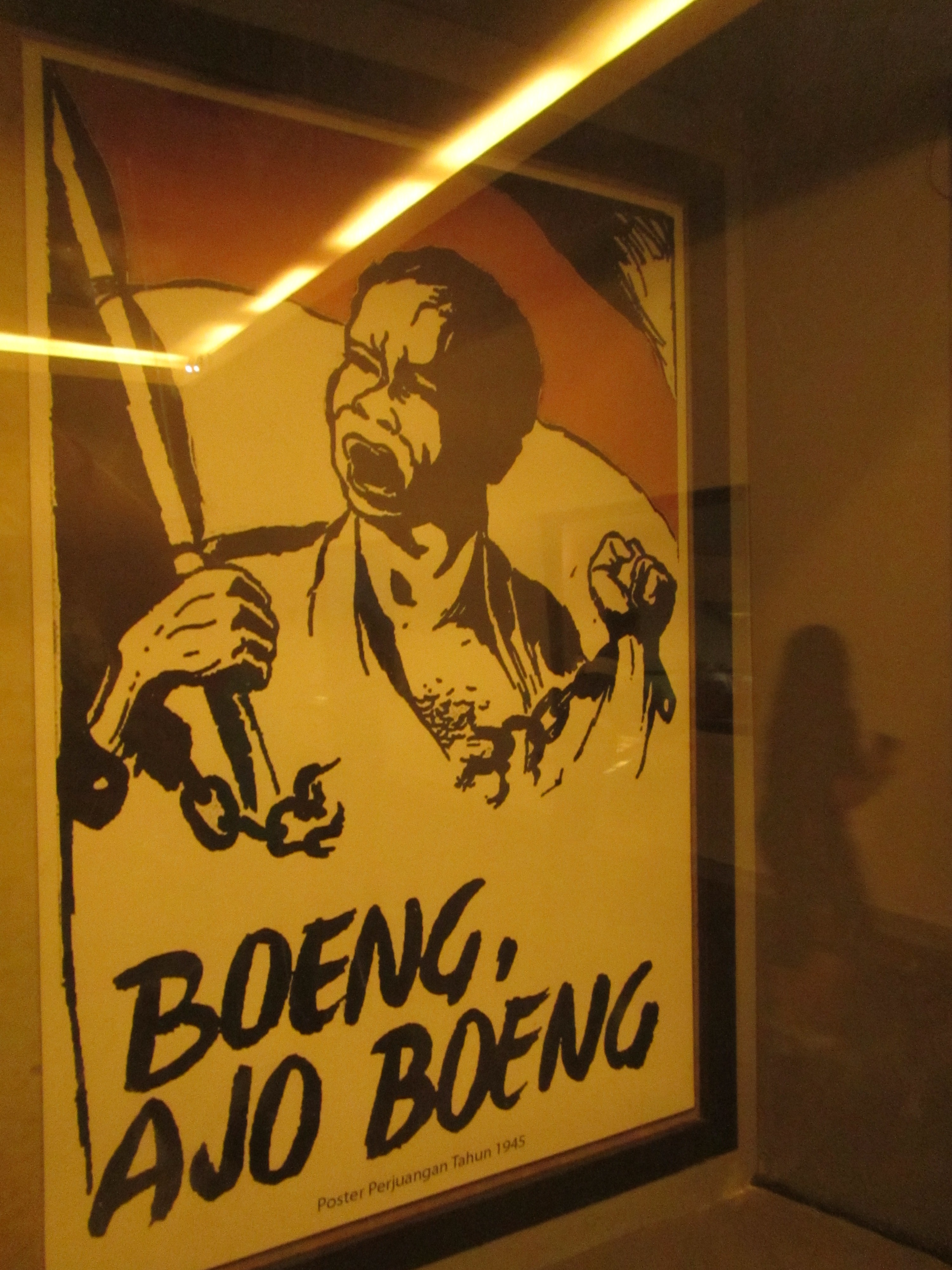
Our last full day in Yogyakarta was an educational one. First, we went to the Benten Vredeburg museum in the downtown. This is an old Dutch fort that was converted to a history museum of Indonesian independence and early national struggles. I really enjoyed the dioramas, which were high quality and probably took someone a long time to make. The stories they depicted bore a heavy stamp of “official history”, but as I was unfamiliar with a lot of the history and appreciated any education, this did not bother me all that much. It is amusing, though, how many were devoted to meetings, a dry subject when taken without the gloss of myth making.

Picture 001

Of course, for the many high-school history students there, we were part of the attraction. We starred in a lot of cell phone photos and made friends with their teacher.

We then got lost for a bit attempting to find the bus to Kaliurang. But eventually, we boarded a scrofulous foam-entrailed minibus which took us to the right village, and we chatted with an pleasant small scale businessman on the way. From Kaliurang, we attempted to board another minibus to the Ullen Sentalu museum. It was going there, but we were going to have to wait another hour for its regularly scheduled departure. Instead, we gave the driver an equivalent $3 to drive there right away.

I really liked Ullen Sentalu. It was up the slopes of the volcano, so the weather was cool. It has beautiful buildings on beautiful grounds, and is a gracious and personal museum of four sultan families of central Java, created and kept by one of those families. Especially charming was the room with many letters to a princess, encouraging her to keep up her strength and happy nature after her parents denied her marriage to her beau. They all had poetic phrases and photos of the sender; the girl’s parents eventually relented.

There is also a great collection of portraits both painted and photographed, an in-depth look at batik, and other quiet treasures. You have to have a museum guide to tour Ullen Sentalu, and ours, Tammy, was a real pleasure to talk to.

Picture 002

Afterward, we caught a cab home and went out for jackfruit curry. I liked the curry just fine, and the fruity pressed tofu quite a lot, but I couldn’t handle the solid fist of organ meat that came with it. Oh well, I just got more tofu.

On the following day, we flew to Singapore. I really like the Yogyakarta airport, which
is a startlingly good place to buy souvenirs. It was much better than Jakarta, where we had a layover.

Singapore began for us with meeting up with our friend Life Is Too Short, who we’d met in Luang Prabang. It was 8:30 pm by the time we were settled and ready for action, so we walked to the nearest hawker stall food court, the Lavender Street one about a block away. I ordered dumpling soup with greens, a plate of bao, and a juice from a fruit I had never heard of before. I sat down with The Professor and our friend, took a bite, and fell in love with Singapore. The fastest way to my heart really is through my stomach, I guess.
– The Private Eye


Yogyakarta, day 3

It was important to me that we come to Yogyakarta because it is the first place I have been where I felt that I was really in Indonesia – not vacationland like the Gilis, and not a place whose identity is so distinct (Bali) that you don’t really feel like you have been to the bigger nation. Not coming here would have felt like I had gone to Hawaii and then claimed I had seen America.

But Yogyakarta is also a vacation place, only it is a place for vacationing Indonesians. As far as I can tell, it is like coming to Philadelphia and viewing The Liberty Bell, other historical sights and the art museums. Families, the women with sensible headwraps and skinny jeans, ride in the horse carriages to the museums. (These carriages are bigger than they were in the Gilis, seating up to six or 8 people, and some of them are drawn by tall horses rather than dainty ponies.) Couples and singles ride in the becak, bicycle carriages with the driver in the rear of the vehicle. Like us, they visit the sultan’s palace, watch the traditional dancing (similar yet different than the Balinese), and visit the museums and the sights.

Of course, there are people who live here, and lots and lots of university students.

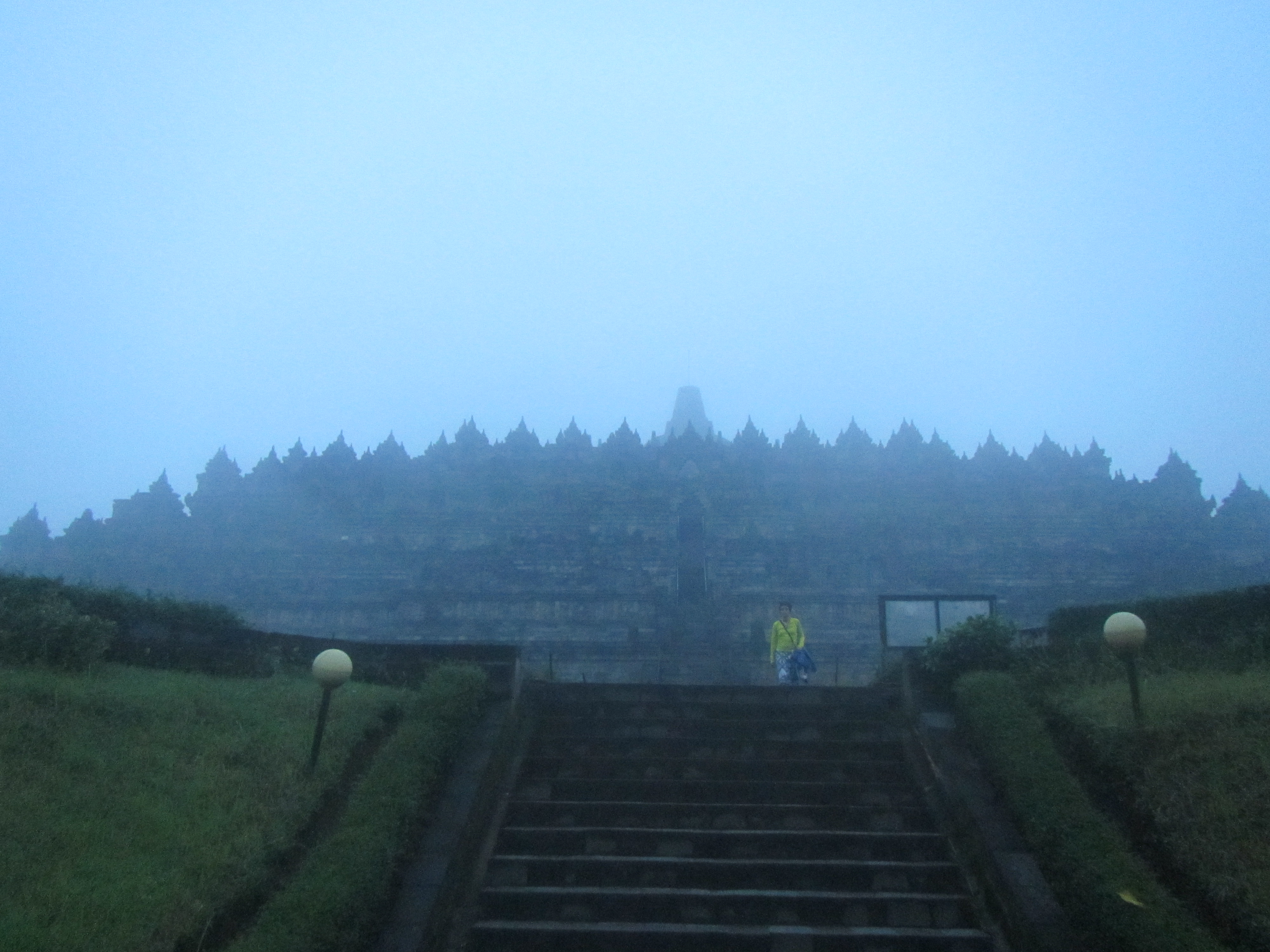
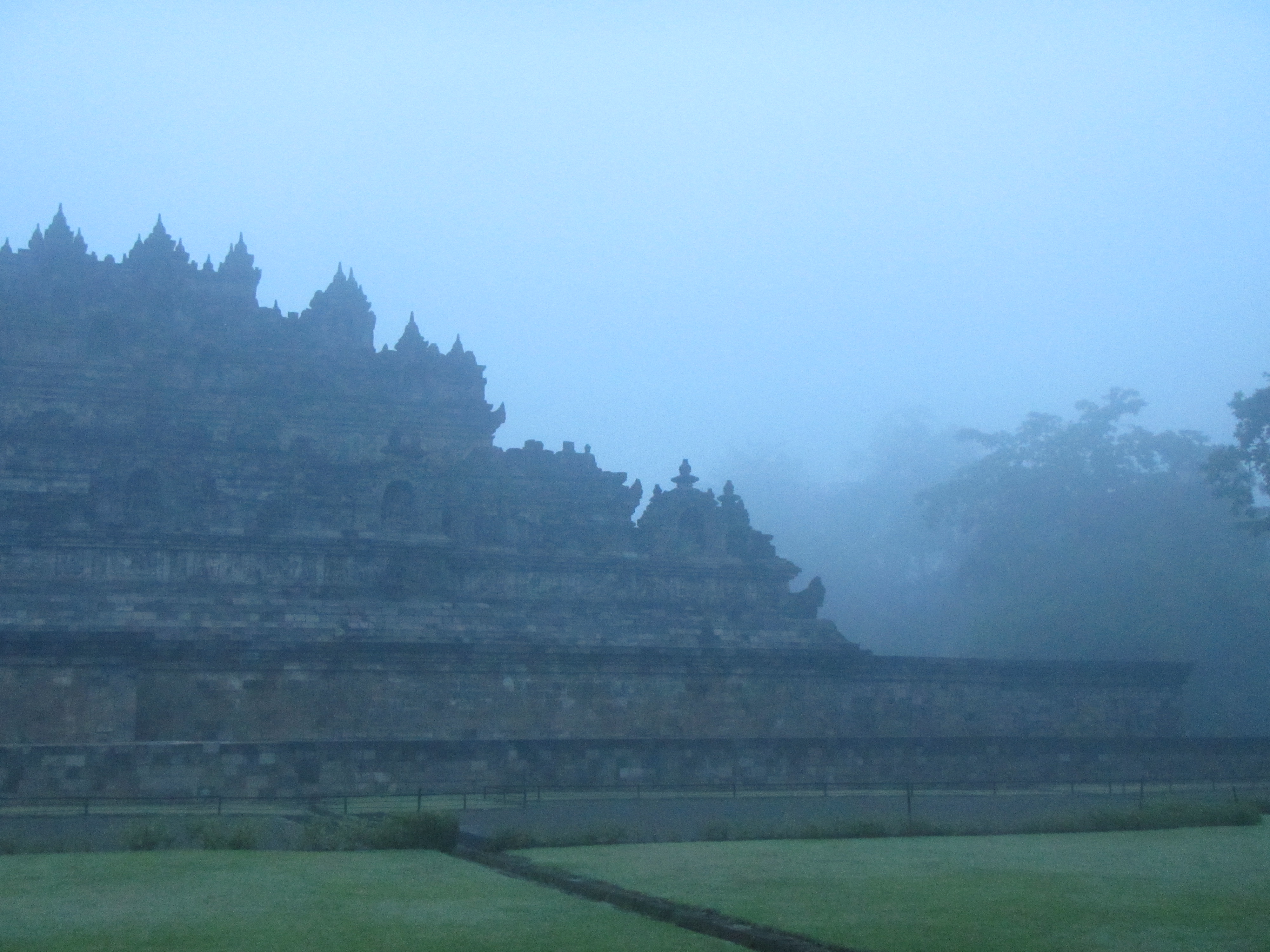
So yesterday, we got in a white Landrover type vehicle with a driver, and headed to Borobudur for the sunrise. Borobudur is a ruin whose shining moment was brief – built in the 700s or 800s AD as a great Buddhist center, it was basically abandoned after a local regime change both political and spiritual. Now, unearthed from volcanic ash and restored, it is a tourist attraction for both foreigners and Indonesians.

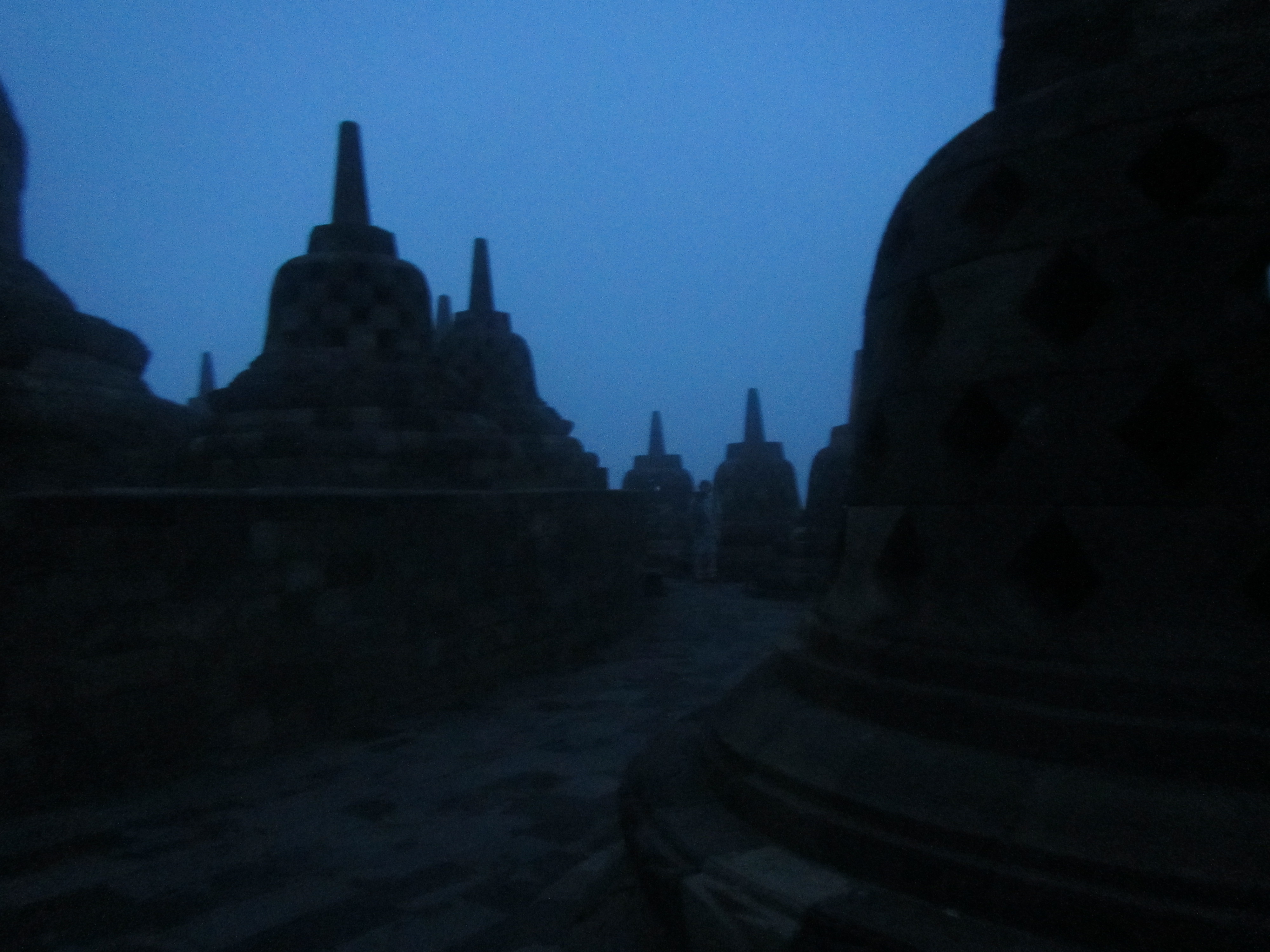
It is magnificent. We booked the “real sunrise tour” at our losmen (hotel), which meant that our tour guide paid a hotel located on the grounds of the monument to let us in before the 6 am official opening hour. We arrived at 5 and were each given a sarong and a flashlight, and went in a group of about 30 people, in the dark, to the walls of the giant stone structure. We were walked a few levels of stairs up, shown the best sunrise-viewing site, and left to our own devices.

Yogyakarta 010Yogyakarta 011

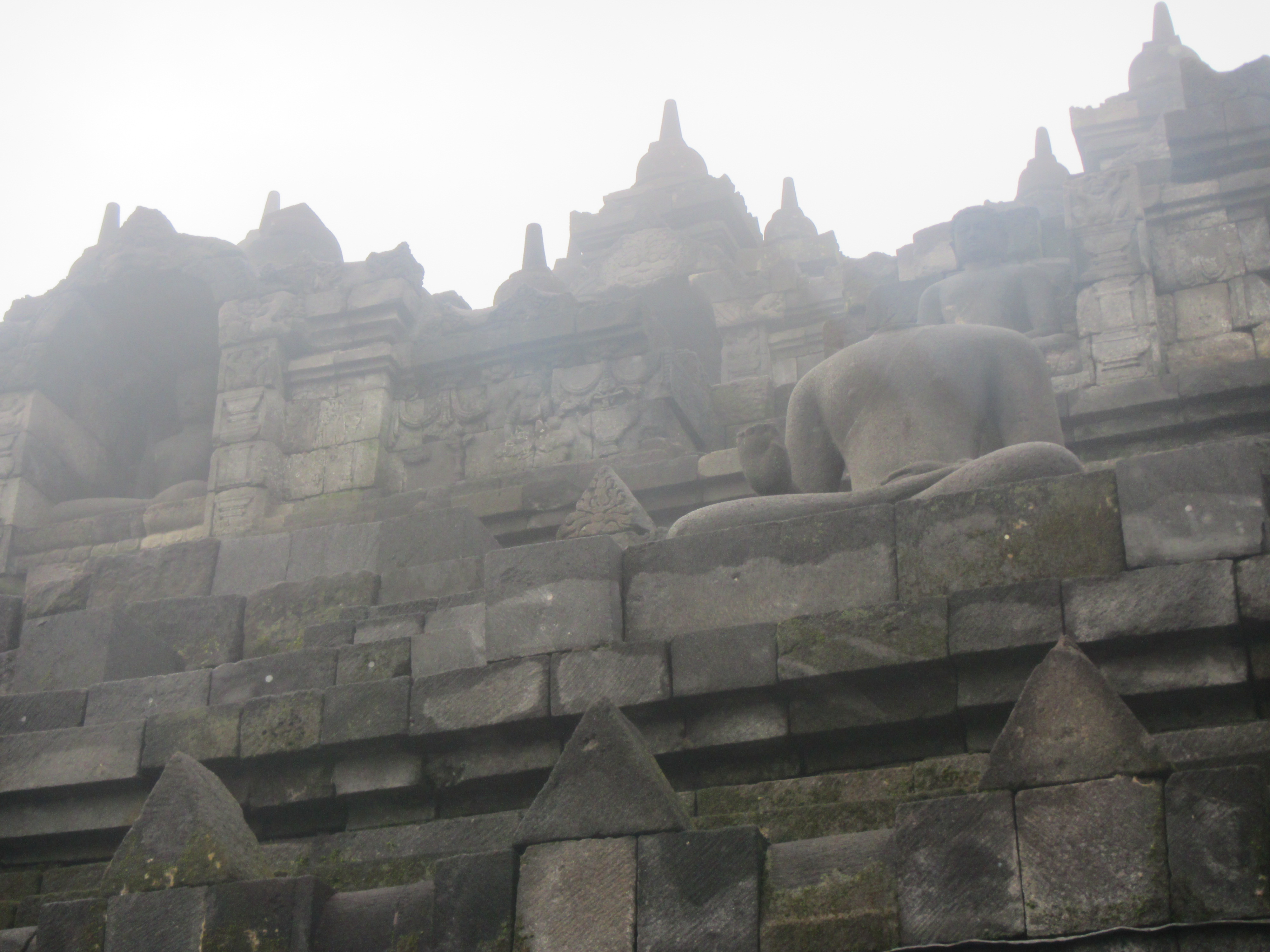
Borobudur is like a giant stone wedding cake, albeit with the bottom levels square and the three upper tiers circular. At the top rests a giant stone onion (stupa), surrounded by smaller such shapes on the penultimate tiers. The entire thing is covered in astonishingly detailed stone carving, most depicting the life of the Buddha, but some showing what look like scenes of regular life – the books tell me that some of these show carnal desires to be overcome and others depict doctrine, but I don’t know enough about that to write intelligently on it.

Yogyakarta 015Yogyakarta 016Yogyakarta 017

We quickly figured out that there would be no golden dawn for us, as it was overcast. Instead, the Professor and I started wandering the narrow walkways of the monument clockwise bottom to top. We were almost always alone, and this was why we’d paid the extra money for the “real sunrise tour”. It was glorious, and even more so after we saw that the monument’s airspace is home to dozens of swallows on the wing. I don’t get tired of these birds ever.

Yogyakarta 014Yogyakarta 019

Afterwards, I was pressed into buying some postcards, but as I had wanted to anyway this was no big deal. We walked through the grounds and then ate breakfast in the early-entry hotel, and then it was off to Mendut temple for a quick visit, and then on to Prabanan. On the way though a beautiful country of rice fields and misty mountains, I told our driver that we had never eaten bakso, a food remembered fondly by President Obama. We decided to get some lunch after Prabanan.

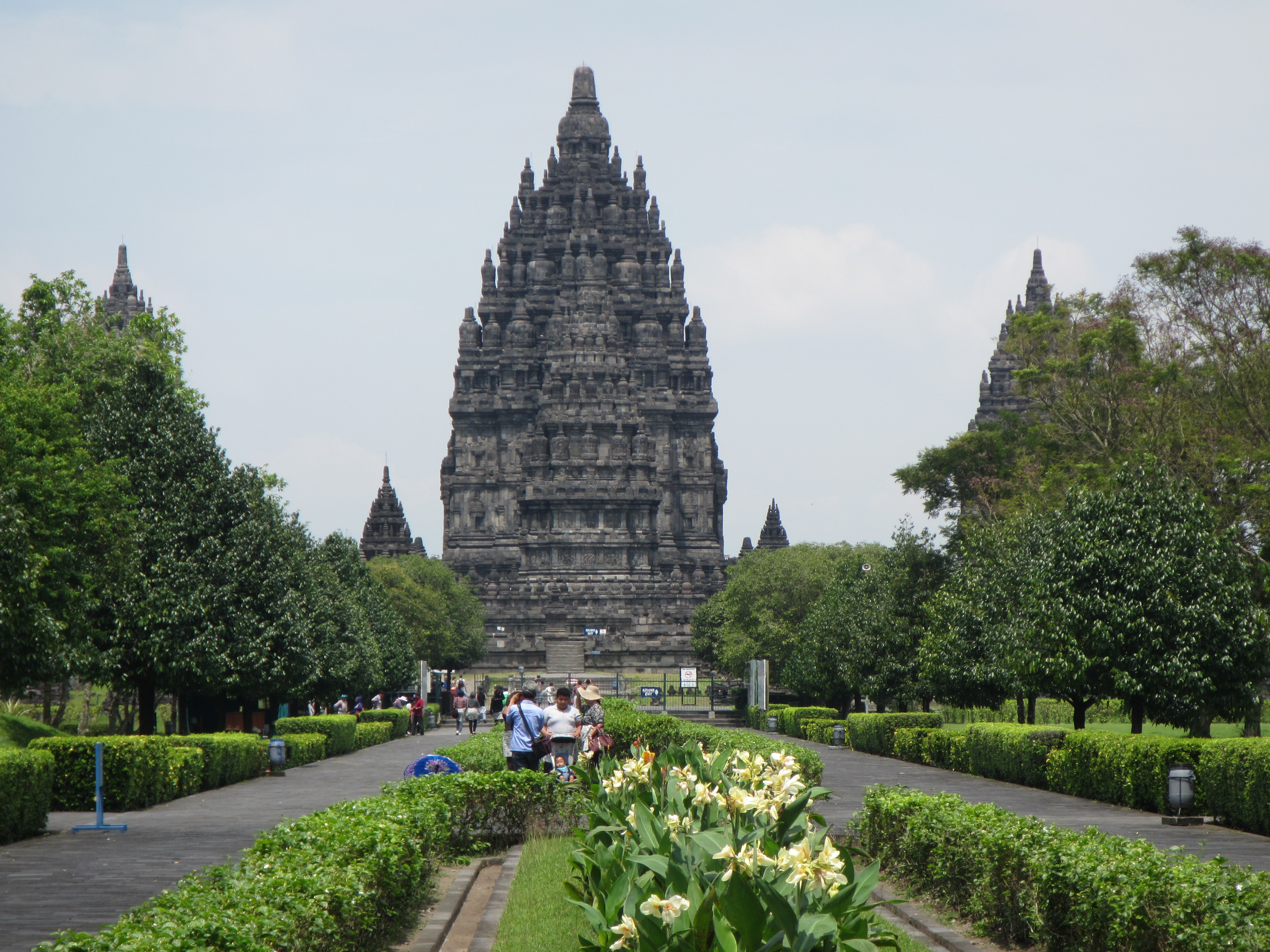
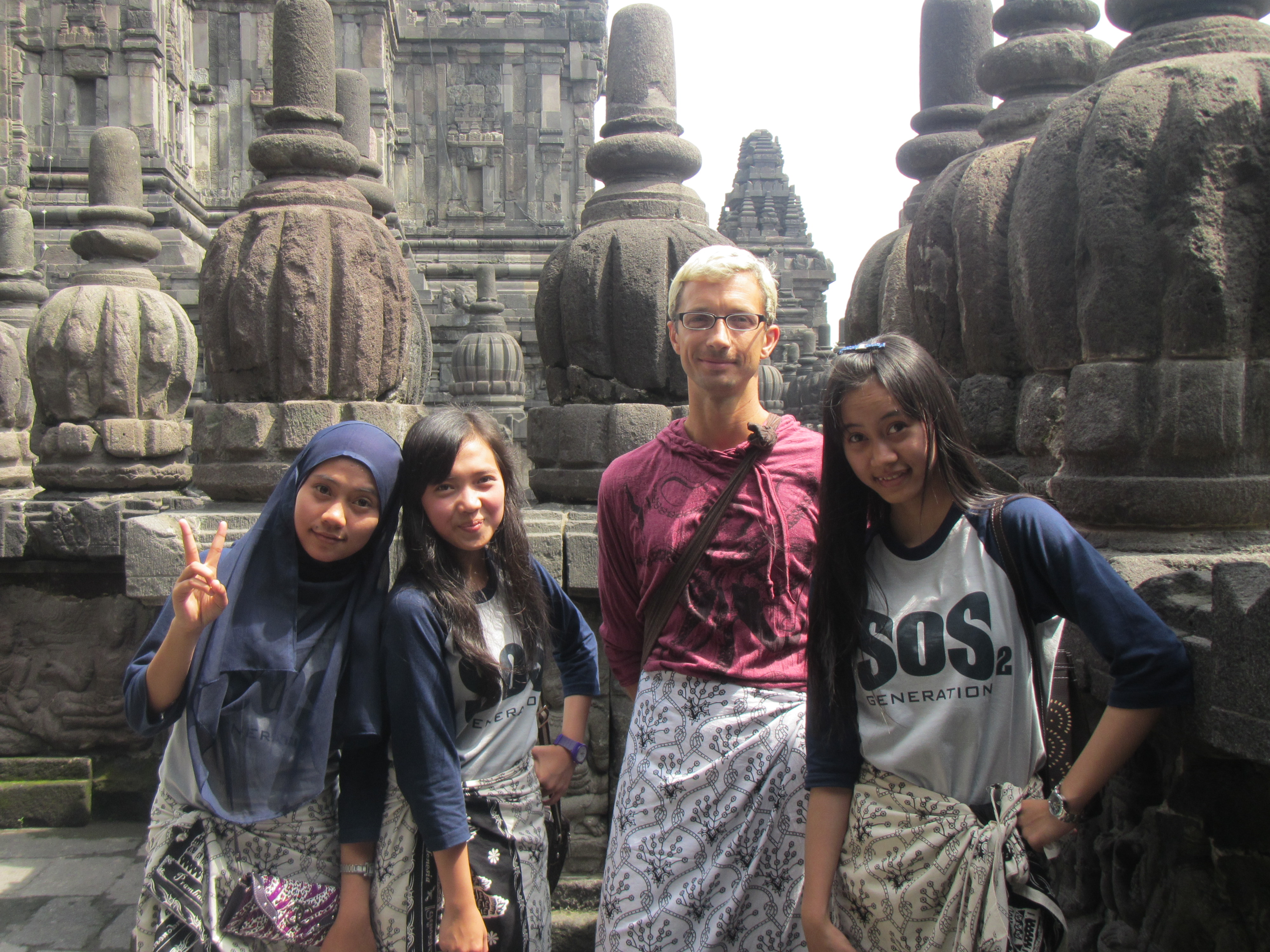
Prabanan is the Hindu sibling of Borobudur, built roughly contemporaneously and likewise abandoned swiftly after a similar regime change, both spiritual and political. Instead of one large building, though, it is a temple complex with separate structures for Shiva, Brahma, Vishnu, etc. We could go inside most of the temples, though we had to wear a hard hat for one of them, as they are working on structural repairs following the 2006 earthquake. The carvings are amazing and as you would expect a lot more fun than the Buddhist ones – multi-armed Kali, monster mouth doorways and mustachioed men abound.

Yogyakarta 021Yogyakarta 024Yogyakarta 025

It is as good a point as any to mention that I have found the mode of dress and presentation among the Javanese to be singularly sexually dimorphic, more so than other places we have been. Women (whom I tower over with a few rare exceptions) seem very … womanly, with small hands, small feet, a neatness and cleanness about themselves. Oh, and headscarves sometimes. Men have shirts cut close to the body, mustaches, white eyes and teeth, and handsome faces full of confidence. They roll their r’s here.

Anyway, we toured the temples for about an hour and a half, and then we and our driver drove to a bakso joint on our way home. Turns out that bakso is meatball soup with noodles. It was, like a lot of Indonesian food that we have tried so far, homey and satisfying rather than spectacular. I like the food here a lot and have never sickened on it, but it is not exciting the way Thai food is.

Despite our early rising, we got a second wind on our way back and so went to the Affandi museum, which we had been to the day before but found it closed. This time, we got a delightful (free with admission!) tour of the artist’s work, which is housed in his own home compound. The buildings are all a shade of robin’s egg blue with curved walls and a roof/ceiling style reminiscent of a banana leaf. He apparently felt that being covered with banana leaves had protected him in early life, and had used them to protect his paintings when he was a poor student.

Yogyakarta 027Yogyakarta 026

I had wanted to see this museum because Affandi is recognized as one of Indonesia’s great modern painters, and his style clearly has left it’s mark on the local scene – at least judging from the paintings we saw in our hotel (which is run by an artist) and also in Bali. But I was most glad that we saw his work after we had visited Borobudur when we got to the third gallery. There, among the sketches, was one of his wife napping at Borobudur’s lovely grounds. Other sketches showed details of Prabanan’s carvings. I loved seeing the evidence of his family’s gentle visits to these monuments, as it made me feel connected somehow to this foreign artist who is no longer with us, and in a grander sense, connected to the world.

We finally went home and napped for three hours, then ate, foraged for middle eastern pastry for dessert, and then returned to bed. It was a happy day.

– the private eye


Yogyakarta – Days 1 and 2

Oh, the batik salesmen of Yogyakarta. They seem so friendly, so hospitable. “My friend! What is your name? Where are you from? When did you arrive? Where from? For how long will you be in Yogya?” But once such pleasantries have wound down, they cast their line. “Oh, you arrived today? You are lucky, it is the last day of the student art exhibition, which has a lot of batik!” Because, you see, their eyes and posture tell you it is so sad, a veritable tragedy, how poor the batik is in your country, and so it’s really your duty to bring some home.

We’ve been trying to come up with a fun way to respond, to play along and pull their chain once it’s clear they’re trying to cheat you. The one I want to try involves reading up a lot about the art and then telling the person I’m a connoisseur, in fact a professor at a prestigious American university, an art professor who studies batik and so yes, can truly appreciate and discern a fine piece of batik. Of course, they might see this as raising the stakes – if I’m that, yet so clueless to talk to them, maybe they can make a HUGE sale… We will see. Either that, or be completely clueless on what batik is and then tell them that I don’t understand why you’d ever want cloth with patterns on it.

Our first day was a mix of reading in the guest house lobby waiting for our room to be ready, then venturing out to Jl. Malioboro (named after the Duke of Marlboro) to see the market.It had a lot of batik, of course, front and center. But in the back, there were also spice and food merchants, huge bags of cinnamon and turmeric, bins of star anise, cloves, and cardamom, all filling the rain-humid air with such wonderful smells. And, of course, head scarves:

Indonesia 011

The Private Eye commented that she’d like a guide: some of the foods, such as dried, thin disks of some starch that were everywhere, were foreign to us. And as she finished her first durian juice, her prayer was answered. A man named Aldi started chatting us up. He is a spice merchant, and started telling us about Sultan’s Tea, also called garbage drink, but not for its flavor, rather that when prepared the many spices floating in the tea make it look like flotsam and jetsam. As we walked back to his stall, we asked him about the different foods and he answered all of our questions. He then sold us two packets with which to prepare Sultan’s Tea, which include ginger, bay leaves, cinnamon, and a half dozen other spices. They were about 90c each; even if a total rip-off, I’d gladly have paid $2 for the time talking with him. We tried Sultan’s Tea tonight at dinner and it was great, sweet and spicy, so we will have to break open one of the packages sometime soon.

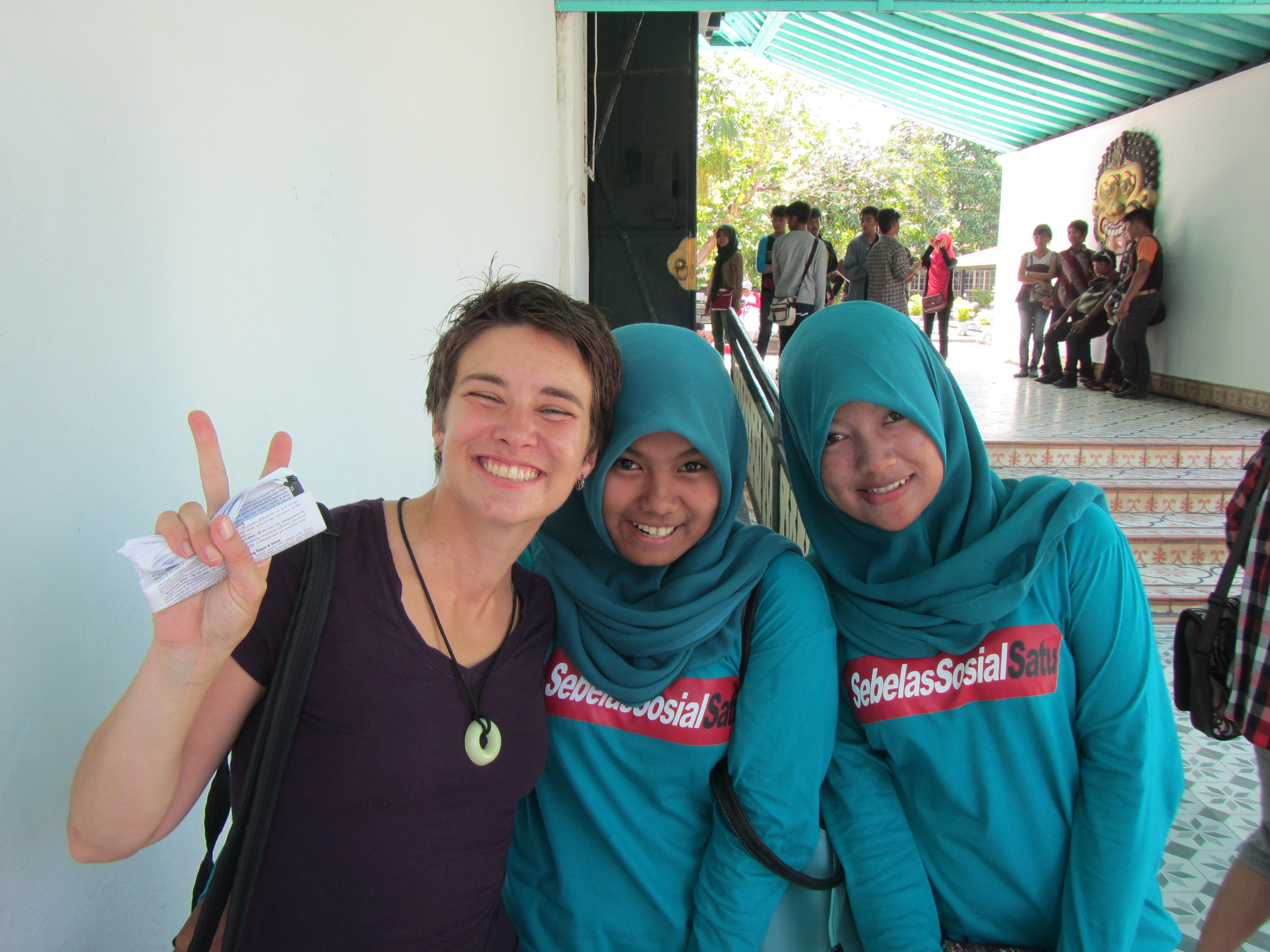
Today, we went to the kraton, the large walled complex that encompasses the Sultan’s palace. We also ventured to the silversmithing village/neighborhood a few kilometers away. At the kraton,we encountered a first, something which we’ve experienced at every tourist destination in Yogyakarta: we are one of the attractions! Teenagers, generally school groups, ask if they can have a picture with us. We usuallu say yes, except when there are so many (and have so many cameras they need to switch between so everyone gets a picture) that we don’t seem to be seeing the sights anymore. Sometimes we ask if we can have a picture too:

Yogyakarta 007

Yogyakarta 020Yogyakarta 023Yogyakarta 022

In all honesty, though, today was more about the transportation than the destinations. We rode in a becak, a two-person seat pushed by a bicycle, in our case ridden by old, gnarled and wiry men who could read the traffic so well that they never used brakes yet were always completely safe.

Yogyakarta 005

I liked the idea of transportation infrastructure that puts its providers in good shape. We rode the bus and, with the help of a man from Holland who used to live here but now just visits, figured out a transfer – no matter that our destination, the Affandi museum, was closed. Then the rain began, and we hid under a tiny tarp with three teenagers running a coffee cart, where we had two cups of coffee, two small bundles of rice and chicken, three egg rolls, and a few other fried goods, for R12,000 – around $1.50.

It’s hard to say much about Yogya just yet – while there is tourism here, it seems much more a working city, and so the culture is not as on display. It also means the division between tourist and local is much thinner, such as sitting in a donut shop that is a Starbucks clone, surrounded by Indonesian couples and friends chatting. Tomorrow we wake at 3:45 to go see Prambanan and Borobudur, enormous, beautiful Hindu and Buddhist temples. We have booked a flight Wednesday afternoon to Singapore, where hopefully we will connect with Life Is Too Short, as well as the Singaporean man we met on the bus to Chiang Rai from Tha Ton.

— The Professor