RSS

Category Archives: food

Singapore Details

Our flight landed at 6:00. After a brief bit of immigration (“Where is your next destination?” “I don’t know.” “Well, you have to write something.”), we took the MRT to our stop, Farrer Park. Life Is Too Short had arrived a few days earlier, and we arranged to meet up for dinner in our lobby at 8:30, wandering over to the Lavender Food Plaza, a hawkers plaza with twenty or so different stalls. We’ve returned there for every meal we have had in our neighborhood. Prawn noodles, Beijing lamain, Hainanese chicken rice, chicken Padang, all so good.

Since Luang Prabang, I’ve been longing for strong, rich coffee. Lao coffee is prepared with a large filter like a sock, filled with grounds, that sits immersed in the coffee. You mix the thick, brutally strong resulting coffee with hot water and condensed milk. Coffee in Thailand is often instant, and coffee in Indonesia (Bali Kopi, Lombok Kopi, Java Kopi) is served in a small cup, optionally with sugar but not milk, with the very fine coffee grounds forming a sludge at the bottom. And so, the rich, sweet coffee of Singapore, served just as in Laos, has been wonderful.

On Thursday, we met up with Life Is Too Short to go to the Singapore zoo. The delight with which The Private Eye and Life Is Too Short raced from animal to animal was hard to keep up with at times. By far the best part was an enclosed rainforest exhibit, surrounded by mesh so the butterflies wouldn’t escape. Mouse deer (neither mouse nor deer!) moved in the underbrush, ringtail lemurs sat on the railings, and enormous flying foxes, with wingspans over a meter, swooped above before gnashing on fruit hung 2 feet in front of you. For those who have been to the rainforest enclosure in the California Academy of Sciences, it was much like that, except out of doors and with many more vertebrates, enough that you seemed surrounded by them.

Picture 010Picture 009

Singapore is a big city, so surely it must have a nightlife. We met up again with Life Is Too Short to find a bar or club. Our part of town has numerous KTV lounges – karaoke. While you can’t see inside any of them, you can hear the singing within. Unfortunately, a bit of research discovered that public KTV lounges (as opposed to private karaoke rooms as in Japan) are where people go to meet friendly members of the opposite sex who work there. Most cater to men, but some cater to women. We tried going into one that billed itself as a pub/disco, but The Private Eye observed it was upstairs from a massage parlor, and we saw the entry has pictures of all of the women who worked there – “Like a menu!” she cried and we backpedalled to the street. At the suggestion of our front desk we went into one that, while it had some very friendly ladies, was very tame and not sleazy. For some reason, the bartender really wanted us to sing Hotel California – enough so the they queued it and assigned it to our table even though we didn’t request it! The Private Eye pulled it off well. But with two beers and a Pepsi being S26 (26 Singapore dollars, about $22) , we only had one round, and we quickly discovered they only put your song request on the queue when you order a drink.

We found out that a huge yearly parade, called Chingay, was on Friday and Saturday evenings. Tickets started at S28, hard to afford when our daily budget for all meals, transport, entertainment, and errands is S100. Talking with some locals, we found out that there’s a large free area, but you want to be early to get a good view. So we wandered downtown, stopped by an outdoor equipemnt store to get some last minute gear for Peru, walked through the colonial district, then the shopping insanity that is Orchard Road until 6 or so, finally making our way via MRT to the parade.

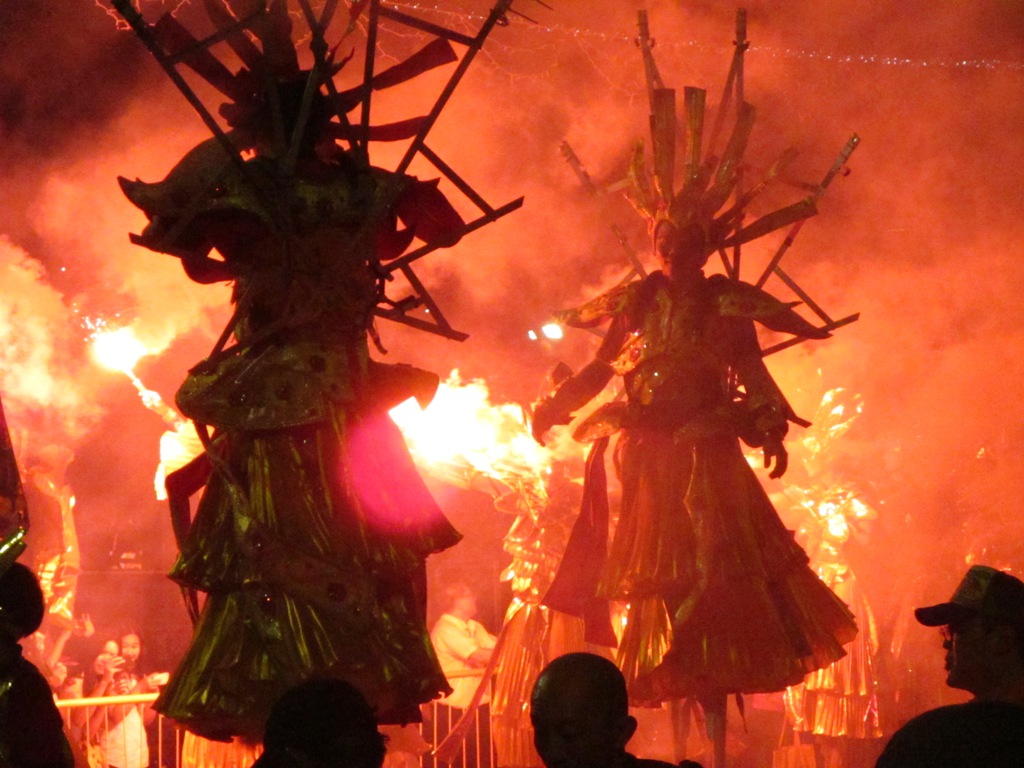
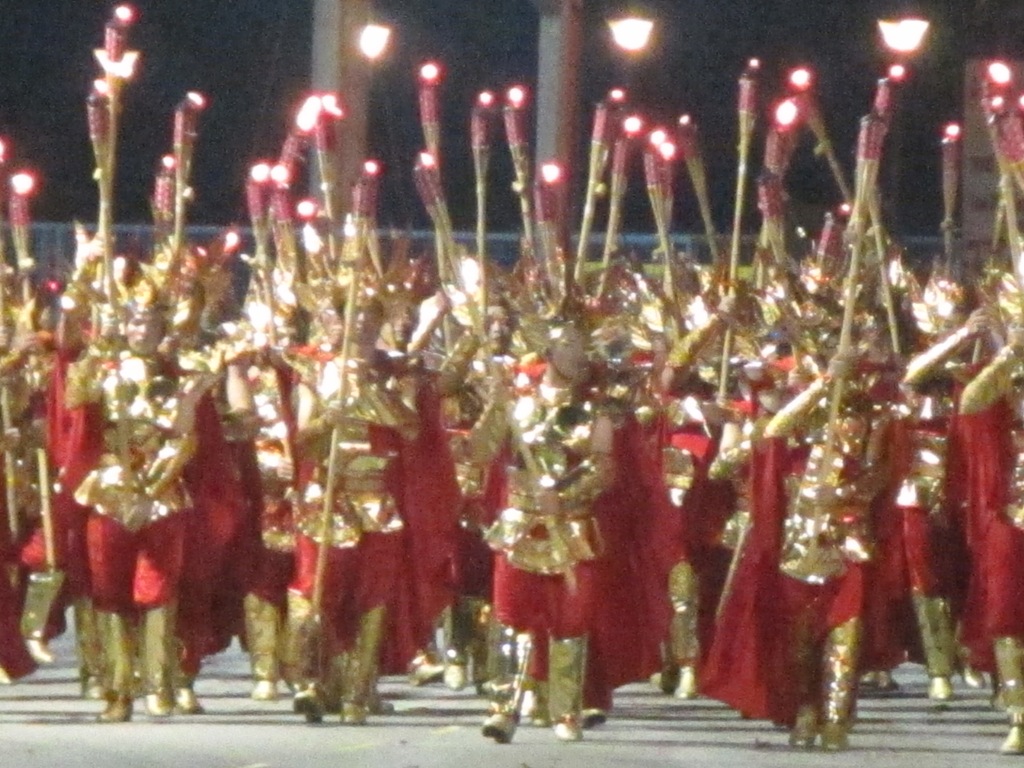
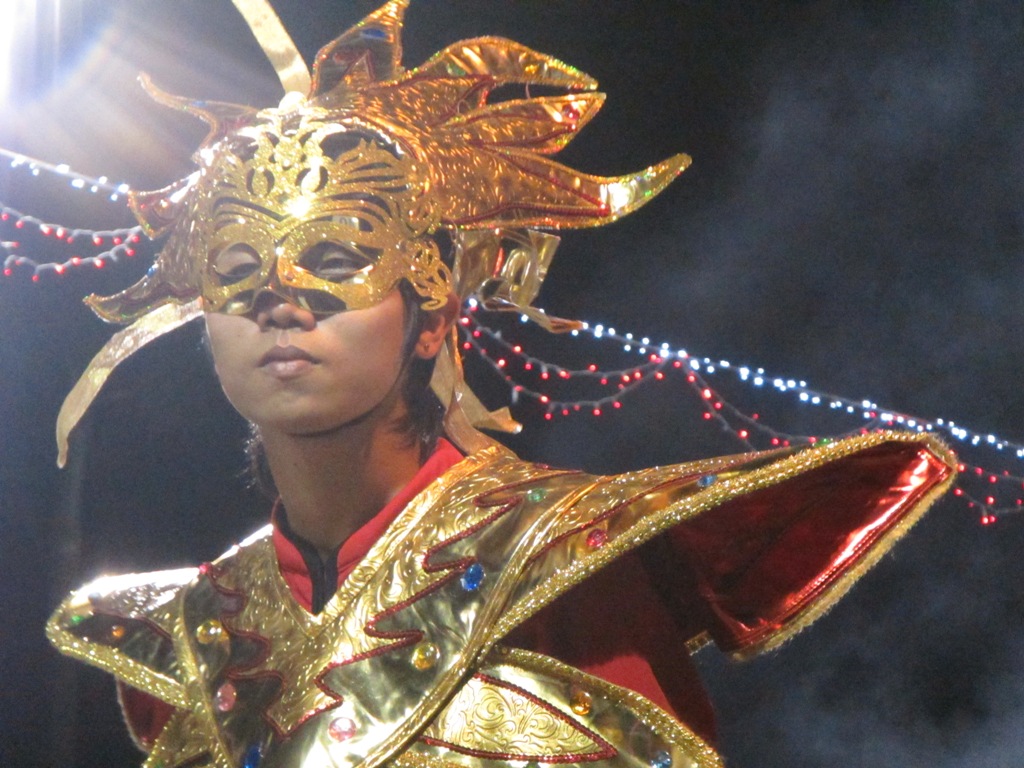
The parade was fantastic. It started with nearly a thousand dancers, had floats, dragons made from recycled plastic bottles, fire breathing, phoenix floats, and lasted for 90 minutes. All for free! The parade started in 1971, when Singapore banned fireworks. Words don’t do it justice:
Picture 011Singapore-KL-SiemReap 008Singapore-KL-SiemReap 007

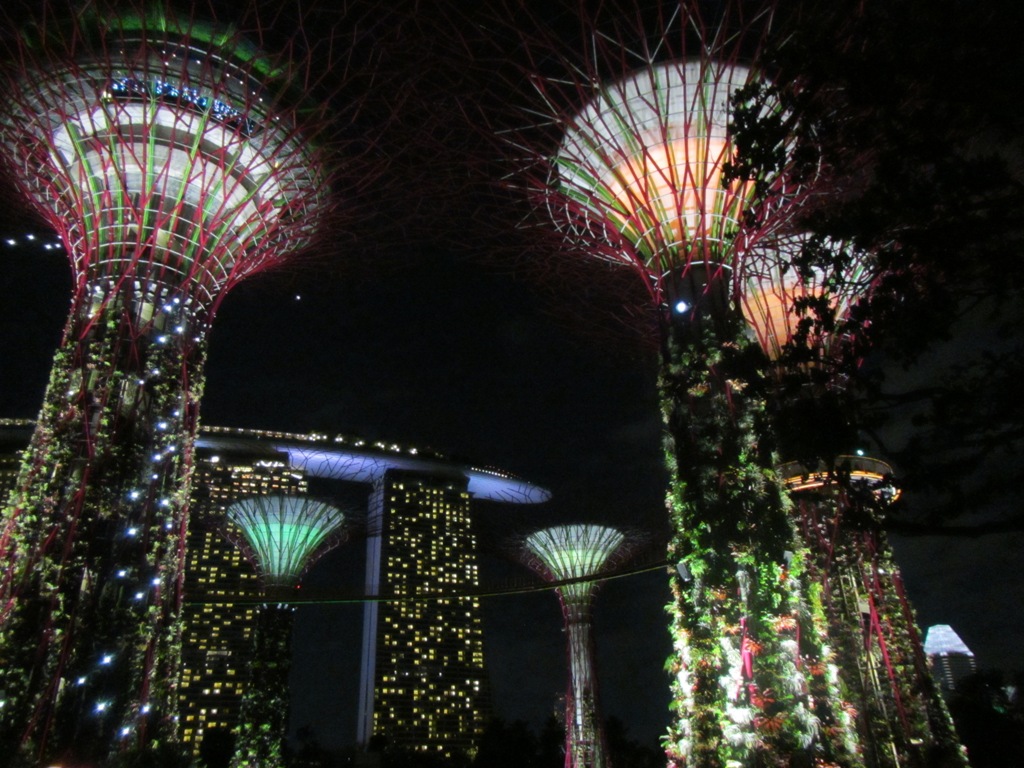
After the parade, we decided that we walk over to Marina Sands, an enormous hotel/casino complex. It’s the most iconic element of Singapore’s skyline: three huge towers in a slight curve, with an enormous open area, park, club, and pool sitting on all three that looks like a gargantuan ship aground in the sky. Unfortunately we were not up to the club’s dress code, so we wandered to the Marina Gardens, enormous steel structures (20-50m tall) that look like trees and are designed to be like them. They’re powered by solar panels atop them, have vines growing on their structure to perform photosynthesis, and, of course, light up and glow at night. Our feet exhausted from so much walking, we sat on some steps to watch the colors change and ebb, before catching one of the last trains back to Farrer Park.
Singapore-KL-SiemReap 010Singapore-KL-SiemReap 009

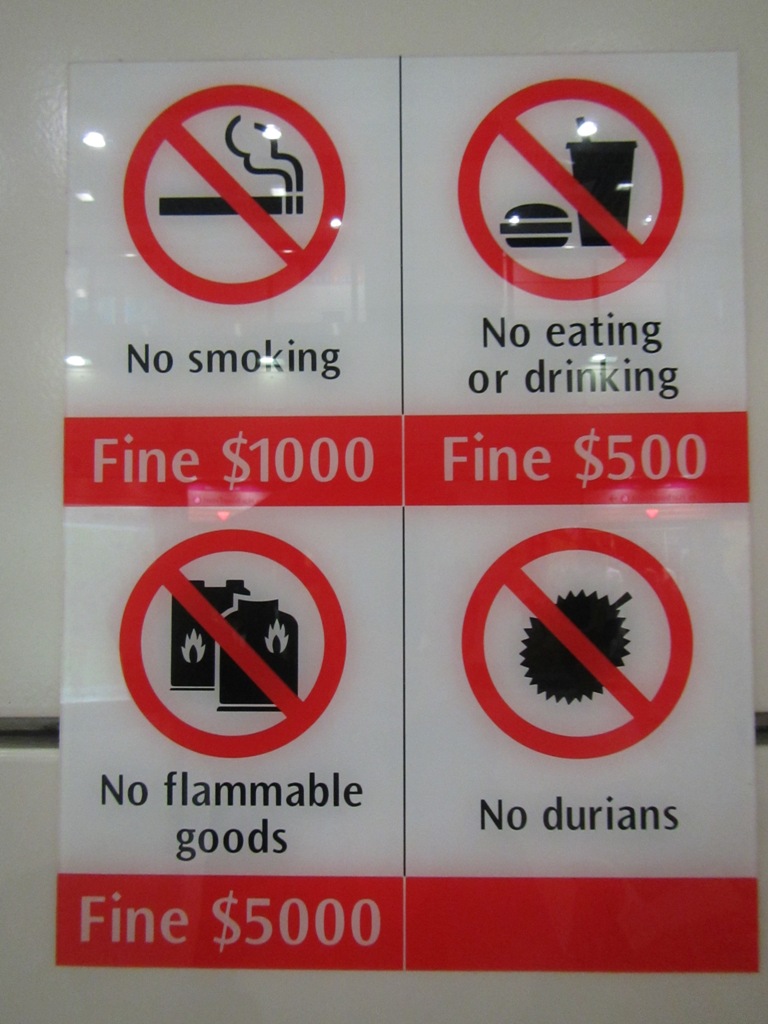
Today has been a slow day: laundry, hair cuts, some other practical things. The Private Eye and Life Is Too Short are back at the gardens to see them when they’re open; I’m back in the hotel stretching out my back, realigning some vertabrae I screwed up a decade ago. I guess I’m getting old. I had my first experience with the paternalism of Singapore: ibuprofen has to be bought over the counter, and sales are logged, so that a pharmacist can tell you know to take it properly. No matter that the instructions are different than every other place I’ve been. In Europe, you often buy 600mg pills; here, the pharmacist told me to take 1-2 200mg pills AND NO MORE. Oh, and here are the signs you see as you enter the subway:
Singapore-KL-SiemReap 011

We’ve booked a flight to Kuala Lumpur on the 25th, and it looks likely we will head to Siem Reap on the 27th, for a few days exploring Angkor Wat. After that, we have a bit under a week before we should return to Bangkok, and right now the top candidate is Hanoi.

— The Professor
 

Singapore

Oh, Singapore, you are a welcome home.

We landed in Singapore on the 20th, planning on staying just a few days. But we’ve loved it so much that we are now slated to depart on my birthday, the 25th. I want to copy The Private Eye and have a passport stamp on my birthday.

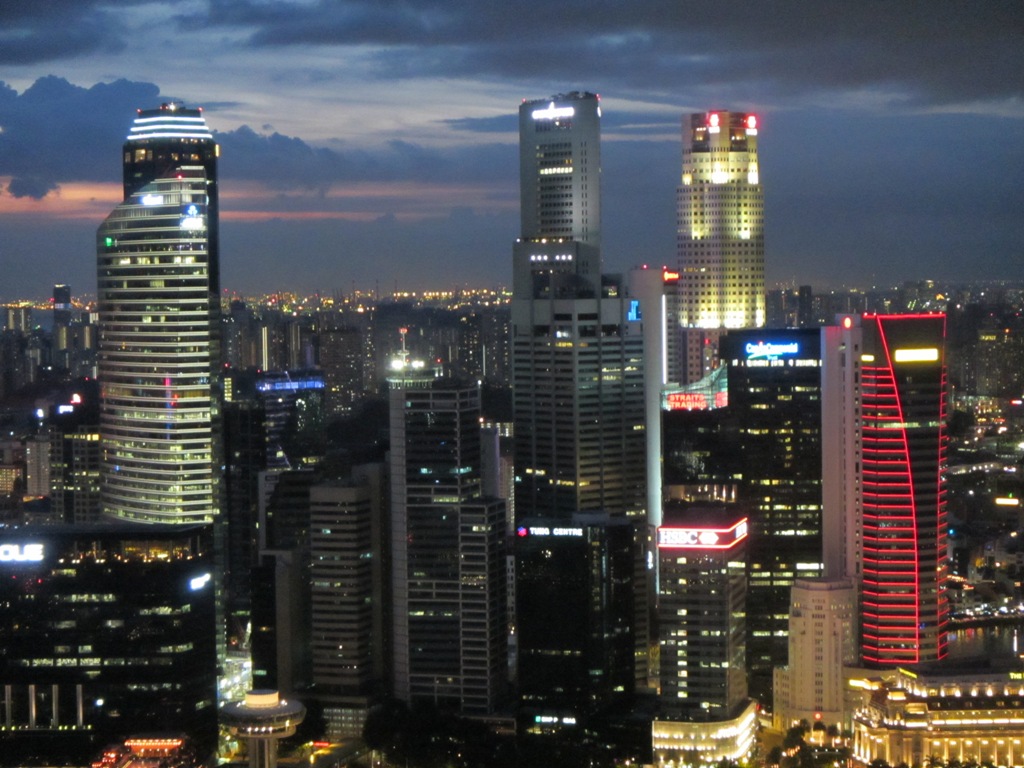
Singapore, a glittering, urban metropolis where everyone meets in hawkers plazas, food courts serving fantastic street food and dishes from China, Indonesia, India, and more. After 20 days in Bali, Jakarta, and the Gilis, the best Indonesian food I’ve had was here in Singapore. Admittedly, it cost $5 rather than $2, but still, it was vibrant and spicy and sharp in contrast to the comforting but ultimately a bit boring I found in Indonesia.

Singapore, a nation so small and dense that most people do not own a car, and so subway rides across 20 km are $2. Where the primary language is English in theory, but in day to day interactions it’s Chinese and many seem unable to speak much English. There are four official languages: English, Mandarin, Malay, and Tamil. So many signs are big and have three different alphabets on them. It’s illegal to sell chewing gum, spit on the street, or bring a durian into the subway.

Singapore, with an enormous zoo so fantastic it deserves a post of its own. Panda bears quietly napping, red pandas looking down at you from their den, flying foxes soaring above your head, false gurials, orangutans holding hands with keepers, Komodo dragons lazily sunning, and so much more. We arrived at noon, thinking we’d have plenty of time, and were some of the last to be shooed out at 6:30.

Singapore, whose Chingay parade began in response to the banning of firecrackers in 1972 and is now watched by over 1.5 million Singaporeans. Ten thousand participants, stilt walkers, floats, fire breathing dragons, visiting participants from other countries, all under the neon skyline and slowly rotating Singapore Flyer.

It is exhilarating to see Southeast Asia through a lens of ultra-modernity and prosperity.

— The Professor


Denpasar to Ubud

One thing is different about Bali for sure: people here are much more aggressive in trying to sell you things. As soon as you exit customs, men start approaching you. “Taxi? Cheap cheap,” accompanied by a gesture of hands outstretched like on a steering wheel. Most of them aren’t really taxis (well, taksis), just people with cars who will charge you an arm and a leg. There is one reputable taxi company in Bali, Bluebird, who actually have meters and charge reasonable rates. To get one, you have to walk through the airport parking lot to an actual street. We flagged one down. The driver was from Tabanan, a town to the north and west of Denpasar. We talked about how he has had a long day, starting work at 6:30 AM. His shift is supposed to end at 12:30, but since he’s already reached his target for the day, he’s going to quit early, after only 13 hours. The ride costs R77,000, or about 10 dollars. We tip him R8k, which is generous, because he has to drive back through the traffic to drop off the taxi before riding his motorbike home, and he was very nice and conversational.

Denpasar is not a big tourist destination, which is why we thought spending a night in it would be nice. It takes us 20 minutes to find our homestay, which thankfully has space. Here in Bali, families don’t live in individual homes. Instead, a family has a plot of land that has multiple buildings within its walls. So many of the cheaper places to stay, rather than separate guest house buildings, are homestays, or rooms in a building in the family compound. We drop off our things and head to Pasar Barung, the largest market in Denpasar, for dinner.

But markets here are different. In Thailand, day markets are a mix of groceries and street food, while night markets are often mostly street food and sometimes some trinkets. Here, it’s all produce, meat and spices. The Private Eye starts to lose confidence we will find anything to eat and suggests we just go to a warung (street food vendor) outside the market, pointing a direction. Of course, it happens to be at that particular exit there is an elderly woman serving some kind of soup and a few fried vegetables. We have no idea what it is, but sit down and have some. It’s different than anything I’ve eaten before, a thin, slightly sweet coconut soup with lentils and a few small balls of sticky rice that she adds. The vegetables are some kind of sweet potato and we think cassava. She’s also making some kind of coffee drink with fresh egg, which the locals seem to like. In our half hour in the market, and since getting out of the taxi, we have seen two other white people. Three bowls of soup (The Private Eye had seconds), two bottles of water, and four fried bites is R31k, or about 4 dollars. We wander back to the homestay, rinse off the sweat (sitting in front of a soup pot in the tropics is hot!), and sleep, thankful that tomorrow is the first day in a while that we don’t need an alarm.

We sleep in and have a simple breakfast in the public area. I’m up first, so over my toast and coffee I have a long discussion with a woman from England about whether western culture is destroying Bali. I mention Ubud and she says she was disappointed. “It has a Starbucks. And a Polo store,” she says. We talk about why this might be bad (or not), finding common ground that if only tourists go to the stores then that’s problematic, as they indicate making a place less challenging and more comfortable as well as less unique. I argue that if locals want a Starbucks, though, they should be able to have it. We veer off into consumerism, capitalism, and other ills. She doesn’t agree with me, but also doesn’t disagree.

We decide to get a SIM card for our phone and to go to the nearby museum of Balinese art. On our way, we pass by a grimy concrete structure that says “Art Market” outside. Inside, it’s basically large, open concrete floors with men and women selling wood carvings. Since business is slow most of them are working on new ones to pass the time. Demon faces, Komodo dragons, Buddhas, monkeys in lewd poses, dragons, chess sets, and boxes dominate. We haven’t even been in Bali for 24 hours so shy from buying anything at first, but then The Private Eye finds a unique carving, a very simple, unfinished one of a rabbit. The woman seems surprised that we like it. She looks at the bottom and names her price: R50k. I bargain her down to 30 (~$3.75), which she accepts pretty easily but seems reasonable to me. After, we look at the bottom and it says 25; we paid a little more than we could have, but still a fair price. The woman stains it for us and wraps it in newspaper.

After the market, we head to the museum, which we have to ourselves. The most interesting exhibit is on Balinese dance, showing some costumes and describing the different forms of dance.

It looks like rain, so we catch a bluebird taksi back to the homestay, pick up our bags, and ride to the terminal where bemos to Ubud leave from. We debated back and forth about whether to take a taksi or a bemo. A taksi would probably be R160k, while a public bemo would be 30. Bemos are basically vans that run certain routes. They are small and kind of cramped. Foreigners don’t ride them much – one issue or complaint many travelers raise with Bali is its lack of a transportation infrastructure. But I figure we should ride one once, and this one is a major route.

Once we get to the terminal, there’s a bunch of discussion with people there. The long and the short of it is that we don’t catch a public bemo. Instead, a grizzled old man with a very beat up van agrees to take us to Ubud for R70k ($10). He won’t go lower. I figure since it’s a charter with no other stops, and it won’t be crowded, it’s worth it.

When we arrive, and I try to pay him, I realize I think I did the right thing. I don’t have correct change: we have only 50k notes and then 19k in other notes. So I give him 100k and ask for change. He looks at the bills, and pulls out a wad of bills from his pocket. He looks at them, leafs through them, and stops. They are mostly small bills. I realize that he probably can’t add them up in his head – he can’t make change. Generally speaking, nobody does arithmetic in their head here, it’s always with a calculator. I offer to make the change for him and realize he doesn’t have 30k – he has only about $3 on him. So I give him the 69k we can give him, counting it very slowly so he can see we are not cheating him. The look of relief and happiness on his face when I give him the money gives me a glimmer of how much harder his life is than mine and how valuable this money is to him. The idea of bargaining for a price you are both happy with does make more sense when there are such disparities.

We get out of the bemo outside the palace in Ubud, find a bookstore/library and a place to stay. I’ll leave our nighttime adventure involving Balinese dances, a jazz bar, and sharing beer with a half dozen artists in their studio for another post.

— The Professor


Cultural Heritage, Waterfalls, and Plans

We’ve made our travel plans to Ko Tau. We are taking a 7:35AM flight out of Luang Prabang to Bangkok on the 16th, will spend the day in Bangkok, then take a sleeper train down to Chumphon. From there we will take a ferry/hydrofoil to Ko Tau, settle in, and start some beach time and scuba diving. We’re thinking we’d like to make it to Ko Phangnan for the next full moon party on the 26th, but given how busy it’s supposed to be around them we might just head east for a live aboard dive of the Similans (a dive where you live on the dive boat).

Perhaps the one thing against Luang Prabang is that it’s been a bit chilly. Much like Pier 29 in San Francisco, local stalls have been selling Lao P.D.R. sweatshirt hoodies at a brisk pace. But otherwise it’s wonderful, a small city with a mix of bustle (the night market) and quiet, pretty streets (the end of the peninsula). This morning we splurged for pain au chocolate aux aumandes at Banneton, which seems to be the best bakery in town. Of course, splurge means they were $1.90. We also picked up a baguette, which is as wonderfully crusty and chewy as we’ve come to expect from Acme in SF.

The bars on the peninsula close at 11:30, much to the chagrin of some of their patrons. The Private Eye did some investigating and heard that this is because they are close to so many of the temples and the UNESCO world heritage site area. Allowing late-night hijinks could supposedly jeopardize its status, so in a recent town meeting they decided to shut everything down at 11:30. I think it’s for the best, personally. I really liked in Dublin how pubs closing at midnight gives them such a different social place than bars in the U.S. – even if you stay until closing you can still get a reasonable night sleep before work tomorrow. I talked with one Israeli woman who objected; I told her to stuff it, although in more polite words than that. I’m sure the Lao want the tourist dollars, but I also think they don’t want coeds dancing on the tables (something that happened in Utopia last night just before it closed). The sense of entitlement from money can run strong. We also found a very classy bar, Ikon, run by a Hungarian expat.

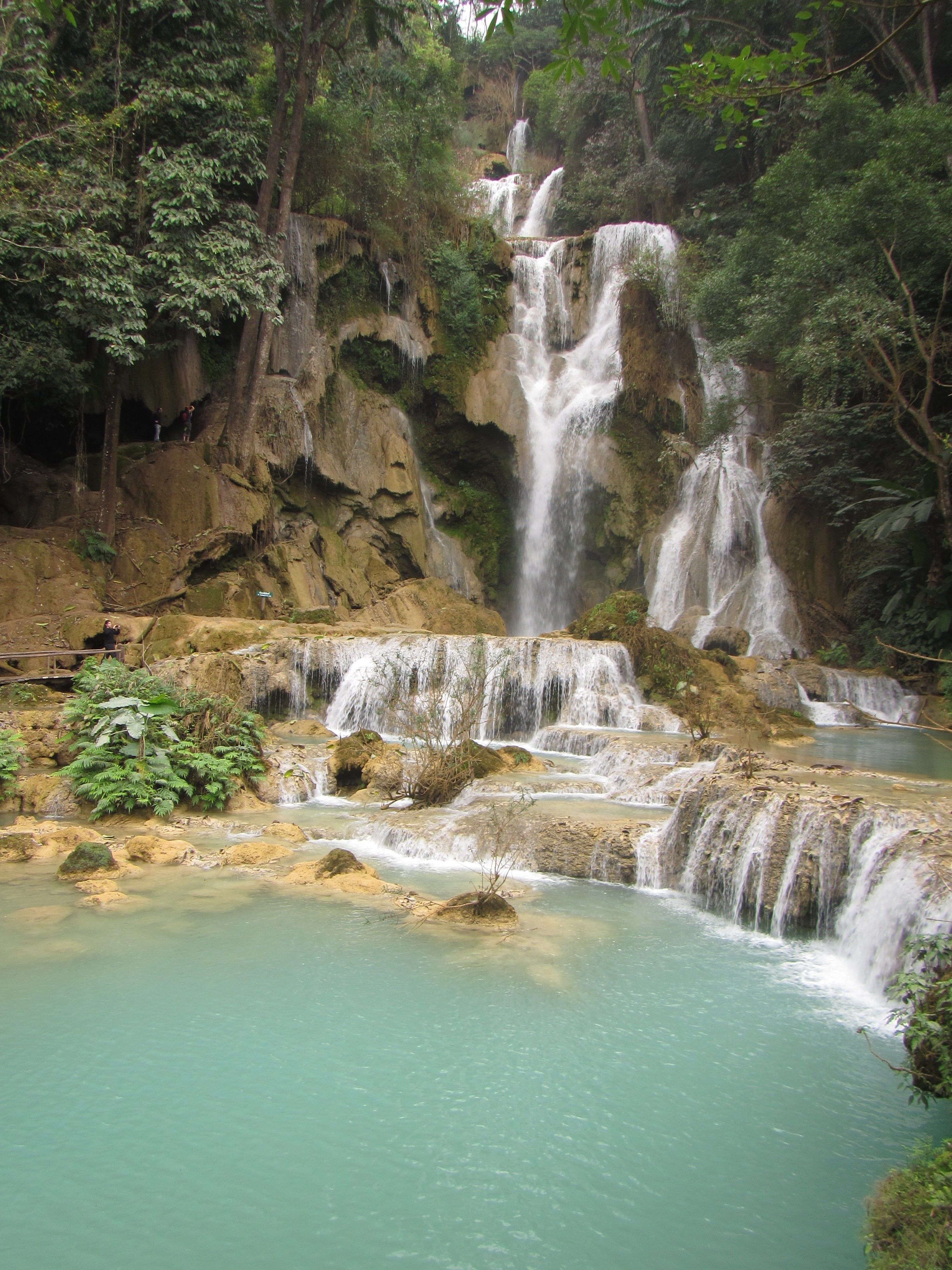
Yesterday we hired a tuk-tuk to take 6 of us to the nearby (38 km) Kan Sai waterfall. The water has calcium in it, which gives it a milky, greenish color. In addition to the fantastic waterfalls themselves, there are two swimming holes, one of which has a rope swing. We had been warned, and so we brought bathing suits and towels. The water was chilly, but it was great fun to scramble across the ladder to the branch, use the hook to grab the rope, then swing out over the water. At the bottom of the falls there’s also a bear rescue/rehabilitation center. We arrived exactly at feeding time. The keepers would hide their food in all sorts of places: under rocks, inside tree hollows, and on top of poles. That way the bears would have an hour or two of sniffing out where it all was, getting to it, and eating it. Seeing a bear peel a banana with its claws and teeth was neat. We had thought about bicycling to the falls, but decided driving there first to get a sense of the road would be better. It looked like a fun, reasonable workout to me; this means it would be unpleasant for The Private Eye, so maybe I’ll do it myself if I become really jumpy.

Jan16 593Jan16 600

Here’s our new friend Life Is Too Short, whom we stare at in horror as she has stepped over the railing to take a photo:

Jan16 594

She’s headed to Huay Xai for the Gibbon Experience in part based on our and The Blythe Spirit’s recommendation. We may cross paths again in Bali mid-February.

Meeting up for dinner after the waterfalls, we ran into the two Israeli Army Doctors from the Gibbon Experience. Their trek in Luong Nam Tha was a nightmare, unfortunately. The government had recently built a road, such that locals no longer used the trail. So a few guides went slowly ahead of them, clearing it with machetes. Furthermore, they were short, so the two doctors had to stoop the entire time. The guides said they’d bring water, but didn’t. One of them caught a cold. They said they are looking forward to recuperating a bit before going anywhere, and we told them this is a wonderful city to do so in. You can get a croissant, walk across the river on a bamboo bridge, and be in farmlands and nature, such as the hill from which we watched the sunset two nights ago.

Jan16 556

One note – I’ve so far been outed (my job) five times. Twice it was to people from the Bay Area, who know all the schools so want to know which one I work at. The other three times it’s been Israelis, in the first three minutes of the conversation: what do you do? what do you teach? what school? It’s a funny cultural signifier that the conversation always goes that way. But an Israeli woman did buy me a beer last night once she found out: so it’s true, kids, being a professor can get you free drinks.

— The Professor


Thai Food and Thai Cooking (Chiang Mai, day 3, New Year’s Day)

We awoke a little lazily after our late night out. The Private Eye headed out to run a few errands (drop off laundry at one of the nearby homes that offer the service, renew our bike rental, etc.). I tided the room before heading to Black Canyon Coffee, which although very bland inside actually makes excellent coffee, to read my book. Almost everyone we know who’s been to Thailand has recommended taking a cooking class, and Chiang Mai is supposed to be one of the best places to do so. The classes range in complexity from an all day class that involves traveling to a local farm to an afternoon/evening affair for 4 hours. Given our late rise, we decided that we’d try to do the latter. We’d bike to and wander around a shopping district in the northwest to try to find The Private Eye another pair of pants, then come back to the old city for our cooking class.

So we ventured out to this one Soi nearby where there seemed to be several cooking classes, with the hopes of signing up for one this afternoon. None of them panned out, including the two our guest house hosts recommended. Since we’re leaving tomorrow morning for Tha Tun, our situation looked grim. But I remembered what our new Melbourne friends has said the night before about finding rooms – just try again later, and chances something will have opened up. So we ventured to the northwest, planning to stop by Asia Scenic, the most highly recommended school, just before the class to see if an opening had appeared.

There’s a huge amount of street food of many kinds, in a fashion that regulations in a place like San Francisco would never allow. Yes, that old man has a sidecar on his motorcycle, which is a propane stove and table. Yes, that’s a huge wok of boiling oil that he’s frying chicken in with that stove, 6 inches from the sidewalk. If you tripped, you could land your hand or face in the oil. In return, a large, enough-for-lunch fried leg and thigh is about 85 cents. The pickings were slim today compared to last night, but this fried chicken vendor was along the road were bicycling on, so lunch for 2 (fried chicken, sticky rice, some vegetables) for $2, slightly less than a cappuccino. A papaya salad is $8 for takeout at Regent Thai in Noe Valley; from a street vendor, it’s 85 cents.

While Parisians famously frown at street food (the recent encroachment of falafel is fascinating), the Thai love it. But this reflects something about the cuisines as well. While a properly made coq au vin takes 3-4 hours to make, a good 90 minutes of which is work, most Thai dishes are astoundingly simple. You can make a bunch of them in the morning and serve them all day. Furthermore, seemingly very different dishes turn out to have almost identical ingredients. The only difference between a red and a green curry is the chili pepper used (fresh green or dried red). Pad See Yew, Pad Thai, and other stir fry dishes have identical seasonings, just different ingredients. So one set of prep can provide for many different dishes.

We dropped by Asia Scenic at 4pm, and, indeed, they had space for 2. We wandered to a nearby coffee bar along this narrow, quiet Soi and read in the shade of a forested oasis before heading back over for our class.

The class itself was delightful. Our group of 12 had four people from Toronto, four from San Francisco, two from Sydney, and two from Frankfurt. The other Californians were really from Sonoma, so we talked a bit about markets to buy the ingredients. Of the 6 possible courses, 2 were picked for us (curry paste and curry) and we as a group could pick 2 from appetizer, soup, stir fry, and dessert. We chose soup and stir fry. For each course, you chose one of 3-4 dishes. After choosing your dishes, you walk to a nearby market to have a bunch of ingredients explained and shown. 3 hours, some chopping, propane, and stirring later, we ate our own cooked Thai food and left with a cookbook.

Jan16 365

Tomorrow morning we’re catching a 4 hour bus to Tha Ton, to meet up with The Expat Teacher again. We plan to stay there until the 5th, at which point we will either head east to Pai and Mae Hong Sun, or north to Laos. I’m itching to get south, to the islands and beaches, Indonesia especially, but doing so before the 15th is probably a bad idea due to the super-high tourist season. I’m fascinated by Brunei Darussalam, in part because I haven’t yet heard anyone say anything about it and in part because of its virgin rainforests. I wonder if it’s off the beaten track because there’s no alcohol, so not a partying destination? We will have to ask The Expat Teacher tomorrow.

– The Professor


markets, reunions, and weighty thoughts

Our first day in Bangkok was pure tourist bliss. We ate pork cracklings and green mango at the house, and then saw some wats – Buddhist temples. Wat Arun was a big favorite with us, as we got to climb up a step stone stair with a rope-wrapped handhold to a high platform on the central tower, and view the beauty of the recycled mosaic work up close, while simultaneously looking down on the city, the river, the boats and the flags. It was so gorgeous. We felt so happy to be there with the Silamander.

Our second day was also very fun, but put me in a more pensive frame of mind. After a long discussion of personal logistics, the kind which plague all couples, the Professor and I went to Chatuchak (sp?) Market, a giant crazy warren of indoor and outdoor stalls in which we thoroughly enjoyed eating fried dough, fruit drinks and an assortment of meat on sticks, but whose actual shopping experience I found overwhelming. We did save ourselves heartache by skipping the pet section, though we saw a lot of great clothes for dogs!

Then we went to the home of the Expat Teachers! We hadn’t seen them in 10 years, and they haven’t changed a bit. They are as gorgeous, warm and wonderful as ever, and now each has a funny, active little mini-me who could make any parent proud. They have a life many teachers would envy, with a beautiful home in a green, pretty compound; nannies who love the children and make the teachers’ professional lives far easier than they are for juggling American-type parents; and students who are so respectful, some of them bow and thank their teachers after class.

Our friends enjoy their life. Yet, thoughtful people that they are, they think about the issues of their adopted country. The environment looms large; Thailand was 70 percent forest in the 1970s, now at 17 percent. The furniture stores responsible, Ethan Allen, Pottery Barn and the like, all have stores in downtown Bangkok. And like a lot of environmental stories, this one is complicated – Thailand was barely affected by the recent recessions, and the nation is both prosperous and cheap – partly due, no doubt, to this cash-in on the natural resources. And the nation is now the rice basket of the region, with farms where all those forests used to be.

Right behind their home is a clearcut rectangle of bare dirt. It used to be a patch of forest, and was home to Burmese pythons. It’s an example of the ugly but prosperous boom going on all around us.

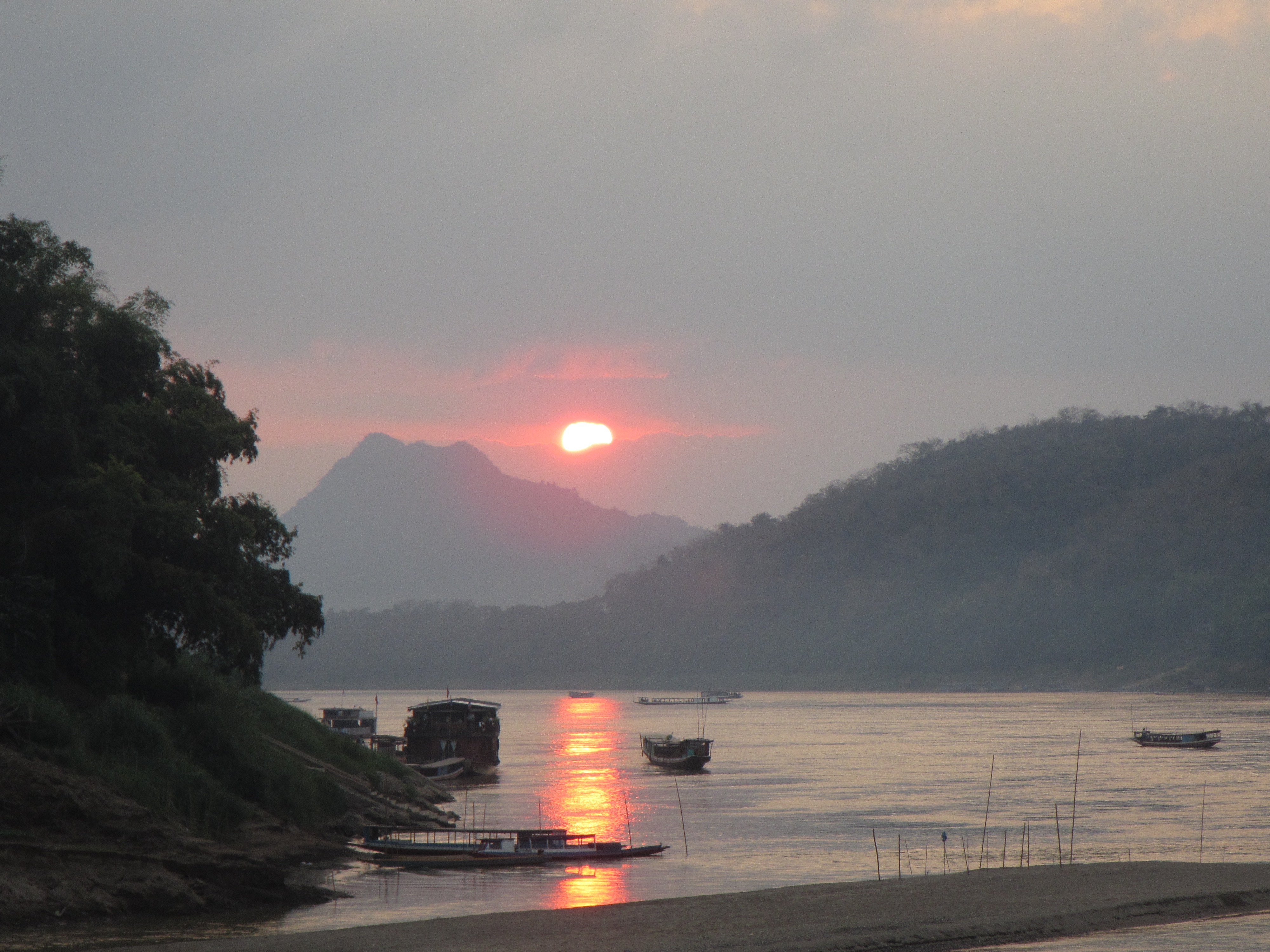
So we went to dinner, and escaped from all that at a beautiful, old, teak open air restaurant on the river, watching the sun set and dye the river pink and gold and aquamarine. a hammock swung under a tin roof next door. We ate delicious crab curry, and somtam with crispy catfish, and tofu rounds that exploded in the mouth like luscious goat cheese. We made plans to hike at a national park later in the week.

We missed the boat home, but a lady gave me some bread on the pier, and I fed the writhing mass of catfish just below us.

Since then, I have been thinking a lot about our role as tourists here, what I can learn that will make this trip more than just a holiday, what I can offer in return. I don’t have a lot of answers yet, but The Professor and I have talked and a few things seem clear:

– We are viewing a region in the midst of rapid change, and we’ll be getting a snapshot of history. It’s fine to want to view things timeless, but labeling those as the only authentic things… Is inauthentic and untrue to the reality of life here. staying where we are in a resident section of the city, we are already off the tourist path – the interactions we are having are real, if not full of simple beauty that travelers idealize.

– This place is so affected by the Vietnam War and so many other exercises of Western powers. it’s the first time I’ve been to a region powerfully impacted by colonialism, and I am going to be processing for a while!

– The Private Eye


First night in Bangkok

The condominium building is nondescript and peeling on the outside. The hallways are bare, white walls with a few scuff marks. But then the condominium inside has a wonderful view, beautiful new hardwood floors, and very very effective air conditioning. The pool on the sixth floor terrace is luxurious, some of it in shade, some of it exposed, with blue tiles, elephant sculptures, and a beautiful table and benches of highly polished and shellacked not-perfectly-finished wood, where one can see the edges of the planks and bark.

The Private Eye and I spoke with the Expat Teacher and made plans for today. Silamander has headed to the country for the weekend with his family, so it’s just the Private Eye and I who will head to her expat enclave for fun with the family and dinner. We haven’t seen her since her wedding in… 2002. She and her husband (then boyfriend) stopped by our place in Boulder in 2000 on a road trip.

Their wedding was near Philadelphia, and Iron Chef Japanese (Morimoto) had just opened his first restaurant there. The day before the wedding, which involved huge amounts of barbequeue and bouncy house for the adults to play in, we ate at Morimoto with the Smiling Knife Girl, also there for the wedding. It was my first meal that I paid for myself in a high style restaurant. The food was outstanding. I’ve come to learn, though, that I’m drawn to rustic and simple cuisine much more than high cuisine. I’ve been to The French Laundry once. The food was divine and spread over four hours. It was a culinary production, full with pomp, tension, expectation, delight and surprise. But given the choice, a plate of pasta at the Incanto bar draws me more. Hence my love of burrito trucks.

For this reason, I am so far loving the food in Thailand. Street food, simple food, just made and made well. For lunch yesterday I had catfish, smoked fish, and eggplant on a bed of rice. Dinner, we huddled around a tiny table on the sidewalk for noodles. Unfortunately, after the noodles jet lag set in, so we tucked in early. It also seems that seeing Muay Thai is a bigger endeavor than we thought, one which deserves more research.

— The Professor