RSS

Category Archives: Singapore

Unsolved mysteries of the Straights and the Archipelago

A few things we never did figure out during our weeks in Indonesia, Malaysia and Singapore:

1. Why are all t-shirts “oblong”?

2. What is up with all the faux Native American stuff? Kickapoo Soda, the “real American” “joy juice”? Apache brand? Stores of touristy Native American stuff like feather headdresses and peace pipes? Is there a factory for that crap here? One man in Yogyakarta told me that it is because their own tribal peoples in Kalimantan (Borneo) have similar dress, and once I saw some dancers from Borneo in the Chingay parade in Singapore, that made some sense. The outfits and feathered headgear did look similar to my untrained eye. But then I saw that there is a wild west show with American-type Indians in Panang, Malaysia. I definitely don’t remember hill tribe village shows in the U.S.!

3. Why is the air conditioning in Singapore and Indonesia pleasant, but frigid in Malaysia? Is it for the comfort of those in observant Muslim dress?

4. How can food be such a big deal and people eat so much yet everyone be so small? Is it because of the poor nutritional qualities of rice?

– The Professor and the Private Eye


National Indentity

The history of these three nations formed after World War II – Indonesia, Singapore, and Malaysia – provided a contrast of how the past can shape the future. This is something The Private Eye and I have been talking a lot about as we wander, as her posts have alluded to.

First, one thing impressed upon us by the couple we met at Cocktail Cycle in Chiang Mai is that Indonesia is a somewhat precarious federation. On one hand, unity with Java provides economic opportunity and drives growth. On the other, Java is where the power lies, and other parts of Indonesia feel that, at times, they have to march to Java’s drum. So a bit like Germany and the EU, albeit without the wounds and distrust of the early 20th century. This became a bit clearer to me as I read about Papua, where armed uprisings against the government are not unheard of in very recent memory, and to which the government answers with executions of political leaders. I was unaware of Timor-Leste’s separation in 2002; The Private Eye commented that she remembered it, but it was at a time when terrorism was flooding international news out of the headlines.

Bali and the Gilis, while part of Indonesia, clearly had their own identity which was not strongly tied to the identity of Indonesia. This is in contrast to Yogyakarta, where Indonesian history was important and presented prominently. Both are technically Muslim nations, but Indonesia has a breadth of cultures and religions; while many of its citizens are Muslim, it seemed more an element of personal rather than national identity. Malaysia, at least Kuala Lumpur, defines itself very much as a Muslim nation, tying its identity to Islam in the Middle Ages and Renaissance.

This very strong Muslim identity makes sense given its history. Throughout the colonialism of the 15th to 20th centuries, the major point of conflict with European colonial powers was whether the people of Malaysia could continue to follow their own customs and religion. The pattern seemed to generally be that the Sultans would sign a treaty granting trade and military rights in return for cultural sovereignty, which the Europeans would soon break, and conflict followed.

This history of not only colonialism but also cultural and religious meddling sheds some light on Malaysia’s split with Singapore and Malaysia’s laws that favor ethnic Malaysians. Where Singapore was a city and port built by the British in the colonial era, Malaysia was a booming hub of trade when European powers arrived. Portugal’s initial efforts were diplomatic; when the Sultan of Malacca took members of the delegation captive and killed a few, Portugal sent a fleet and took the port by force. Colonialism kept Malaysians at the low rungs of the economic ladder. And so where Singapore wants equality among its ethnic groups, Malaysia wants to correct inequalities encouraged by past colonial politics.

And so, its heritage of Islam suppressed for so long, Malaysia, once independent, strongly asserted that part of its identity. The National Museum goes into the different Sultans and when they converted to Islam; the Islamic Art Museum is more notable than the National Art Museum; the space agency has exhibits tying modern concepts of the cosmos to Islam’s astronomers in Al-Andalus and North Africa. Singapore, meanwhile, looks solidly towards the future, less focused on history from 500 years ago.

Malaysia is clearly prospering. The architectural icon of Kuala Lumpur, the Petronas Towers, are the office buildings for an oil company. And so Malaysia also shares that aspect of national identity with many Arab nations, although Malaysia also has a lot of agriculture. The Islamic world is vast. Remember World Without Oil, the game played on web bulletin boards a few years ago? I want to go back and see if anyone seriously explored the implications the end of oil will have to Islam.

— The Professor


Singapore Details

Our flight landed at 6:00. After a brief bit of immigration (“Where is your next destination?” “I don’t know.” “Well, you have to write something.”), we took the MRT to our stop, Farrer Park. Life Is Too Short had arrived a few days earlier, and we arranged to meet up for dinner in our lobby at 8:30, wandering over to the Lavender Food Plaza, a hawkers plaza with twenty or so different stalls. We’ve returned there for every meal we have had in our neighborhood. Prawn noodles, Beijing lamain, Hainanese chicken rice, chicken Padang, all so good.

Since Luang Prabang, I’ve been longing for strong, rich coffee. Lao coffee is prepared with a large filter like a sock, filled with grounds, that sits immersed in the coffee. You mix the thick, brutally strong resulting coffee with hot water and condensed milk. Coffee in Thailand is often instant, and coffee in Indonesia (Bali Kopi, Lombok Kopi, Java Kopi) is served in a small cup, optionally with sugar but not milk, with the very fine coffee grounds forming a sludge at the bottom. And so, the rich, sweet coffee of Singapore, served just as in Laos, has been wonderful.

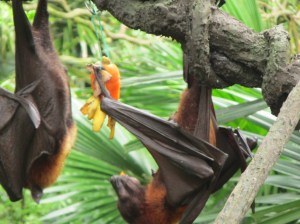
On Thursday, we met up with Life Is Too Short to go to the Singapore zoo. The delight with which The Private Eye and Life Is Too Short raced from animal to animal was hard to keep up with at times. By far the best part was an enclosed rainforest exhibit, surrounded by mesh so the butterflies wouldn’t escape. Mouse deer (neither mouse nor deer!) moved in the underbrush, ringtail lemurs sat on the railings, and enormous flying foxes, with wingspans over a meter, swooped above before gnashing on fruit hung 2 feet in front of you. For those who have been to the rainforest enclosure in the California Academy of Sciences, it was much like that, except out of doors and with many more vertebrates, enough that you seemed surrounded by them.

Picture 010Picture 009

Singapore is a big city, so surely it must have a nightlife. We met up again with Life Is Too Short to find a bar or club. Our part of town has numerous KTV lounges – karaoke. While you can’t see inside any of them, you can hear the singing within. Unfortunately, a bit of research discovered that public KTV lounges (as opposed to private karaoke rooms as in Japan) are where people go to meet friendly members of the opposite sex who work there. Most cater to men, but some cater to women. We tried going into one that billed itself as a pub/disco, but The Private Eye observed it was upstairs from a massage parlor, and we saw the entry has pictures of all of the women who worked there – “Like a menu!” she cried and we backpedalled to the street. At the suggestion of our front desk we went into one that, while it had some very friendly ladies, was very tame and not sleazy. For some reason, the bartender really wanted us to sing Hotel California – enough so the they queued it and assigned it to our table even though we didn’t request it! The Private Eye pulled it off well. But with two beers and a Pepsi being S26 (26 Singapore dollars, about $22) , we only had one round, and we quickly discovered they only put your song request on the queue when you order a drink.

We found out that a huge yearly parade, called Chingay, was on Friday and Saturday evenings. Tickets started at S28, hard to afford when our daily budget for all meals, transport, entertainment, and errands is S100. Talking with some locals, we found out that there’s a large free area, but you want to be early to get a good view. So we wandered downtown, stopped by an outdoor equipemnt store to get some last minute gear for Peru, walked through the colonial district, then the shopping insanity that is Orchard Road until 6 or so, finally making our way via MRT to the parade.

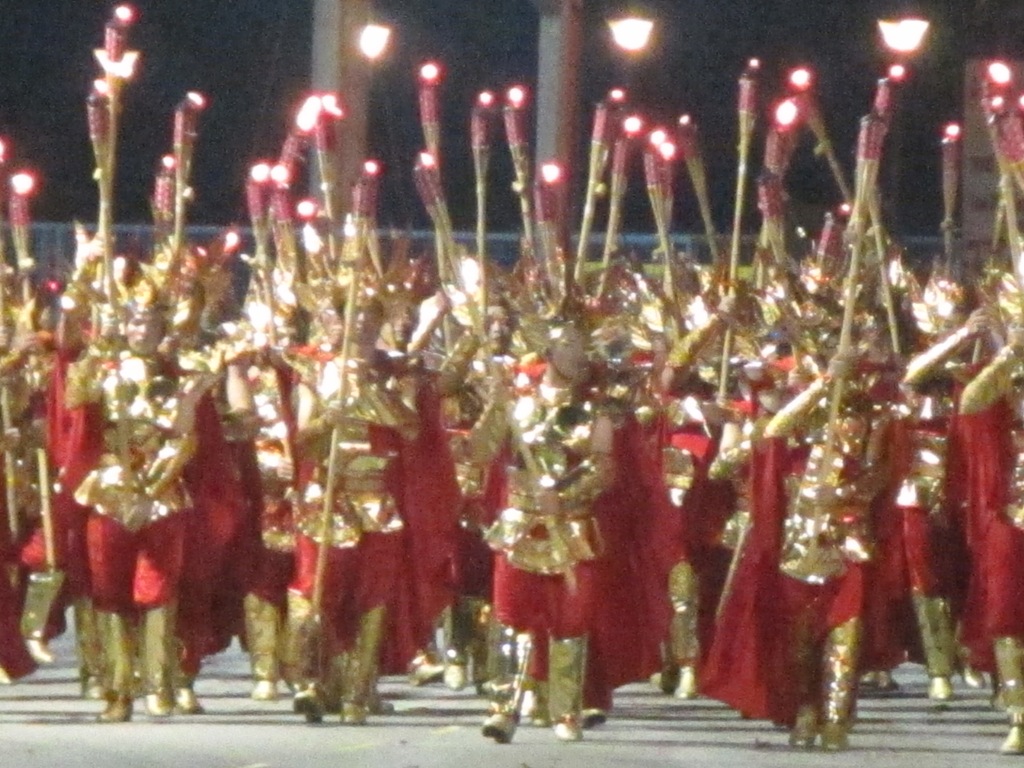
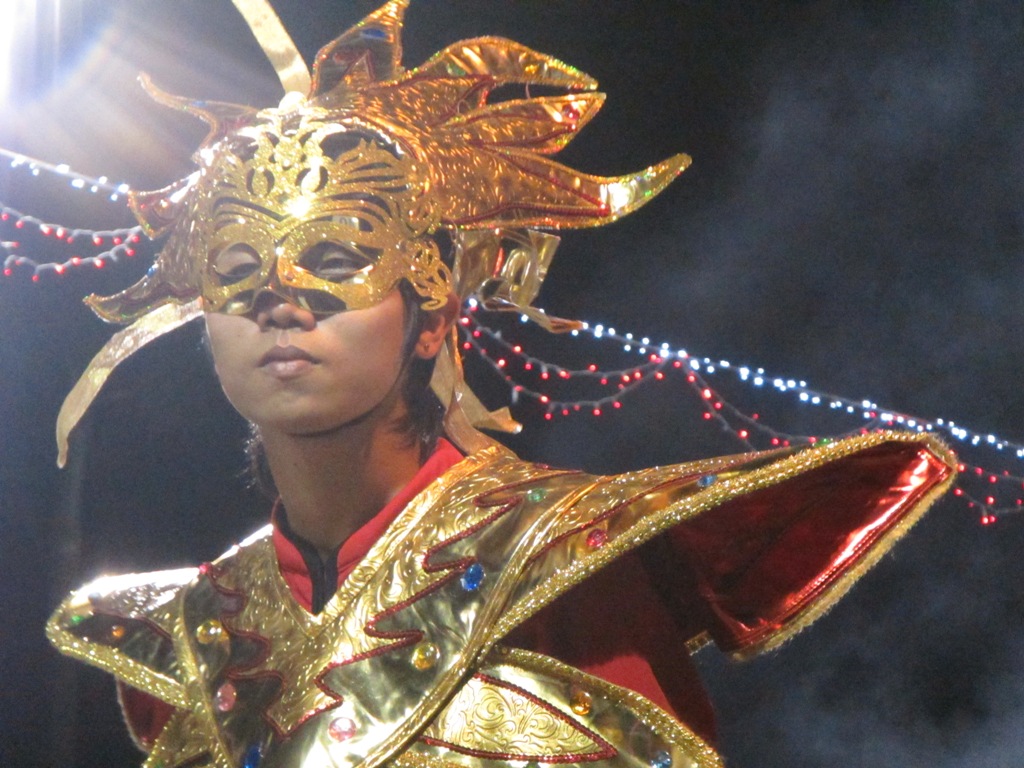
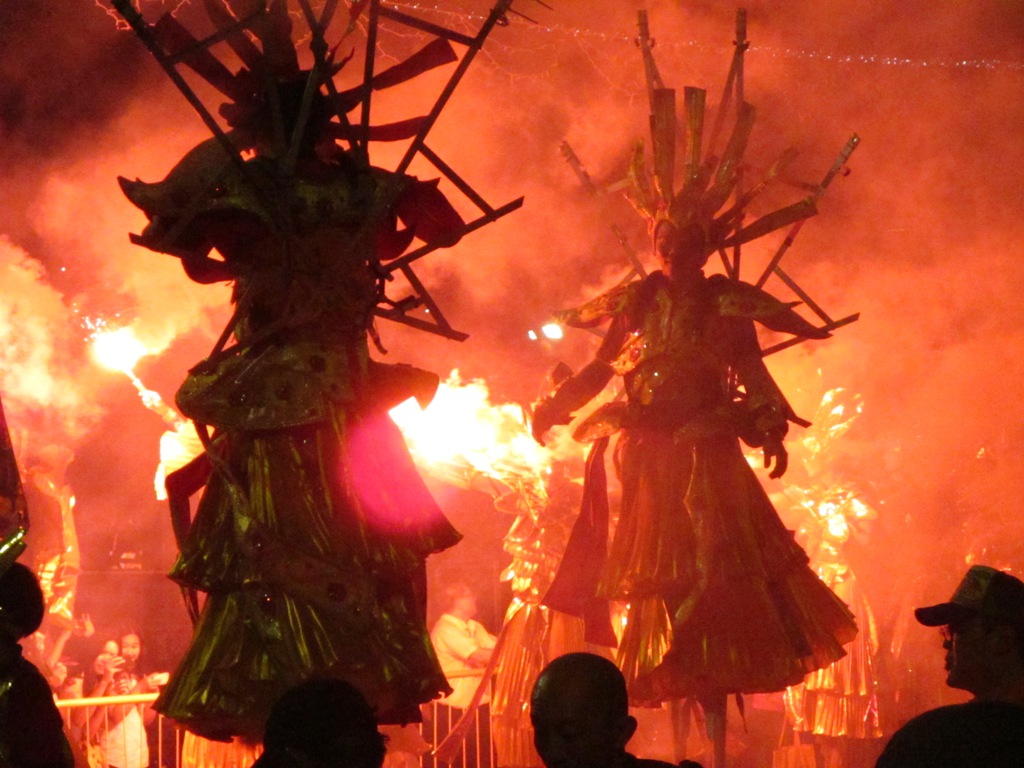
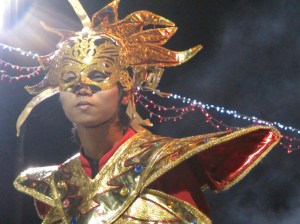
The parade was fantastic. It started with nearly a thousand dancers, had floats, dragons made from recycled plastic bottles, fire breathing, phoenix floats, and lasted for 90 minutes. All for free! The parade started in 1971, when Singapore banned fireworks. Words don’t do it justice:

Picture 011Singapore-KL-SiemReap 008Singapore-KL-SiemReap 007

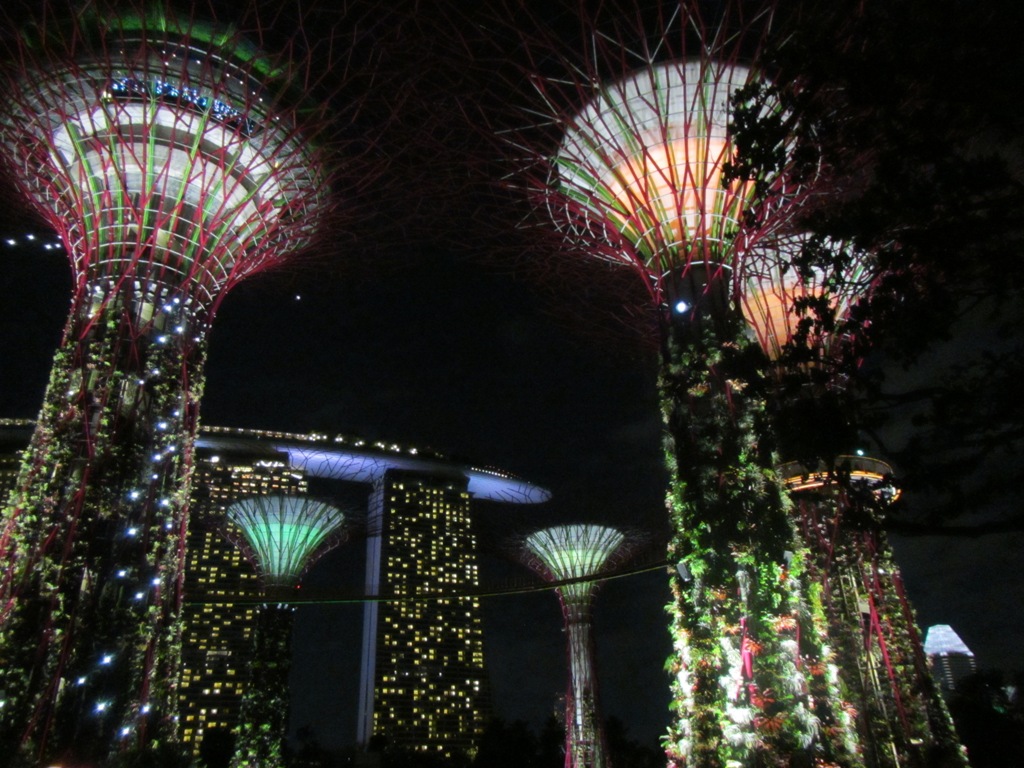
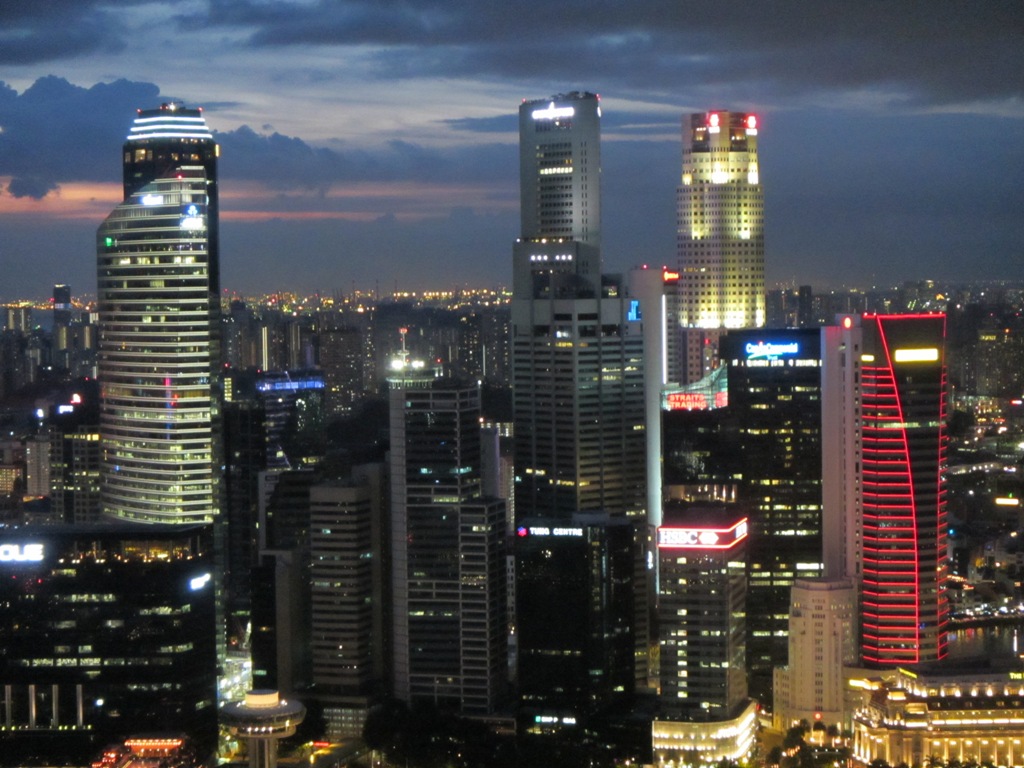
After the parade, we decided that we walk over to Marina Sands, an enormous hotel/casino complex. It’s the most iconic element of Singapore’s skyline: three huge towers in a slight curve, with an enormous open area, park, club, and pool sitting on all three that looks like a gargantuan ship aground in the sky. Unfortunately we were not up to the club’s dress code, so we wandered to the Marina Gardens, enormous steel structures (20-50m tall) that look like trees and are designed to be like them. They’re powered by solar panels atop them, have vines growing on their structure to perform photosynthesis, and, of course, light up and glow at night. Our feet exhausted from so much walking, we sat on some steps to watch the colors change and ebb, before catching one of the last trains back to Farrer Park.
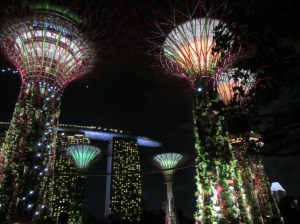
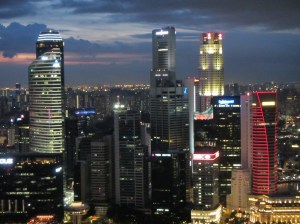
Singapore-KL-SiemReap 010Singapore-KL-SiemReap 009

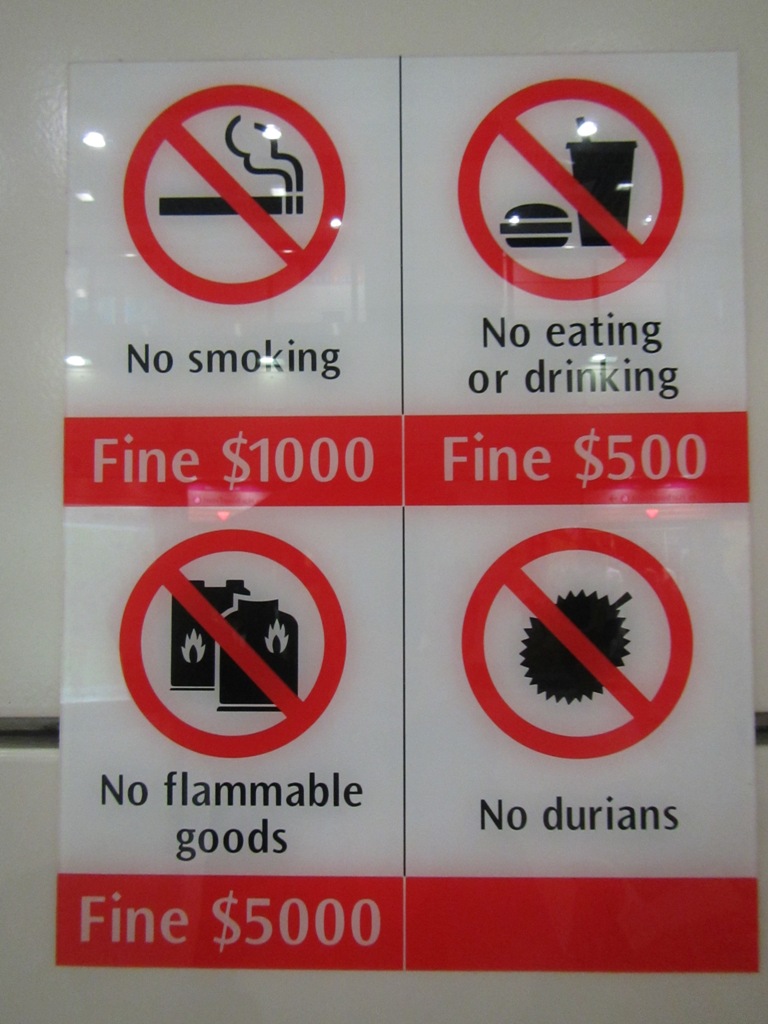
Today has been a slow day: laundry, hair cuts, some other practical things. The Private Eye and Life Is Too Short are back at the gardens to see them when they’re open; I’m back in the hotel stretching out my back, realigning some vertabrae I screwed up a decade ago. I guess I’m getting old. I had my first experience with the paternalism of Singapore: ibuprofen has to be bought over the counter, and sales are logged, so that a pharmacist can tell you know to take it properly. No matter that the instructions are different than every other place I’ve been. In Europe, you often buy 600mg pills; here, the pharmacist told me to take 1-2 200mg pills AND NO MORE. Oh, and here are the signs you see as you enter the subway:

Singapore-KL-SiemReap 011

We’ve booked a flight to Kuala Lumpur on the 25th, and it looks likely we will head to Siem Reap on the 27th, for a few days exploring Angkor Wat. After that, we have a bit under a week before we should return to Bangkok, and right now the top candidate is Hanoi.

— The Professor


Singapore

Oh, Singapore, you are a welcome home.

We landed in Singapore on the 20th, planning on staying just a few days. But we’ve loved it so much that we are now slated to depart on my birthday, the 25th. I want to copy The Private Eye and have a passport stamp on my birthday.

Singapore, a glittering, urban metropolis where everyone meets in hawkers plazas, food courts serving fantastic street food and dishes from China, Indonesia, India, and more. After 20 days in Bali, Jakarta, and the Gilis, the best Indonesian food I’ve had was here in Singapore. Admittedly, it cost $5 rather than $2, but still, it was vibrant and spicy and sharp in contrast to the comforting but ultimately a bit boring I found in Indonesia.

Singapore, a nation so small and dense that most people do not own a car, and so subway rides across 20 km are $2. Where the primary language is English in theory, but in day to day interactions it’s Chinese and many seem unable to speak much English. There are four official languages: English, Mandarin, Malay, and Tamil. So many signs are big and have three different alphabets on them. It’s illegal to sell chewing gum, spit on the street, or bring a durian into the subway.

Singapore, with an enormous zoo so fantastic it deserves a post of its own. Panda bears quietly napping, red pandas looking down at you from their den, flying foxes soaring above your head, false gurials, orangutans holding hands with keepers, Komodo dragons lazily sunning, and so much more. We arrived at noon, thinking we’d have plenty of time, and were some of the last to be shooed out at 6:30.

Singapore, whose Chingay parade began in response to the banning of firecrackers in 1972 and is now watched by over 1.5 million Singaporeans. Ten thousand participants, stilt walkers, floats, fire breathing dragons, visiting participants from other countries, all under the neon skyline and slowly rotating Singapore Flyer.

It is exhilarating to see Southeast Asia through a lens of ultra-modernity and prosperity.

— The Professor