After our cooking class we went to bed a bit early and read. Our hosts at Taicoon guest house told us there is a direct bus from Chiang Mai to Tha Ton, leaving from the north bus terminal. We looked up the schedule and found it is a four hour trip, departing every 90 minutes or so. We thought catching the 9am would be best, but if we slept in 10:30 would work. Our alarm didn’t go off, but we managed to return our bicycles, buy pastries for breakfast, and get to the bus by 8:55.
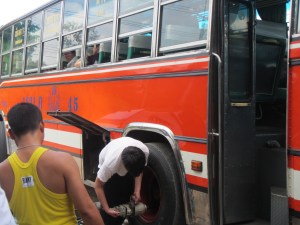
A bus winding along mountain roads was a bit rough on two of the kids on the bus, who threw up, but a great breeze through the open windows made sure the smell wasn’t a problem. The bus dashed from town to town, stopping at a half dozen or so spots in Chiang Mai, Chiang Dao, and Fang before arriving in Tha Ton. We had a brief delay when the bus blew a tire in Fang; we limped a half mile to a tire shop, then a bunch of Thai men took off their shirts (Thai men in tank tops! The scandal!) to employ pneumatic tools and jacks to get us on our way. I’m glad it happened there and not halfway between towns, that could have been disastrous. So we rolled into Tha Ton and booked a room at the Garden Home for 300B ($10) a night.
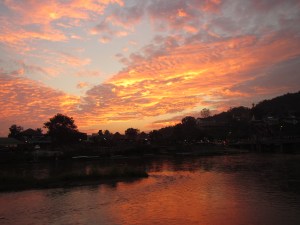
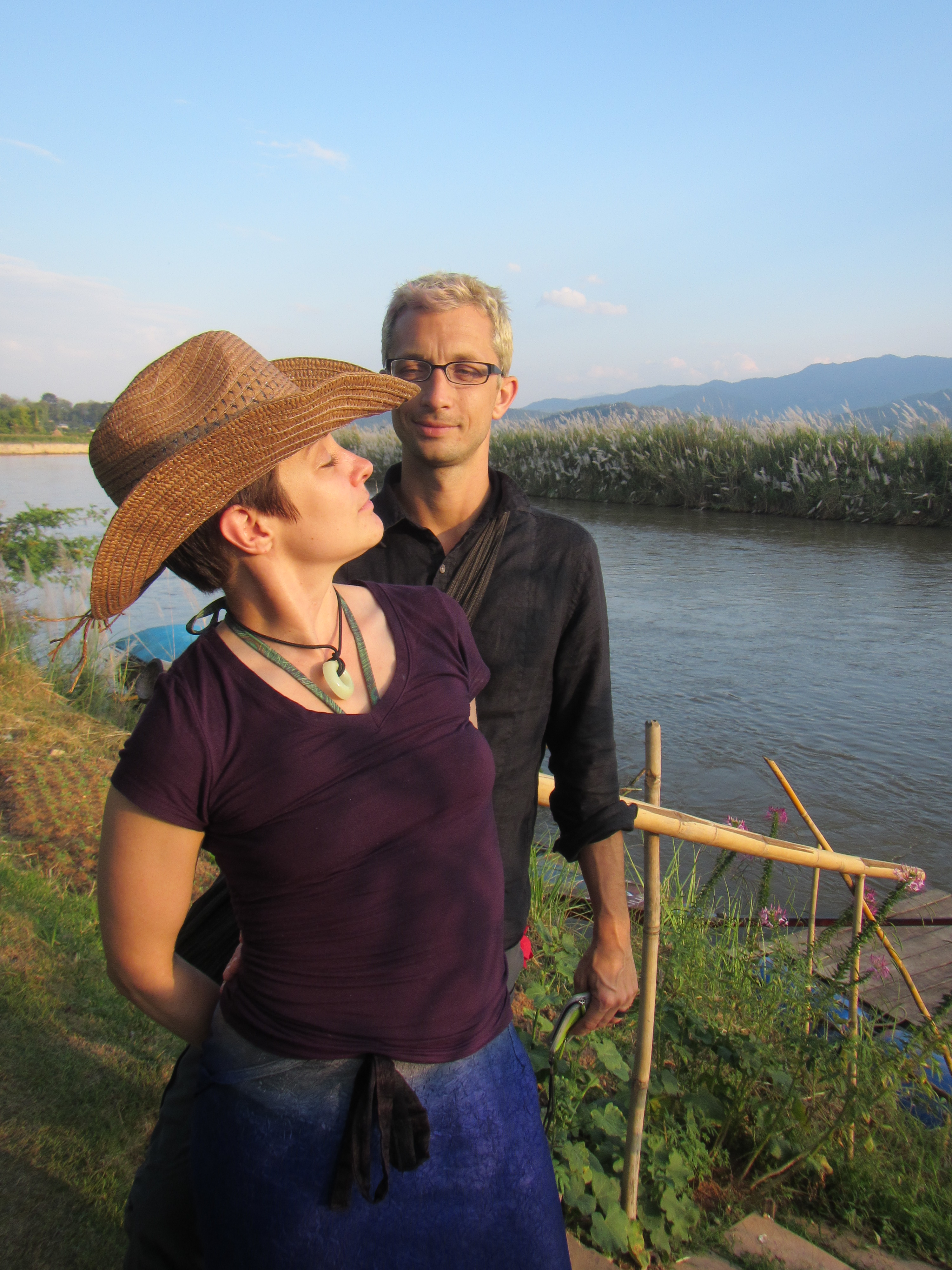
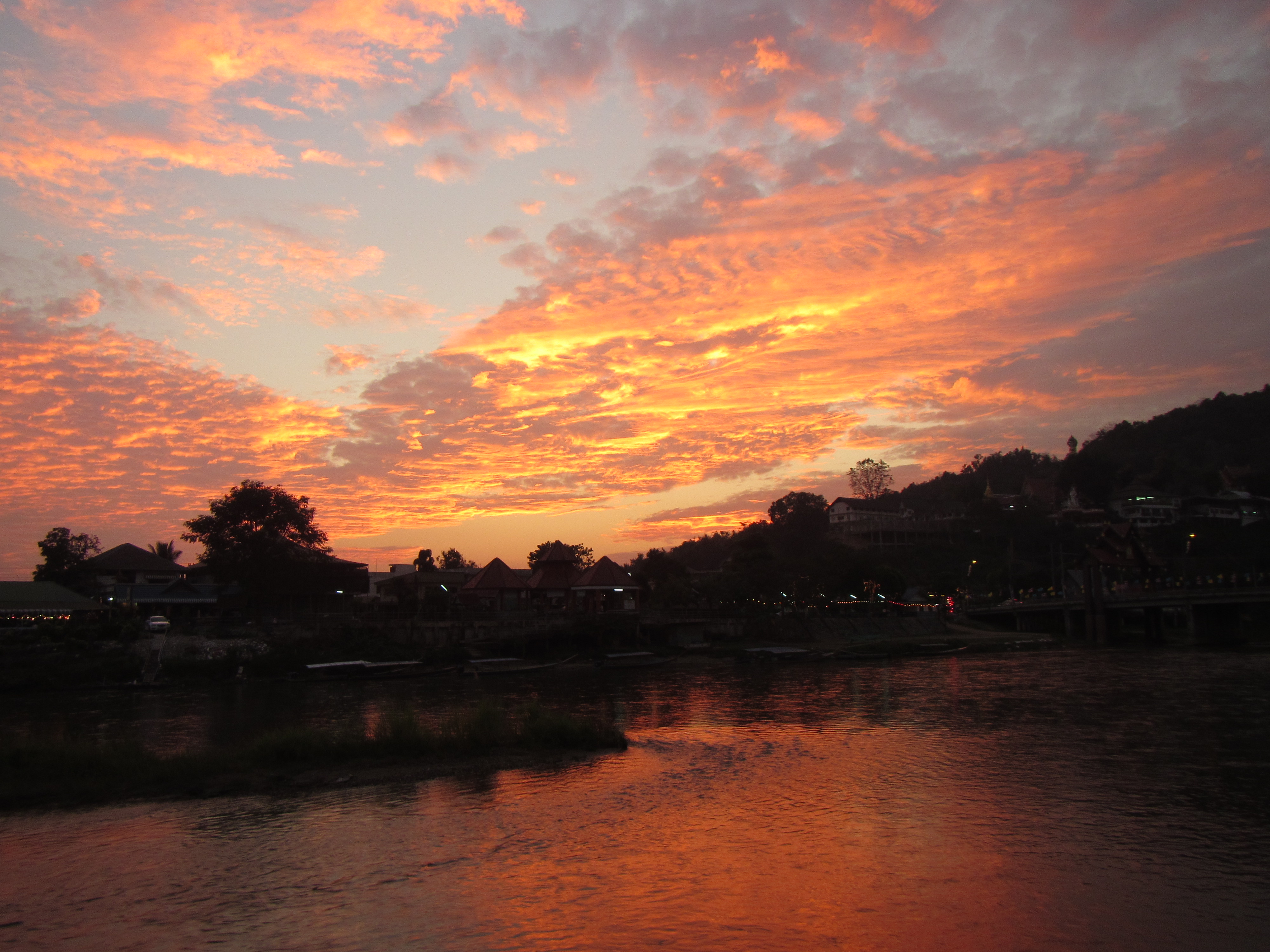
Tha Ton is a small, rural Thai town. There is one main street, which goes over the Maekok river (which the locals call the Limkok river, I believe, making directions difficult the first few tries). It’s surrounded by corn farms, garlic farms, guava orchards, and other agriculture. The mountains overlook to the west, and there are several Wats hidden in their tree-covered clefts and seams, visible at times from the road. The humidity gives everything a thick haze, so the river seems to wind away into a milky nothingness.
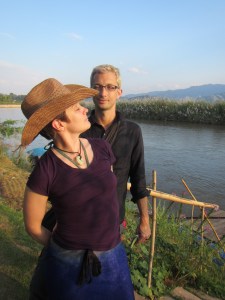
The Expat Teacher is staying with her family and a few friends at a nice resort a kilometer from town, along the main road. We walked there, talked with her while gazing out over the fields, joined her and her family for dinner (Khao Soi for everyone!), then continued talking over a drink. Come 10pm, The Private Eye and I decided to head home. It was too late for a sōrng-tāa-ou, so we decided to take the 10 minute walk home.
For two city slickers who love nature but don’t actually spend much time in rural areas, it was an adventure. Some of it was fun, like the silent white cow looking ghostly in the moonlight. The part that was scary was when we walked by a home and a trio of dogs started growling and barking furiously. But unlike other homes with barking dogs, these dogs weren’t behind a fence. So they came out onto the road and followed The Private Eye, growling and surging forward, then slowing. None of them were very big dogs, so we weren’t in serious danger, but a bite or two would certainly have been painful. And in all honesty, we don’t quite know how to deal with dogs in a pack who are that aggressive. Our uncertainty and surprise led to a lot of adrenalin, but nothing happened. They followed us for a hundred yards or so – seemed like a mile – then turned back. In the same spirit of honesty as The Private Eye, I’d like to say that it didn’t bother us at all, but that is not true; we were both scared as this trio of dogs growled at our heels and calves on the otherwise deserted and dark road along the hillside.
We woke early, while it was still cool, to climb up to the most ornate of the Wats that one can see for the road. There’s a series of 8 different stages, from small Buddha shrines, to a large golden Buddha with a Naga hood (the Naga eyes light up at night?!?!?!) to finally the temple on top. Inside it was beautiful, but also creepy; there were lifelike wax figures of two famous monks whose pictures were all over the temple, sitting in the central prayer area, while a recording of monk prayer played over the speakers. When I first saw them I thought monks were actually praying (why was the cleaning lady using her vacuum then, of all times?), but no, just creepy wax figures. The Expat Teacher’s husband, who also visited the Wat, but later in the day, saw them as emblematic of the decline and corruption of Thai Buddhism. “No attachment, indeed,” he said.
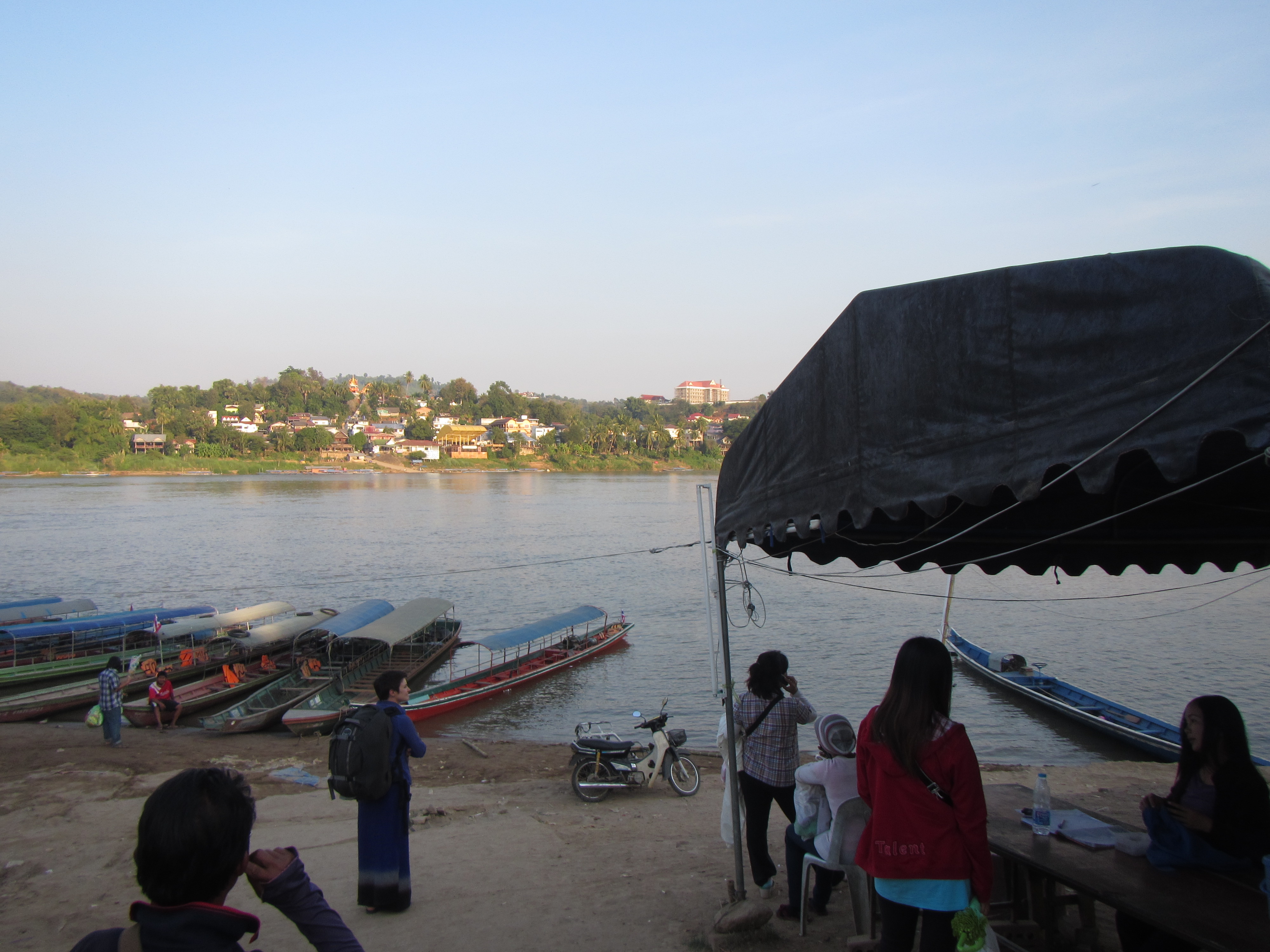
We wandered down to the docks to arrange for a private boat to take us 6 down river to see hill tribe villages (The Private Eye is great at this), and found a lady who said her daughter could teach us how to ride a motor scooter when she returned from school. Unfortunately the girl had cold feet – she was only 12 after all – so we will have to learn some other time.
Being in Tha Tun has been wonderful because it’s rural. After Bangkok and Chiang Mai, we needed some quiet, nature, and clean air, all of which are here in abundance. It’s a sigh of relief. But it’s of course also a bit slow, which I have trouble with after 48 hours or so.
The Private Eye and I went over a bunch of possible plans for our next steps. Our hope is to do a nature adventure trip in Laos called the Gibbon Experience, which involves sleeping in tree houses 200 feet up and going across 2km of zipline in the jungle canopy, then heading to Luang Prabang. Depending on how much time we take, we have a lot of options. If we spend a lot of time in Luang Prabang, we might head directly south to Ko Tau. If we have a few extra days before most European tourists clear out on the 15th, we might head south to Vang Vieng, which seems to have thankfully cleaned up a bit recently (no more bars at the top of the tubing region of the river). If we have a bunch of extra time, we might just fly over to Angkor Wat and give it the 3 or more days it deserves.
— The Professor

 The Professor and the Private Eye: Adventures Abroad