The calamity, of course, is the bloody reign of the Khmer Rouge. Yesterday we went to the Tuol Sleng museum, where the regime tortured its countrymen, and to the memorial park at Choeung Ek, where the regime then murdered them. Each is one of a series of such places in use in the late 1970s – today, the symbol for them all.
I feel inhibited writing much about history that I don’t know all that well, and from highly derivative sources at that. You can read about the Khmer Rouge elsewhere. I will just say that it killed more than a million – likely millions – of its own people as it took power, purged dissidents, and then turned in on itself with such viciousness that in 1978, 300 or more people a day were murdered in Choeung Ek, many of them the Khmer Rouge’s own officials or military. Those numbers included vast numbers of women and children, in a move designed to eliminate the possibility of family revenge – all of a targeted person’s family was destroyed.
Tuol Sleng itself had been a school prior to its use as holding cells and torture chambers for supposed dissidents. It is easy to imagine eager pupils in the cool cream and terra cotta tiled classrooms, with the windows looking out on leafy streets and a courtyard. But the museum has left the metal beds there, and the shackles made of rebar, and the empty munitions boxes. On some of the walls are photos of the last 14 corpses found in and around those beds when the place was liberated. There are bars on the windows, and when I saw a sparrow fly in and around the room, I wondered how many birds the prisoners had seen, and if their unhampered flight brought comfort or despair. I am guessing the latter, because the prisoner were underfed and shackled to their beds, and probably couldn’t reach the sparrows to eat them.
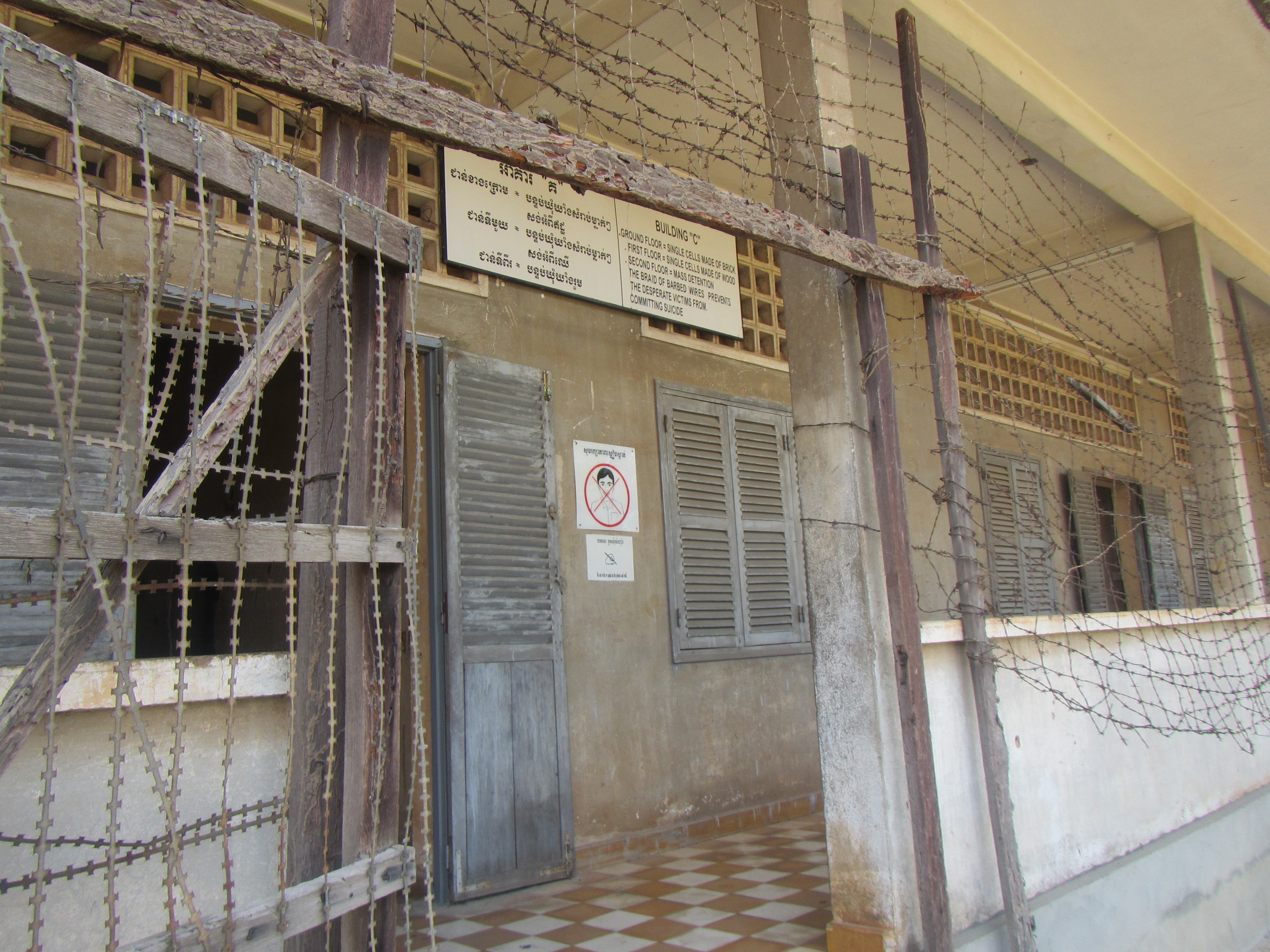
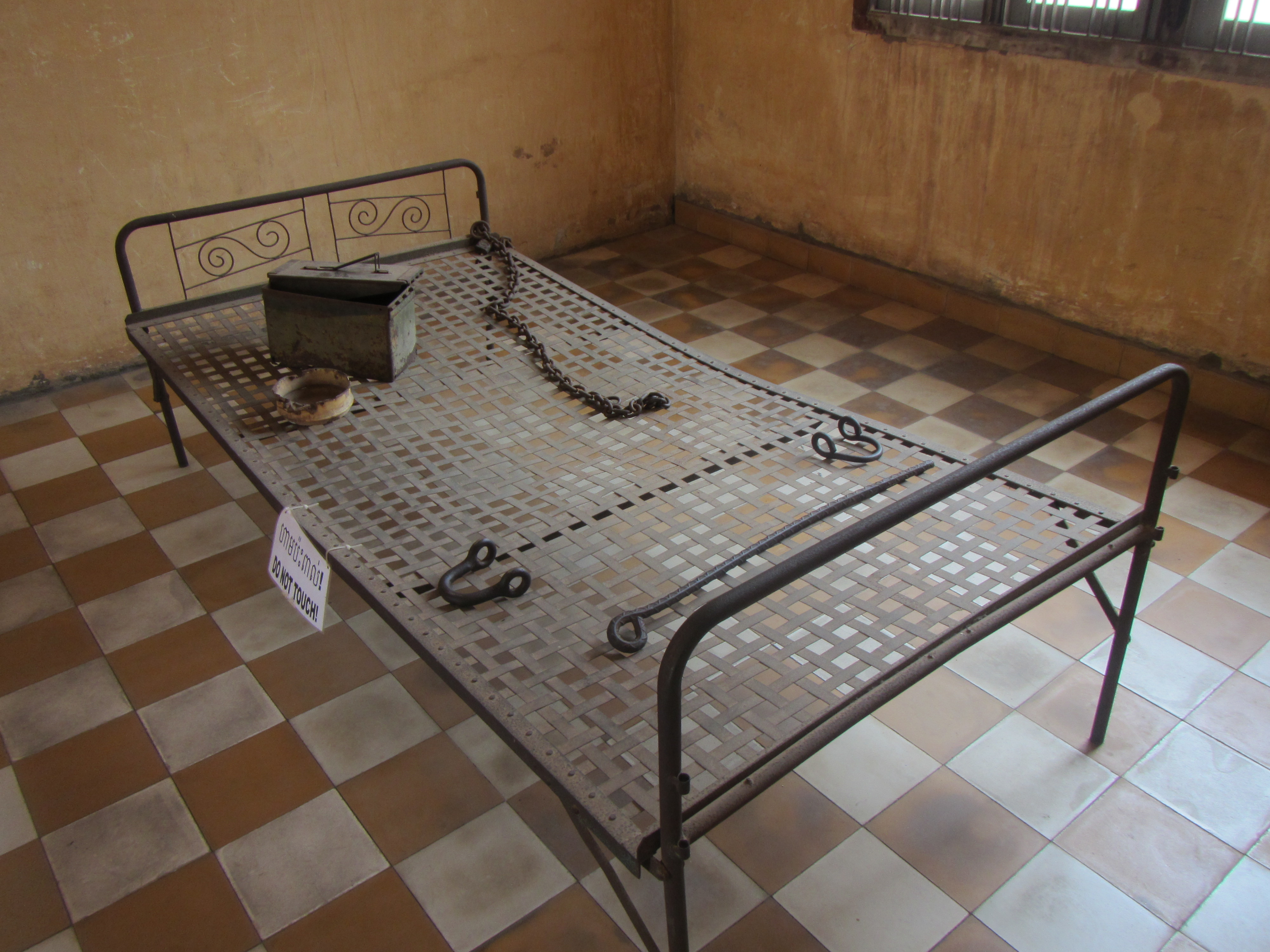
Some of the classrooms were built out into dozens of little brick cells, each basically long enough for a man to lie down in, and a chain sunk into cement on the floor.

The most powerful part, of course, was the hundreds of photos in some of the rooms. Numbered prisoners, men, women, and children. Bright faced young children conscripted for the cause, turned into child soldiers, prison guards and murderers, in fear of their own lives if they didn’t cooperate.
I love people. I love listening to their stories. It’s why I am a private eye. Looking at the faces, I could imagine so many personalities – that smart young man who has trouble with his temper. That girl with the lazy, confident smile of a hippie chick. That woman, my age, with my haircut, but with a more aged face, probably a grandmother, with a whiff of good sense about her. The honest man who has finally gotten mad and stares into the camera defiantly. So many faces. Most dead, and the others living with the memory of what they did to stave off death.
I got very quiet when I saw the photos of intellectuals. In such a revolution, The Professor and I would be among those first up against the wall.
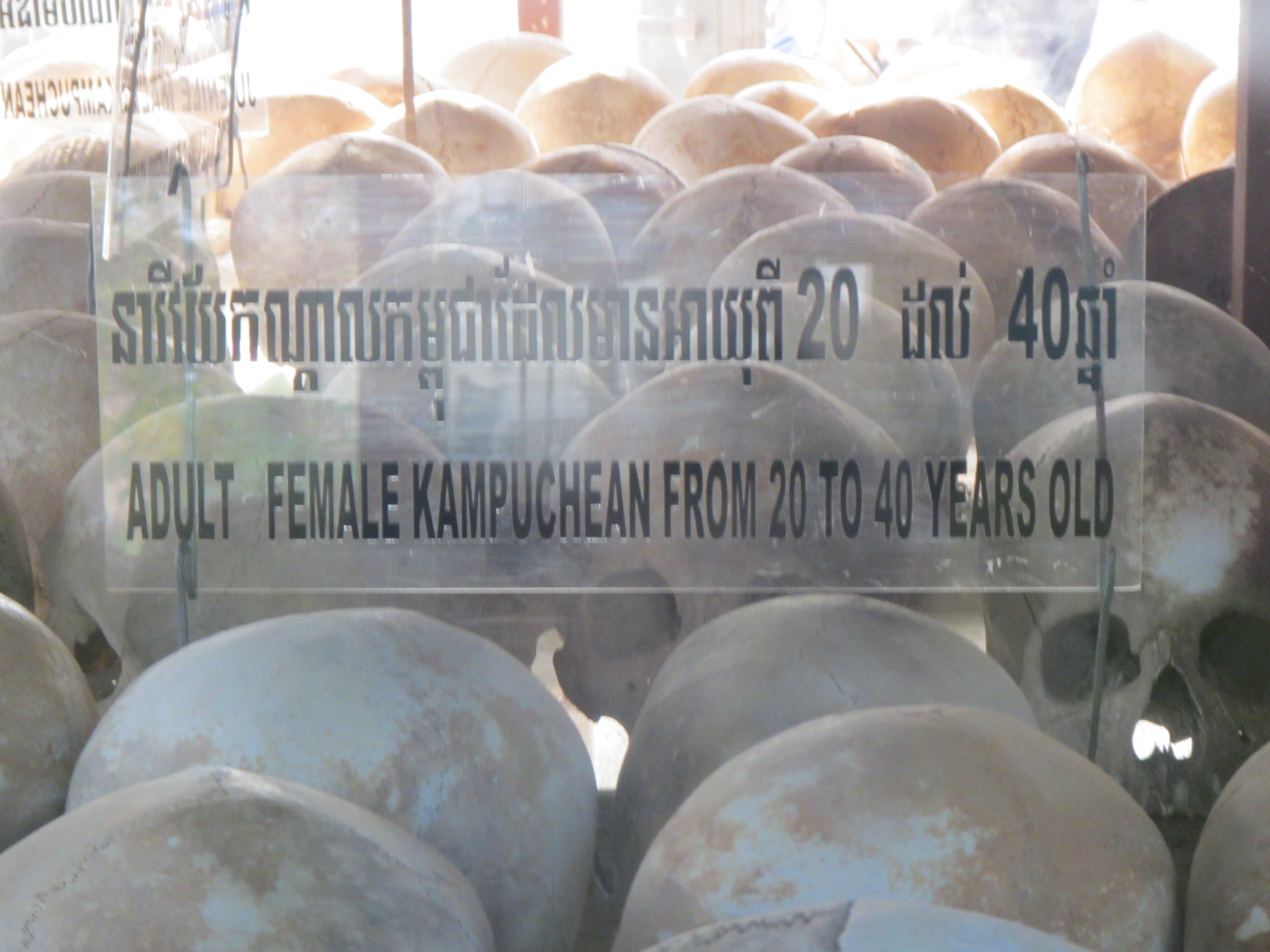
After touring Tuol Sleng, we went to Choeung Ek. It is a pleasant country place, surrounded by rice paddies, orchards, white hump-backed cows, and lotus root ponds. In the middle of the field stands a great tower of a stupa, its glass faces filled with skulls exhumed from the mass graves in and around the field. The audio tour is fantastically informative, giving information about the use of the site itself, about the history of the Khmer Rouge, stories of survivors and perpetrators of atrocities, and even a piece of classical music composed in response to the atrocities.
Being informative, it tells you just how bad the whole thing really was. Hideously bad. Shockingly bad. Babies-smashed-against-a-tree bad. They-used-farmtool-clubs-instead-of-expensive-bullets-and-then-DDT-to-finish-the-job bad. They-played-revolutionary-music-on-a-loudspeaker-while-killing-people-one-by-one bad.
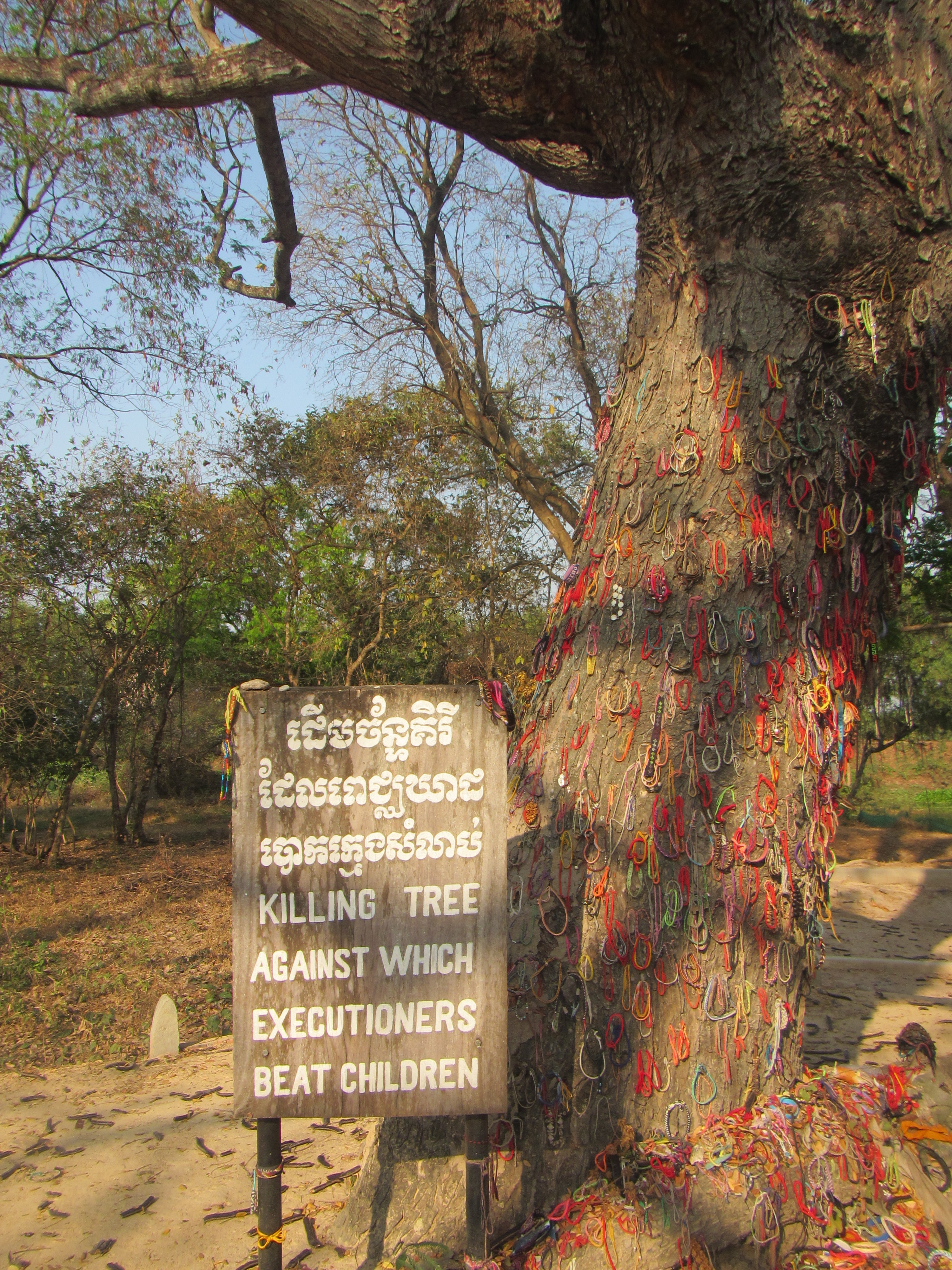
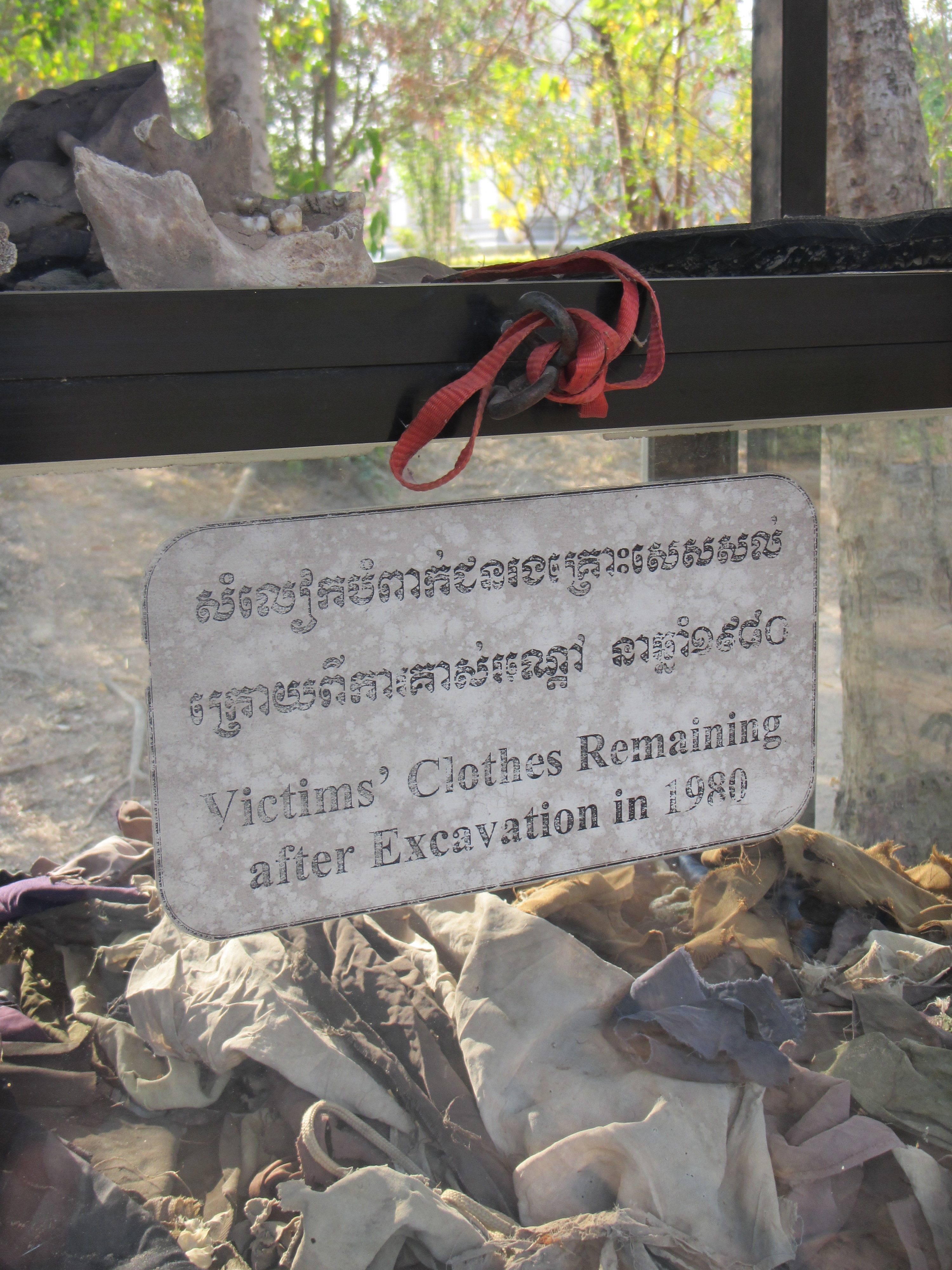
Sometimes people have told me I am too paranoid. It goes with the territory, I suppose, but I cannot look at such history and have any illusions that things are always going to be all right. You never know when something terrible will happen, and destroy your life and all you love. You have to make the most of every moment, and be wary enough to dodge before the gun is lowered against you, and fight politically for a just society. You shouldn’t live in fear, but neither should you live in the expectation of safety. What little we have has been painstakingly built through civilization, and this is why I get angry when some people, mostly men, predict the collapse of civilization with a gleam in their eye, as though they look forward to it. Anarchy means the strong will rape and kill middle aged women like me. Look at the evidence.
– the Private Eye
PS – the governments of the West all supported the Khmer Rouge for decades because they opposed the North Vietnamese victors. This makes me ashamed.
PPS – the quibble is too stupid to write about after all this. Let me just say that I am a westerner and don’t want to turn all my business transactions into exclusive relationships, and I resent not having autonomy in travel. In short, I want to treat my tuk-tuk like an American taxi and it just doesn’t work easily that way.
 The Professor and the Private Eye: Adventures Abroad