It was important to me that we come to Yogyakarta because it is the first place I have been where I felt that I was really in Indonesia – not vacationland like the Gilis, and not a place whose identity is so distinct (Bali) that you don’t really feel like you have been to the bigger nation. Not coming here would have felt like I had gone to Hawaii and then claimed I had seen America.
But Yogyakarta is also a vacation place, only it is a place for vacationing Indonesians. As far as I can tell, it is like coming to Philadelphia and viewing The Liberty Bell, other historical sights and the art museums. Families, the women with sensible headwraps and skinny jeans, ride in the horse carriages to the museums. (These carriages are bigger than they were in the Gilis, seating up to six or 8 people, and some of them are drawn by tall horses rather than dainty ponies.) Couples and singles ride in the becak, bicycle carriages with the driver in the rear of the vehicle. Like us, they visit the sultan’s palace, watch the traditional dancing (similar yet different than the Balinese), and visit the museums and the sights.
Of course, there are people who live here, and lots and lots of university students.
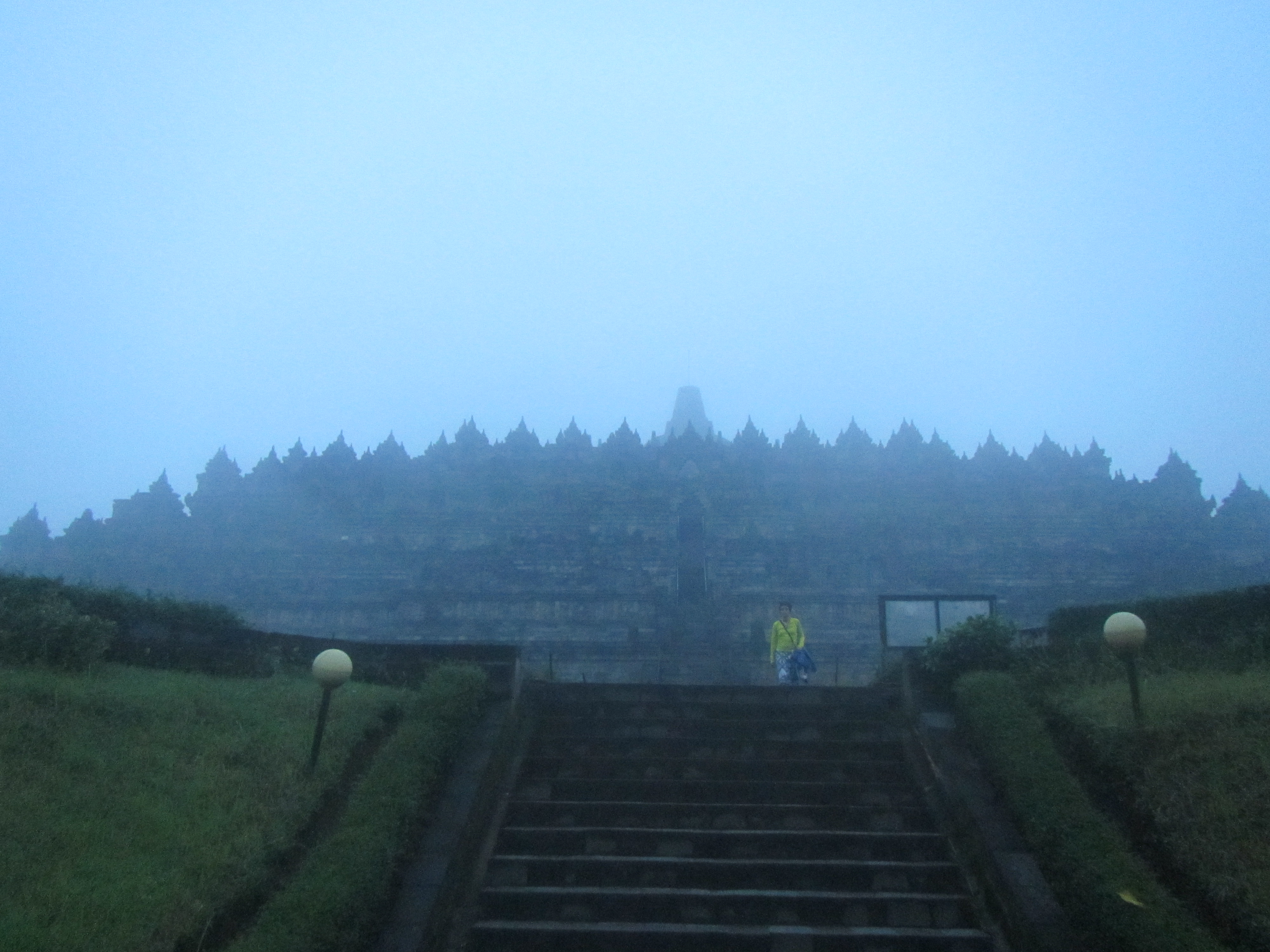
So yesterday, we got in a white Landrover type vehicle with a driver, and headed to Borobudur for the sunrise. Borobudur is a ruin whose shining moment was brief – built in the 700s or 800s AD as a great Buddhist center, it was basically abandoned after a local regime change both political and spiritual. Now, unearthed from volcanic ash and restored, it is a tourist attraction for both foreigners and Indonesians.
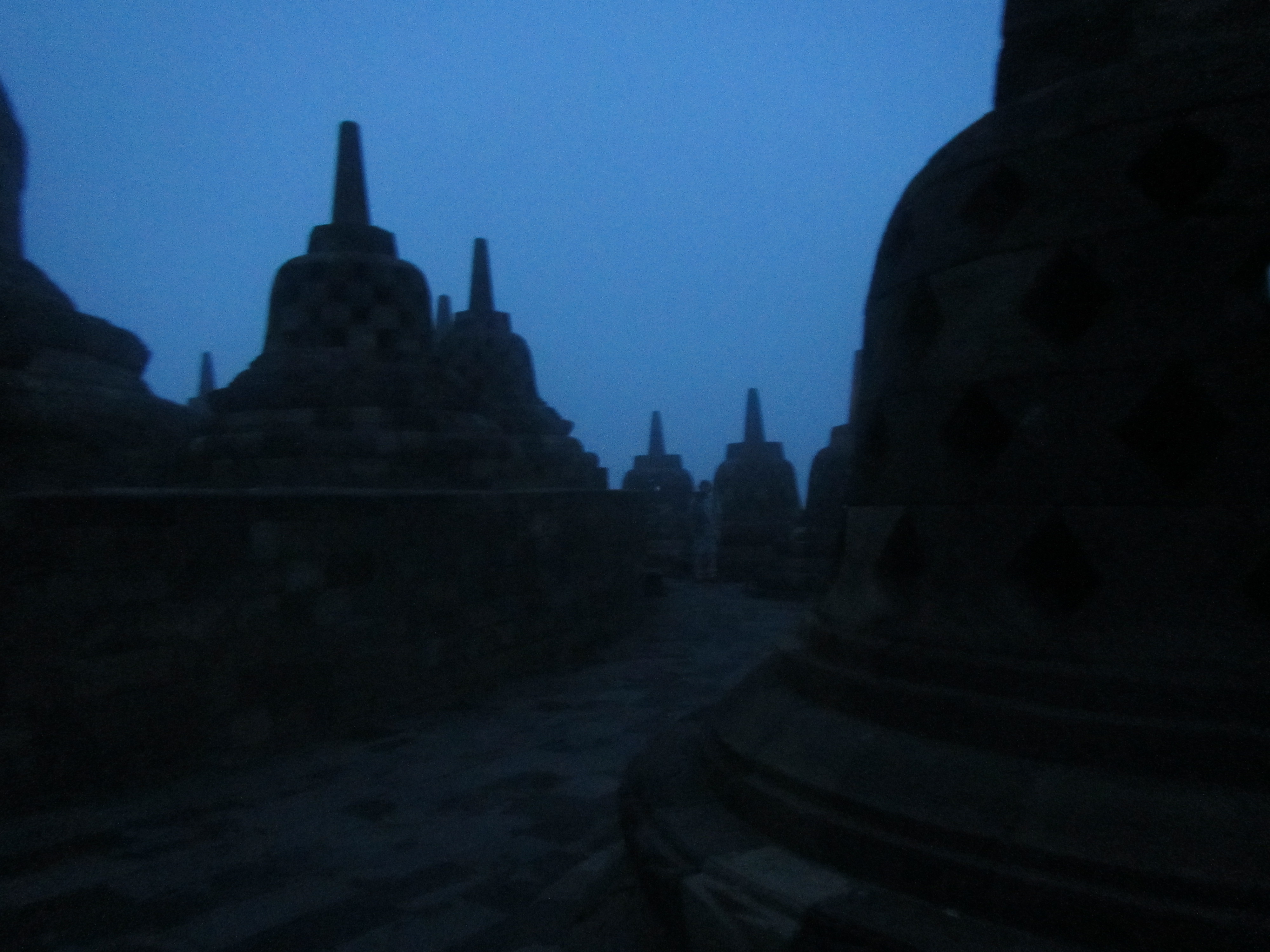
It is magnificent. We booked the “real sunrise tour” at our losmen (hotel), which meant that our tour guide paid a hotel located on the grounds of the monument to let us in before the 6 am official opening hour. We arrived at 5 and were each given a sarong and a flashlight, and went in a group of about 30 people, in the dark, to the walls of the giant stone structure. We were walked a few levels of stairs up, shown the best sunrise-viewing site, and left to our own devices.
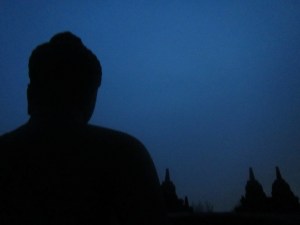
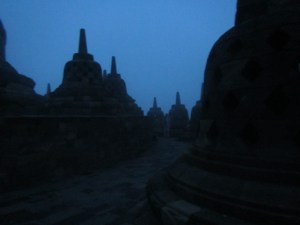
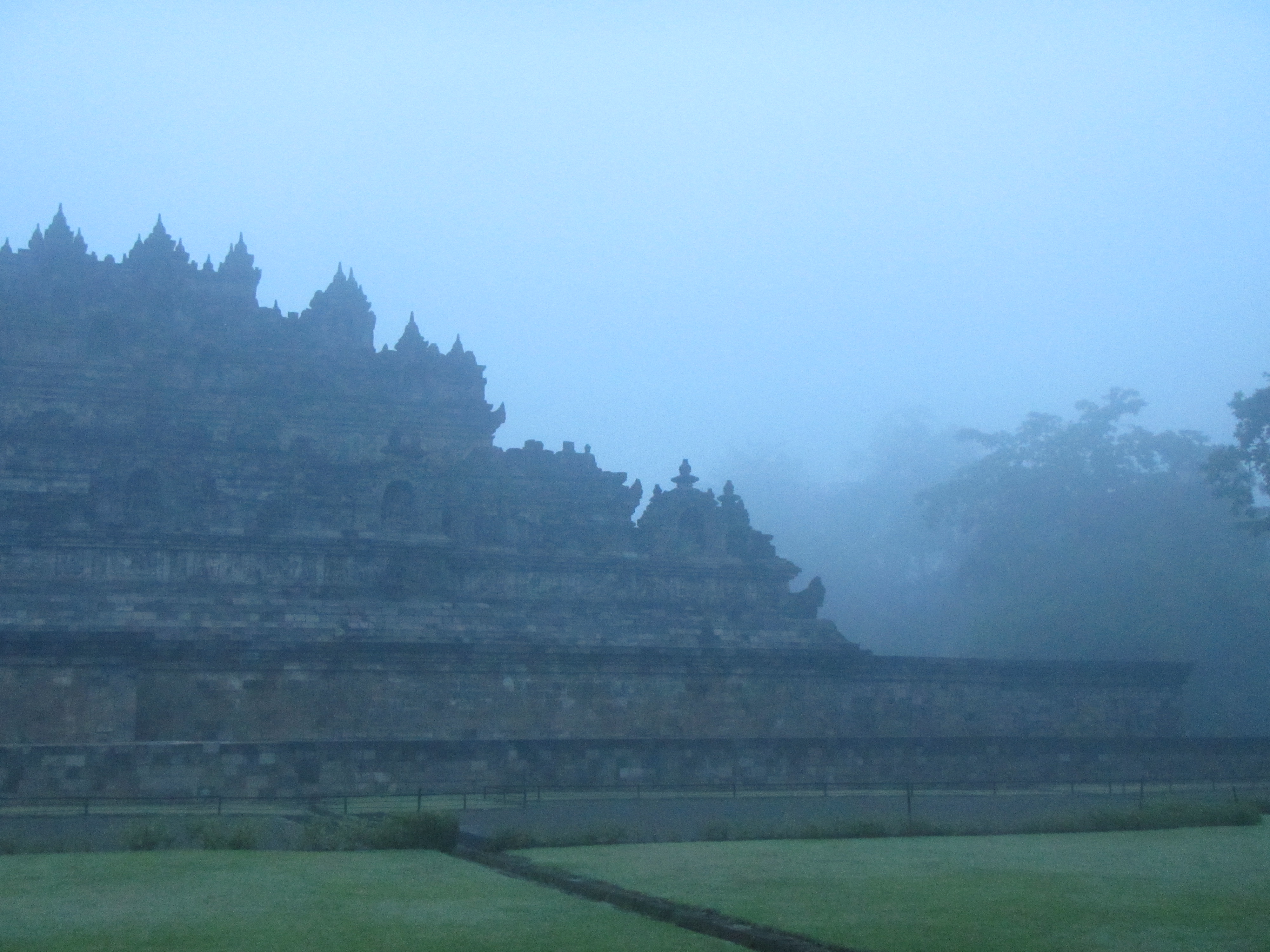
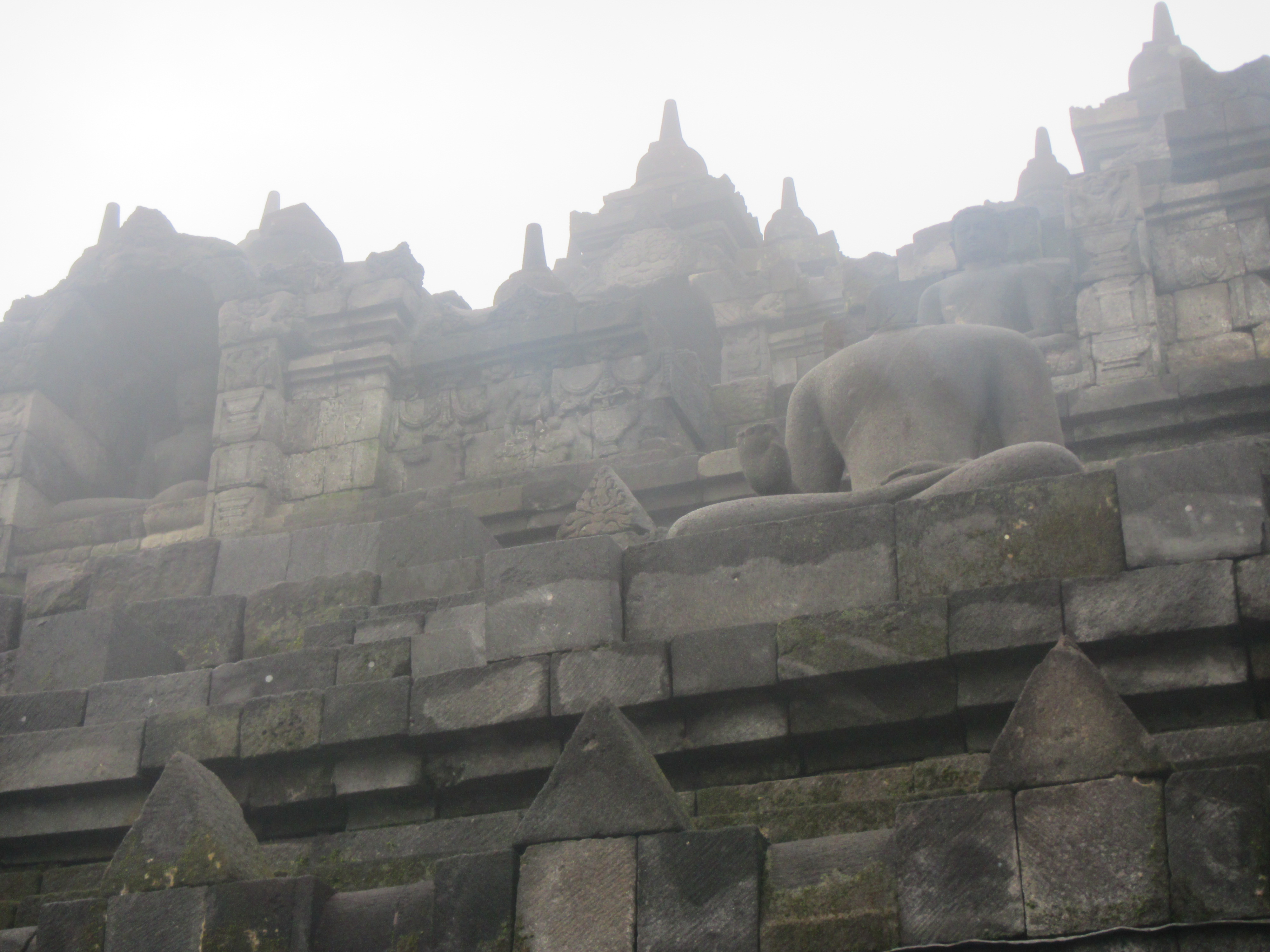
Borobudur is like a giant stone wedding cake, albeit with the bottom levels square and the three upper tiers circular. At the top rests a giant stone onion (stupa), surrounded by smaller such shapes on the penultimate tiers. The entire thing is covered in astonishingly detailed stone carving, most depicting the life of the Buddha, but some showing what look like scenes of regular life – the books tell me that some of these show carnal desires to be overcome and others depict doctrine, but I don’t know enough about that to write intelligently on it.
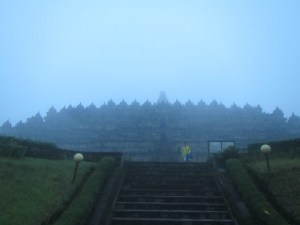
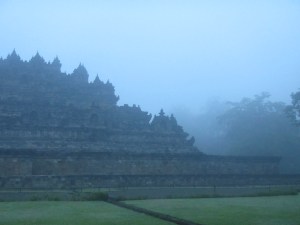

We quickly figured out that there would be no golden dawn for us, as it was overcast. Instead, the Professor and I started wandering the narrow walkways of the monument clockwise bottom to top. We were almost always alone, and this was why we’d paid the extra money for the “real sunrise tour”. It was glorious, and even more so after we saw that the monument’s airspace is home to dozens of swallows on the wing. I don’t get tired of these birds ever.


Afterwards, I was pressed into buying some postcards, but as I had wanted to anyway this was no big deal. We walked through the grounds and then ate breakfast in the early-entry hotel, and then it was off to Mendut temple for a quick visit, and then on to Prabanan. On the way though a beautiful country of rice fields and misty mountains, I told our driver that we had never eaten bakso, a food remembered fondly by President Obama. We decided to get some lunch after Prabanan.
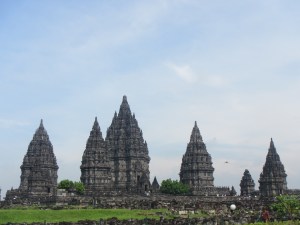
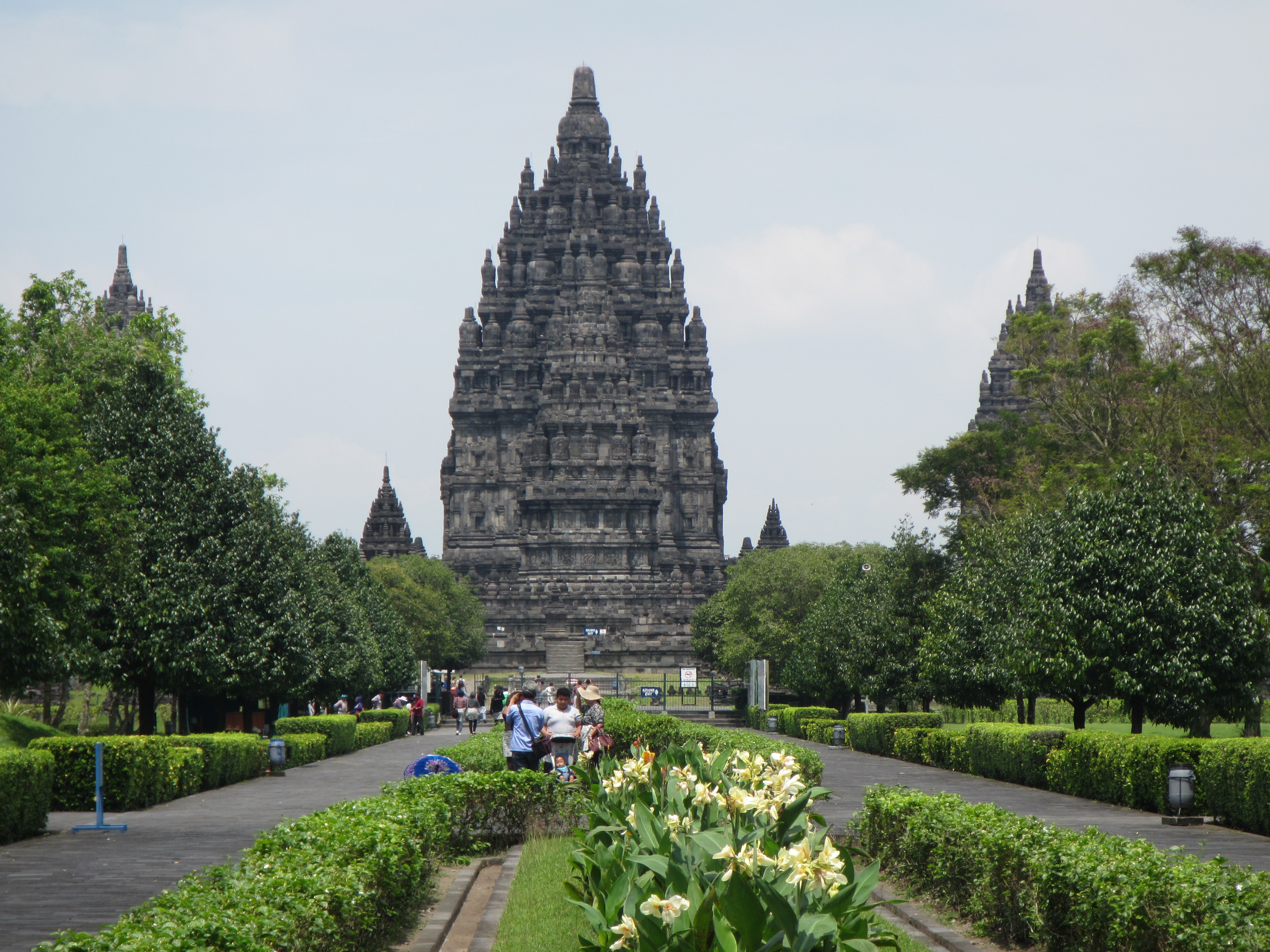
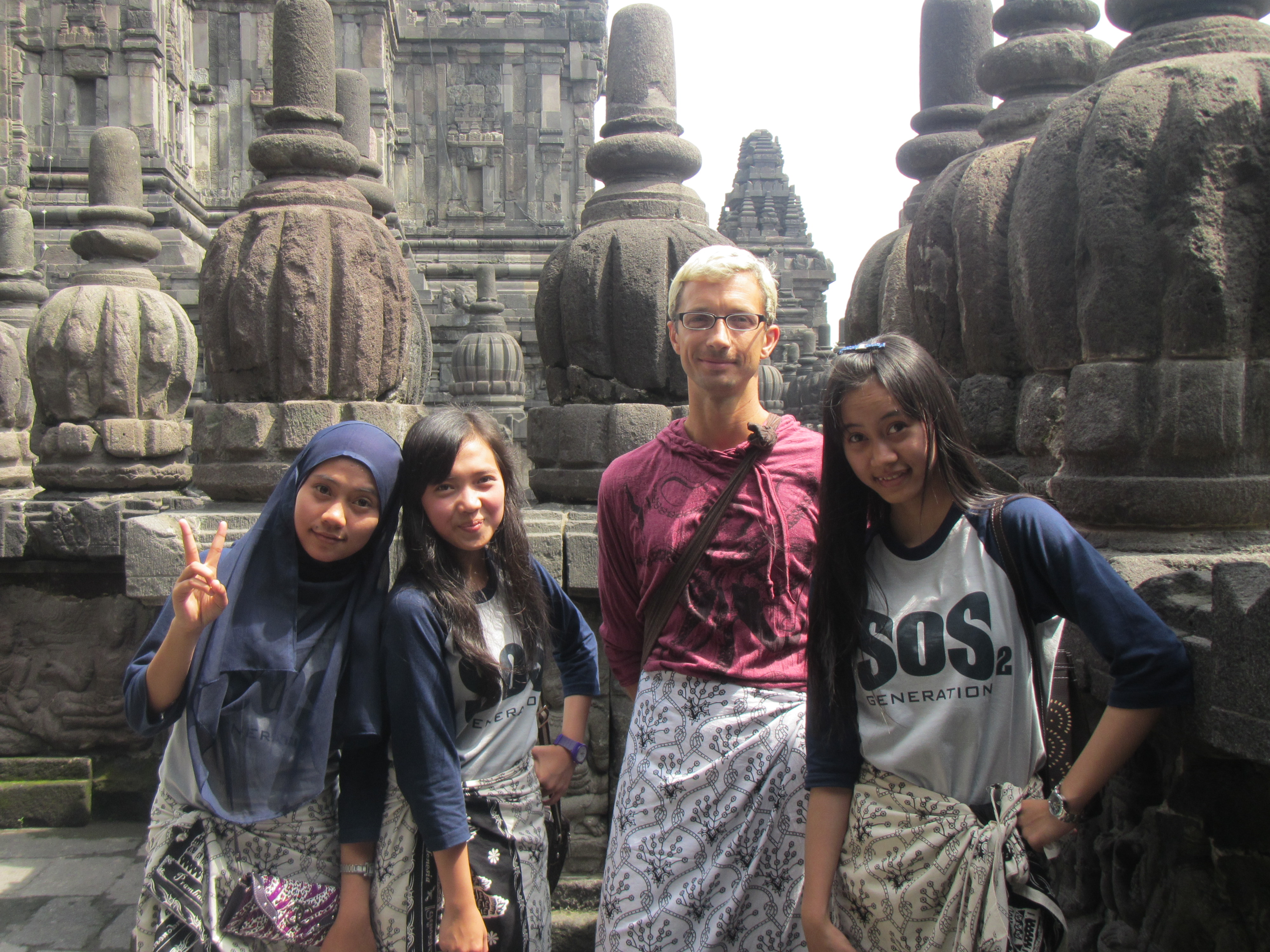
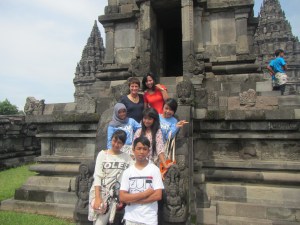
Prabanan is the Hindu sibling of Borobudur, built roughly contemporaneously and likewise abandoned swiftly after a similar regime change, both spiritual and political. Instead of one large building, though, it is a temple complex with separate structures for Shiva, Brahma, Vishnu, etc. We could go inside most of the temples, though we had to wear a hard hat for one of them, as they are working on structural repairs following the 2006 earthquake. The carvings are amazing and as you would expect a lot more fun than the Buddhist ones – multi-armed Kali, monster mouth doorways and mustachioed men abound.


It is as good a point as any to mention that I have found the mode of dress and presentation among the Javanese to be singularly sexually dimorphic, more so than other places we have been. Women (whom I tower over with a few rare exceptions) seem very … womanly, with small hands, small feet, a neatness and cleanness about themselves. Oh, and headscarves sometimes. Men have shirts cut close to the body, mustaches, white eyes and teeth, and handsome faces full of confidence. They roll their r’s here.
Anyway, we toured the temples for about an hour and a half, and then we and our driver drove to a bakso joint on our way home. Turns out that bakso is meatball soup with noodles. It was, like a lot of Indonesian food that we have tried so far, homey and satisfying rather than spectacular. I like the food here a lot and have never sickened on it, but it is not exciting the way Thai food is.
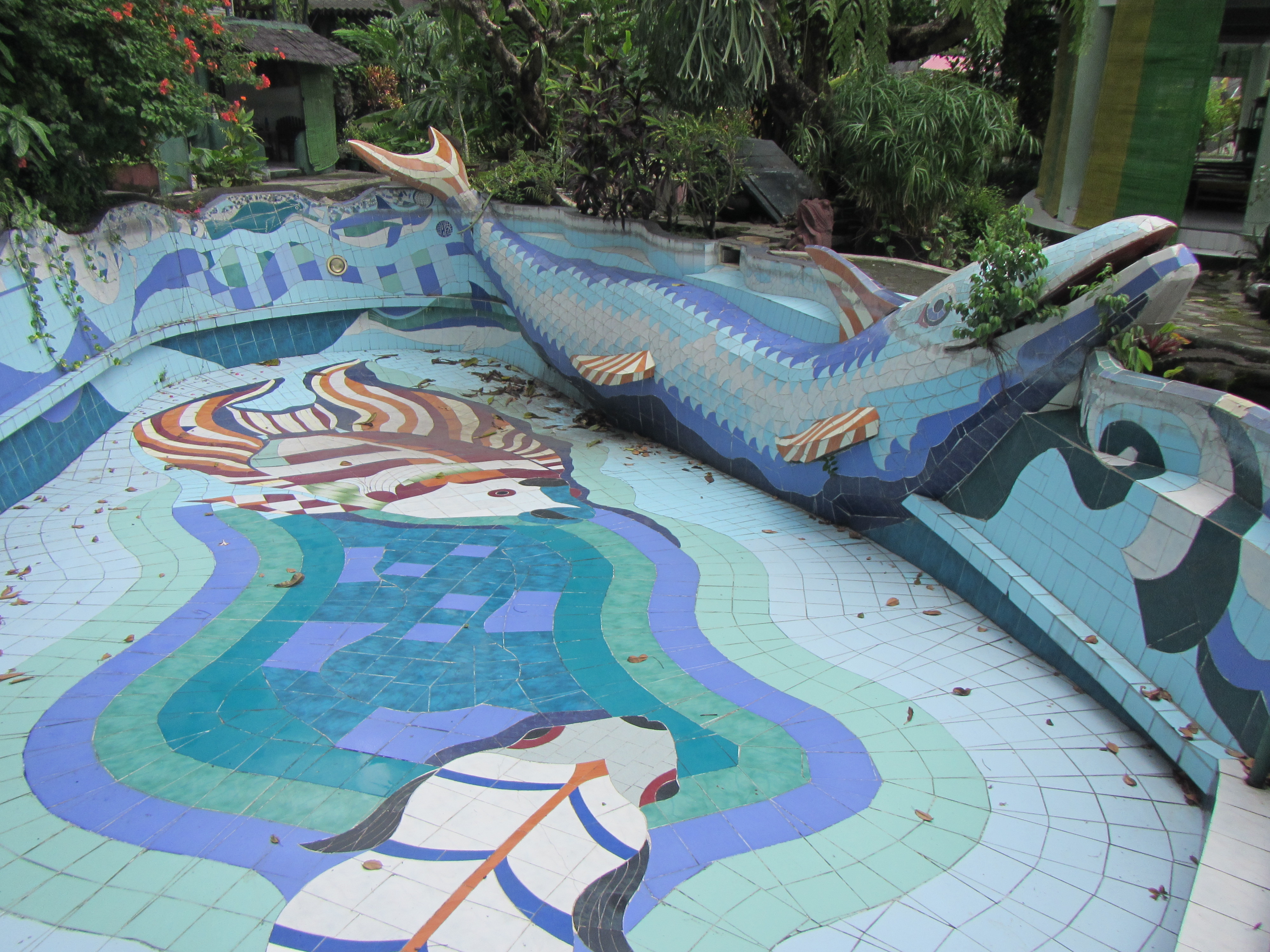
Despite our early rising, we got a second wind on our way back and so went to the Affandi museum, which we had been to the day before but found it closed. This time, we got a delightful (free with admission!) tour of the artist’s work, which is housed in his own home compound. The buildings are all a shade of robin’s egg blue with curved walls and a roof/ceiling style reminiscent of a banana leaf. He apparently felt that being covered with banana leaves had protected him in early life, and had used them to protect his paintings when he was a poor student.
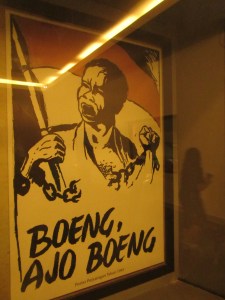
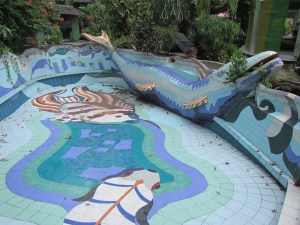
I had wanted to see this museum because Affandi is recognized as one of Indonesia’s great modern painters, and his style clearly has left it’s mark on the local scene – at least judging from the paintings we saw in our hotel (which is run by an artist) and also in Bali. But I was most glad that we saw his work after we had visited Borobudur when we got to the third gallery. There, among the sketches, was one of his wife napping at Borobudur’s lovely grounds. Other sketches showed details of Prabanan’s carvings. I loved seeing the evidence of his family’s gentle visits to these monuments, as it made me feel connected somehow to this foreign artist who is no longer with us, and in a grander sense, connected to the world.
We finally went home and napped for three hours, then ate, foraged for middle eastern pastry for dessert, and then returned to bed. It was a happy day.
– the private eye









 The Professor and the Private Eye: Adventures Abroad